Dr. Daniel - The Cancer Directory
Здесь есть возможность читать онлайн «Dr. Daniel - The Cancer Directory» — ознакомительный отрывок электронной книги совершенно бесплатно, а после прочтения отрывка купить полную версию. В некоторых случаях можно слушать аудио, скачать через торрент в формате fb2 и присутствует краткое содержание. Жанр: unrecognised, на английском языке. Описание произведения, (предисловие) а так же отзывы посетителей доступны на портале библиотеки ЛибКат.
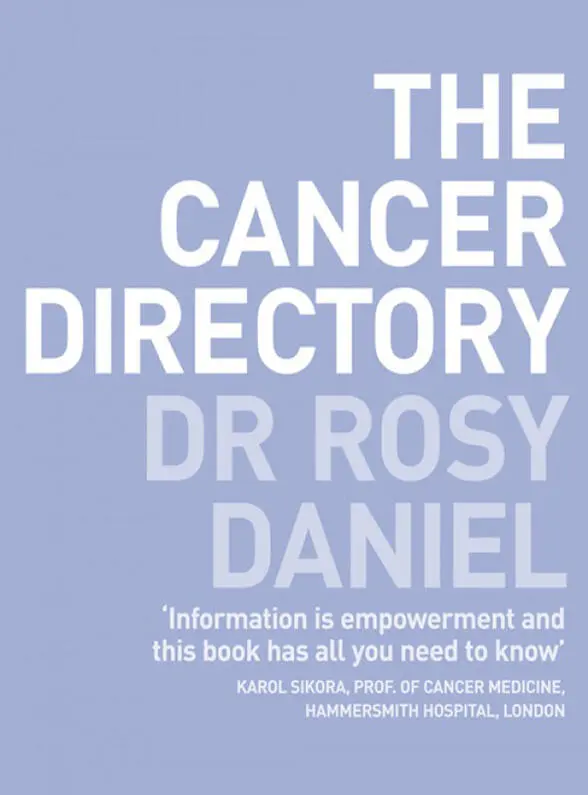
- Название:The Cancer Directory
- Автор:
- Жанр:
- Год:неизвестен
- ISBN:нет данных
- Рейтинг книги:3 / 5. Голосов: 1
-
Избранное:Добавить в избранное
- Отзывы:
-
Ваша оценка:
The Cancer Directory: краткое содержание, описание и аннотация
Предлагаем к чтению аннотацию, описание, краткое содержание или предисловие (зависит от того, что написал сам автор книги «The Cancer Directory»). Если вы не нашли необходимую информацию о книге — напишите в комментариях, мы постараемся отыскать её.
The Cancer Directory — читать онлайн ознакомительный отрывок
Ниже представлен текст книги, разбитый по страницам. Система сохранения места последней прочитанной страницы, позволяет с удобством читать онлайн бесплатно книгу «The Cancer Directory», без необходимости каждый раз заново искать на чём Вы остановились. Поставьте закладку, и сможете в любой момент перейти на страницу, на которой закончили чтение.
Интервал:
Закладка:
• Do not sign the consent form to surgery unless you fully understand what is being proposed and the potential long-term side-effects.
• Make sure you are prepared physically, psychologically and practically before you undergo the operation (see Chapter 7).
If you are told your tumour is inoperable, you should certainly consider getting a second or even a third opinion. There may be a great variance in opinion, depending on the particular surgeon’s skill and experience, and certain hospitals specialize in certain types of cancer. You may find a surgeon who is specialized in your particular type of cancer and is highly skilled in removing difficult tumours. For example, some neurologists will operate to remove bony secondary tumours from the spine and reconstruct the vertebra using a titanium prosthesis whereas, in other places, only radiotherapy is on offer. Your scans and X-rays can also be sent to specialists in other countries for their opinion of the possible surgical help for more complex tumours.
Following Surgery
If your tumour has been completely removed and no spreading to other tissues is detected, you may not need follow-up treatment. However, you will usually be offered either or both radiotherapy and chemotherapy, as well as hormone therapy if your tumour is hormone-dependent.
Radiotherapy
Radiotherapy uses ionizing radiation in the form of X-rays to treat cancer. Wilhem Roentgen discovered X-rays in 1895. Within a year, they were being used in the treatment of cancer. We have come a long way since then, and radiotherapy for cancer treatment is now incredibly sophisticated. Often, radiotherapy is given to effect a complete cure – called radical radiotherapy. Alternatively, it can be used after surgery to ‘mop up’ any stray cancer cells persisting around the operation site. Another important use of radiotherapy is for symptom control in palliative care.
Types of Radiotherapy
The most common type of radiotherapy is the use of an external radiation source produced by a linear accelerator, a large machine that delivers a precise dose of radiation to a particular site of the body. An alternative form uses internal radiation, where a radioactive source – such as radioactive needles or ‘seeds’ – is temporarily placed in the part of the body affected by tumour, such as the womb or prostate gland.
Different types of X-rays are used as each has a different level of penetration. Laboratory evidence tells us that radiotherapy works by damaging DNA in the nucleus of rapidly dividing cells. The DNA molecule has a particular sequence, creating a vital code for proteins that have important functions both inside and outside the cell. Radiation breaks the ‘backbone’ of the DNA molecule so that, when the strands join back together, the coding sequence is altered, resulting in the cell’s death. It only affects cells that are reproducing, which is why radiotherapy is given in multiple doses – to catch the cells at different phases of their growth cycle.
Radiotherapy damages cancer cells whereas normal tissue is usually able to repair itself. We have learned how to exploit this difference, and establish a balance between destroying cancer cells while causing minimal damage to normal tissues. Also, the delivery systems for radiation are now so precise that it is almost possible to irradiate only the tumour. However, if the individual survives for some time after radiotherapy, it is possible for a new, different second cancer to arise as a result of the radiotherapy treatment.
The Radiotherapy Process
A consultant radiotherapist will be in charge of your radiotherapy treatment and will help with decision-making. So, discuss any problems or questions you have with him. When receiving radiotherapy, the radiographers who deliver the treatment will see you on a daily basis. They are an excellent source of information and can often be far more helpful than the consultant. Despite a lot of adverse publicity, radiotherapy is a remarkably safe form of treatment. There are clear guidelines for the calibration of the machines, and it is a legal requirement that the machines be frequently checked.
Having decided on radiotherapy, the next part of the process is the planning. This is usually done on a machine called a ‘simulator’, which simulates your treatment on the X-ray therapy machine to set up the exact position of the intended treatment. The area to be treated is marked on your skin with an indelible pen so that the markings last throughout the treatment period. However, if the areas are complicated or where marks are unsightly or less likely to stay put, a perspex shell can be contoured to fit your body precisely and act as a marker. This shell can also prevent even the slightest movement during treatment so that the X-ray beam only strikes those tissues it is supposed to hit. If intended for the head, holes are cut out of the shell to leave your eyes, nose and mouth uncovered.
As no two individuals are the same, do not be alarmed if you compare notes with others and find that your radiotherapy is different from theirs. There are all sorts of reasons for this. If you are at all worried, question the radiographers during one of your visits or ask to see the consultant oncologist who has planned your treatment.
Different centres may use different machines, with larger centres having a wider choice for more specialized treatments. But it may be appropriate to be treated at a small centre nearer home to cut down on the hours spent travelling to and from the hospital each day. Once again, a relative-benefit evaluation needs to be done, involving both you and your doctor.
If the most important aspect of treatment is the cosmetic result, then this may necessitate a lengthier treatment using a relatively lower dose to avoid long-term skin damage from the radiation. However, if the final appearance is not of concern and the area being treated is very small, it may be possible to have a shorter course of radiotherapy using a higher dose. Radiotherapy treatment is flexible, and it is important that the patient makes his needs apparent at the outset so that the consultant can tailor the treatment appropriately.
New research by Professor Kedar N. Prasad in the US has shown that, far from potentially diminishing the effectiveness of chemo-and radiotherapy, high-dose vitamin and mineral therapy can potentiate both forms of treatment. This is because the abnormal tumour cells become more vulnerable after having taken up high levels of antioxidants (see Chapter 5).
Side-effects of Radiotherapy
A full description of remedies to reduce the side-effects of radiotherapy are found in Chapter 7.
Fatigue and Nausea
One side-effect that many people experience during their radiotherapy treatment is general fatigue and nausea. This is thought to be due to:
• your body having to work harder as cells are destroyed
• the toxicity of the radiation
• the disruption to your body’s natural energy fields.
So, you should not be at all surprised if you need an extra two or three hours of sleep every day, and spiritual healing to lift your energy and spirits. See Chapter 7 for ways to help your body cope with this treatment with the help of homoeopathic remedies and acupuncture, which releases the stored heat and energy radiotherapy causes.
Nausea may be experienced at the beginning of treatment, but this should gradually improve with time. This may occur especially when a large part of the body is being treated, and is particularly common during radiotherapy to the abdomen, although it may also arise when having treatment to nearby areas.
Читать дальшеИнтервал:
Закладка:
Похожие книги на «The Cancer Directory»
Представляем Вашему вниманию похожие книги на «The Cancer Directory» списком для выбора. Мы отобрали схожую по названию и смыслу литературу в надежде предоставить читателям больше вариантов отыскать новые, интересные, ещё непрочитанные произведения.









Обсуждение, отзывы о книге «The Cancer Directory» и просто собственные мнения читателей. Оставьте ваши комментарии, напишите, что Вы думаете о произведении, его смысле или главных героях. Укажите что конкретно понравилось, а что нет, и почему Вы так считаете.