J. Steers - The Sea Coast
Здесь есть возможность читать онлайн «J. Steers - The Sea Coast» — ознакомительный отрывок электронной книги совершенно бесплатно, а после прочтения отрывка купить полную версию. В некоторых случаях можно слушать аудио, скачать через торрент в формате fb2 и присутствует краткое содержание. Жанр: unrecognised, на английском языке. Описание произведения, (предисловие) а так же отзывы посетителей доступны на портале библиотеки ЛибКат.
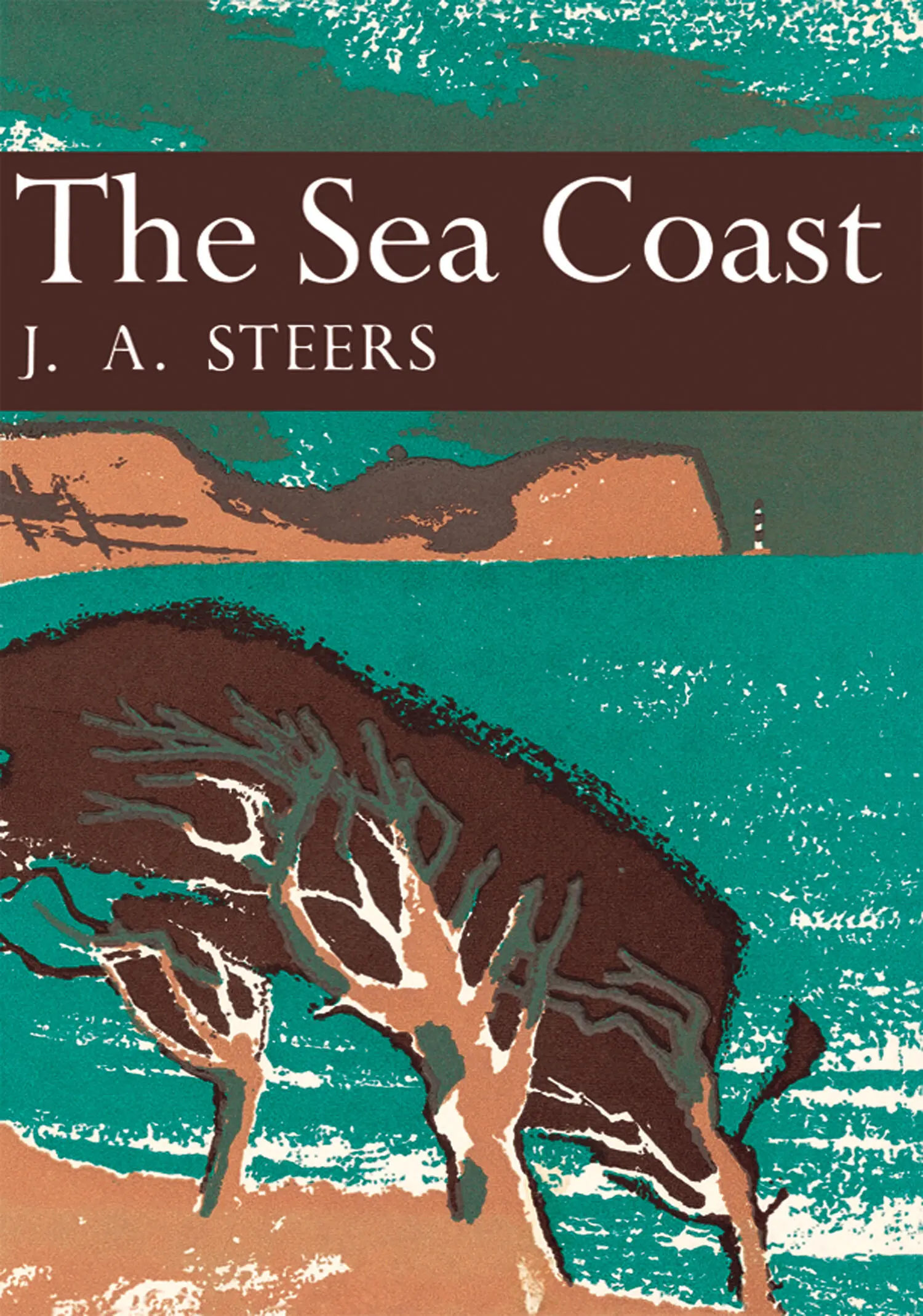
- Название:The Sea Coast
- Автор:
- Жанр:
- Год:неизвестен
- ISBN:нет данных
- Рейтинг книги:4 / 5. Голосов: 1
-
Избранное:Добавить в избранное
- Отзывы:
-
Ваша оценка:
The Sea Coast: краткое содержание, описание и аннотация
Предлагаем к чтению аннотацию, описание, краткое содержание или предисловие (зависит от того, что написал сам автор книги «The Sea Coast»). Если вы не нашли необходимую информацию о книге — напишите в комментариях, мы постараемся отыскать её.
The Sea Coast — читать онлайн ознакомительный отрывок
Ниже представлен текст книги, разбитый по страницам. Система сохранения места последней прочитанной страницы, позволяет с удобством читать онлайн бесплатно книгу «The Sea Coast», без необходимости каждый раз заново искать на чём Вы остановились. Поставьте закладку, и сможете в любой момент перейти на страницу, на которой закончили чтение.
Интервал:
Закладка:
Coasts formed mainly or wholly of rocks of igneous origin differ greatly not only from those formed of stratified rocks, but also amongst themselves. This is largely because there is a wide variety of igneous types, but still more because these rocks occur in many different ways. There is, for example, no similarity between the granite coast of Land’s End and the tuffs and agglomerates associated with the old volcanic vents on the coasts of the Firth of Forth,
Magnificent examples of shore forms associated with lava flows, dykes, and sills are seen in the western islands of Scotland. In south Arran the country rock (Triassic sandstone) is pierced by numerous vertical dykes which run out from the cliffs across the beach as a series of low ridges from a foot or two up to several yards in width. Since they are usually harder than the rocks they intrude, the dykes stand above the general level of the beach, but here and there the converse occurs. They may act rather like groynes, and sometimes trap material travelling along the beaches. It is plain on Fig. 13, that these dykes are part of a great system associated with five main centres in western Scotland—Skye, Rum, Ardnamurchan, Mull, and Arran—and other centres in north-eastern Ireland. Detailed geological maps show numerous dykes along certain tracts of coast (see Fig. 14).
Whereas the dykes give great character to the shore platform, they also play some part in the configuration of the cliffs. Often they form great buttresses, sometimes they make re-entrants. They may reach to the top of the cliffs. But the great lava flows and interbedded agglomerates are the features which commonly play the greatest role in cliff scenery in the wholly volcanic areas. Many excellent examples occur. In Canna, the high cliffs at Compass Hill are formed of bedded tuffs and agglomerates alternating with sheets of columnar dolerite. The north coast of Canna is faced by a line of black and nearly perpendicular cliffs. Unfortunately their northern aspect obscures their beauty. The whole island consists of lavas and sills, and a line of fine cliffs also faces west. The other parts of the coast are lower. The bright green appearance of the interior, the lines of interior cliffs and the frequency of columnar structures, make this small island most attractive. Muck is generally similar (Fig. 12).
Eigg, too, presents some striking features. The northern part, indeed nearly the whole island, is formed of basaltic lavas. In the north they rest on Jurassic sediments which give grassy slopes and make the lower ground around Cleddale. The north-east is thus a high plateau, sloping upwards to the north, and breaking off to the west, north, and east very abruptly.
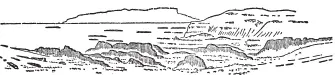
FIG. 12 Dykes on the Coast of Muck. (After A. Harker)
The great lava flows, often markedly columnar, give a strongly terraced appearance to the island. Along the east coast steep slopes reach sea level, but there are no true erosion cliffs. The Sgurr is the most spectacular feature of the island. From the north it appears as a great perpendicular monolith. By sailing round the island one can obtain a reasonable appreciation of this interesting feature. It is a long line of whitish rock running parallel with the south coast, and ending in fine abrupt precipices to the southwest. It is a great sheet of pitchstone, the origin of which is still debatable. Harker concluded it was an intrusion, whereas Sir A. Geikie, and more recently Sir E. B. Bailey, consider it as a series of subaerial lava flows filling a valley eroded in the basalts (Fig. 15).
In western Skye are some of the finest precipitous cliffs in lava in these islands. At Talisker the flows vary from 6 or 8 feet to 40 feet in thickness. At Dunvegan Head, about 1000 feet high, there are at least 25 sheets averaging about 40 feet thick. Perhaps the best development of a basaltic coast occurs between Loch Bracadale and Loch Brittle.
FIG. 13 Igneous Rocks in the Western Isle and mainland of Scotland (Based on Geological Survey)
In this stretch the basalts descend below sea level and give rise to a great range of precipitous cliffs, often nearly vertical, and ranging from 500 to even 900 feet high, the maximum being reached at Beinn nan Caithearn. Since the cliffs are formed of lava flows and sills, they bear a close resemblance to stratified rocks. The sills, which are markedly cross-jointed, are here no more resistant than the lavas, and so the whole shows one great face.
On the eastern coast of Skye the Jurassic rocks are below the basalts. But the great sills, often exceeding 100 feet in thickness, which penetrate these rocks, also strengthen them, and allow them to form prominent cliffs. The higher basalts often form another, inner line of cliffs, behind, and roughly parallel to the actual sea cliffs. The varying thickness of the sills, their inclination and their local frequency give much variety to the scenery. In general, the sills are harder than the lavas, and so they stand salient.
If in any locality the inclination of the sills is but slight, flat-topped hills may be formed. MacLeod’s Tables, west of Dunvegan, illustrate this. If a sill is steeply inclined, and divides the summits into sharp steps where columnar jointing is marked, a vertical element enters into the scenery, and often in such places detached masses and pinnacles stand out from the general line of the cliffs. Sometimes this is also true of dykes, but very often in Skye the dykes weather more rapidly into hollows. This is not because they are formed of softer rock, but, in Harker’s opinion, because of the vertical posture which makes attack easier; “and this is most markedly the case where a multiple dyke has presented several vertical planes of weakness … in a short space. Any tendency to a platy fracture in an undivided dyke tells in the same sense, and the much commoner cross-jointing also facilitates disintegration by allowing the dyke to divide into little horizontal prisms which are easily removed.” 1
Probably the best-known example of columnar lava in western Scotland is at Fingal’s Cave on Staffa. The lava in the cave and along much of the west coast of the island is underlain by a red ash, and at Meallan Fulaan it passes under other basaltic flows. At Fingal’s Cave the lava is divisible into three parts; a bottom zone of massive columns, a middle zone of thin rather wavy columns, and a top zone largely composed of slag. Both sets of columns are clearly visible, and there is no line of separation in the basalt. Not far away, at Rudha na h’Uamha in western Mull, there are beautiful exposures in the cliffs of lava flows showing columnar structure.
FIG. 14 Part of the South Coast of the Ardnamurchan Peninsula. (Based on Geological Survey)
These lavas invaded a forest, for in more than one instance there are trees preserved in the lavas or breccias. “An actual tree trunk was discovered by Macculloch embedded in lava along the coastal cliffs south-west of the wilderness …. The trunk is represented by a cast infilled with ‘white trap’ (i.e. bleached basalt) and charred wood, five feet across and forty feet in height. It stands erect, surrounded by a remarkable columnar basalt.” 1 The horizontal element in the scenery of much of the island of Mull is perhaps best appreciated from a ship, but the views seawards from the high ground near Dervaig also emphasise it. The view across the Sound of Iona looking toward the north-western corner of the Ross of Mull, with Ardmeanach and Ben More also in sight, is an instructive one in the way it illustrates the effect of different types of rock on scenery. The foreground of Lewisian Gneiss, the pinkish granite east of the Sound, the glaciated granite knobs, the horizontal nature of the basalt country, and the great volcanic pile of Ben More are unforgettable.
Читать дальшеИнтервал:
Закладка:
Похожие книги на «The Sea Coast»
Представляем Вашему вниманию похожие книги на «The Sea Coast» списком для выбора. Мы отобрали схожую по названию и смыслу литературу в надежде предоставить читателям больше вариантов отыскать новые, интересные, ещё непрочитанные произведения.




Обсуждение, отзывы о книге «The Sea Coast» и просто собственные мнения читателей. Оставьте ваши комментарии, напишите, что Вы думаете о произведении, его смысле или главных героях. Укажите что конкретно понравилось, а что нет, и почему Вы так считаете.