J. Steers - The Sea Coast
Здесь есть возможность читать онлайн «J. Steers - The Sea Coast» — ознакомительный отрывок электронной книги совершенно бесплатно, а после прочтения отрывка купить полную версию. В некоторых случаях можно слушать аудио, скачать через торрент в формате fb2 и присутствует краткое содержание. Жанр: unrecognised, на английском языке. Описание произведения, (предисловие) а так же отзывы посетителей доступны на портале библиотеки ЛибКат.
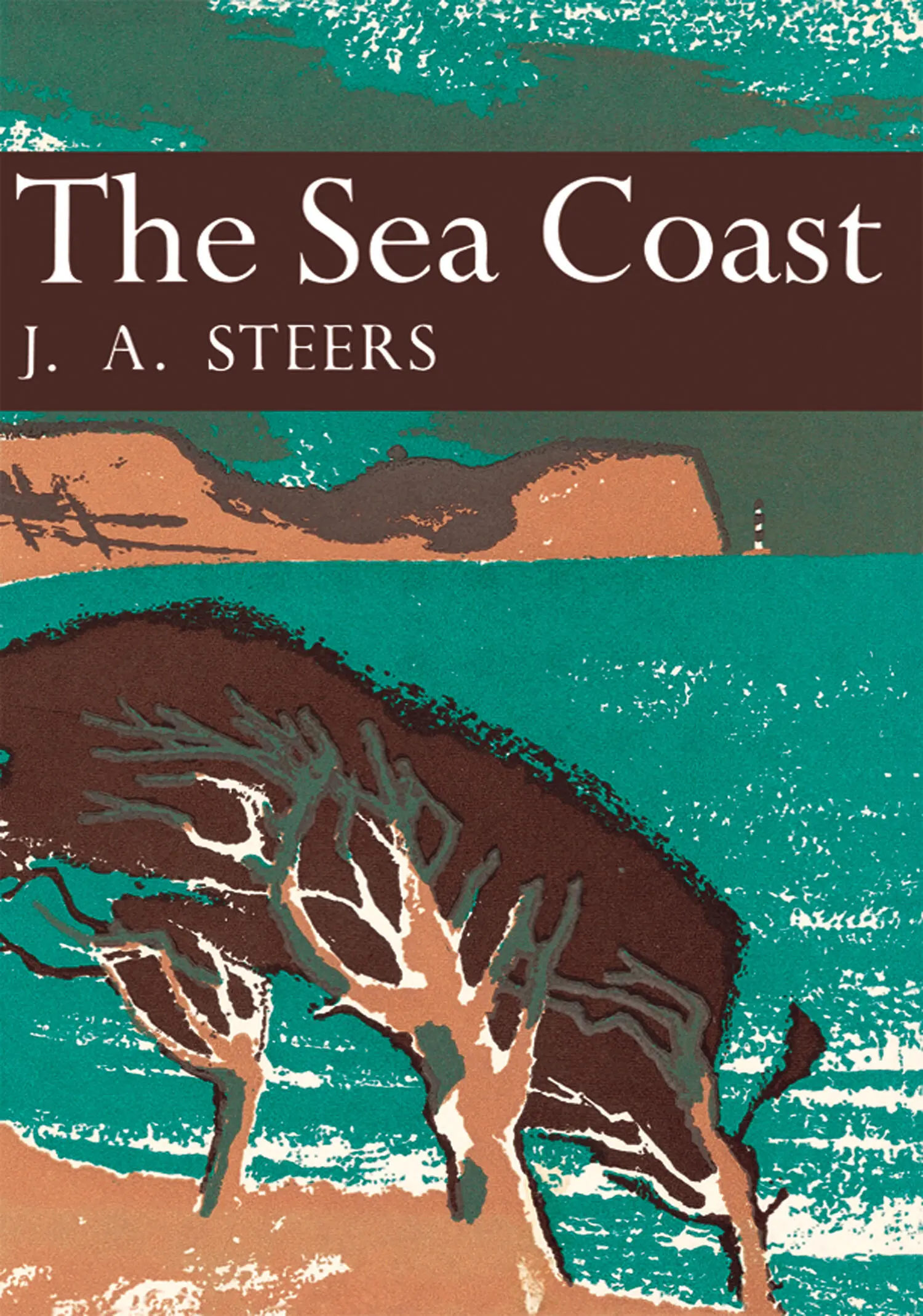
- Название:The Sea Coast
- Автор:
- Жанр:
- Год:неизвестен
- ISBN:нет данных
- Рейтинг книги:4 / 5. Голосов: 1
-
Избранное:Добавить в избранное
- Отзывы:
-
Ваша оценка:
The Sea Coast: краткое содержание, описание и аннотация
Предлагаем к чтению аннотацию, описание, краткое содержание или предисловие (зависит от того, что написал сам автор книги «The Sea Coast»). Если вы не нашли необходимую информацию о книге — напишите в комментариях, мы постараемся отыскать её.
The Sea Coast — читать онлайн ознакомительный отрывок
Ниже представлен текст книги, разбитый по страницам. Система сохранения места последней прочитанной страницы, позволяет с удобством читать онлайн бесплатно книгу «The Sea Coast», без необходимости каждый раз заново искать на чём Вы остановились. Поставьте закладку, и сможете в любой момент перейти на страницу, на которой закончили чтение.
Интервал:
Закладка:
Is there, then, any foundation for the inundation legend? Certain facts are important. The sarns are natural features; at Borth and other places there are submerged forests indicating changes of level; this and the existing distribution of boulder clay on and near the coast clearly imply that much of Cardigan Bay was a low lying boulder clay plain before a geologically recent subsidence or submergence took place.
Somehow or other it seems that a tale of a former land in Cardigan Bay has come down to us from remote antiquity, and it is one of many similar tales. “The numerous interesting features which these tales have in common seem to suggest the existence in past times of people who were supposed to live in lakes, were small of stature, disliked iron, possessed few articles of furniture, had not learnt the art of making bread, disliked the greensward being broken up by the plough, were successful in tending animals, had a limited ability to count, and probably used a language of their own which no-one else understood. They appear also to have reckoned descent in the female line. If this suggestion is accepted, these characteristics are consistent with a pastoral people in a primitive state of culture, who were not acquainted with the use of iron, but who attributed great importance to stocks of cattle, sheep and goats, and knew little or nothing about tilling the ground and the growing of corn.” 1
This description might well apply to the Bronze Age people, whose pile-dwellings make clear their intimate association with lakes. The later Iron Age peoples, with better weapons, must have frightened the earlier inhabitants. An anthropological investigation of Central Wales has revealed that a short, dark, and rather long-headed people are associated with remote hill lands, in fact in places where traces of Neolithic man are still common. In the Mawddach valley, around Towyn and in other places is another type. In these places Bronze Age pottery is found. The distribution of these people suggests they came later than the dark hill folk. Later still came the iron using people.
It is, therefore, possible that the folk tales, a better description than legends, go back at least as far as the early contacts of the Iron Age people with the peoples already living in Wales, or it may even be that the tales date from the remoter past when the Bronze Age and Neolithic peoples were first in contact.
There is little doubt (see Chapters 8and 9) that in or before the Neolithic period the boulder clay reached some distance out into Cardigan Bay as a low-lying plain through which the rivers pursued winding, sluggish courses. The post-glacial rise of sea level included the Neolithic period, but probably ceased fairly soon after it. It is likely that the submergence was wholly or nearly complete in the Bronze Age. It has been argued with conviction that many of the present inhabitants of Wales are the direct descendants of Neolithic man, and it is at least possible that their remote ancestors actually witnessed the drowning of the coastal plain. In short, we may have in the legend of Cantref y Gwaelod the gist of a folk tale that has been handed down from a very remote period of human history.
One final word: the sarns are formed of boulders that were contained in the boulder clay; there is no reason whatever for ascribing their formation to any human element. It is, however, difficult to account for their long and narrow shape. Sarn Badrig and Sarn Cynfelin occur about mid-way between river mouths, thus suggesting the idea that they are in some way continuations of the watersheds between adjacent streams.
1 For recent information on Holderness I have made considerable use of an unpublished report, 7 July 1947, by G. M. Hines and C. Pinsent, Research officers to the Ministry of Town and Country Planning (Leeds), and shown to me by the kindness of the Regional Controller.
1 The Lost Towns of the Yorkshire Coast,” 1912, p. 42.
2 It was later removed.
3 Letter 10.9.1948 from the County Planning Officer (Norfolk) to the Regional Controller, Ministry Town and Country Planning, Cambridge.
4 The figures are kindly given to me by the Cambridge office of the Ministry of Town and Country Planning.
1 Partly from a plan prepared by F. W. S. Stanton about 1908, and further details from information supplied to the Ministry of Town and Country Planning (Tunbridge Wells), and passed to me by Mr. H. R. Wardill.
1 Based on information given to me by the Department of Health for Scotland.
2 Halophytes are plants which will live in soils containing an appreciable amount of common salt or of other organic salts.
1 C. P. Petch, Reclaimed Lands of West Norfolk, Trans. Norf. Norw. Nat. Soc. 16, 1945, 106.
2 A. G. Tansley, The British Islands and their Vegetation, 1939, p. 828.
1 Royal Commission on Coast Erosion and Afforestation: Final Rept. p. 135, para. 49.
1 V. B. Redstone, Memorials of Old Suffolk, Ch. XII. (The italics are mine, J.A.S.).
1 An account of the historical fluctuations of the bar of the river Findhorn, on the Moray Firth, is given on page 143. All river harbours deflected by a sand or shingle bar have similar stories, but the examples given are sufficient to illustrate the general subject.
2 Arch. Cambrensis, June, 1933.
1 L. S. Higgins, op. cit.
2 A Cornish Legend: the Three Churches of Perranzabuloe. Truro, City Printing Works, 1923. Dr. N. J. G. Pounds put me in touch with various sources dealing with coastal sand areas in Cornwall.
1 The English Martyrologe, 1608, p. 116.
1 F. J. North, Supplement to the Llandudno, Colwyn Bay and District Field Club Proceedings, Llandudno, 1940.
1 O. T. Jones, The Welsh Outlook, January, 1941.
CHAPTER 4
THE COAST IN PROFILE AND PLAN
BEFORE discussing particular stretches of coastline formed by rocks of various types, a general review of the nature of cliffs and of the shore profile is desirable.
Let us assume that the sea comes to rest against the land at a certain level, and that that level remains unchanged for a long period of time. What will happen depends on a variety of factors, and to make the matter clear it will be convenient to discuss certain special conditions.
If the land is formed of soft rocks and is low and flat, the waves will begin to cut a slight notch in it. The notch implies a cliff and a platform, which develop concurrently. If the initial slopes of the land are gentle, the cliffs are not likely to attain any great height, but the platform can widen considerably. But in order that it may widen, it must also slope seawards. In the early stages the cliff and platform are insignificant, and only those waves reach the cliff foot which can traverse the shallow water off shore. With the increasing width of the platform, the waves crossing it lose much of their power. At the same time the larger storm waves will break near the outer edge of the platform and gradually wear it down, thus enabling other waves to traverse it. A factor of great importance in this connection is the tidal range. At high tide the platform may be covered by several feet of water and the waves can run over it and erode the cliff. At low tide the platform may be wholly or partly exposed. This statement immediately poses a difficult question. At what level are platforms cut? There is no definite answer to this, and the difficulty is not lessened if we consider cliffs and platforms around our own coasts, because it is not always clear that they are entirely the product of present-day conditions—in fact we may be reasonably certain that they often have a long and complicated history associated with former shifts of sea level.
Some writers argue that platforms are cut mainly at and near high water. In order to think about this matter it is advisable to disregard any existing platforms and consider what might happen in an ideal case. Suppose in Figure 9 AB represents average high-water level, and CD average low-water level. (This in itself is an improper simplification, since in a tidal cycle all levels between these two selected ones, as well as some above or below them, are reached). It is clear that the waves can erode effectively at all levels between the two lines. In early stages we may probably assume somewhat irregular erosion, but since it is only at and near the time of high water that the higher levels can be attacked, it is plain that erosion near the AB level is associated with high water. But at low water all or nearly all above the CD level is exposed and cannot then be eroded by the waves. With the rise of the tide, waves, at first small, but gradually increasing with the increasing depth of water, can traverse the slope DB and it seems likely that the most effective erosion of this slope must take place, other things being equal, at and about high water.
Читать дальшеИнтервал:
Закладка:
Похожие книги на «The Sea Coast»
Представляем Вашему вниманию похожие книги на «The Sea Coast» списком для выбора. Мы отобрали схожую по названию и смыслу литературу в надежде предоставить читателям больше вариантов отыскать новые, интересные, ещё непрочитанные произведения.




Обсуждение, отзывы о книге «The Sea Coast» и просто собственные мнения читателей. Оставьте ваши комментарии, напишите, что Вы думаете о произведении, его смысле или главных героях. Укажите что конкретно понравилось, а что нет, и почему Вы так считаете.