J. Steers - The Sea Coast
Здесь есть возможность читать онлайн «J. Steers - The Sea Coast» — ознакомительный отрывок электронной книги совершенно бесплатно, а после прочтения отрывка купить полную версию. В некоторых случаях можно слушать аудио, скачать через торрент в формате fb2 и присутствует краткое содержание. Жанр: unrecognised, на английском языке. Описание произведения, (предисловие) а так же отзывы посетителей доступны на портале библиотеки ЛибКат.
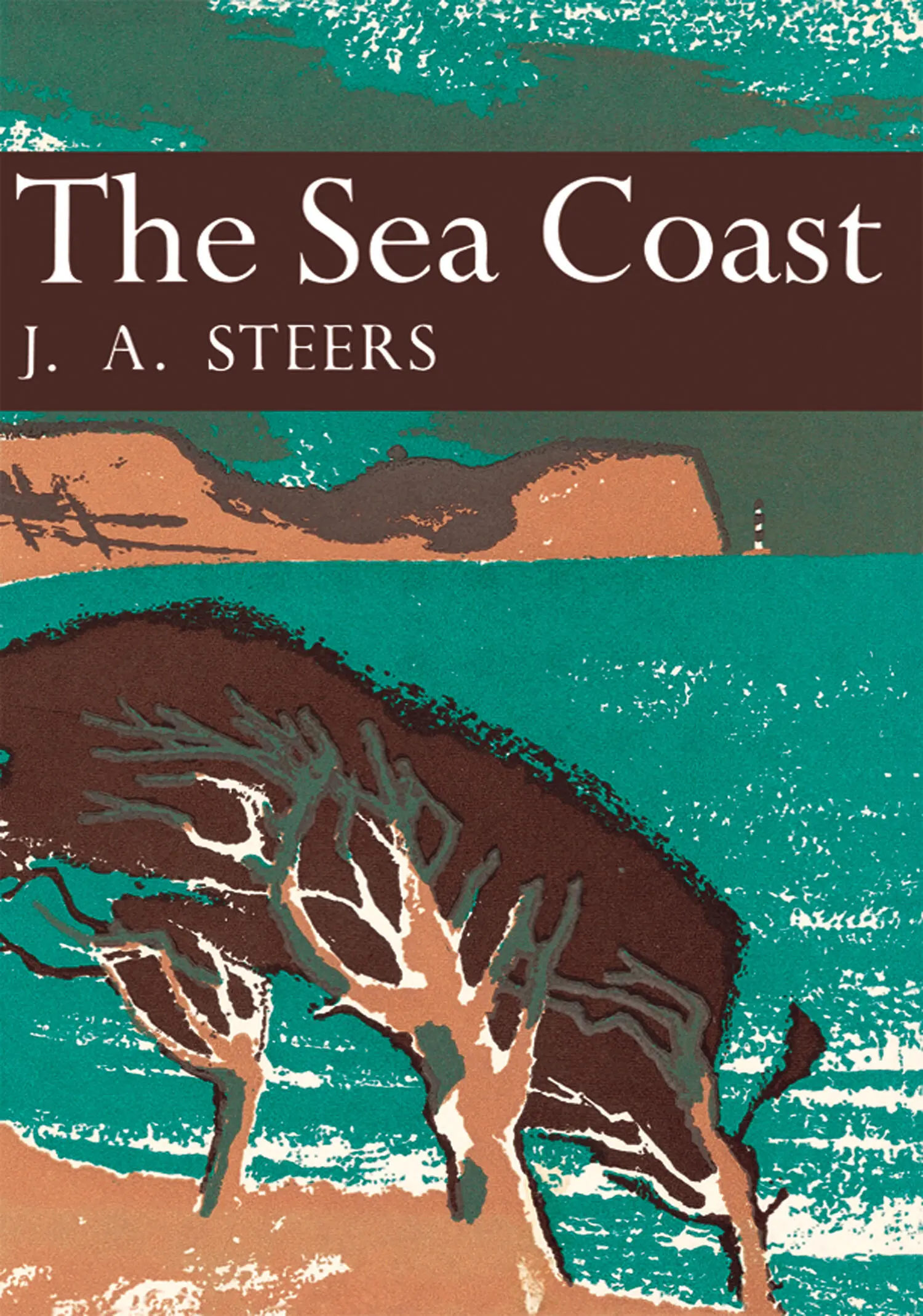
- Название:The Sea Coast
- Автор:
- Жанр:
- Год:неизвестен
- ISBN:нет данных
- Рейтинг книги:4 / 5. Голосов: 1
-
Избранное:Добавить в избранное
- Отзывы:
-
Ваша оценка:
The Sea Coast: краткое содержание, описание и аннотация
Предлагаем к чтению аннотацию, описание, краткое содержание или предисловие (зависит от того, что написал сам автор книги «The Sea Coast»). Если вы не нашли необходимую информацию о книге — напишите в комментариях, мы постараемся отыскать её.
The Sea Coast — читать онлайн ознакомительный отрывок
Ниже представлен текст книги, разбитый по страницам. Система сохранения места последней прочитанной страницы, позволяет с удобством читать онлайн бесплатно книгу «The Sea Coast», без необходимости каждый раз заново искать на чём Вы остановились. Поставьте закладку, и сможете в любой момент перейти на страницу, на которой закончили чтение.
Интервал:
Закладка:
FIG. 9 Cutting of Platforms
The bigger waves can attack it in its outer parts and gradually wear it down, and smaller but still effective waves can traverse it and attack the cliff in the rear. In ordinary conditions the waves need not be large and can travel over it easily: the differentiation in the size of the waves really only applies to the contrast between storm and normal conditions—but it is under storm conditions that the real work of erosion is so often accomplished.
It may, however, be argued that platforms are more easily cut below average low water level. It is true that below this somewhat arbitrary level the sea floor is nearly always covered with water and therefore in a position to suffer erosion. Moreover, at high water, the bigger waves can travel over it and add their quota to the erosion that takes place at (and near) low water. This may be true, but simple low water erosion presumably implies that the cliff foot should begin at that level and, except in so far as beach deposits may obscure it, at high water the cliff foot should be well submerged.
Since we are uncertain about the levels at which platforms are cut, we must either ignore, or at least refer with care, to those around our own coasts, so that we do not beg the question. However, it is likely that in soft rocks existing platforms are largely, perhaps wholly, the result of present conditions, e.g. the Garstone platform off Hunstanton and the Chalk platform around parts of Kent and Sussex. If that assumption is correct, it is almost certain that the effective cutting takes place only above mean sea level and especially near the time of high water. Low water cutting of many existing platforms at springs is impossible, and even at neaps is negligible.
Another point demands consideration by field workers. If it is assumed that an existing platform is of present-day origin and is formed mainly by waves at high water, is there any reason for thinking that waves at low water are forming a lower platform at the seaward front of the visible one? Or are waves at low water, or at mean sea level, merely rounding off the edge of this flat? These are easy questions to ask, but so far there appears to be no conclusive answer.
This digression has taken us away from our original theme. Suppose the sea comes to rest against a strip of coast of hard rocks, and suppose that the land slopes steeply into deep water. The waves will cut a notch—but how? On the previous pages a soft rock coast is assumed and in consequence there would be plenty of fine material, mud, sand, and small stones, with which the waves could attack the cliff and platform. It is true that the direct attack of the waves on a hard coast may be considerable, but it will only be so if the rocks attacked are much weathered or riddled with holes, clefts, and crannies in which the air can be suddenly compressed and released and so lead to fracture of the rocks. Waves, without sand and other ammunition, which are attacking a hard rock coast sloping steeply into deep water will have but little effect. They are reflected back from the coast, and owing to the rise and fall of the tides, to say nothing of the variability in size of the waves, the rocks are attacked through a considerable vertical range, and NOT just along a narrow strip. Thus, there is no very good reason why a notch, gradually giving way to a narrow platform and small cliff, should be formed unless conditions remain static for a long period of time.
This at once provokes the question—what is a cliff? Definitions vary, but the following is from the Shorter Oxford Dictionary: “A high steep face of rock; esp. (now) a steep face of rock on the seashore.” This is a good definition, since it does not specify origin, In the preceding paragraphs, and in many writings on physical geography or geology, sea cliffs usually imply marine erosion. If this is so, we are bound to meet difficulties sooner or later. It is clear that if we associate cliff and platform together, then we must imply that the cliff is an erosion feature. The point, however, is worth making, since it is difficult, perhaps impossible, to avoid ambiguity. We speak quite properly of the cliffs of Torridon Sandstone at, e.g. Handa Island, Point of Stoer, Rhu Coigach, and Greenstone Point, so that it is difficult to avoid speaking in the same (erosive) sense of the steep slopes of the Sound of Sleat or Loch Hourn, neither of which is or has been appreciably affected by marine erosion.
There remain, however, long stretches of the coast of Great Britain fringed by well-developed platforms and backed by fine cliffs. Perhaps the most beautiful examples are seen between Bude and Westward Ho! Many miles of platform, cut out of contorted rocks of varying hardness, are exposed at low water, but covered at high water, at which time erosion of the cliffs, at any rate in times of storm, may be severe. These platforms may be the work of waves at present sea level, but they may equally owe part or even most of their formation to conditions existing when the more recent raised beaches were formed. On the other hand, if the Patella 1 beach is studied in parts of south Cornwall and south Devon it will be noticed that there are often remains of a definite platform, frequently covered by Head. The Patella beach, however, is probably inter-glacial, and if the present rock platforms are not wholly of modern origin, they may perhaps be associated with more recent fluctuations of sea level than those applicable to the Patella beach,
To return, however, to the cliffs. Their form varies with many factors. First of all there is the topography of the original land, which may be flat and low-lying, rugged, rolling, or mountainous. The sea will come to rest against the land at a given level, and the “high steep faces of rock” will depend first on what the land is like. Later marine erosion may modify the original slopes, provided that wave action can be effectively directed toward them.
If waves attack a land formed of more or less horizontal rocks there is the likelihood of nearly vertical cliffs being produced. This is especially noticeable if the various strata are of unequal hardness. Good examples occur at Hunstanton, Lyme Regis, and on the coast of Glamorganshire. If the strata composing the cliff dip seawards, the cliff form is likely to vary greatly in detail. Sometimes it may overhang, but the general slope of the surface above the part directly attacked by the sea may well leave a stronger impression on one’s mind than does the lower part of the cliff, which is likely to be steep. If the strata are inclined away from the coast the cliff slope is as a rule moderate. These simple cases can easily be visualised. In nature the form and structure of cliffs are very variable. Chalk Cliffs (see here) are often nearly vertical independently of their structure. This is presumably the outcome of the effects of marine and subaerial erosion on a rock of great homogeneity, good jointing, and often marked bedding. The profile of the cliffs of north Devon varies a good deal, but is locally steep—immediately north of Hartland Quay there is a range of high and almost vertical cliffs which are made up of sharply folded beds. On the other hand, soft rocks often form steep cliffs. The boulder clay cliffs of Holderness and of north Norfolk, or again around Criccieth and Afon Wen are soft and easily eroded by the waves. For this reason they are undercut and steepened. But local composition and height play their parts. The glacial cliffs near Sheringham are c. 100 feet high and steep, often tumbled, and composed not only of boulder clay, but sand and gravels. The natural angle of slope of these materials, even if partly consolidated, will not allow of verticality. Farther north the lower and, on the whole, more homogeneous Holderness cliffs sometimes approach the vertical.
Читать дальшеИнтервал:
Закладка:
Похожие книги на «The Sea Coast»
Представляем Вашему вниманию похожие книги на «The Sea Coast» списком для выбора. Мы отобрали схожую по названию и смыслу литературу в надежде предоставить читателям больше вариантов отыскать новые, интересные, ещё непрочитанные произведения.











Обсуждение, отзывы о книге «The Sea Coast» и просто собственные мнения читателей. Оставьте ваши комментарии, напишите, что Вы думаете о произведении, его смысле или главных героях. Укажите что конкретно понравилось, а что нет, и почему Вы так считаете.