Phil Rostron - Big Fry - Barry Fry - The Autobiography
Здесь есть возможность читать онлайн «Phil Rostron - Big Fry - Barry Fry - The Autobiography» — ознакомительный отрывок электронной книги совершенно бесплатно, а после прочтения отрывка купить полную версию. В некоторых случаях можно слушать аудио, скачать через торрент в формате fb2 и присутствует краткое содержание. Жанр: unrecognised, на английском языке. Описание произведения, (предисловие) а так же отзывы посетителей доступны на портале библиотеки ЛибКат.
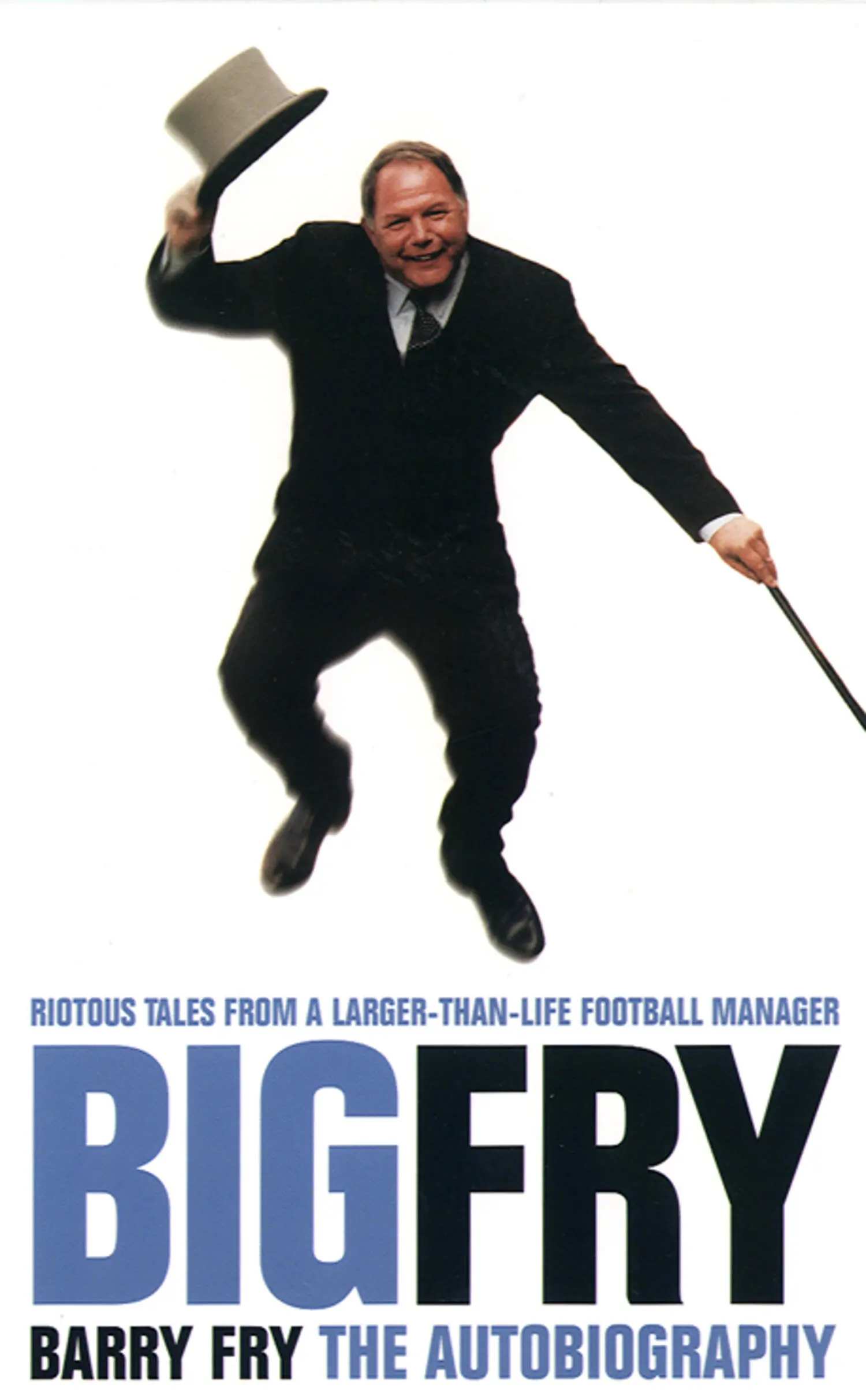
- Название:Big Fry: Barry Fry: The Autobiography
- Автор:
- Жанр:
- Год:неизвестен
- ISBN:нет данных
- Рейтинг книги:5 / 5. Голосов: 1
-
Избранное:Добавить в избранное
- Отзывы:
-
Ваша оценка:
Big Fry: Barry Fry: The Autobiography: краткое содержание, описание и аннотация
Предлагаем к чтению аннотацию, описание, краткое содержание или предисловие (зависит от того, что написал сам автор книги «Big Fry: Barry Fry: The Autobiography»). Если вы не нашли необходимую информацию о книге — напишите в комментариях, мы постараемся отыскать её.
Big Fry: Barry Fry: The Autobiography — читать онлайн ознакомительный отрывок
Ниже представлен текст книги, разбитый по страницам. Система сохранения места последней прочитанной страницы, позволяет с удобством читать онлайн бесплатно книгу «Big Fry: Barry Fry: The Autobiography», без необходимости каждый раз заново искать на чём Вы остановились. Поставьте закладку, и сможете в любой момент перейти на страницу, на которой закончили чтение.
Интервал:
Закладка:
One day I was waiting at the bus stop outside Old Trafford and Matt Busby drew up in his car. He asked me where I was going and when I told him that my destination was Manchester races he said: ‘Jump in.’ I had been having treatment for an injury and the other lads had gone on ahead of me.
‘Do you like racing?’ he asked me.
I told him I loved it.
‘Listen, son,’ he said, ‘it’s like women and it’s like drink. It is fine in moderation, but don’t ever let it get to grips with you.’
It was the best bit of advice anyone had ever given to me … and I took no notice whatsoever.
Since then I have seen so many players who have been paid millions of pounds end up without a pot to piss in. I never had a million pounds to start with, but all through my life gambling has cost me to some extent. Gus Demmy was the top bookmaker in Manchester and I would see him at all the various meetings. I got to know him quite well and in the end he gave me a job chalking up the prices in his main betting office in the afternoons. I never made any wages because I used to do them all behind the counter, but I was in my element. In those days I had a Post Office account from which I was making withdrawals on a regular basis to fund my gambling. It soon whittled down from a few thousand to nothing and it was a frightening experience to look at the opening and closing balances. Even if I won, it was a case of loaning the money from the bookmakers for just a couple of days before I gave it back to them. But I got a great buzz out of it.
When we were abroad with United we used to get a daily allowance of £10, so you only needed to be away for 10 days to have a tidy sum to look forward to. They were in a different league with that kind of perk. The trouble is that once you leave, everything is an anticlimax. Looking back, it is true to say that I stopped working at my game. I ceased to focus. I still played in the reserves, but other, younger players were leapfrogging me. One such player was Willie Anderson. Another was George Best, who went straight from the A team into the first team.
George and I got along great and still do to this day. There have been various occasions on which he has come to my rescue in times of strife and who would have thought that would be the case when as a slight, shy boy he walked into Old Trafford a year behind me? The omens were not very good for George when he became homesick after a day, went back to Belfast and Joe Armstrong pursued him and dragged him back, yet he was the most naturally gifted footballer I had ever laid eyes upon. Despite his lack of size and weight he would beat people for fun in training, which infuriated some players. They would shout: ‘Cross it, get the ball across …’ and they would moan and groan when he didn’t. The boss and Jimmy Murphy would tell them to leave him alone, adding that he would learn with time when to cross. More fuel would be poured onto the fires of his detractors when he would beat four men in a spellbinding mazy dribble, go back for more and then lose the ball. What was clear from the outset was that George had the heart of a lion. For a wiry little kid he had this great strength and determination. He tackled like a full-back. There were some real full-blooded full-backs around in those days, like Roy Hartle and Tommy Banks, but even they would have been proud of the challenges delivered by George. It was like being hit by a double-decker bus. He was a genius. I loved him. His terrible shyness meant that he needed a bit more looking after than most and I was more than happy to help in that direction.
I had been going out with a girl called Judith Fish, which was something of a laugh in itself. Fish meets Fry! If we had got married I don’t think that either of us could have resisted the temptation for her to carry a double-barrelled surname, which is the current vogue for women. Judith’s father Tom, a local big businessman, was a rabid Manchester United fan and I got Denis Law to go along and cut the tape when he opened a garage. All the apprentices were given two complimentary tickets for matches and those not required for friends and family were sold to Tom. It was a few extra quid for the lads and no harm was done. I would buy George’s complimentaries and pass them on to Tom. As everyone knows, George became a star overnight and rightly so. The beauty about George is that he has had so many bad things written and said about him – he can do 99 good things for people and one bad thing will have him on the front, back and middle pages of every newspaper – that while the temptation must have been to lay low he has kept smiling through. He has been brilliant to me, always keeping in touch despite his having reached the dizzy heights and me having never got off the ground in terms of playing careers. The only sad thing about him is his having packed up at the age of 27.
George’s career did not really start to blossom until after I had left Old Trafford in the 1964/65 season. It was to be three more years until their famous victory in the European Cup and he entered the realms of superstardom as ‘El Beatle’. By this time I had gone into management and he was in that surreal world of agents, advisers and hangers-on which was brought about as much by his inability to say no to anyone as people wanting to be associated with him.
To demonstrate just how different class he was, my cousins Karen and Pauline Miller were obsessed, like thousands of other girls, with George and wanted to meet him. Manchester United were playing a night match at Luton at the height of his popularity and, even though I hadn’t seen him for a few years, he greeted me warmly when I went into their dressing room and agreed to see the girls after the game. The lads, meanwhile, were saying: ‘Hey Barry, you still backing those f***ing losers?’ and having a laugh. That’s football for you. George emerged later and greeted Karen and Pauline, who haven’t washed their hands since.
The parting of the ways for me at Old Trafford was, indeed, a sad moment. Just as he had done in much happier circumstances a couple of years previously, Matt Busby called me into his office at the end of April 1965, with my contract due to expire at the end of June. I was 19 and I honestly thought he was going to offer me another contract. All players do. One of the strange things about football is that even if you are a crap player, or even a decent player whose game has turned to crap, you cannot see it yourself. You always think you are better than you are in reality.
‘Barry,’ he said. ‘You haven’t progressed as much as we would have liked you to have done. Other players who were not as advanced as you have now overtaken you.’
He added that Bolton Wanderers had made an approach for me.
‘We won’t charge any money,’ Matt said. ‘We will give you a free transfer so that you can get yourself looked after.’
He urged me to go home and think about it for a day or two, putting me under no pressure, and the following day I went to see Noel Cantwell, the club captain. I told him what had happened and he said: ‘Don’t go to Bolton, go to Southend. I know the manager there, Ted Fenton, who used to be my boss at West Ham. I’ll get in touch with him and give you a glowing report.’ This confused me even more and for a few days I was in a daze. For the first time in my life I felt a failure. Although Matt had not said as much, I felt that Manchester United no longer wanted me and the fact that he was allowing me to talk to other clubs only reinforced this viewpoint.
George Martin, the chief scout at Bolton, came round to my digs and told me that they had permission to talk to me with a view to joining them. United, he said, were going to release me anyway. They were words which felt like daggers through my heart.
Читать дальшеИнтервал:
Закладка:
Похожие книги на «Big Fry: Barry Fry: The Autobiography»
Представляем Вашему вниманию похожие книги на «Big Fry: Barry Fry: The Autobiography» списком для выбора. Мы отобрали схожую по названию и смыслу литературу в надежде предоставить читателям больше вариантов отыскать новые, интересные, ещё непрочитанные произведения.






Обсуждение, отзывы о книге «Big Fry: Barry Fry: The Autobiography» и просто собственные мнения читателей. Оставьте ваши комментарии, напишите, что Вы думаете о произведении, его смысле или главных героях. Укажите что конкретно понравилось, а что нет, и почему Вы так считаете.