Alexandre Dumas - Essential Novelists - Alexandre Dumas
Здесь есть возможность читать онлайн «Alexandre Dumas - Essential Novelists - Alexandre Dumas» — ознакомительный отрывок электронной книги совершенно бесплатно, а после прочтения отрывка купить полную версию. В некоторых случаях можно слушать аудио, скачать через торрент в формате fb2 и присутствует краткое содержание. Жанр: unrecognised, на английском языке. Описание произведения, (предисловие) а так же отзывы посетителей доступны на портале библиотеки ЛибКат.
- Название:Essential Novelists - Alexandre Dumas
- Автор:
- Жанр:
- Год:неизвестен
- ISBN:нет данных
- Рейтинг книги:4 / 5. Голосов: 1
-
Избранное:Добавить в избранное
- Отзывы:
-
Ваша оценка:
Essential Novelists - Alexandre Dumas: краткое содержание, описание и аннотация
Предлагаем к чтению аннотацию, описание, краткое содержание или предисловие (зависит от того, что написал сам автор книги «Essential Novelists - Alexandre Dumas»). Если вы не нашли необходимую информацию о книге — напишите в комментариях, мы постараемся отыскать её.
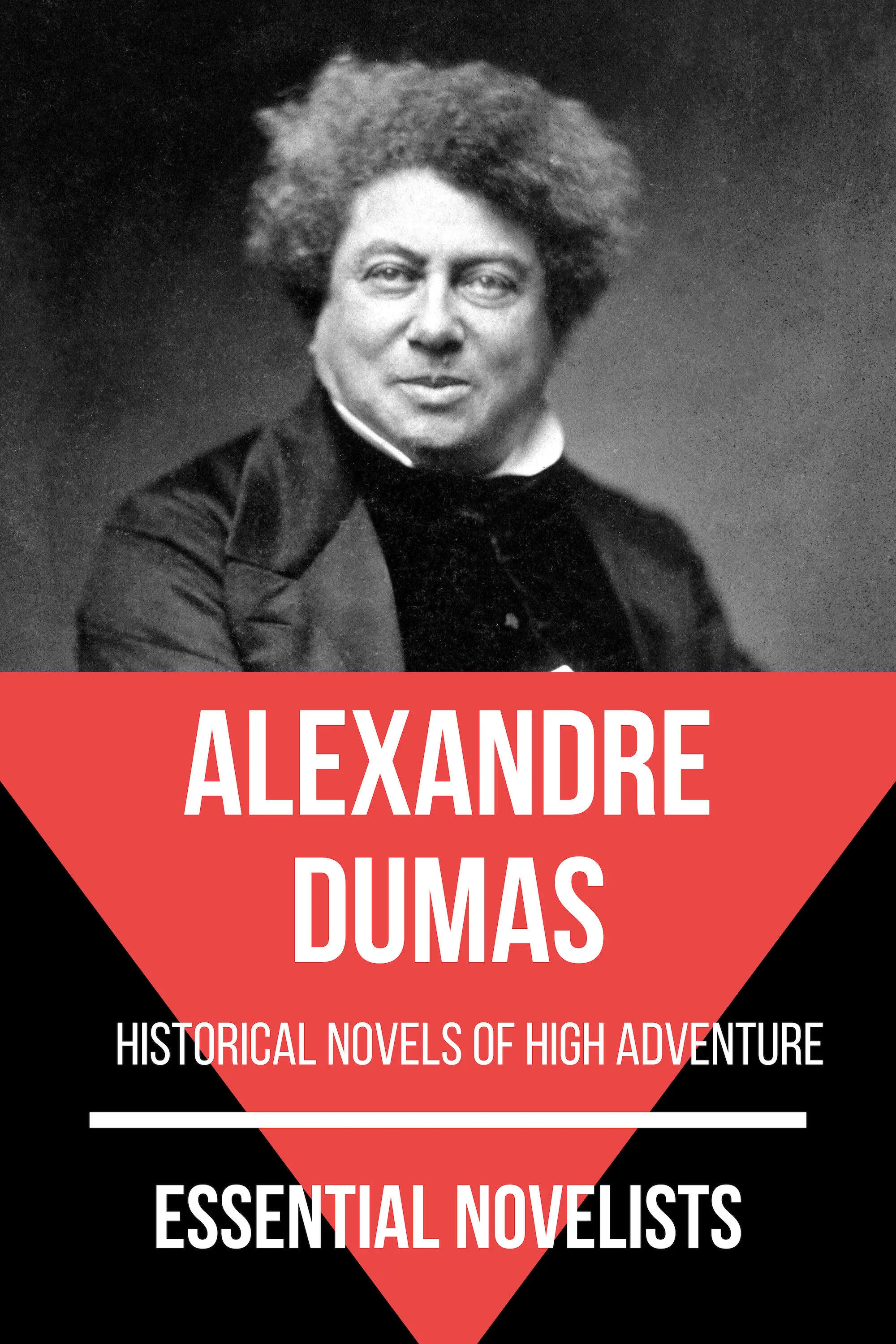
For this book, the literary critic August Nemo has chosen the two most important and meaningful novels of Alexandre Dumas which are The Three Musketeersand The Count of Monte Cristo.
Alexandre Dumas is a celebrated French author best known for his historical adventure novels, including 'The Three Musketeers' and 'The Count of Monte Cristo.'
Novels selected for this book:
– The Three Musketeers
– The Count of Monte Cristo.
This is one of many books in the series Essential Novelists. If you liked this book, look for the other titles in the series, we are sure you will like some of the authors.
Essential Novelists - Alexandre Dumas — читать онлайн ознакомительный отрывок
Ниже представлен текст книги, разбитый по страницам. Система сохранения места последней прочитанной страницы, позволяет с удобством читать онлайн бесплатно книгу «Essential Novelists - Alexandre Dumas», без необходимости каждый раз заново искать на чём Вы остановились. Поставьте закладку, и сможете в любой момент перейти на страницу, на которой закончили чтение.
Интервал:
Закладка:
“Why did you so maladroitly restore me the handkerchief?”
“Why did you so awkwardly let it fall?”
“I have said, monsieur, and I repeat, that the handkerchief did not fall from my pocket.”
“And thereby you have lied twice, monsieur, for I saw it fall.”
“Ah, you take it with that tone, do you, Master Gascon? Well, I will teach you how to behave yourself.”
“And I will send you back to your Mass book, Master Abbe. Draw, if you please, and instantly—”
“Not so, if you please, my good friend—not here, at least. Do you not perceive that we are opposite the Hotel d’Arguillon, which is full of the cardinal’s creatures? How do I know that this is not his Eminence who has honored you with the commission to procure my head? Now, I entertain a ridiculous partiality for my head, it seems to suit my shoulders so correctly. I wish to kill you, be at rest as to that, but to kill you quietly in a snug, remote place, where you will not be able to boast of your death to anybody.”
“I agree, monsieur; but do not be too confident. Take your handkerchief; whether it belongs to you or another, you may perhaps stand in need of it.”
“Monsieur is a Gascon?” asked Aramis.
“Yes. Monsieur does not postpone an interview through prudence?”
“Prudence, monsieur, is a virtue sufficiently useless to Musketeers, I know, but indispensable to churchmen; and as I am only a Musketeer provisionally, I hold it good to be prudent. At two o’clock I shall have the honor of expecting you at the hotel of Monsieur de Treville. There I will indicate to you the best place and time.”
The two young men bowed and separated, Aramis ascending the street which led to the Luxembourg, while d’Artagnan, perceiving the appointed hour was approaching, took the road to the Carmes-Deschaux, saying to himself, “Decidedly I can’t draw back; but at least, if I am killed, I shall be killed by a Musketeer.”
5 THE KING’S MUSKETEERS AND THE CARDINAL’S GUARDS
––––––––
D’ARTAGNAN WAS ACQUAINTED with nobody in Paris. He went therefore to his appointment with Athos without a second, determined to be satisfied with those his adversary should choose. Besides, his intention was formed to make the brave Musketeer all suitable apologies, but without meanness or weakness, fearing that might result from this duel which generally results from an affair of this kind, when a young and vigorous man fights with an adversary who is wounded and weakened—if conquered, he doubles the triumph of his antagonist; if a conqueror, he is accused of foul play and want of courage.
Now, we must have badly painted the character of our adventure seeker, or our readers must have already perceived that d’Artagnan was not an ordinary man; therefore, while repeating to himself that his death was inevitable, he did not make up his mind to die quietly, as one less courageous and less restrained might have done in his place. He reflected upon the different characters of those with whom he was going to fight, and began to view his situation more clearly. He hoped, by means of loyal excuses, to make a friend of Athos, whose lordly air and austere bearing pleased him much. He flattered himself he should be able to frighten Porthos with the adventure of the baldric, which he might, if not killed upon the spot, relate to everybody a recital which, well managed, would cover Porthos with ridicule. As to the astute Aramis, he did not entertain much dread of him; and supposing he should be able to get so far, he determined to dispatch him in good style or at least, by hitting him in the face, as Caesar recommended his soldiers do to those of Pompey, to damage forever the beauty of which he was so proud.
In addition to this, d’Artagnan possessed that invincible stock of resolution which the counsels of his father had implanted in his heart: “Endure nothing from anyone but the king, the cardinal, and Monsieur de Treville.” He flew, then, rather than walked, toward the convent of the Carmes Dechausses, or rather Deschaux, as it was called at that period, a sort of building without a window, surrounded by barren fields—an accessory to the Preaux-Clercs, and which was generally employed as the place for the duels of men who had no time to lose.
When d’Artagnan arrived in sight of the bare spot of ground which extended along the foot of the monastery, Athos had been waiting about five minutes, and twelve o’clock was striking. He was, then, as punctual as the Samaritan woman, and the most rigorous casuist with regard to duels could have nothing to say.
Athos, who still suffered grievously from his wound, though it had been dressed anew by M. de Treville’s surgeon, was seated on a post and waiting for his adversary with hat in hand, his feather even touching the ground.
“Monsieur,” said Athos, “I have engaged two of my friends as seconds; but these two friends are not yet come, at which I am astonished, as it is not at all their custom.”
“I have no seconds on my part, monsieur,” said d’Artagnan; “for having only arrived yesterday in Paris, I as yet know no one but Monsieur de Treville, to whom I was recommended by my father, who has the honor to be, in some degree, one of his friends.”
Athos reflected for an instant. “You know no one but Monsieur de Treville?” he asked.
“Yes, monsieur, I know only him.”
“Well, but then,” continued Athos, speaking half to himself, “if I kill you, I shall have the air of a boy-slayer.”
“Not too much so,” replied d’Artagnan, with a bow that was not deficient in dignity, “since you do me the honor to draw a sword with me while suffering from a wound which is very inconvenient.”
“Very inconvenient, upon my word; and you hurt me devilishly, I can tell you. But I will take the left hand—it is my custom in such circumstances. Do not fancy that I do you a favor; I use either hand easily. And it will be even a disadvantage to you; a left-handed man is very troublesome to people who are not prepared for it. I regret I did not inform you sooner of this circumstance.”
“You have truly, monsieur,” said d’Artagnan, bowing again, “a courtesy, for which, I assure you, I am very grateful.”
“You confuse me,” replied Athos, with his gentlemanly air; “let us talk of something else, if you please. Ah, s’blood, how you have hurt me! My shoulder quite burns.”
“If you would permit me—” said d’Artagnan, with timidity.
“What, monsieur?”
“I have a miraculous balsam for wounds—a balsam given to me by my mother and of which I have made a trial upon myself.”
“Well?”
“Well, I am sure that in less than three days this balsam would cure you; and at the end of three days, when you would be cured—well, sir, it would still do me a great honor to be your man.”
D’Artagnan spoke these words with a simplicity that did honor to his courtesy, without throwing the least doubt upon his courage.
“PARDIEU, monsieur!” said Athos, “that’s a proposition that pleases me; not that I can accept it, but a league off it savors of the gentleman. Thus spoke and acted the gallant knights of the time of Charlemagne, in whom every cavalier ought to seek his model. Unfortunately, we do not live in the times of the great emperor, we live in the times of the cardinal; and three days hence, however well the secret might be guarded, it would be known, I say, that we were to fight, and our combat would be prevented. I think these fellows will never come.”
“If you are in haste, monsieur,” said d’Artagnan, with the same simplicity with which a moment before he had proposed to him to put off the duel for three days, “and if it be your will to dispatch me at once, do not inconvenience yourself, I pray you.”
Читать дальшеИнтервал:
Закладка:
Похожие книги на «Essential Novelists - Alexandre Dumas»
Представляем Вашему вниманию похожие книги на «Essential Novelists - Alexandre Dumas» списком для выбора. Мы отобрали схожую по названию и смыслу литературу в надежде предоставить читателям больше вариантов отыскать новые, интересные, ещё непрочитанные произведения.







Обсуждение, отзывы о книге «Essential Novelists - Alexandre Dumas» и просто собственные мнения читателей. Оставьте ваши комментарии, напишите, что Вы думаете о произведении, его смысле или главных героях. Укажите что конкретно понравилось, а что нет, и почему Вы так считаете.