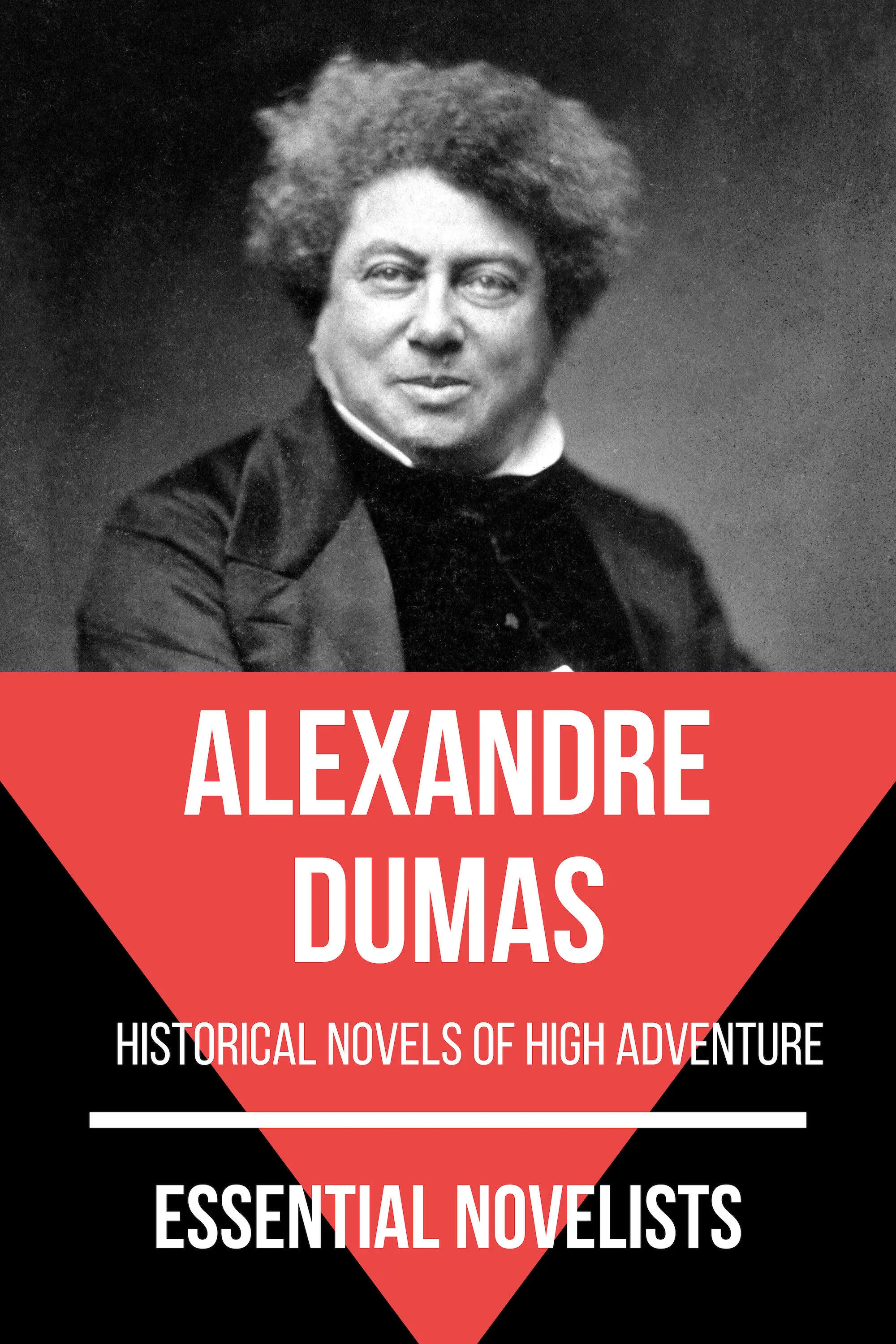
Alexandre Dumas - Essential Novelists - Alexandre Dumas
Здесь есть возможность читать онлайн «Alexandre Dumas - Essential Novelists - Alexandre Dumas» — ознакомительный отрывок электронной книги совершенно бесплатно, а после прочтения отрывка купить полную версию. В некоторых случаях можно слушать аудио, скачать через торрент в формате fb2 и присутствует краткое содержание. Жанр: unrecognised, на английском языке. Описание произведения, (предисловие) а так же отзывы посетителей доступны на портале библиотеки ЛибКат.
- Название:Essential Novelists - Alexandre Dumas
- Автор:
- Жанр:
- Год:неизвестен
- ISBN:нет данных
- Рейтинг книги:4 / 5. Голосов: 1
-
Избранное:Добавить в избранное
- Отзывы:
-
Ваша оценка:
Essential Novelists - Alexandre Dumas: краткое содержание, описание и аннотация
Предлагаем к чтению аннотацию, описание, краткое содержание или предисловие (зависит от того, что написал сам автор книги «Essential Novelists - Alexandre Dumas»). Если вы не нашли необходимую информацию о книге — напишите в комментариях, мы постараемся отыскать её.
For this book, the literary critic August Nemo has chosen the two most important and meaningful novels of Alexandre Dumas which are The Three Musketeersand The Count of Monte Cristo.
Alexandre Dumas is a celebrated French author best known for his historical adventure novels, including 'The Three Musketeers' and 'The Count of Monte Cristo.'
Novels selected for this book:
– The Three Musketeers
– The Count of Monte Cristo.
This is one of many books in the series Essential Novelists. If you liked this book, look for the other titles in the series, we are sure you will like some of the authors.
Essential Novelists - Alexandre Dumas — читать онлайн ознакомительный отрывок
Ниже представлен текст книги, разбитый по страницам. Система сохранения места последней прочитанной страницы, позволяет с удобством читать онлайн бесплатно книгу «Essential Novelists - Alexandre Dumas», без необходимости каждый раз заново искать на чём Вы остановились. Поставьте закладку, и сможете в любой момент перейти на страницу, на которой закончили чтение.
Интервал:
Закладка:
“Fortunately,” added he, “my good friends are down yonder, and they will not allow me to be carried away without a struggle. Nevertheless, Monsieur de Treville’s company of Musketeers alone cannot maintain a war against the cardinal, who disposes of the forces of all France, and before whom the queen is without power and the king without will. D’Artagnan, my friend, you are brave, you are prudent, you have excellent qualities; but the women will ruin you!”
He came to this melancholy conclusion as he entered the antechamber. He placed his letter in the hands of the usher on duty, who led him into the waiting room and passed on into the interior of the palace.
In this waiting room were five or six of the cardinals Guards, who recognized d’Artagnan, and knowing that it was he who had wounded Jussac, they looked upon him with a smile of singular meaning.
This smile appeared to d’Artagnan to be of bad augury. Only, as our Gascon was not easily intimidated—or rather, thanks to a great pride natural to the men of his country, he did not allow one easily to see what was passing in his mind when that which was passing at all resembled fear—he placed himself haughtily in front of Messieurs the Guards, and waited with his hand on his hip, in an attitude by no means deficient in majesty.
The usher returned and made a sign to d’Artagnan to follow him. It appeared to the young man that the Guards, on seeing him depart, chuckled among themselves.
He traversed a corridor, crossed a grand saloon, entered a library, and found himself in the presence of a man seated at a desk and writing.
The usher introduced him, and retired without speaking a word. D’Artagnan remained standing and examined this man.
D’Artagnan at first believed that he had to do with some judge examining his papers; but he perceived that the man at the desk wrote, or rather corrected, lines of unequal length, scanning the words on his fingers. He saw then that he was with a poet. At the end of an instant the poet closed his manuscript, upon the cover of which was written “Mirame, a Tragedy in Five Acts,” and raised his head.
D’Artagnan recognized the cardinal.
40 A TERRIBLE VISION
––––––––

THE CARDINAL LEANED his elbow on his manuscript, his cheek upon his hand, and looked intently at the young man for a moment. No one had a more searching eye than the Cardinal de Richelieu, and d’Artagnan felt this glance run through his veins like a fever.
He however kept a good countenance, holding his hat in his hand and awaiting the good pleasure of his Eminence, without too much assurance, but also without too much humility.
“Monsieur,” said the cardinal, “are you a d’Artagnan from Bearn?”
“Yes, monseigneur,” replied the young man.
“There are several branches of the d’Artagnans at Tarbes and in its environs,” said the cardinal; “to which do you belong?”
“I am the son of him who served in the Religious Wars under the great King Henry, the father of his gracious Majesty.”
“That is well. It is you who set out seven or eight months ago from your country to seek your fortune in the capital?”
“Yes, monseigneur.”
“You came through Meung, where something befell you. I don’t very well know what, but still something.”
“Monseigneur,” said d’Artagnan, “this was what happened to me—”
“Never mind, never mind!” resumed the cardinal, with a smile which indicated that he knew the story as well as he who wished to relate it. “You were recommended to Monsieur de Treville, were you not?”
“Yes, monseigneur; but in that unfortunate affair at Meung—”
“The letter was lost,” replied his Eminence; “yes, I know that. But Monsieur de Treville is a skilled physiognomist, who knows men at first sight; and he placed you in the company of his brother-in-law, Monsieur Dessessart, leaving you to hope that one day or other you should enter the Musketeers.”
“Monseigneur is correctly informed,” said d’Artagnan.
“Since that time many things have happened to you. You were walking one day behind the Chartreux, when it would have been better if you had been elsewhere. Then you took with your friends a journey to the waters of Forges; they stopped on the road, but you continued yours. That is all very simple: you had business in England.”
“Monseigneur,” said d’Artagnan, quite confused, “I went—”
“Hunting at Windsor, or elsewhere—that concerns nobody. I know, because it is my office to know everything. On your return you were received by an august personage, and I perceive with pleasure that you preserve the souvenir she gave you.”
D’Artagnan placed his hand upon the queen’s diamond, which he wore, and quickly turned the stone inward; but it was too late.
“The day after that, you received a visit from Cavois,” resumed the cardinal. “He went to desire you to come to the palace. You have not returned that visit, and you were wrong.”
“Monseigneur, I feared I had incurred disgrace with your Eminence.”
“How could that be, monsieur? Could you incur my displeasure by having followed the orders of your superiors with more intelligence and courage than another would have done? It is the people who do not obey that I punish, and not those who, like you, obey—but too well. As a proof, remember the date of the day on which I had you bidden to come to me, and seek in your memory for what happened to you that very night.”
That was the very evening when the abduction of Mme. Bonacieux took place. D’Artagnan trembled; and he likewise recollected that during the past half hour the poor woman had passed close to him, without doubt carried away by the same power that had caused her disappearance.
“In short,” continued the cardinal, “as I have heard nothing of you for some time past, I wished to know what you were doing. Besides, you owe me some thanks. You must yourself have remarked how much you have been considered in all the circumstances.”
D’Artagnan bowed with respect.
“That,” continued the cardinal, “arose not only from a feeling of natural equity, but likewise from a plan I have marked out with respect to you.”
D’Artagnan became more and more astonished.
“I wished to explain this plan to you on the day you received my first invitation; but you did not come. Fortunately, nothing is lost by this delay, and you are now about to hear it. Sit down there, before me, d’Artagnan; you are gentleman enough not to listen standing.” And the cardinal pointed with his finger to a chair for the young man, who was so astonished at what was passing that he awaited a second sign from his interlocutor before he obeyed.
“You are brave, Monsieur d’Artagnan,” continued his Eminence; “you are prudent, which is still better. I like men of head and heart. Don’t be afraid,” said he, smiling. “By men of heart I mean men of courage. But young as you are, and scarcely entering into the world, you have powerful enemies; if you do not take great heed, they will destroy you.”
“Alas, monseigneur!” replied the young man, “very easily, no doubt, for they are strong and well supported, while I am alone.”
“Yes, that’s true; but alone as you are, you have done much already, and will do still more, I don’t doubt. Yet you have need, I believe, to be guided in the adventurous career you have undertaken; for, if I mistake not, you came to Paris with the ambitious idea of making your fortune.”
“I am at the age of extravagant hopes, monseigneur,” said d’Artagnan.
Читать дальшеИнтервал:
Закладка:
Похожие книги на «Essential Novelists - Alexandre Dumas»
Представляем Вашему вниманию похожие книги на «Essential Novelists - Alexandre Dumas» списком для выбора. Мы отобрали схожую по названию и смыслу литературу в надежде предоставить читателям больше вариантов отыскать новые, интересные, ещё непрочитанные произведения.








Обсуждение, отзывы о книге «Essential Novelists - Alexandre Dumas» и просто собственные мнения читателей. Оставьте ваши комментарии, напишите, что Вы думаете о произведении, его смысле или главных героях. Укажите что конкретно понравилось, а что нет, и почему Вы так считаете.