Liuping Wang - PID Control System Design and Automatic Tuning using MATLAB/Simulink
Здесь есть возможность читать онлайн «Liuping Wang - PID Control System Design and Automatic Tuning using MATLAB/Simulink» — ознакомительный отрывок электронной книги совершенно бесплатно, а после прочтения отрывка купить полную версию. В некоторых случаях можно слушать аудио, скачать через торрент в формате fb2 и присутствует краткое содержание. Жанр: unrecognised, на английском языке. Описание произведения, (предисловие) а так же отзывы посетителей доступны на портале библиотеки ЛибКат.
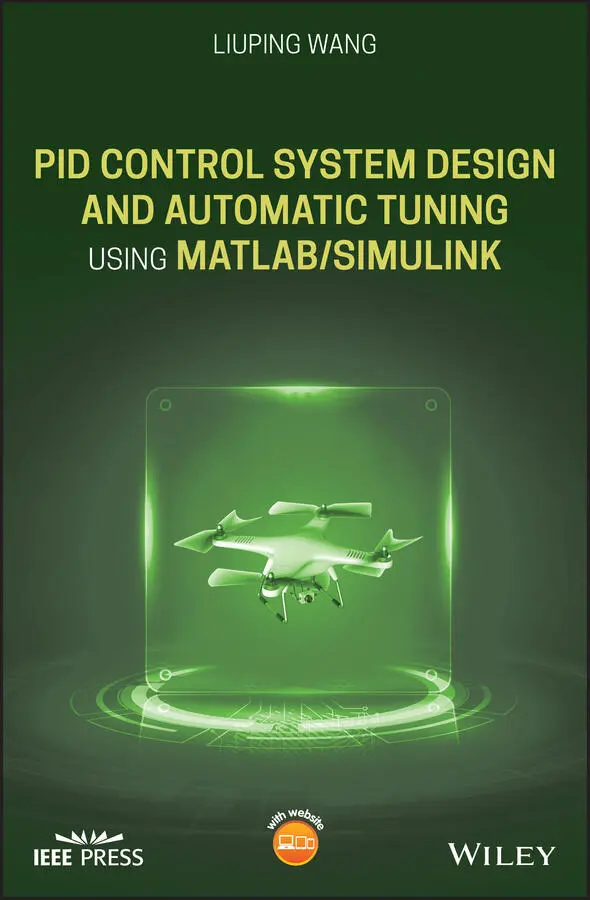
- Название:PID Control System Design and Automatic Tuning using MATLAB/Simulink
- Автор:
- Жанр:
- Год:неизвестен
- ISBN:нет данных
- Рейтинг книги:3 / 5. Голосов: 1
-
Избранное:Добавить в избранное
- Отзывы:
-
Ваша оценка:
PID Control System Design and Automatic Tuning using MATLAB/Simulink: краткое содержание, описание и аннотация
Предлагаем к чтению аннотацию, описание, краткое содержание или предисловие (зависит от того, что написал сам автор книги «PID Control System Design and Automatic Tuning using MATLAB/Simulink»). Если вы не нашли необходимую информацию о книге — напишите в комментариях, мы постараемся отыскать её.
PID Control System Design and Automatic Tuning using MATLAB Provides unique coverage of PID Control of unmanned aerial vehicles (UAVs), including mathematical models of multi-rotor UAVs, control strategies of UAVs, and automatic tuning of PID controllers for UAVs
Provides detailed descriptions of automatic tuning of PID control systems, including relay feedback control systems, frequency response estimation, Monte-Carlo simulation studies, PID controller design using frequency domain information, and MATLAB/Simulink simulation and implementation programs for automatic tuning Includes 15 MATLAB/Simulink tutorials, in a step-by-step manner, to illustrate the design, simulation, implementation and automatic tuning of PID control systems Assists lecturers, teaching assistants, students, and other readers to learn PID control with constraints and apply the control theory to various areas. Accompanying website includes lecture slides and MATLAB/ Simulink programs
is intended for undergraduate electrical, chemical, mechanical, and aerospace engineering students, and will greatly benefit postgraduate students, researchers, and industrial personnel who work with control systems and their applications.
PID Control System Design and Automatic Tuning using MATLAB/Simulink — читать онлайн ознакомительный отрывок
Ниже представлен текст книги, разбитый по страницам. Система сохранения места последней прочитанной страницы, позволяет с удобством читать онлайн бесплатно книгу «PID Control System Design and Automatic Tuning using MATLAB/Simulink», без необходимости каждый раз заново искать на чём Вы остановились. Поставьте закладку, и сможете в любой момент перейти на страницу, на которой закончили чтение.
Интервал:
Закладка:
8 Chapter 8Figure 8.1 Illustration of the design process and closed-loop responses (Exa...Figure 8.2 Closed-loop responses (Example 8.1) when using the phase margin. ...Figure 8.3 Illustration of the design process and closed-loop responses (Exa...Figure 8.4 Comparison of closed-loop responses of PI and PID control systems...Figure 8.5 Comparison of closed-loop responses of PID control systems with d...Figure 8.6 Comparison of closed-loop responses of PID control systems. (a) O...Figure 8.7 Frequency response. Key: line (1)  ; line (2)
  ; line (3)
  Figure 8.8 Nyquist plot. Key: line (1)
 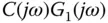 ; line (2)
 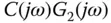 .Figure 8.9 Closed-loop control simulation for output stair case disturbance ...Figure 8.10 Calculated normalized proportional controller gain. (a)
  ,
,  . (b...Figure 8.11 Calculated gain and phase margins for PID controllers. (a) Gain ...Figure 8.12 Calculated gain and phase margins for PI controllers. (a) Gain m...Figure 8.13 Calculated gain and phase margins for PD controllers. (a) Gain m...Figure 8.14 Comparison of closed-loop performance for three types of control...Figure 8.15 Comparison of closed-loop PID control performance between the mo...
9 Chapter 9Figure 9.1 Block diagram of relay feedback control.Figure 9.2 Location of  on a Nyquist curve.Figure 9.3 Simulink diagram for the relay feedback control.Figure 9.4 Relay feedback control signals with hysteresis (Example 9.1). (a)...Figure 9.5 Block diagram of integrated relay feedback control.Figure 9.6 Location of
  on a Nyquist curve when using an integrator with re...Figure 9.7 Relay feedback control signals with and without integrator (Examp...Figure 9.8 Frequency response estimation using FFT (Example 9.3). (a) Input ...Figure 9.9 Frequency response estimation using FFT (Example 9.4). (a) Input ...Figure 9.10 Block diagram of the frequency sampling filter model with reduce...Figure 9.11 Frequency response estimation using FSF (Example 9.5).Figure 9.12 Monte-Carlo simulation results with
  random seeds in the presen...Figure 9.13 Monte-Carlo simulation results with
  random seeds in the presen...Figure 9.14 Monte-Carlo simulation results for estimation of steady-state ga...Figure 9.15 Simulink diagram of auto-tuner for stable system.Figure 9.16 Nyquist plots using the PID controller parameters in Table 9.1. ...Figure 9.17 Closed-loop simulation results using the PID controller paramete...Figure 9.18 Closed-loop simulation results using the PID controller paramete...Figure 9.19 Block diagram of relay feedback control for an integrating syste...Figure 9.20 Input and output relay feedback control data (Example 9.6).Figure 9.21 Comparison between the estimated frequency point with the origin...Figure 9.22 Frequency response comparison (Example 9.6). (a) Nyquist diagram...Figure 9.23 Comparison of closed-loop performance for three types of control...Figure 9.24 Input and output relay feedback control data (Example 9.7).Figure 9.25 Comparison between the estimated frequency point with the origin...Figure 9.26 Comparison of closed-loop performance for three types of control...Figure 9.27 Frequency response comparison (Example 9.7). (a) Nyquist diagram...Figure 9.28 Relay feedback control signals from inner closed-loop system (Ex...Figure 9.29 Auto-tuning inner-loop control system (Example 9.8). (a) Nyquist...Figure 9.30 Relay feedback control signals from outer- closed-loop system (E...Figure 9.31 Auto-tuning outer-loop control system (Example 9.8). (a) Nyquist...
10 Chapter 10Figure 10.1 Inertial frame and body frame of the quadrotor.Figure 10.2 Representation of a hexacopter (Ligthart et al. (2017)).Figure 10.3 Attitude control system structure.Figure 10.4 Quadrotor test-bed.Figure 10.5 Experimental rig for a hexacopter.Figure 10.6 Relay feedback control signals from the inner-loop system: top f...Figure 10.7 Inner-loop step response in closed-loop control. Dashed line, re...Figure 10.8 Relay feedback control signals from outer-loop system: top figur...Figure 10.9 Comparative roll angle step response in closed-loop control.Figure 10.10 Roll angle step response of quadrotor using test rig.Figure 10.11 Inner loop relay test result.Figure 10.12 Attitude control system with approximated inner loop.Figure 10.13 Outdoor flight test.Figure 10.14 Flight data for roll axis.Figure 10.15 Flight data for pitch axis.Figure 10.16 Flight data for yaw axis.
Guide
1 Cover
2 Table of Contents
3 Begin Reading
Pages
1 iii
2 iv
3 v
4 xv
5 xvi
6 xvii
7 xix
8 xx
9 xxi
10 1
11 2
12 3
13 4
14 5
15 6
16 7
17 8
18 9
19 10
20 11
21 12
22 13
23 14
24 15
25 16
26 17
27 18
28 19
29 20
30 21
31 22
32 23
33 24
34 25
35 26
36 27
37 28
38 29
39 30
40 31
41 32
42 33
43 34
44 35
45 36
46 37
47 38
48 39
49 40
50 41
51 42
52 43
53 44
54 45
55 46
56 47
57 48
58 49
59 50
60 51
61 52
62 53
63 54
64 55
65 56
66 57
67 58
68 59
69 60
70 61
71 62
72 63
73 64
74 65
75 66
76 67
77 68
78 69
79 70
80 71
81 72
82 73
83 74
84 75
85 76
86 77
87 78
88 79
89 80
90 81
91 82
92 83
93 84
94 85
95 86
96 87
97 88
98 89
99 90
100 91
101 92
102 93
103 94
104 95
105 96
106 97
107 98
108 99
109 100
110 101
111 102
112 103
113 104
114 105
115 106
116 107
117 108
118 109
119 110
120 111
121 112
122 113
123 114
124 115
125 116
126 117
127 118
128 119
129 120
Читать дальшеИнтервал:
Закладка:
Похожие книги на «PID Control System Design and Automatic Tuning using MATLAB/Simulink»
Представляем Вашему вниманию похожие книги на «PID Control System Design and Automatic Tuning using MATLAB/Simulink» списком для выбора. Мы отобрали схожую по названию и смыслу литературу в надежде предоставить читателям больше вариантов отыскать новые, интересные, ещё непрочитанные произведения.










Обсуждение, отзывы о книге «PID Control System Design and Automatic Tuning using MATLAB/Simulink» и просто собственные мнения читателей. Оставьте ваши комментарии, напишите, что Вы думаете о произведении, его смысле или главных героях. Укажите что конкретно понравилось, а что нет, и почему Вы так считаете.