James G. Speight - Synthesis Gas
Здесь есть возможность читать онлайн «James G. Speight - Synthesis Gas» — ознакомительный отрывок электронной книги совершенно бесплатно, а после прочтения отрывка купить полную версию. В некоторых случаях можно слушать аудио, скачать через торрент в формате fb2 и присутствует краткое содержание. Жанр: unrecognised, на английском языке. Описание произведения, (предисловие) а так же отзывы посетителей доступны на портале библиотеки ЛибКат.
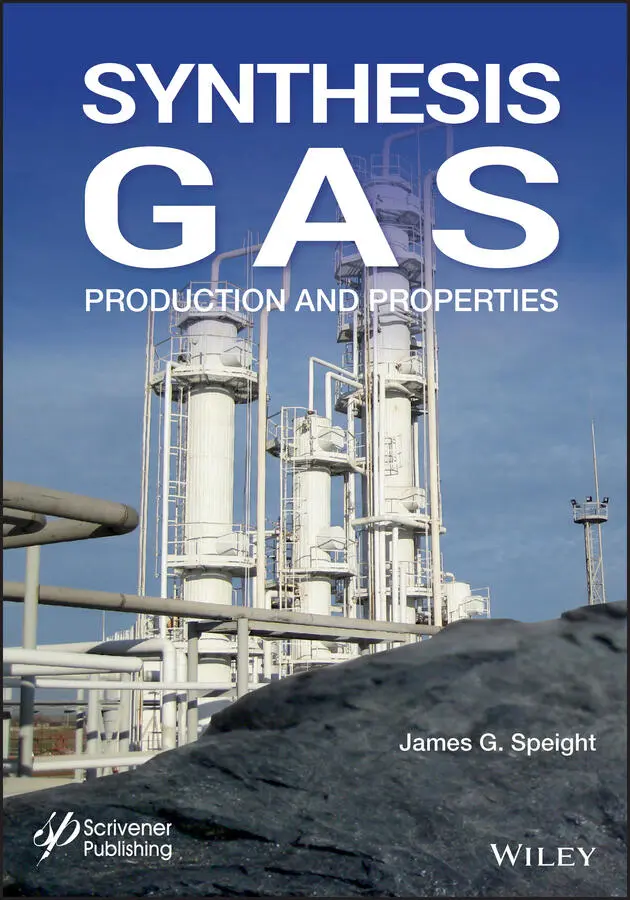
- Название:Synthesis Gas
- Автор:
- Жанр:
- Год:неизвестен
- ISBN:нет данных
- Рейтинг книги:5 / 5. Голосов: 1
-
Избранное:Добавить в избранное
- Отзывы:
-
Ваша оценка:
Synthesis Gas: краткое содержание, описание и аннотация
Предлагаем к чтению аннотацию, описание, краткое содержание или предисловие (зависит от того, что написал сам автор книги «Synthesis Gas»). Если вы не нашли необходимую информацию о книге — напишите в комментариях, мы постараемся отыскать её.
Synthesis Gas — читать онлайн ознакомительный отрывок
Ниже представлен текст книги, разбитый по страницам. Система сохранения места последней прочитанной страницы, позволяет с удобством читать онлайн бесплатно книгу «Synthesis Gas», без необходимости каждый раз заново искать на чём Вы остановились. Поставьте закладку, и сможете в любой момент перейти на страницу, на которой закончили чтение.
Интервал:
Закладка:
Electricity production or combined electricity and heat production remain the most likely area for the application of gasification or co-gasification. The lowest investment cost per unit of electricity generated is the use of the gas in an existing large power station. This has been done in several large utility boilers, often with the gas fired alongside the main fuel. This option allows a comparatively small thermal output of gas to be used with the same efficiency as the main fuel in the boiler as a large, efficient steam turbine can be used. It is anticipated that addition of gas from a biomass or wood gasifier into the natural gas feed to a gas turbine to be technically possible but there will be concerns as to the balance of commercial risks to a large power plant and the benefits of using the gas from the gasifier.
The use of fuel cells with gasifiers is frequently discussed but the current cost of fuel cells is such that their use for mainstream electricity generation is uneconomic. Furthermore, the disposal of municipal and industrial waste has become an important problem because the traditional means of disposal, landfill, are much less environmentally acceptable than previously. Much stricter regulation of these disposal methods will make the economics of waste processing for resource recovery much more favorable. In fact, one method of processing waste streams is to convert the energy value of the combustible waste into a fuel. One type of fuel attainable from waste is a low heating value gas, usually 100-150 Btu/scf, which can be used to generate process steam or to generate electricity (Gay et al. , 1980). Co-processing such waste with coal is also an option (Speight, 2008, 2013; Luque and Speight, 2015).
2.3.7 Black Liquor
Another waste that is not often recognized as a source of energy – in the current context a potential source of synthesis gas – is the waste from pulping processes. As an example, black liquor is the spent liquor from the Kraft process in which pulpwood is converted into paper pulp by removing lignin and hemicellulose constituents as well as other extractable materials from wood to free the cellulose fibers. The equivalent spent cooking liquor in the sulfite process is usually called brown liquor , but the terms red liquor , thick liquor , and sulfite liquor are also used. Approximately seven units of black liquor are produced in the manufacture of one unit of pulp (Biermann, 1993).
Black liquor is the spent liquor from the Kraft process in which pulpwood is converted into paper pulp by removing lignin and hemicellulose constituents as well as other extractable materials from wood to free the cellulose fibers. The present-day chemical pulping process uses a complex combustion system called a recovery boiler to generate process heat and electricity as well as to recover the processing chemicals in an almost closed cycle. The recovery boiler is a very complex device, which is actually operated as a gasifier-combustor. After evaporation of the majority of the water, the very high solids black liquor is sprayed onto a mass of char in the bottom of the boiler. Black liquor comprises an aqueous solution of lignin residues, hemicellulose, and the inorganic chemical used in the process and 15% w/w solids of which 10% w/w are inorganic and 5% w/w are organic. Typically, the organic constituents in black liquor are 40 to 45% w/w soaps, 35 to 45% w/w lignin, and 10 to 15% w/w other (miscellaneous) organic materials.
The organic constituents in the black liquor are made up of water/alkali soluble degradation components from the wood. Lignin is partially degraded to shorter fragments with sulfur contents in the order of 1 to 2% w/w and sodium content at approximately 6% w/w of the dry solids. Cellulose (and hemicellulose) is degraded to aliphatic carboxylic acid soaps and hemicellulose fragments. The extractable constituents yield tall oil soap and crude turpentine. The tall oil soap may contain up to 20% w/w sodium. Residual lignin components currently serve for hydrolytic or pyrolytic conversion or combustion. Alternative, hemicellulose constituents may be used in fermentation processes.
Gasification of black liquor has the potential to achieve higher overall energy efficiency as compared to those of conventional recovery boilers, while generating an energy-rich synthesis gas. The synthesis gas can then be burned in a gas turbine combined cycle system ( BLGCC – black liquor gasification combined cycle – and similar to IGCC , integrated gasification combined cycle) to produce electricity or converted (through catalytic processes) into chemicals or fuels (e.g., methanol, dimethyl ether, Fischer-Tropsch hydrocarbon derivatives and diesel fuel).
The organic constituents in the black liquor are made up of water/alkali soluble degradation components from the wood. Lignin is partially degraded to shorter fragments with sulfur contents in the order of 1 to 2% w/w and sodium content at approximately 6% w/w of the dry solids. Cellulose (and hemicellulose) is degraded to aliphatic carboxylic acid soaps and hemicellulose fragments. The extractable constituents yield tall oil soap and crude turpentine. The tall oil soap may contain up to 20% w/w sodium. Lignin components currently serve for hydrolytic or pyrolytic conversion or combustion. Alternative, hemicellulose constituents may be used in fermentation processes.
In another aspect, lignin pyrolysis produces reducing gases and char which react with the spent pulping chemicals to produce sodium carbonate (Na 2CO 3) and sodium sulfide (Na 2S). Other minerals in the feedstock appear as non-usable chemical ash and have to be removed from the cycle. The gas product from the char bed passes to an oxidizing zone in the furnace where the gas is combusted to produce process steam (and electricity) as well as provide radiant heat back to the char bed for the reduction chemistry to take place. The product chemicals are molten, drained from the char bed to collectors, and then poured into water to produce green liquor.
Thus, the pulp and paper industry offers unique opportunities for the production of synthesis gas insofar as an important part of many pulp and paper plants is the chemicals recovery cycle where black liquor is combusted in boilers. Substituting the boiler by a gasification plant with additional biofuel and electricity production is very attractive, especially when the old boiler has to be replaced. The equivalent spent cooking liquor in the sulfite process is usually called brown liquor , but the terms red liquor , thick liquor , and sulfite liquor are also used. Approximately seven units of black liquor are produced in the manufacture of one unit of pulp (Biermann, 1993).
2.3.8 Mixed Feedstocks
Any carbonaceous feedstock may be co-gasified with waste or biomass for environmental, technical or commercial reasons ( Chapter 5, Chapter 6, Chapter 7). It allows larger, more efficient plants than those sized for grown biomass or arising waste within a reasonable transport distance; specific operating costs are likely to be lower and fuel supply security is assured.
Although the gasification processes used for individual feedstocks are relatively straightforward, process efficiency depends for the most part on the unique characteristics of each feedstock. In addition, the non-uniformity of the feedstocks and the variability of the specific compositions over time require flexible and robust gasifiers. For example, consideration should be given to the individual constituents of each feedstock to determine if there are any reactions between the constituents that can have an adverse effect on the process. An example is the composition of any mineral matter that may cause the constituents to interact to form a troublesome slag that may cause harm to the gasifier.
Читать дальшеИнтервал:
Закладка:
Похожие книги на «Synthesis Gas»
Представляем Вашему вниманию похожие книги на «Synthesis Gas» списком для выбора. Мы отобрали схожую по названию и смыслу литературу в надежде предоставить читателям больше вариантов отыскать новые, интересные, ещё непрочитанные произведения.









Обсуждение, отзывы о книге «Synthesis Gas» и просто собственные мнения читателей. Оставьте ваши комментарии, напишите, что Вы думаете о произведении, его смысле или главных героях. Укажите что конкретно понравилось, а что нет, и почему Вы так считаете.