C. S. Lewis - Mere Christianity
Здесь есть возможность читать онлайн «C. S. Lewis - Mere Christianity» — ознакомительный отрывок электронной книги совершенно бесплатно, а после прочтения отрывка купить полную версию. В некоторых случаях можно слушать аудио, скачать через торрент в формате fb2 и присутствует краткое содержание. Жанр: unrecognised, на английском языке. Описание произведения, (предисловие) а так же отзывы посетителей доступны на портале библиотеки ЛибКат.
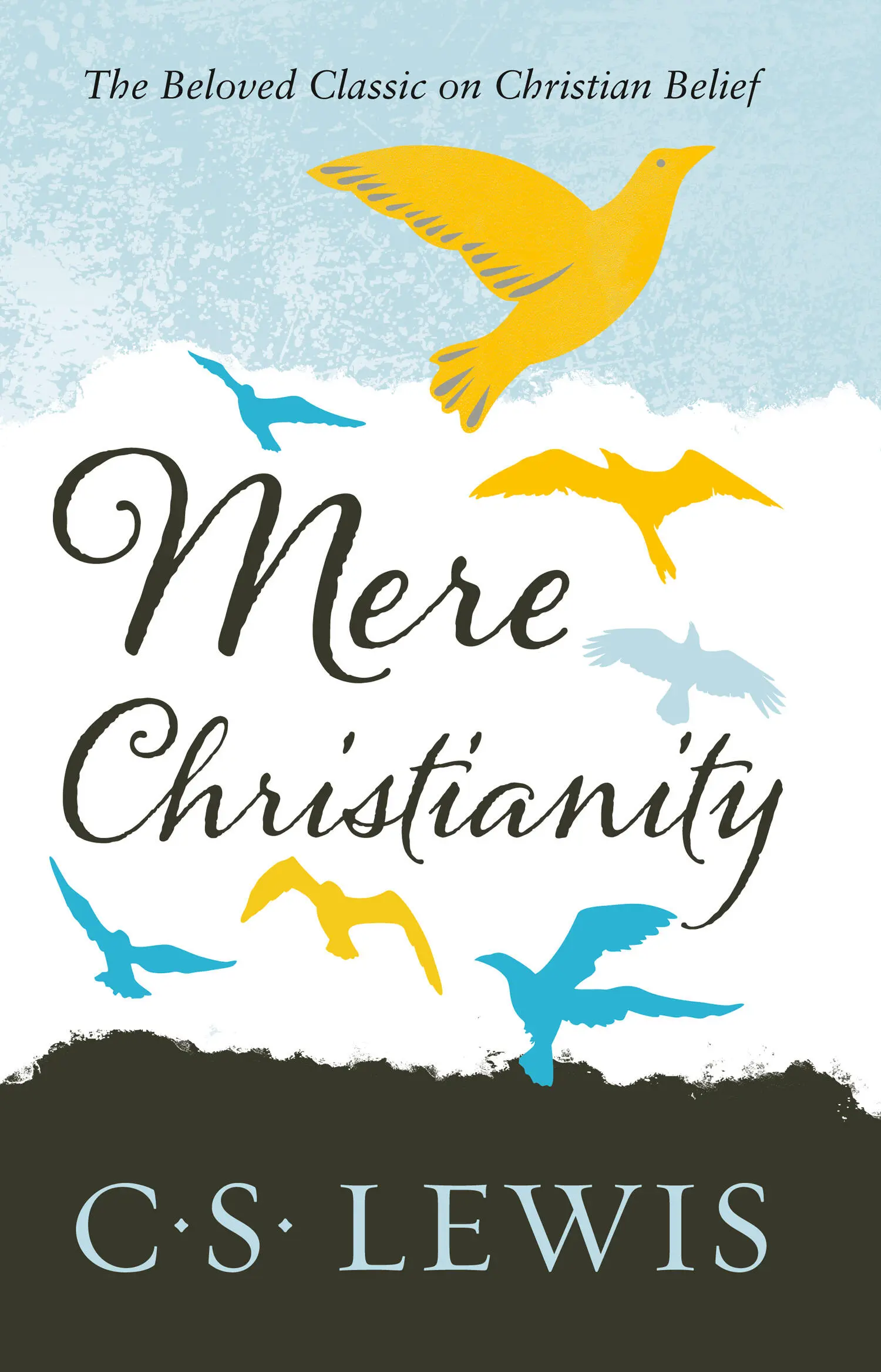
- Название:Mere Christianity
- Автор:
- Жанр:
- Год:неизвестен
- ISBN:нет данных
- Рейтинг книги:3 / 5. Голосов: 1
-
Избранное:Добавить в избранное
- Отзывы:
-
Ваша оценка:
Mere Christianity: краткое содержание, описание и аннотация
Предлагаем к чтению аннотацию, описание, краткое содержание или предисловие (зависит от того, что написал сам автор книги «Mere Christianity»). Если вы не нашли необходимую информацию о книге — напишите в комментариях, мы постараемся отыскать её.
Mere Christianity — читать онлайн ознакомительный отрывок
Ниже представлен текст книги, разбитый по страницам. Система сохранения места последней прочитанной страницы, позволяет с удобством читать онлайн бесплатно книгу «Mere Christianity», без необходимости каждый раз заново искать на чём Вы остановились. Поставьте закладку, и сможете в любой момент перейти на страницу, на которой закончили чтение.
Интервал:
Закладка:
The “mere” Christianity of C. S. Lewis is not a philosophy or even a theology that may be considered, argued, and put away in a book on a shelf. It is a way of life, one that challenges us always to remember, as Lewis once stated, that “there are no ordinary people” and that “it is immortals whom we joke with, work with, marry, snub, and exploit.” 4 Once we tune ourselves to this reality, Lewis believes, we open ourselves to imaginatively transform our lives in such a way that evil diminishes and good prevails. It is what Christ asked of us in taking on our humanity, sanctifying our flesh, and asking us in turn to reveal God to one another.
If the world would make this seem a hopeless task, Lewis insists that it is not. Even someone he envisions as “poisoned by a wretched upbringing in some house full of vulgar jealousies and senseless quarrels” 5 can be assured that God is well aware of “what a wretched machine you are trying to drive,” and asks only that you “keep on, [doing] the best you can.” The Christianity Lewis espouses is humane, but not easy: it asks us to recognize that the great religious struggle is not fought on a spectacular battleground, but within the ordinary human heart, when every morning we awake and feel the pressures of the day crowding in on us, and we must decide what sort of immortals we wish to be. Perhaps it helps us, as surely it helped the war-weary British people who first heard these talks, to remember that God plays a great joke on those who would seek after power at any cost. As Lewis reminds us, with his customary humor and wit, “How monotonously alike all the great tyrants and conquerors have been: how gloriously different the saints.” 6
Kathleen Norris
1 Information on the blitz and Royal Air Force pilots by William Griffin, Clive Staples Lewis: A Dramatic Life; sections on the years 1941 & 1942. Holt & Rinehart, 1986.
2 “The longest way round,” quoted from Mere Christianity .
3 “An amateur,” from January 11, 1942, radio broadcast; cited in Clive Staples Lewis: A Dramatic Life .
4 “There are no ordinary people,” quoted from “The Weight of Glory,” a C. S. Lewis sermon delivered June 8, 1941.
5 “Poisoned by a wretched upbringing,” quoted from Mere Christianity .
6 “How monotonously alike,” quoted from Mere Christianity .
1 THE LAW OF HUMAN NATURE
Every one has heard people quarrelling. Sometimes it sounds funny and sometimes it sounds merely unpleasant; but however it sounds, I believe we can learn something very important from listening to the kind of things they say. They say things like this: ‘How’d you like it if anyone did the same to you?’—‘That’s my seat, I was there first’—‘Leave him alone, he isn’t doing you any harm’—‘Why should you shove in first?’—‘Give me a bit of your orange, I gave you a bit of mine’—‘Come on, you promised.’ People say things like that every day, educated people as well as uneducated, and children as well as grown-ups.
Now what interests me about all these remarks is that the man who makes them is not merely saying that the other man’s behaviour does not happen to please him. He is appealing to some kind of standard of behaviour which he expects the other man to know about. And the other man very seldom replies: ‘To hell with your standard.’ Nearly always he tries to make out that what he has been doing does not really go against the standard, or that if it does there is some special excuse. He pretends there is some special reason in this particular case why the person who took the seat first should not keep it, or that things were quite different when he was given the bit of orange, or that something has turned up which lets him off keeping his promise. It looks, in fact, very much as if both parties had in mind some kind of Law or Rule of fair play or decent behaviour or morality or whatever you like to call it, about which they really agreed. And they have. If they had not, they might, of course, fight like animals, but they could not quarrel in the human sense of the word. Quarrelling means trying to show that the other man is in the wrong. And there would be no sense in trying to do that unless you and he had some sort of agreement as to what Right and Wrong are; just as there would be no sense in saying that a footballer had committed a foul unless there was some agreement about the rules of football.
Now this Law or Rule about Right and Wrong used to be called the Law of Nature. Nowadays, when we talk of the ‘laws of nature’ we usually mean things like gravitation, or heredity, or the laws of chemistry. But when the older thinkers called the Law of Right and Wrong ‘the Law of Nature’, they really meant the Law of Human Nature. The idea was that, just as all bodies are governed by the law of gravitation, and organisms by biological laws, so the creature called man also had his law—with this great difference, that a body could not choose whether it obeyed the law of gravitation or not, but a man could choose either to obey the Law of Human Nature or to disobey it.
We may put this in another way. Each man is at every moment subjected to several different sets of law but there is only one of these which he is free to disobey. As a body, he is subjected to gravitation and cannot disobey it; if you leave him unsupported in mid-air, he has no more choice about falling than a stone has. As an organism, he is subjected to various biological laws which he cannot disobey any more than an animal can. That is, he cannot disobey those laws which he shares with other things; but the law which is peculiar to his human nature, the law he does not share with animals or vegetables or inorganic things, is the one he can disobey if he chooses.
This law was called the Law of Nature because people thought that every one knew it by nature and did not need to be taught it. They did not mean, of course, that you might not find an odd individual here and there who did not know it, just as you find a few people who are colour-blind or have no ear for a tune. But taking the race as a whole, they thought that the human idea of decent behaviour was obvious to every one. And I believe they were right. If they were not, then all the things we said about the war were nonsense. What was the sense in saying the enemy were in the wrong unless Right is a real thing which the Nazis at bottom knew as well as we did and ought to have practised? If they had had no notion of what we mean by right, then, though we might still have had to fight them, we could no more have blamed them for that than for the colour of their hair.
I know that some people say the idea of a Law of Nature or decent behaviour known to all men is unsound, because different civilisations and different ages have had quite different moralities.
But this is not true. There have been differences between their moralities, but these have never amounted to anything like a total difference. If anyone will take the trouble to compare the moral teaching of, say, the ancient Egyptians, Babylonians, Hindus, Chinese, Greeks and Romans, what will really strike him will be how very like they are to each other and to our own. Some of the evidence for this I have put together in the appendix of another book called The Abolition of Man; but for our present purpose I need only ask the reader to think what a totally different morality would mean. Think of a country where people were admired for running away in battle, or where a man felt proud of double-crossing all the people who had been kindest to him. You might just as well try to imagine a country where two and two made five. Men have differed as regards what people you ought to be unselfish to—whether it was only your own family, or your fellow countrymen, or every one. But they have always agreed that you ought not to put yourself first. Selfishness has never been admired. Men have differed as to whether you should have one wife or four. But they have always agreed that you must not simply have any woman you liked.
Читать дальшеИнтервал:
Закладка:
Похожие книги на «Mere Christianity»
Представляем Вашему вниманию похожие книги на «Mere Christianity» списком для выбора. Мы отобрали схожую по названию и смыслу литературу в надежде предоставить читателям больше вариантов отыскать новые, интересные, ещё непрочитанные произведения.










Обсуждение, отзывы о книге «Mere Christianity» и просто собственные мнения читателей. Оставьте ваши комментарии, напишите, что Вы думаете о произведении, его смысле или главных героях. Укажите что конкретно понравилось, а что нет, и почему Вы так считаете.