Marina Kemp - Nightingale
Здесь есть возможность читать онлайн «Marina Kemp - Nightingale» — ознакомительный отрывок электронной книги совершенно бесплатно, а после прочтения отрывка купить полную версию. В некоторых случаях можно слушать аудио, скачать через торрент в формате fb2 и присутствует краткое содержание. Жанр: unrecognised, на английском языке. Описание произведения, (предисловие) а так же отзывы посетителей доступны на портале библиотеки ЛибКат.
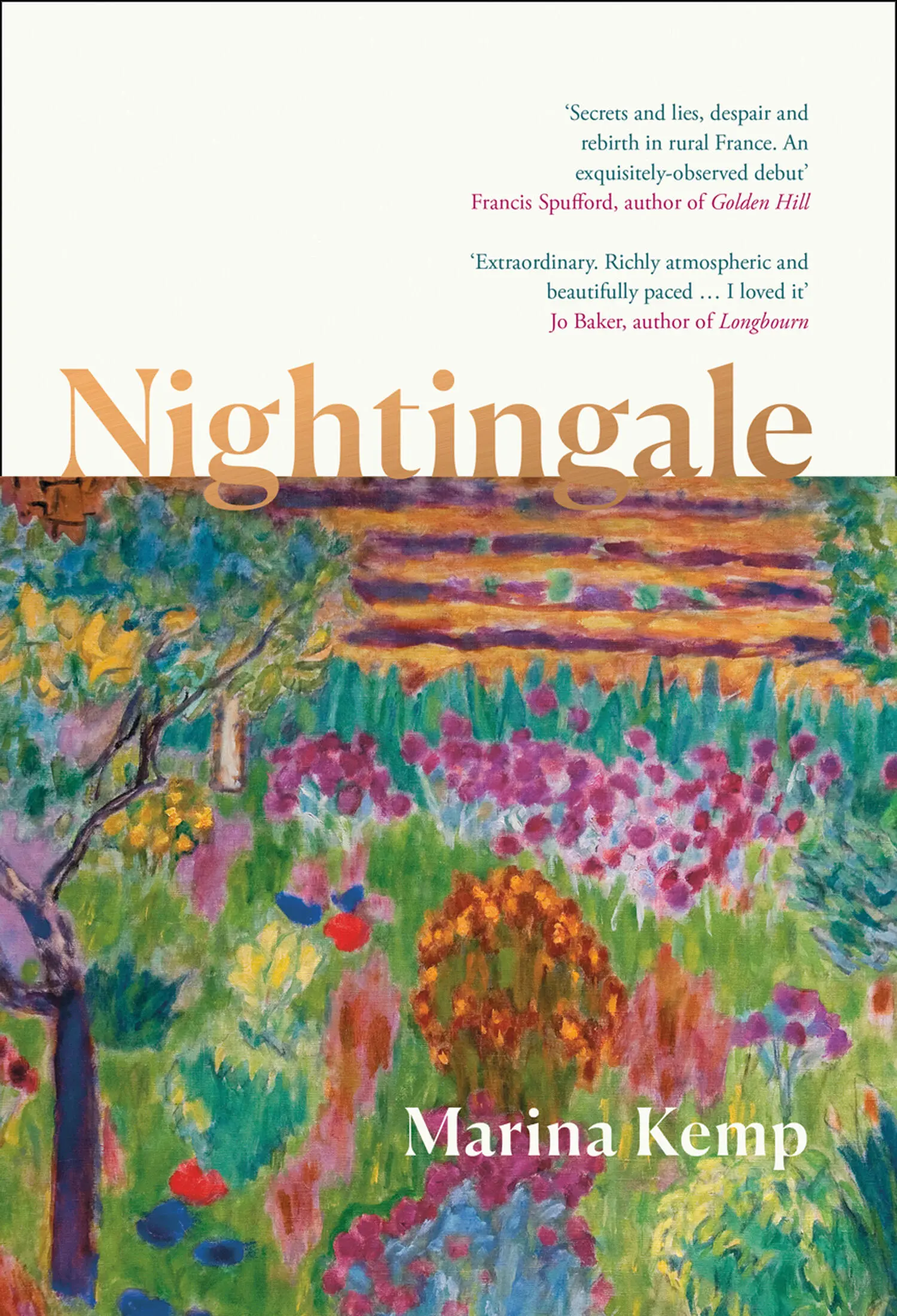
- Название:Nightingale
- Автор:
- Жанр:
- Год:неизвестен
- ISBN:нет данных
- Рейтинг книги:3 / 5. Голосов: 1
-
Избранное:Добавить в избранное
- Отзывы:
-
Ваша оценка:
Nightingale: краткое содержание, описание и аннотация
Предлагаем к чтению аннотацию, описание, краткое содержание или предисловие (зависит от того, что написал сам автор книги «Nightingale»). Если вы не нашли необходимую информацию о книге — напишите в комментариях, мы постараемся отыскать её.
Nightingale — читать онлайн ознакомительный отрывок
Ниже представлен текст книги, разбитый по страницам. Система сохранения места последней прочитанной страницы, позволяет с удобством читать онлайн бесплатно книгу «Nightingale», без необходимости каждый раз заново искать на чём Вы остановились. Поставьте закладку, и сможете в любой момент перейти на страницу, на которой закончили чтение.
Интервал:
Закладка:
She looked at Jérôme and wondered about his own painful memories. A man like him must have reams of them. She thought of the son who had interviewed her for the job: evasive, hasty, a little pleased with himself. That unique combination of infallible politeness and unidentifiable rudeness that she had come to recognise in nearly everyone with a privileged background, a background like her own.
He hadn’t made a secret of his dislike for his father, though he hadn’t openly mentioned it. He’d emphasised that the job wouldn’t be easy, that Jérôme had had many nurses leave and that they needed someone who would stick it out. He’d also emphasised that there would be no one else around, no one at all. Marguerite had wanted the silence then, though she was aware now that she had underestimated it. She’d also needed the money – the salary they were paying more than justified the fact that the job was 24/7, without respite.
And of course, crucially, it was far away from Paris. Her mother and father hadn’t tried to contact her when she’d been nursing in Picardy, but they had known she was there. Now – unless they made a little effort, which she doubted they would do – they’d be gratefully unaware that she was here in the Languedoc, surrounded by miles of rural silence, with a dying old man for company.
‘I have three sons, you know,’ Jérôme said, and Marguerite sat up; she felt eerily as if her thoughts had permeated his.
‘Yes, I know.’
‘I suppose you met the youngest, Jean-Christophe.’
‘Yes.’
‘The lawyer.’ He looked at her. ‘I’ll bet he could barely give you five minutes of his time? It’s a strange way to work, being paid by the minute. I’m not sure it can do anything except make you think your company is too valuable to share around.’
Marguerite nodded. She had often thought this about her own father.
‘And then I have two others. Marc and Thibault. Three sons and me, can you imagine what it was like when we all lived under one roof?’ He smiled wryly. ‘Poor Céline.’
‘Was Céline your wife?’
‘Yes.’
‘The only woman in a house full of boys.’
He shot her a glance, his softness dissolved. ‘Well, I’m sure it was fine. She had nothing to complain about, nothing at all.’ He looked at her again, checking for a response, and Marguerite nodded. ‘I gave her this house – you might not believe it now, but it was very grand. And I gave her everything she could ask for.’
‘I’m sure,’ Marguerite said.
‘Oh, she had nothing to complain about. You get all kinds of women – and men now, too – complaining, complaining, complaining. Giving a woman a great house, giving your kids skis and expensive bicycles and language tuition, that’s not enough. They’ll still find something to complain about.’ He shook his head, frowned. ‘But not Céline. She never complained, not once.’
Marguerite had cooled down a little; she pulled a blanket around her shoulders.
‘Are you warm enough?’ she asked.
Jérôme turned to look at her again. ‘If you ever get married,’ he said, ‘you’ll do well not to listen to any of the crap you pick up in magazines and on television. What men want is a woman with sense and patience. We might think we want the red racing car but we don’t really, not in the long run. We need an engine that will keep us going.’
‘That isn’t a very romantic metaphor.’
‘What do you know about metaphors?’ he snapped. ‘Or romance.’
‘I know plenty about both,’ she said, irritated, but her words sounded foolish as soon as she’d spoken them. A child trying to show her parents that she’s grown up. Jérôme merely grunted.
‘Really. Well, your literature teacher must have been terribly disappointed when you chose to become a carer.’
‘I’m a nurse.’
‘What a difference.’
Marguerite closed her eyes tight, breathed deeply to try to quieten the thudding in her chest. Then she opened them. ‘Was working in a tile shop intellectually demanding?’
Jérôme’s neck bulged as he turned to stare at her. His eyes were wide; an immediate colour had spread across his face. ‘Would you like to repeat that?’
‘No.’
‘I’m asking you to repeat it.’
‘I don’t think you misheard me.’
He blinked. ‘Have you forgotten that you’re working for me?’
‘No, I haven’t.’ She felt the insult of tears forming; she was too exhausted for confrontation. But she couldn’t face backing down. ‘That’s why I don’t think it’s right that you should insult me constantly.’
‘Well! I don’t think it’s right that you should answer back. Don’t forget, just one word from me and you’ll be gone, out of here.’
‘With pleasure,’ she said, very quietly.
‘What did you say?’
She didn’t answer and he watched her, intently, his shoulders up near his ears. She ignored the crawling of an insect on her neck, determined not to look away, and there was total silence between them as they stared. Then a magpie rattled and Jérôme broke his stare, let out a harsh little laugh. ‘You’re funny,’ he said. ‘You know I was just teasing you? You mustn’t let me get under your skin.’
‘I don’t.’
‘I was just having a joke.’
‘Okay.’
He was watching her again, eyes sharp above his smile.
‘And as I’m sure you know, I didn’t “work in a tile shop”. I owned an extremely profitable business.’
Marguerite didn’t reply; she shrugged the blanket from around her shoulders, warm again from the adrenaline. She felt the thud in her chest subside, slowly.
Jérôme laughed again, a laugh that didn’t seem wholly forced.
‘A tile shop,’ he repeated. ‘You’re very funny.’
The milking clusters detached from the cows’ udders and withdrew, clanking and swinging. Henri sanitised the cows’ teats, pink and engorged, thin lines of milk still trickling from them like the white sap from figs. He opened the gate for the cows to move slowly out, lowing and nodding as they walked, and then he called Thierry in from the yard to hose the parlour down. When the young man had taken over, Henri pulled off his thick rubber gloves and rinsed them. He would change out of his milky overalls before he saw to Vanille. He didn’t want to taunt her with the smell of her youth.
Back in the house, he changed into a fresh shirt and jeans and sat in the study to get some paperwork done. It wasn’t urgent, but he needed delay. He went through the accounts for perhaps fifteen minutes until he knew he could no longer put it off. Then he stood up, walked straight out of the house, taking his shotgun, glimpsing Brigitte through the kitchen door and ignoring her as she called out. He strode out to the pasture, where the cows had already settled back into grazing.
Thierry sat with the calves now, feeding them formula, and he looked up and then down at the gun. His head bobbed back slightly, like a tic, and he looked at Henri questioningly, with some alarm, opening his mouth to speak. Henri didn’t acknowledge him.
He held the gun behind his back as he approached Vanille, only now slowing his pace. She blinked.
‘Come on, my beautiful lady,’ he said. ‘Beautiful lady.’ He let her smell his hand, and she rubbed it. ‘Come on,’ he said more loudly, even tersely, so that Thierry might hear. Then he led her away, her awkward, rocking gait making him tread more slowly than he could bear. He needed to do it now, could already feel his resolve slipping. Now Thierry had seen him, he had to go through with it. He couldn’t turn around and wait until tomorrow.
She was docile, infinitely trusting; he got her with ease into the old stable nestled at the corner of the next field. Standing there beside her, he had to wipe tears from his eyes and cheeks.
Читать дальшеИнтервал:
Закладка:
Похожие книги на «Nightingale»
Представляем Вашему вниманию похожие книги на «Nightingale» списком для выбора. Мы отобрали схожую по названию и смыслу литературу в надежде предоставить читателям больше вариантов отыскать новые, интересные, ещё непрочитанные произведения.








Обсуждение, отзывы о книге «Nightingale» и просто собственные мнения читателей. Оставьте ваши комментарии, напишите, что Вы думаете о произведении, его смысле или главных героях. Укажите что конкретно понравилось, а что нет, и почему Вы так считаете.