Marina Kemp - Nightingale
Здесь есть возможность читать онлайн «Marina Kemp - Nightingale» — ознакомительный отрывок электронной книги совершенно бесплатно, а после прочтения отрывка купить полную версию. В некоторых случаях можно слушать аудио, скачать через торрент в формате fb2 и присутствует краткое содержание. Жанр: unrecognised, на английском языке. Описание произведения, (предисловие) а так же отзывы посетителей доступны на портале библиотеки ЛибКат.
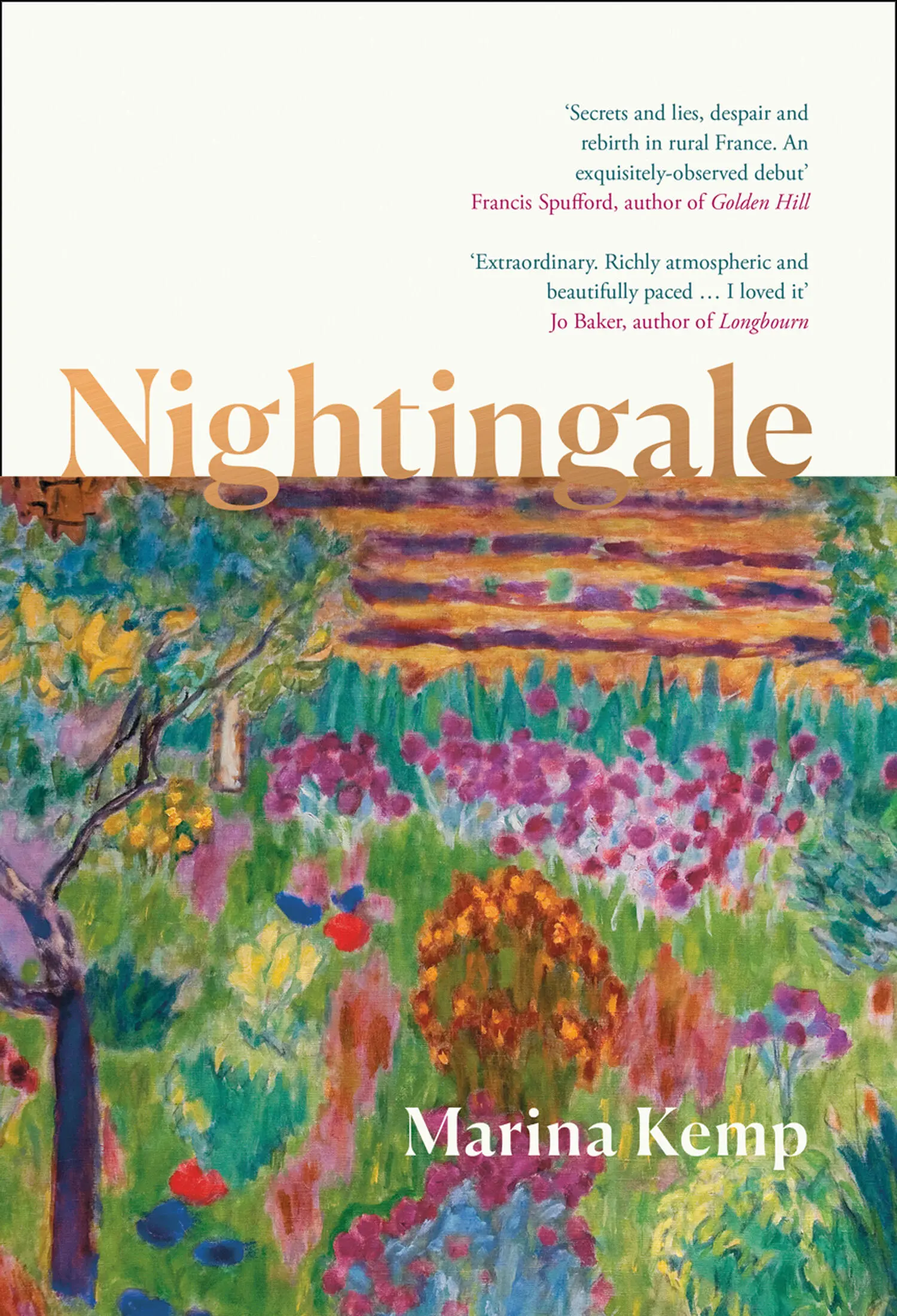
- Название:Nightingale
- Автор:
- Жанр:
- Год:неизвестен
- ISBN:нет данных
- Рейтинг книги:3 / 5. Голосов: 1
-
Избранное:Добавить в избранное
- Отзывы:
-
Ваша оценка:
Nightingale: краткое содержание, описание и аннотация
Предлагаем к чтению аннотацию, описание, краткое содержание или предисловие (зависит от того, что написал сам автор книги «Nightingale»). Если вы не нашли необходимую информацию о книге — напишите в комментариях, мы постараемся отыскать её.
Nightingale — читать онлайн ознакомительный отрывок
Ниже представлен текст книги, разбитый по страницам. Система сохранения места последней прочитанной страницы, позволяет с удобством читать онлайн бесплатно книгу «Nightingale», без необходимости каждый раз заново искать на чём Вы остановились. Поставьте закладку, и сможете в любой момент перейти на страницу, на которой закончили чтение.
Интервал:
Закладка:
‘Woman!’ he shouted after her, but she ignored him, entered the kitchen and ate a large slice of tart standing up by the counter. It was delicious.
4
Henri leant against the fence, watching Cédric as he examined Vanille. At eighteen, Vanille was his oldest cow and the only one to have a name. She had not been able to produce milk for many years, but Henri couldn’t let her go. ‘He loves that old thing more than me,’ Brigitte would often chide, which irritated him because his loyalty to Vanille felt more elemental than sentimental. It might sound ridiculous – he could guess perfectly well what Paul, or indeed anyone, would think if he knew – but she was the last link between the farm he had now and the farm he had inherited when his father retired. The place had done well under her vigil. It had mutated and expanded, a little colony of industry; Vanille and the house itself were the only things that remained the same.
And now she was ill – slothlike, heavy, sad. He looked at Cédric, trying to read his face. Henri had no instinct for sickness.
‘It’s not a blockage this time,’ Cédric said after a while. ‘I can’t find anything up there.’
The men stood in silence for a little while. Henri stepped towards Vanille, resting one hand on her head. She didn’t flinch, looking up at him blankly, her eyeballs marbled pink.
‘Probably just time she went on her way,’ Cédric said. Henri let go of her head, resting his palm under her muzzle for her to smell. ‘She’s what, fifteen by now?’
‘Eighteen.’ Henri looked into his friend’s eyes. They were still their old, deep blue, but Henri noticed his wrinkles now, how deeply they were scored. They had been two of the brightest boys at school; Henri could still remember clearly Cédric going off to Grenoble to study veterinary science, how glamorous that had seemed. ‘It couldn’t be urinary?’
‘Her piss ran normal.’
‘Ah.’
‘How many productive years did you get out of her?’
‘A lot. Ten, perhaps?’
Cédric whistled. ‘You’re lucky to get more than three these days.’ He laid his hand gently on Vanille’s back. ‘She’s done you proud.’
‘My girls are all right. They’re not a bad lot.’ Henri looked at the rest of the herd, grazing calmly, indifferent to the two men.
‘Well,’ Cédric said, packing up his things, ‘I’m afraid I can’t find anything. It might be cancer but let’s call it old age. At this point it’s the same thing really.’
Henri nodded. ‘Nothing we can do?’
‘I wouldn’t say so.’ The vet ran his hand again over the big knuckles of her spine and smiled gently. ‘They won’t get much meat off her.’
‘Oh, I won’t bother with all that.’ Henri stroked one of her ears; she stood there dumbly, not even grazing. He couldn’t send her away to die.
‘Are you staying out here?’ Cédric asked, and Henri nodded. ‘I’ll see myself out. Send my regards to Brigitte. I’ll see you soon.’
They shook hands and Cédric turned and started back towards the farmhouse. Henri watched him go, his figure dark against the pale morning. He turned to Vanille and stroked her muzzle again.
‘You pretty old thing,’ he said. Then he climbed over the gate; he had to get to work.
The air was warming already: it would be hot work today. The cicadas had started, he hadn’t noticed when. It was the same each year, their chorus insinuating its way into the fabric of the days without fuss or ceremony. Once it was there, it was difficult to imagine how silence sounded without it.
Henri turned back as he walked to look at Vanille; she was still watching him. She knew.
‘Good God,’ Jérôme said when she brought his breakfast. She had barely slept in the night, imagining sounds and the sly movement of human shapes against the black shadows of the trees outside her room. Jérôme was already sitting up in bed, a manoeuvre he managed with difficulty alone; unlike her, he appeared to have had an unusually good night, calling only once for pain relief. ‘You look like you’ve spent the night in a cave.’
‘Thank you,’ she said, and he laughed. The sound – a real laugh, not a harsh little bark for effect – was so surprising that she turned from arranging his medication to look at him. He was smiling, his eyes bright, a different creature altogether from the day before.
‘But you have slept well.’
‘Very well,’ he said, tugging at the sheets with a little excitement. ‘Like a baby.’
She watched him as he ate, the grinding cogs of his old jaw as he chewed. Sunlight poured through the window onto the foot of his bed. The wind had blown away the rain; the clouds dotting the sky outside were white and bilious.
‘Today, I’ll go outside,’ he said when he’d finished.
‘Fine,’ she said. She thought with weariness of the effort it would entail. ‘Of course.’
‘It looks like a good day.’
‘It’s pretty sunny,’ she said. ‘It might be a bit cold, but I’ll bring blankets.’
‘And it’ll do me good. As you say.’
‘Yes. We can go after your nap.’
‘Why wait?’ he said brightly. ‘Let’s go now.’
She brought his wheelchair into the room. It was old-fashioned, more like a grand piece of garden furniture than a wheelchair. She could imagine it carrying young wartime convalescents around country houses in England, or frail, wealthy women in resorts in Switzerland. Marguerite was accustomed to sitting patients up in their chairs for eight hours a day, or as long as their skin could take it; it was crucial to prevent pressure sores and the build-up of fluid in immobile chests. But Madame Brochon had dismissed her request for a modern chair – another thing for which she had apparently not been allocated expenses – and Marguerite relied on bed positioning and the armchair in the bedroom to keep Jérôme upright.
When she wheeled it into the room he scowled, his first unpleasant look of the day. ‘I don’t need that thing!’
Marguerite stopped. She felt drunk with exhaustion. ‘How else do I take you out?’
‘You help me walk, it’s no different to taking me to the bath or the lavatory. Take the armchair out instead, I’ll sit in that. I hate this contraption, I don’t need it.’
She lifted him from the bed and they shuffled together through the corridor, the utility room, the kitchen, stopping occasionally so that he could rest against a wall or surface and she could catch her breath. His arm around her neck made her stoop, the long bone of his forearm tight against her throat.
When they got out of the house, he stopped, looking up, breathing hard. The sunshine fell white on his face. They continued to shuffle together, until they reached two particularly old-looking olive trees.
‘Here,’ he said. She lowered him to sit on the edge of a terrace wall while she went back into the house to fetch the armchair in which she often dozed in the kitchen. She set it down between the two trees and lowered him into it, laid blankets over his lap and chest, asked if he needed a hat.
‘I want to feel the sun on my face,’ he said.
Marguerite was warm and breathless from exertion. It was still a little windy; the breeze cooled her skin and rustled the silver leaves of the olives. She laid another blanket over the ground by his chair and sat down.
‘This is where the washing used to hang,’ he said quietly. She looked at him; he looked calm, gazing at nothing.
‘Yes?’
He didn’t respond. She wondered what ghosts he was seeing right now. A woman, his children, his own younger self. Friends, visitors, maybe lovers. Then she let herself think of home for a moment. Frances, their English au pair, hanging washing in the large spare bedroom. Marguerite hanging a towel over the tops of two chairs so that she and Cassandre could sit under their own little roof; Frances singing funny-sounding songs to them in English, ‘Little Miss Muffet’, ‘Hickory Dickory Dock’ with its guttural heft. Marguerite and Cassandre playing escargot on their large balcony, taking care to wash the chalk off the ground before their mother came home. Hopping, marking their own squares with their initials, Marguerite always winning. MD, MD, MD, CD, MD.
Читать дальшеИнтервал:
Закладка:
Похожие книги на «Nightingale»
Представляем Вашему вниманию похожие книги на «Nightingale» списком для выбора. Мы отобрали схожую по названию и смыслу литературу в надежде предоставить читателям больше вариантов отыскать новые, интересные, ещё непрочитанные произведения.







Обсуждение, отзывы о книге «Nightingale» и просто собственные мнения читателей. Оставьте ваши комментарии, напишите, что Вы думаете о произведении, его смысле или главных героях. Укажите что конкретно понравилось, а что нет, и почему Вы так считаете.