Patrick Bishop - Fighter Boys
Здесь есть возможность читать онлайн «Patrick Bishop - Fighter Boys» — ознакомительный отрывок электронной книги совершенно бесплатно, а после прочтения отрывка купить полную версию. В некоторых случаях можно слушать аудио, скачать через торрент в формате fb2 и присутствует краткое содержание. Жанр: unrecognised, на английском языке. Описание произведения, (предисловие) а так же отзывы посетителей доступны на портале библиотеки ЛибКат.
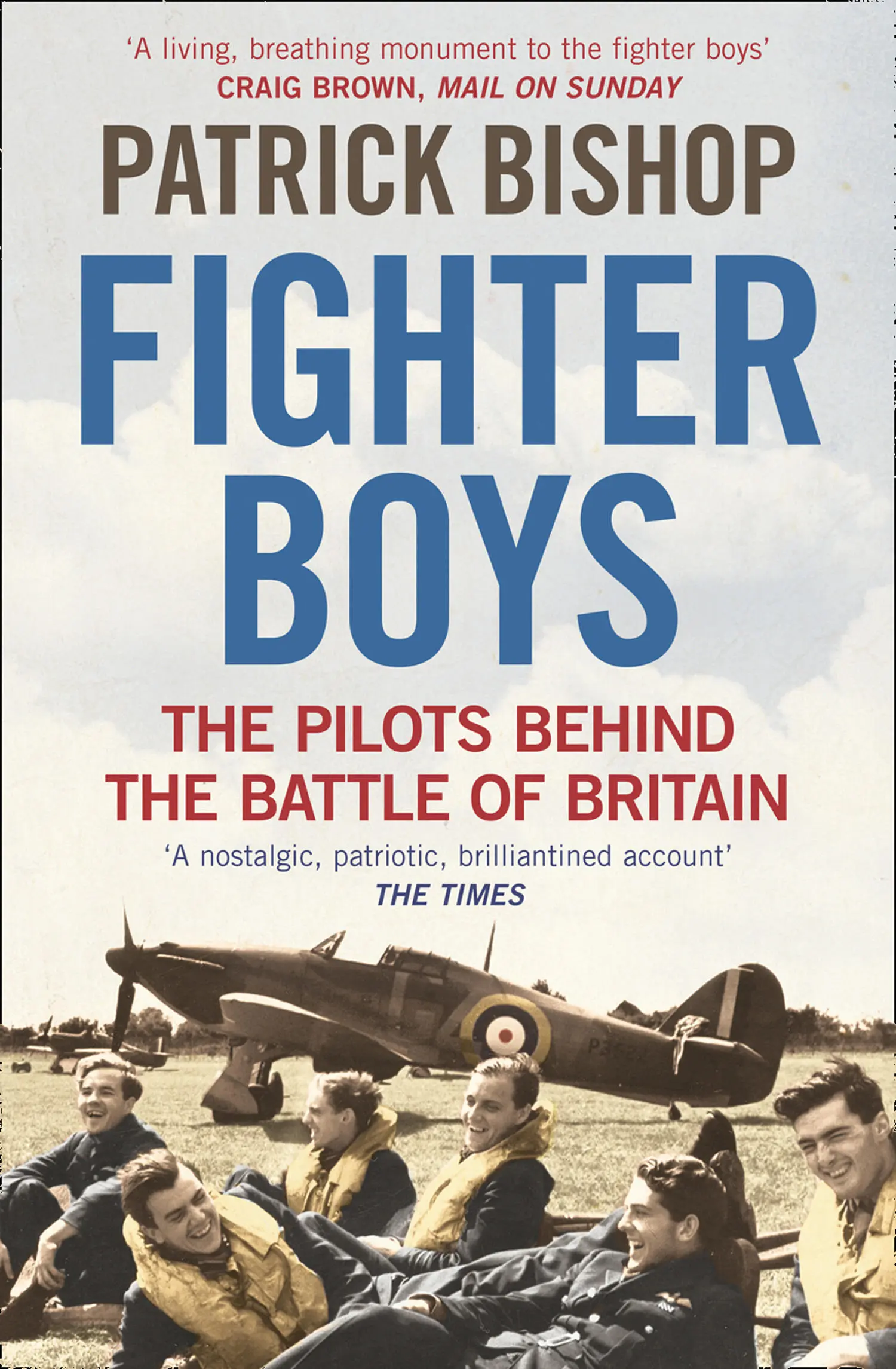
- Название:Fighter Boys
- Автор:
- Жанр:
- Год:неизвестен
- ISBN:нет данных
- Рейтинг книги:3 / 5. Голосов: 1
-
Избранное:Добавить в избранное
- Отзывы:
-
Ваша оценка:
Fighter Boys: краткое содержание, описание и аннотация
Предлагаем к чтению аннотацию, описание, краткое содержание или предисловие (зависит от того, что написал сам автор книги «Fighter Boys»). Если вы не нашли необходимую информацию о книге — напишите в комментариях, мы постараемся отыскать её.
Fighter Boys — читать онлайн ознакомительный отрывок
Ниже представлен текст книги, разбитый по страницам. Система сохранения места последней прочитанной страницы, позволяет с удобством читать онлайн бесплатно книгу «Fighter Boys», без необходимости каждый раз заново искать на чём Вы остановились. Поставьте закладку, и сможете в любой момент перейти на страницу, на которой закончили чтение.
Интервал:
Закладка:
Life was not so congenial at every fighter base. Conditions around the country were variable. The fast rate of the expansion meant accommodation often lagged behind needs. Desmond Sheen, a nineteen-year-old Australian who joined the RAF on a short-service commission from the Royal Australian Air Force, arrived at 72 Squadron at Church Fenton in Yorkshire in June 1937 to be told he was living in a tent at the end of the airfield while the mess was being built. ‘We stayed there until November when the fog and the mists drove us out and we moved into hangars until the building was completed.’ 31When Arthur Banham reported for duty to 19 Squadron at Duxford in Cambridgeshire after finishing his training in August 1936, he was put with nine other junior officers in a hut which acted as a dormitory. ‘The whole place was a mess, with trenches all over the place where they were laying foundations for the new buildings. The officers married quarters weren’t built and most officers lived out of the aerodrome altogether.’ 32
Arriving at their first posts, the newly qualified pilots learned quickly that henceforth everything would centre on the squadron. It became the focus of their professional and their social lives. Nothing could be more exciting than flying and no one could be more fun to be with than one’s fellow fighter pilots. ‘It was a wonderful time for most of us,’ remembered John Nicholas, who joined 65 Squadron in December 1937. ‘It was very pleasant to be with a number of young men of one’s own age, most of whom believed in the same things.’ 33Some of the pre-expansion pilots had worried that the influx would dilute the clubby character of the old organization and dissolve its tenderly guarded esprit de corps. Peter Townsend, a sensitive, reflective career officer who had passed out of Cranwell as the Prize Cadet, returned to Britain to join 43 Squadron in June 1937 after a posting to the Far Bast, to find that ‘gone were the halcyon days of “the best flying club in the world” Tangmere was now peopled by strange faces, different people with a different style. I resented the new generation of pilots who had answered the RAF’s urgent appeal and found heaven-sent relief from boring civilian jobs.’ 34Townsend accepted, almost immediately, that these feelings were unworthy. In a subsequent mea culpa he admitted that ‘my prejudices against them were ignoble, for they were soon to become the most generous-hearted friends, then, a little later, die, most of them, for England’. The reasoning was, anyway, wrong. At any time in the years before the run-up to the expansion programme, a majority of officers in the admittedly much smaller RAF were serving on short-service commissions.
The newcomers took to the existing traditions quickly, offering no serious challenge to the way things were done. Many were familiar with the routines of sport, joviality and boisterous high spirits from school days. Most of the short-service commission pilots entering in the expansion years had a public-school background of one sort or another. Roland Beamont was at Eastbourne College, Geoffrey Page at Dean Close, Cheltenham, Paddy Barthropp went to Ampleforth and Arthur Banham to the Perse School, Cambridge. Bob Tuck attended a small fee-paying day school, St Dunstan’s at Catford, and Pete Brothers a similar establishment, North Manchester School. Billy Drake, James Saunders and John Nicholas were educated abroad. Pat Hancock went to a day school in Croydon before moving to the technical college. Dennis David had been to a boarding school in Deal before changing to Surbiton County School. Of the Cranwellians, Tim Vigors had been at Eton and Brian Kingcome at Bedford.
Most of the entrants, even if they had not been to a proper public school, knew something of the ethos, if only from the pages of the Magnet and the Gem. Bob Doe, a secondary-school boy, felt out of place. Of his fellow short-service entrants he was ‘probably the poorest of the lot. I hadn’t done all the things other people had done. I felt very much an outsider. I was very shy as well, which didn’t help. They were friendly enough but I always felt I was inferior.’ 35The barriers were lowered when he was invited to club together with three others to buy a Hispano-Suiza saloon for £20, this enabling them to go on occasional forays into Cheltenham, twelve miles from Little Rissington, where they were based.
The overseas entrants had little difficulty fitting in. Their status as colonials put them beyond the rigid categorizations of the British class system. Desmond Sheen’s father was a plasterer, but he found at 72 Squadron that ‘everyone got on, with a lot of hilarity and a lot of fun, extremely well. There was no conflict. There was a lot of taking the mickey out of each other, but it was all very friendly. They were all good sports.’ 36
Being a good sport was the essential quality in fitting in. Taken literally, it meant that athletic ability would count in a pilot’s favour, a factor which benefited the outdoorsy arrivals from the Empire. Deere found that ‘the natural reserve of all Englishmen gave way to a more friendly approach’ after a game of rugby in which New Zealanders took on the rest, beating the English pilots by a colossal score. He was a boxer who had taken part in the New Zealand amateur championships. He was reluctant to don the gloves again, but was persuaded to do so by a senior officer who advised him it would be good for his career. The abbreviation of a first name, the bestowal of a nickname, signalled you were in. Alan quickly became Al.
Being a good sport, however, went beyond the observance of the conventions, attitudes and observances of middle-class males of the time. A mood of tolerance prevailed so that individuality, even eccentricity, was prized. The business of aerial warfare meant that the type of military discipline applied to soldiers and sailors was not appropriate for airmen. Junior officers addressed their squadron superiors as ‘sir’ on the initial meeting of the day. After that it was first names. Once in combat in the air, everyone was essentially on their own and beyond the orders of a commander. Good pilots, anyway, succeeded by initiative and making their own decisions.
From the earliest days on the Western Front, pilots took a relaxed view of military conventions and often displayed a sceptical attitude towards senior officers, though seldom with their own immediate commanders if they had earned their respect. Pomposity was ruthlessly punished and shyness discouraged. Coy newcomers learned that a certain amount of leg-pulling and practical joking was the price of belonging. Deere, like all new arrivals, spent his first few weeks at 54 Squadron at Hornchurch doing dogsbody tasks like overseeing the pay and clothing parades. He was also required to check the navigation inventory and found to his concern that an item called the Oxometer was missing. On informing his flight commander, he was told that this was a very serious matter and the station commander might have to be notified if it was not found. It was some days before he ‘realized that no such item of equipment existed and that it was a trick played on all new pilots and one in which everyone from the station commander down participated’. 37The joke took on a further refinement when a particularly earnest pilot officer was told that the missing Oxometer had been found. A fake instrument was rigged up and the relieved officer invited to blow in it to check it was working, which resulted in him being sprayed with soot.
The boisterous and extrovert tone of squadron life disguised a level of consideration and fellow feeling that perhaps marked out the RAF from the other services. The testimony of survivors, and what little was written down by those who died, is imbued with an overwhelming affection for fellow pilots and for the units in which they served. The camaraderie that came with membership of a fighter squadron appears to have provided a degree of spiritual sustenance, augmenting the warmth of an absent family or making those with dislocated backgrounds feel they had arrived at a place where they belonged. The simple cheeriness that was the Fighter Boys’ chosen style masked some complicated stories. Geoffrey Page’s parents were separated. His father frightened him and he resented his miserly attitude toward his mother. Dennis David was brought up by his mother after his father, who drank and had financial troubles, abandoned the family when he was eight. Brian Kingcome’s mother had returned to England with her children, leaving her husband to continue working in India. He returned only once every two and a half years. As Kingcome was at boarding school, he barely saw his son during his childhood and adolescence.
Читать дальшеИнтервал:
Закладка:
Похожие книги на «Fighter Boys»
Представляем Вашему вниманию похожие книги на «Fighter Boys» списком для выбора. Мы отобрали схожую по названию и смыслу литературу в надежде предоставить читателям больше вариантов отыскать новые, интересные, ещё непрочитанные произведения.







Обсуждение, отзывы о книге «Fighter Boys» и просто собственные мнения читателей. Оставьте ваши комментарии, напишите, что Вы думаете о произведении, его смысле или главных героях. Укажите что конкретно понравилось, а что нет, и почему Вы так считаете.