Museum Practice
Здесь есть возможность читать онлайн «Museum Practice» — ознакомительный отрывок электронной книги совершенно бесплатно, а после прочтения отрывка купить полную версию. В некоторых случаях можно слушать аудио, скачать через торрент в формате fb2 и присутствует краткое содержание. Жанр: unrecognised, на английском языке. Описание произведения, (предисловие) а так же отзывы посетителей доступны на портале библиотеки ЛибКат.
- Название:Museum Practice
- Автор:
- Жанр:
- Год:неизвестен
- ISBN:нет данных
- Рейтинг книги:5 / 5. Голосов: 1
-
Избранное:Добавить в избранное
- Отзывы:
-
Ваша оценка:
Museum Practice: краткое содержание, описание и аннотация
Предлагаем к чтению аннотацию, описание, краткое содержание или предисловие (зависит от того, что написал сам автор книги «Museum Practice»). Если вы не нашли необходимую информацию о книге — напишите в комментариях, мы постараемся отыскать её.
Museum Practice — читать онлайн ознакомительный отрывок
Ниже представлен текст книги, разбитый по страницам. Система сохранения места последней прочитанной страницы, позволяет с удобством читать онлайн бесплатно книгу «Museum Practice», без необходимости каждый раз заново искать на чём Вы остановились. Поставьте закладку, и сможете в любой момент перейти на страницу, на которой закончили чтение.
Интервал:
Закладка:
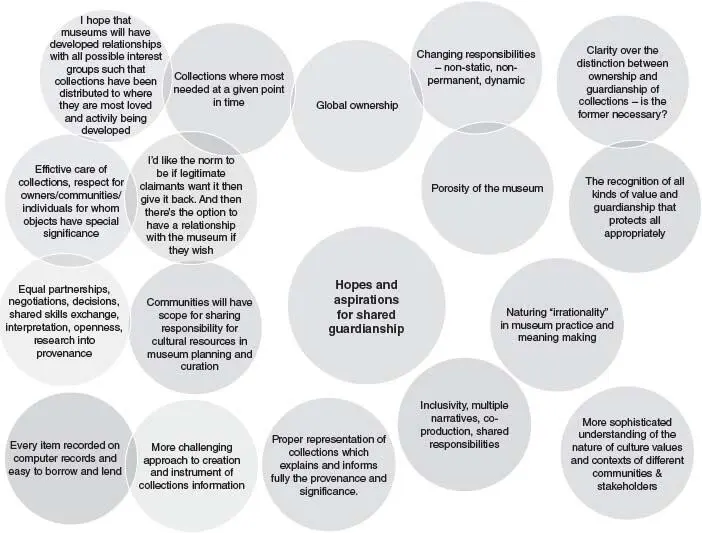
FIGURE 4.5 Participant responses to “Hopes and aspirations for shared guardianship.”
Marstine remarked that the ethics of museum collecting and collections is a highly contested area that often leads to polarization between economic and cultural rights. Janet Ulph, Professor of Law at the University of Leicester, discussed how contrasting legal and ethical approaches to collections have contributed to these oppositions. She explained that, from a legal perspective, objects are viewed as property and are assigned economic value, but from an ethical perspective, objects are seen in terms of the relationships they produce among stakeholders and the “social good(s)” that these relationships generate. The group agreed that the concept of “social good” in the context of collections needs to be explored further, as do the values (such as aesthetic and nationalistic) that museums attach to objects that may mitigate against shared guardianship.
Megone argued that case studies of repatriation debates demonstrate that disagreement is fundamental to applied ethics and that conflict should be explored as a means of overcoming polarized positions. A process of identifying how and why clashing positions develop can facilitate a shared understanding of common ground. Megone showed how the protagonists on either side of an argument might desire the same outcome, but disagree on how to reach it. Alternatively, they might articulate the same view, but frame it within different political or belief systems. There was general support for the idea of unpacking conflict in order to identify potential points of connection as a fruitful and constructive approach that could be developed in the museum sector, although some participants felt that certain views may be too entrenched to be reconciled. Several contributors remarked that the difficult work of reconciliation hinges on transparency in communicating organizational values and agendas. MA Head of Policy and Communications, Maurice Davies, added that in the UK government policy is also key. When museums encounter legal imperatives to rethink ownership of collections (for example, in cases of Nazi spoliation), they respond with a coordinated and successful approach; however, when government policy is more ambiguous (for example, in cases of the possession and display of human remains), museum responses are less clear and consistent (on these topics see chapters by Bienkowski and Pickering in this volume).
Paul Tapsell, Dean of Te Tumu, School of Māori, Pacific and Indigenous Studies at the University of Otago, New Zealand, elucidated policies and practices of shared guardianship from a Māori perspective and discussed how these policies and practices have shaped the bicultural society of New Zealand, including its museums (Tapsell 2011). He presented a persuasive argument from a rights perspective for implementing shared guardianship across the museum sector.
Paul Basu and Nick Merriman presented case studies of shared guardianship in a UK context. Basu, Reader in Material Culture and Museum Studies at University College London, discussed an initiative on “reanimating cultural heritage” through a digital access initiative among five UK museums and archives and collaborating institutions in Sierra Leone. (See Chapter 15, “Reanimating Cultural Heritage: Digital Curatorship, Knowledge Networks, and Social Transformation in Sierra Leone,” by Paul Basu, in Museum Transformations .) The project speaks to broader agendas of access, inclusion, capacity-building, and knowledge sharing. Merriman outlined the Manchester Museum’s work on relational collecting. He described a collaboration with local communities on collecting trees as a means both to promote sustainability and to apply a different lens to the legacies of colonialism within the permanent collection, including botanical collections, live collections of animals, and trees in mythological and symbolic representation (see Merriman, this volume). Both Basu’s and Merriman’s examples illustrated the importance of producing a “social good” by enabling communities to reconnect with their culture and heritage. Jette Sandahl, who has worked in museums in New Zealand and Europe, argued that, so as to avoid becoming mausoleums, museums need to keep collecting, and that relational collecting is an ethical practice. She voiced a powerful reminder that we need to “keep remembering the violence sitting beneath the surface of museum collections” as well as the “loneliness of exile and life as a thing” when alienated from their communities.
What else emerged from the robust discussions about the challenges and opportunities of shared guardianship? Questions arose about how an aspiration to shared guardianship could be implemented in practice. Some participants described challenges in identifying who can represent or speak for a community and in building trust within groups that museums have wronged in the past. Overall, there is a need for museums to develop more sophisticated ways of understanding cultural value, and to think more deeply about how and why museums collect and display objects. Manchester City Galleries conservator Amanda Wallace remarked that museums have become overly obsessed with the materiality of objects. Many contributors concurred that relational collecting could play a significant role in shared guardianship, with museums developing their collections in relation to important themes to their communities. Poole expressed the idea that if museums do not open up their collections toward shared guardianship, they risk becoming irrelevant in an era that values participation and agency. Davies suggested that the new museums ethics is, first and foremost, about deconstructing power issues, and that the area of collections is highly contested because collections represent both economic and cultural control. Others countered that, within the context of shared guardianship, there is the potential to think about collecting as an ethical good.
Moving beyond canonicity
The fourth workshop took a narrow lens to focus on ethics in one particular type of museum – the art museum. Marstine asserted that many of the ethical challenges endemic in art museums and galleries stem from the principles and assumptions of canonicity. She explained how judgments of quality, based on subjective and culturally relative factors including aesthetics, originality, and influence, determine a canon; a canon is thus an exclusionary sifting device that delineates boundaries between insiders and outsiders, the core and the margins. This discrimination leaks from the artistic to the social sphere: in perpetuating canonicity, art museums and galleries implicitly also perpetuate social inequalities that create barriers to participation. Marstine argued that canonicity encourages art museums to extend themselves financially to develop costly blockbuster exhibitions and to acquire high-priced works by canonical artists, and, as a result, many art museums make ethical compromises, from accepting funding from ethically tainted corporations to overlooking conflicts of interest. Despite the focus on art museums, the workshop raised issues relevant to other types of museums, particularly the ways in which canonicity translates to history, science, anthropology, and natural history museum settings. Participants acknowledged that canonicity in these other settings often operates through hierarchies attached to factors such as provenance, gender, sexual orientation, ethnicity, race, and class. Poole asserted that the canon reinforces the founding identity of the museum as a means of organizing and structuring the world: “it’s difficult to take institutions founded as such and transform them into reflective and responsive spaces.”
Читать дальшеИнтервал:
Закладка:
Похожие книги на «Museum Practice»
Представляем Вашему вниманию похожие книги на «Museum Practice» списком для выбора. Мы отобрали схожую по названию и смыслу литературу в надежде предоставить читателям больше вариантов отыскать новые, интересные, ещё непрочитанные произведения.








Обсуждение, отзывы о книге «Museum Practice» и просто собственные мнения читателей. Оставьте ваши комментарии, напишите, что Вы думаете о произведении, его смысле или главных героях. Укажите что конкретно понравилось, а что нет, и почему Вы так считаете.