Museum Practice
Здесь есть возможность читать онлайн «Museum Practice» — ознакомительный отрывок электронной книги совершенно бесплатно, а после прочтения отрывка купить полную версию. В некоторых случаях можно слушать аудио, скачать через торрент в формате fb2 и присутствует краткое содержание. Жанр: unrecognised, на английском языке. Описание произведения, (предисловие) а так же отзывы посетителей доступны на портале библиотеки ЛибКат.
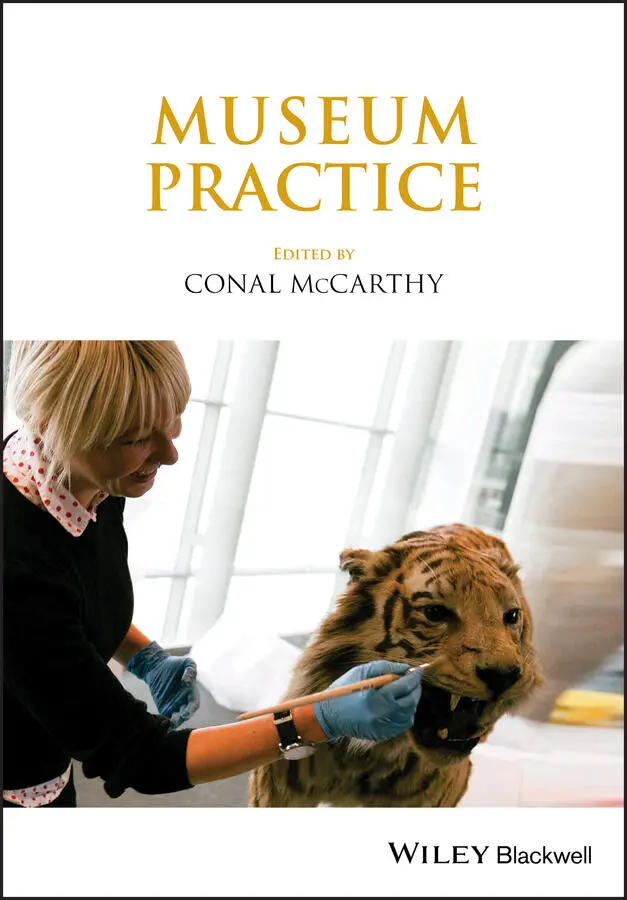
- Название:Museum Practice
- Автор:
- Жанр:
- Год:неизвестен
- ISBN:нет данных
- Рейтинг книги:5 / 5. Голосов: 1
-
Избранное:Добавить в избранное
- Отзывы:
-
Ваша оценка:
Museum Practice: краткое содержание, описание и аннотация
Предлагаем к чтению аннотацию, описание, краткое содержание или предисловие (зависит от того, что написал сам автор книги «Museum Practice»). Если вы не нашли необходимую информацию о книге — напишите в комментариях, мы постараемся отыскать её.
Museum Practice — читать онлайн ознакомительный отрывок
Ниже представлен текст книги, разбитый по страницам. Система сохранения места последней прочитанной страницы, позволяет с удобством читать онлайн бесплатно книгу «Museum Practice», без необходимости каждый раз заново искать на чём Вы остановились. Поставьте закладку, и сможете в любой момент перейти на страницу, на которой закончили чтение.
Интервал:
Закладка:
Issues of canonicity illuminate a crisis of values that dissuades museums from tackling inequalities. John Jackson, from the Natural History Museum in London, was critical of the ways in which museums naturalize canonicity without explaining how, and by whom, it is constructed. Matt Smith, a Brighton-based artist and curator, discussed the burdens of canonicity from a queer perspective. He explained how narratives of canonicity exclude LGBT experiences and discussed examples from his own work that refute and unsettle this exclusivity. David Anderson argued that museums invest very little in meaningful social participation and staff assume that the institution itself has intrinsic, rather than instrumental, value. Rather, he said, “[i]t is the objects within them, rather than the organizations themselves, that have intrinsic value.” Basu added that the nineteenth-century notion of the art museum as a “civilizing institution” is alive and well. Merriman championed working with artists to develop imaginative and creative approaches to collections and exhibitions, but Sandahl and Nightingale voiced frustration that one-off artist-driven initiatives too often enable museums to ignore the potential of such projects to produce organizational change.
Professor Richard Sandell of the School of Museum Studies at the University of Leicester explored BP’s sponsorship of Tate and the powerful protest art of activist group Liberate Tate in critiquing this partnership (see Chong, this volume). When questions arose about the assumption that corporate funding is tainted while public money is always free from compromise, Megone cautioned that it is always challenging to analyze the ethical practices of any organization and its supply chains. Jackson asked whether the ethical practices of individual donors should be scrutinized before their contribution is accepted. Merriman admitted that the UK MA ethics committee does not consider cases concerned with museum sponsorship; almost all of its work involves collections issues. Jackson remarked that most museums make funding decisions based on risk assessment, not on ethics.
Overall, there was no consensus that art museums are particularly weak in addressing ethical issues. Some discussants were concerned that the critique of canonicity was not more widespread and that most practitioners believed that art museums are valuable spaces of creativity, inquiry, and reflection. Sandell declared that quality and social justice are not mutually exclusive. Jocelyn Dodd shared the findings from a long-term RCMG project that evaluated the impact of art works on the perceptions, feelings, and attitudes of young people. Though unfamiliar with art museums, the sample respondents had the opportunity for sustained engagement with a particular painting: Raphael’s Madonna of the Pinks (National Gallery, London). The research showed that age, ability, and previous knowledge of art are not prerequisites for engaging with such canonical works; the experiences of the young people involved were enjoyable, thought-provoking, and in many cases enabled self-reflection and considerable skills to be developed (RCMG 2007). Do projects like this challenge canonicity or legitimize it through public funding? Merriman pointed out that some art museums have taken significant steps to deconstruct canonicity; he cited Kelvingrove in Glasgow, which challenges canonicity by treating artworks like all other museum objects. He also expressed some concern with the “missionary zeal” with which social responsibility was thrust upon museums and galleries, believing it was also important for people to have the choice to resist museums. Others countered that, for many people, resisting is not a choice because the power structures in place do not equally empower diverse publics to exercise their cultural rights.
What would it mean to exercise ethical leadership in the art museum? IDEA CETL took the lead in asking how the museum sector might find common ground. Megone suggested that museums could look to universities, which grapple with many of the same ethical dilemmas of participation and access, but also acknowledge their moral agency as they challenge traditional hierarchies of disciplines and “ways of knowing.” Partnerships between art museums and museum studies departments could offer new ways to think beyond canonicity. IDEA CETL lecturer Jamie Dow advocated a role for museum professionals, in conjunction with museum studies researchers, to define more rigorously the “social good” that museums promote. David Anderson suggested we re-examine the values of public service, which are rarely discussed, as a way of thinking. The workshop as a whole revealed that alternative ways of valuing artistic practice beyond the hierarchies of canonicity can help art museums and galleries to generate shared authority more successfully and become, as Jackson put it, “social actors beyond matters of taste and cultural capital.”
Sustainability
The fifth and final meeting of the network examined the theme of sustainability and, like many of the other workshops, raised ethical debates that were not easily resolved. Nick Poole, who opened the discussions, identified the need to decide the parameters of sustainability in museums; specifically, what should be sustained, why, and who decides. Poole characterized sustainability as “managing a dynamic equilibrium between consumption and production by establishing priorities.” He acknowledged the many conflicting definitions of perpetuity: from 100 years, which is how many museum professionals frame long-term impact, to thousands and millions of years, which is how environmentalists commonly measure actions. Poole asked if it is ethical to sustain some elements of museum activity, such as collections, at the expense of others, such as the experience of culture. He suggested that, in museums, sustainability concerns “educating individuals about their mutual obligation to others.” Megone noted that the ancient Greeks did not have a concept that could be identified as sustainability; instead, our relatively greater control over our world today has generated the idea of sustainability as an ethical value. Others added, however, that it remains difficult to determine exactly what we do, and do not, control.
Tony Kendle, Creative Director of the Eden Project, Cornwall, and Robert Janes, Editor-in-Chief of Museum Management and Curatorship , agreed on the need for collective action among museums to help define and develop the parameters of sustainability. Kendle discussed the interconnectedness of the “three pillars” of sustainability: environmental, economic, and social. He argued for the benefits of understanding how these work together, rather than focusing on each at the expense of the others. Kendle warned that views on sustainability too often “protect particular versions of the future” that create difficult ethical dilemmas. Poole proposed that museums could justify a commitment to sustainability by balancing their economic costs with the social good they create: “the opportunity to live good and reflective lives.”
Janes claimed that addressing sustainability is dependent upon recognizing the synergies between museums and wider society: if economic growth is no longer tenable, how will museums adapt to a non-growth economy? He identified three issues of sustainability facing museums: negative environmental impacts; government and private debt; and resource depletion. Museums can only become sustainable when they engage with people and issues outside, including both professional “outreach” activities and personal experiences beyond their own self-interest.
The role of museum professionals in leading change sparked a debate about the agency of individuals within an organization. Janes remarked that senior management often feels threatened by the idea of individual agency and, as a result, does not cultivate it; this is a wasted opportunity to strengthen museum ethics. The model of the lone museum CEO is not working, and, as Farson has argued, “leadership is the property of the group, not an individual” (1996, 144). David Anderson called for the museum sector to develop a statement of personal ethics that could accede greater agency to individuals, citing medicine as a profession that cannot ignore the social context in which it operates. Responding to this, Eithne Nightingale advocated the alignment of personal and organizational ethics. Poole, however, questioned the wisdom of conflating ethics for the sector with individual ethics, and suggested that revisions to organizational structures and pathways of authority can also generate greater individual agency among museum staff. Similarly, Kendle critiqued the environmental movement’s focus on personal behavior to the detriment of larger, but more disruptive, social changes; while collective action toward sustainability is essential, individuals have to be inspired to hope in a “future possible.”
Читать дальшеИнтервал:
Закладка:
Похожие книги на «Museum Practice»
Представляем Вашему вниманию похожие книги на «Museum Practice» списком для выбора. Мы отобрали схожую по названию и смыслу литературу в надежде предоставить читателям больше вариантов отыскать новые, интересные, ещё непрочитанные произведения.







Обсуждение, отзывы о книге «Museum Practice» и просто собственные мнения читателей. Оставьте ваши комментарии, напишите, что Вы думаете о произведении, его смысле или главных героях. Укажите что конкретно понравилось, а что нет, и почему Вы так считаете.