Museum Practice
Здесь есть возможность читать онлайн «Museum Practice» — ознакомительный отрывок электронной книги совершенно бесплатно, а после прочтения отрывка купить полную версию. В некоторых случаях можно слушать аудио, скачать через торрент в формате fb2 и присутствует краткое содержание. Жанр: unrecognised, на английском языке. Описание произведения, (предисловие) а так же отзывы посетителей доступны на портале библиотеки ЛибКат.
- Название:Museum Practice
- Автор:
- Жанр:
- Год:неизвестен
- ISBN:нет данных
- Рейтинг книги:5 / 5. Голосов: 1
-
Избранное:Добавить в избранное
- Отзывы:
-
Ваша оценка:
Museum Practice: краткое содержание, описание и аннотация
Предлагаем к чтению аннотацию, описание, краткое содержание или предисловие (зависит от того, что написал сам автор книги «Museum Practice»). Если вы не нашли необходимую информацию о книге — напишите в комментариях, мы постараемся отыскать её.
Museum Practice — читать онлайн ознакомительный отрывок
Ниже представлен текст книги, разбитый по страницам. Система сохранения места последней прочитанной страницы, позволяет с удобством читать онлайн бесплатно книгу «Museum Practice», без необходимости каждый раз заново искать на чём Вы остановились. Поставьте закладку, и сможете в любой момент перейти на страницу, на которой закончили чтение.
Интервал:
Закладка:
Acknowledging the dilemmas of sustainability in twenty-first-century ethics, Poole remarked that tackling the issue was “like looking through a veil” and not knowing what was on the other side. He noted that it is possible to address very limited areas of sustainability, but much harder to resolve the broader issues. Kendle stated that some impacts might not be known or measurable, even if we do know they exist. Janes added that sustainability could be understood as a process of coming to terms with the paradoxical nature of museums and the need to manage an unknown future. Participants were certain that it was no longer acceptable for museums to remain silent, but that they must become activist organizations in pursuit of a sustainable world. They also acknowledged that the route toward change was slow and that the discourse around radical change is weak, but, as Sandahl remarked, the route backward is much faster.
In conclusion, Janes reinforced the need for individual and institutional action to develop the socially engaged museum. However, some participants argued that, in their experience, institutions were likely to impede or compromise ethical decision- making. Poole asserted that currently there was a “moral leadership vacuum” in the museum sector that needed to be addressed. Citing the example of the UK’s Leveson Inquiry, the public investigation into the practices and ethics of the British press after the revelation of the phone-hacking scandal by News International in 2011, Megone considered its implications for redefining ethics in the media, drawing attention to the tension between public interest and freedom of the press (over which there is a lack of clarity), and the need for an active code of ethics alongside regulation. It was suggested that examples such as this relevant to museums would help to define the cultural contexts for museum ethics. Finally, Poole noted that Kendle had used three aspirational phrases to capture the spirit of network conversations on sustainability and museum ethics: “hope,” “change you can believe in,” and “future possible.”
Reflections on the processes of the research network: what was most valuable?
Involvement in the workshops had a significant impact on participants. It gave them a new language to discuss ethics in the wider sector and brought them into contact with other colleagues who advocate progressive ethical models for museums. Participants were asked to indicate what issues from the five workshops they found to be most insightful ( Figure 4.6) and most challenging ( Figure 4.7). Insightful issues included: co-production; the interdependence of museums and the wider world; and the need for a personal ethics in the sector. Challenging issues ranged from: mapping the relationships between personal and institutional ethics; distinguishing between theoretical and applied ethics; and acknowledging the diversity of approaches to ethics within the museum sector. Contributors reflected that there was often a connection between the most insightful and the most challenging issues: for example, co-production was an insightful issue for some participants, but also raised challenges in in terms of definition and the reinterpretation of expertise. One participant questioned whether ethics was the most appropriate framework through which to address the most pressing issues facing museums, such as the structures of power and inequality.
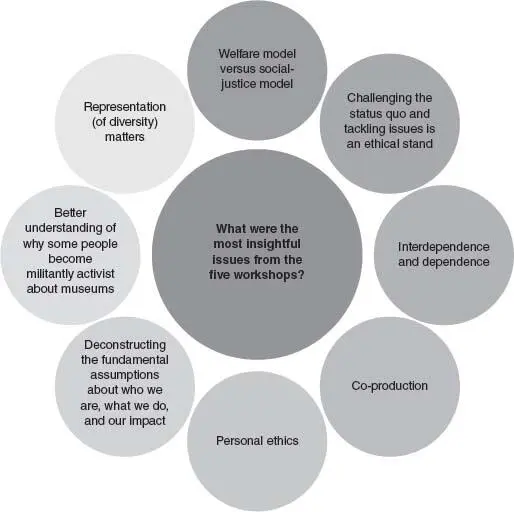
FIGURE 4.6 Reflections on the most insightful elements of the five workshops.
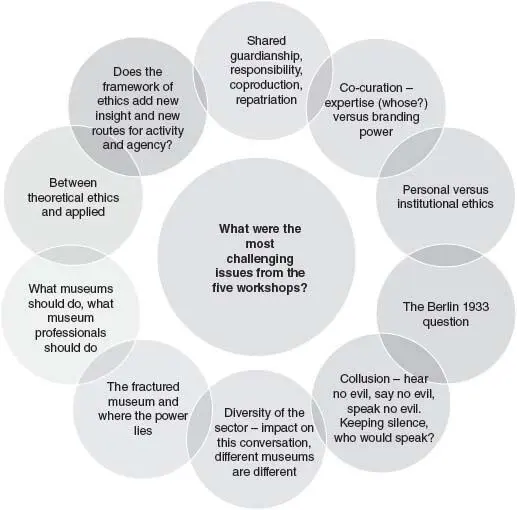
FIGURE 4.7 Reflections on the most challenging issues from the five workshops.
When asked what major questions had been left unanswered by the research network, participants wanted more time to unpack further the ideas of the new museum ethics. Issues to explore in greater depth included: whether ethics is a set of principles and values, a discipline, or a method; and the multiple ways in which ethics is framed – by “universal” values or principles such as human rights or culturally relative practices – and might be negotiated within conflicting systems of values. The network would have benefited from the involvement of more international and non-Western contributors, and from more time to consider how ethics intersects with power and politics. Members also said that they would have welcomed more discussion of case studies outside of the museum sector, such as the Leveson Inquiry into media ethics. A few participants wanted more exposure to speakers who could articulate a conservative perspective on museums so as to challenge the formation of a consensus within the workshop and to help prepare for conversations within the sector.
Finally, contributors wanted to look at a range of new initiatives to advance twenty-first-century museum ethics. Some contributors championed the possibility of developing an independent body that would stand as an intermediary between institutions and museum professionals, to ensure that museum staff who disagreed with the ethical position of their institution would have a voice; the body would provide support for dissensus, as well as a space to reflect and think critically about ethics in museums. Other participants advocated the establishment of a research and development fund for museums to experiment with socially engaged projects. A few hoped to see an integrity auditing or monitoring tool that could be piloted in the museum sector. Participants were eager to put their ideas into action. Clearly, the research network created momentum among the group to keep conversations flowing.
Conclusion
The AHRC research network tested the value of the new ethics to address key ethics issues with which museums are grappling and its relevance to developing socially purposeful museums. The conversations that emerged from the network argued that reconceptualizing ethics as a discourse, informed by both intellectual engagement and social practice, is integral to museums’ continued relevance and sustainability. Understanding the significance and confluences among values, case studies, and codes has the potential to help museum practitioners recognize the benefits of self-reflective practice through the lens of the new museum ethics. Clearly, building a strategic approach to embed the new museum ethics is challenging work. But regulation per se is not an adequate response to the ethics quandaries of the twenty-first century. In fact, the reliance on codes alone too often becomes a justification for museums to avoid difficult ethics conversations, particularly around values, principles, and social responsibility. The new museum ethics represents an opportunity for growth, rather than a burden of compliance.
Engaging in the new museum ethics is a twenty-first-century skill that museum and museum studies leaders must build among students, professionals, and communities. The new ethics is a powerful tool to effect organizational change and work toward social responsibility. It has the capacity to strengthen public trust by equipping museum practitioners to deal sensitively and fairly with the shifting ethical terrain, now and in the future. To develop a level of comfort with ethical decision-making based on a range of social concerns, is to accept the complexity and dynamism of ethics discourse that both reflects and shapes the real issues that museums encounter.
APPENDIX: LIST OF CONTRIBUTORS TO THE MUSEUM ETHICS NETWORK BY EACH WORKSHOP
Интервал:
Закладка:
Похожие книги на «Museum Practice»
Представляем Вашему вниманию похожие книги на «Museum Practice» списком для выбора. Мы отобрали схожую по названию и смыслу литературу в надежде предоставить читателям больше вариантов отыскать новые, интересные, ещё непрочитанные произведения.





Обсуждение, отзывы о книге «Museum Practice» и просто собственные мнения читателей. Оставьте ваши комментарии, напишите, что Вы думаете о произведении, его смысле или главных героях. Укажите что конкретно понравилось, а что нет, и почему Вы так считаете.