Immanuel Kant - Kant's Three Critiques
Здесь есть возможность читать онлайн «Immanuel Kant - Kant's Three Critiques» — ознакомительный отрывок электронной книги совершенно бесплатно, а после прочтения отрывка купить полную версию. В некоторых случаях можно слушать аудио, скачать через торрент в формате fb2 и присутствует краткое содержание. Жанр: unrecognised, на английском языке. Описание произведения, (предисловие) а так же отзывы посетителей доступны на портале библиотеки ЛибКат.
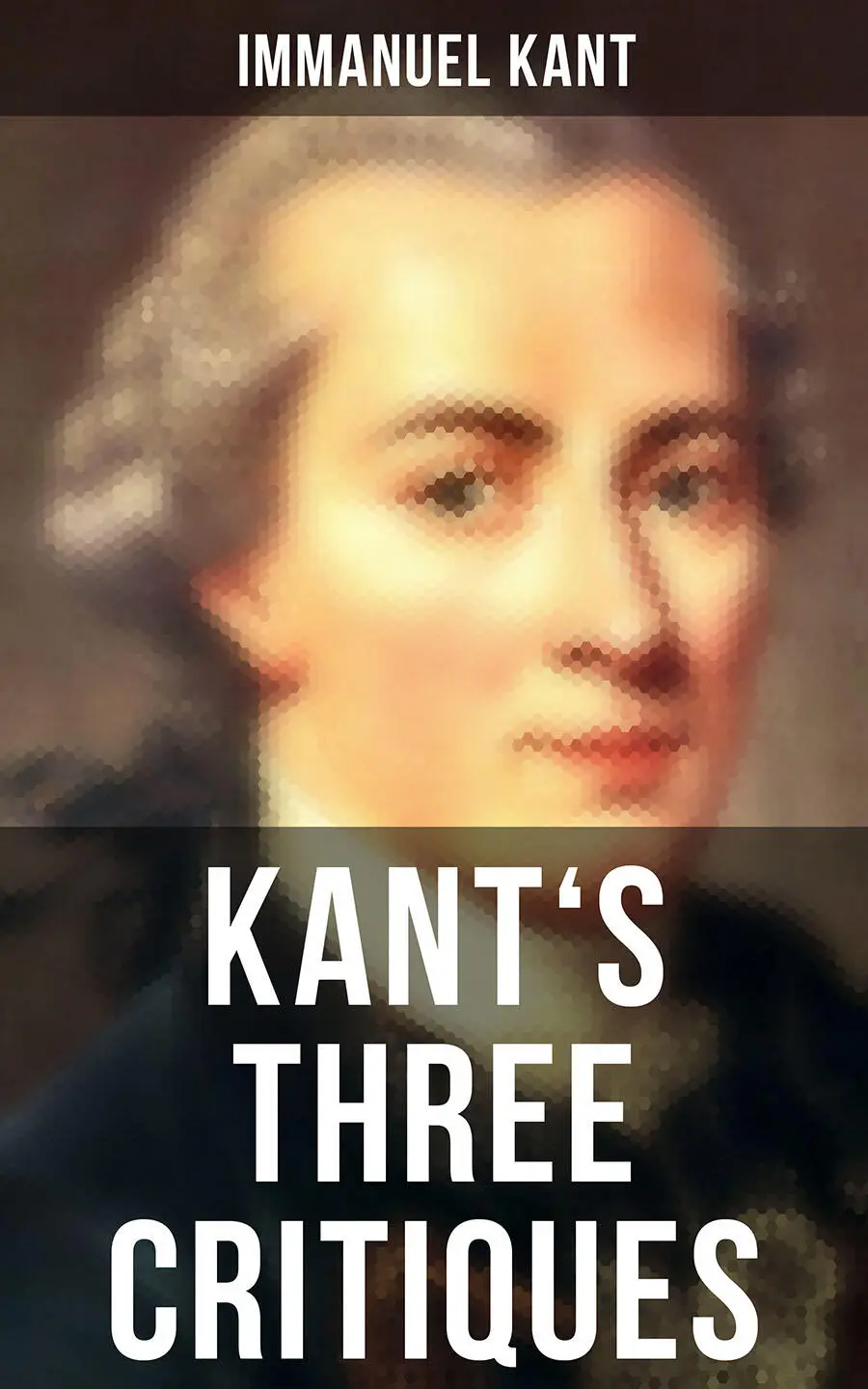
- Название:Kant's Three Critiques
- Автор:
- Жанр:
- Год:неизвестен
- ISBN:нет данных
- Рейтинг книги:5 / 5. Голосов: 1
-
Избранное:Добавить в избранное
- Отзывы:
-
Ваша оценка:
Kant's Three Critiques: краткое содержание, описание и аннотация
Предлагаем к чтению аннотацию, описание, краткое содержание или предисловие (зависит от того, что написал сам автор книги «Kant's Three Critiques»). Если вы не нашли необходимую информацию о книге — напишите в комментариях, мы постараемся отыскать её.
The Critique of Practical Reason is the second of Immanuel Kant's three critiques and it deals with his moral philosophy. The second Critique exercised a decisive influence over the subsequent development of the field of ethics and moral philosophy, beginning with Johann Gottlieb Fichte's Doctrine of Science.
The Critique of Judgment, also translated as the Critique of the Power of Judgment completes the Critical project begun in the Critique of Pure Reason. The book is divided into two main sections: the Critique of Aesthetic Judgment and the Critique of Teleological Judgment, and also includes a large overview of the entirety of Kant's Critical system, arranged in its final form.
Immanuel Kant (1724-1804) was a German philosopher, who, according to the Stanford Encyclopedia of Philosophy is «the central figure of modern philosophy.» Kant argued that fundamental concepts of the human mind structure human experience, that reason is the source of morality, that aesthetics arises from a faculty of disinterested judgment, that space and time are forms of our understanding, and that the world as it is «in-itself» is unknowable. Kant took himself to have effected a Copernican revolution in philosophy, akin to Copernicus' reversal of the age-old belief that the sun revolved around the earth.
Table of Contents:
THE CRITIQUE OF PURE REASON
THE CRITIQUE OF PRACTICAL REASON
THE CRITIQUE OF JUDGMENT
Kant's Three Critiques — читать онлайн ознакомительный отрывок
Ниже представлен текст книги, разбитый по страницам. Система сохранения места последней прочитанной страницы, позволяет с удобством читать онлайн бесплатно книгу «Kant's Three Critiques», без необходимости каждый раз заново искать на чём Вы остановились. Поставьте закладку, и сможете в любой момент перейти на страницу, на которой закончили чтение.
Интервал:
Закладка:
A. FIRST ANALOGY.
Principle of the Permanence of Substance.
In all changes of phenomena, substance is permanent, and the quantum thereof in nature is neither increased nor diminished.
PROOF.
All phenomena exist in time, wherein alone as substratum, that is, as the permanent form of the internal intuition, coexistence and succession can be represented. Consequently time, in which all changes of phenomena must be cogitated, remains and changes not, because it is that in which succession and coexistence can be represented only as determinations thereof. Now, time in itself cannot be an object of perception. It follows that in objects of perception, that is, in phenomena, there must be found a substratum which represents time in general, and in which all change or coexistence can be perceived by means of the relation of phenomena to it. But the substratum of all reality, that is, of all that pertains to the existence of things, is substance; all that pertains to existence can be cogitated only as a determination of substance. Consequently, the permanent, in relation to which alone can all relations of time in phenomena be determined, is substance in the world of phenomena, that is, the real in phenomena, that which, as the substratum of all change, remains ever the same. Accordingly, as this cannot change in existence, its quantity in nature can neither be increased nor diminished.
Our apprehension of the manifold in a phenomenon is always successive, is consequently always changing. By it alone we could, therefore, never determine whether this manifold, as an object of experience, is coexistent or successive, unless it had for a foundation something fixed and permanent, of the existence of which all succession and coexistence are nothing but so many modes (modi of time). Only in the permanent, then, are relations of time possible (for simultaneity and succession are the only relations in time); that is to say, the permanent is the substratum of our empirical representation of time itself, in which alone all determination of time is possible. Permanence is, in fact, just another expression for time, as the abiding correlate of all existence of phenomena, and of all change, and of all coexistence. For change does not affect time itself, but only the phenomena in time (just as coexistence cannot be regarded as a modus of time itself, seeing that in time no parts are coexistent, but all successive). If we were to attribute succession to time itself, we should be obliged to cogitate another time, in which this succession would be possible. It is only by means of the permanent that existence in different parts of the successive series of time receives a quantity, which we entitle duration. For in mere succession, existence is perpetually vanishing and recommencing, and therefore never has even the least quantity. Without the permanent, then, no relation in time is possible. Now, time in itself is not an object of perception; consequently the permanent in phenomena must be regarded as the substratum of all determination of time, and consequently also as the condition of the possibility of all synthetical unity of perceptions, that is, of experience; and all existence and all change in time can only be regarded as a mode in the existence of that which abides unchangeably. Therefore, in all phenomena, the permanent is the object in itself, that is, the substance (phenomenon); but all that changes or can change belongs only to the mode of the existence of this substance or substances, consequently to its determinations.
I find that in all ages not only the philosopher, but even the common understanding, has preposited this permanence as a substratum of all change in phenomena; indeed, I am compelled to believe that they will always accept this as an indubitable fact. Only the philosopher expresses himself in a more precise and definite manner, when he says: “In all changes in the world, the substance remains, and the accidents alone are changeable.” But of this decidedly synthetical proposition, I nowhere meet with even an attempt at proof; nay, it very rarely has the good fortune to stand, as it deserves to do, at the head of the pure and entirely a priori laws of nature. In truth, the statement that substance is permanent, is tautological. For this very permanence is the ground on which we apply the category of substance to the phenomenon; and we should have been obliged to prove that in all phenomena there is something permanent, of the existence of which the changeable is nothing but a determination. But because a proof of this nature cannot be dogmatical, that is, cannot be drawn from conceptions, inasmuch as it concerns a synthetical proposition a priori , and as philosophers never reflected that such propositions are valid only in relation to possible experience, and therefore cannot be proved except by means of a deduction of the possibility of experience, it is no wonder that while it has served as the foundation of all experience (for we feel the need of it in empirical cognition), it has never been supported by proof.
A philosopher was asked: “What is the weight of smoke?” He answered: “Subtract from the weight of the burnt wood the weight of the remaining ashes, and you will have the weight of the smoke.” Thus he presumed it to be incontrovertible that even in fire the matter (substance) does not perish, but that only the form of it undergoes a change. In like manner was the saying: “From nothing comes nothing,” only another inference from the principle or permanence, or rather of the ever-abiding existence of the true subject in phenomena. For if that in the phenomenon which we call substance is to be the proper substratum of all determination of time, it follows that all existence in past as well as in future time, must be determinable by means of it alone. Hence we are entitled to apply the term substance to a phenomenon, only because we suppose its existence in all time, a notion which the word permanence does not fully express, as it seems rather to be referable to future time. However, the internal necessity perpetually to be, is inseparably connected with the necessity always to have been, and so the expression may stand as it is. “Gigni de nihilo nihil; in nihilum nil posse reverti,” 30 are two propositions which the ancients never parted, and which people nowadays sometimes mistakenly disjoin, because they imagine that the propositions apply to objects as things in themselves, and that the former might be inimical to the dependence (even in respect of its substance also) of the world upon a supreme cause. But this apprehension is entirely needless, for the question in this case is only of phenomena in the sphere of experience, the unity of which never could be possible, if we admitted the possibility that new things (in respect of their substance) should arise. For in that case, we should lose altogether that which alone can represent the unity of time, to wit, the identity of the substratum, as that through which alone all change possesses complete and thorough unity. This permanence is, however, nothing but the manner in which we represent to ourselves the existence of things in the phenomenal world.
The determinations of a substance, which are only particular modes of its existence, are called accidents. They are always real, because they concern the existence of substance (negations are only determinations, which express the non-existence of something in the substance). Now, if to this real in the substance we ascribe a particular existence (for example, to motion as an accident of matter), this existence is called inherence, in contradistinction to the existence of substance, which we call subsistence. But hence arise many misconceptions, and it would be a more accurate and just mode of expression to designate the accident only as the mode in which the existence of a substance is positively determined. Meanwhile, by reason of the conditions of the logical exercise of our understanding, it is impossible to avoid separating, as it were, that which in the existence of a substance is subject to change, whilst the substance remains, and regarding it in relation to that which is properly permanent and radical. On this account, this category of substance stands under the title of relation, rather because it is the condition thereof than because it contains in itself any relation.
Читать дальшеИнтервал:
Закладка:
Похожие книги на «Kant's Three Critiques»
Представляем Вашему вниманию похожие книги на «Kant's Three Critiques» списком для выбора. Мы отобрали схожую по названию и смыслу литературу в надежде предоставить читателям больше вариантов отыскать новые, интересные, ещё непрочитанные произведения.








Обсуждение, отзывы о книге «Kant's Three Critiques» и просто собственные мнения читателей. Оставьте ваши комментарии, напишите, что Вы думаете о произведении, его смысле или главных героях. Укажите что конкретно понравилось, а что нет, и почему Вы так считаете.