Immanuel Kant - Kant's Three Critiques
Здесь есть возможность читать онлайн «Immanuel Kant - Kant's Three Critiques» — ознакомительный отрывок электронной книги совершенно бесплатно, а после прочтения отрывка купить полную версию. В некоторых случаях можно слушать аудио, скачать через торрент в формате fb2 и присутствует краткое содержание. Жанр: unrecognised, на английском языке. Описание произведения, (предисловие) а так же отзывы посетителей доступны на портале библиотеки ЛибКат.
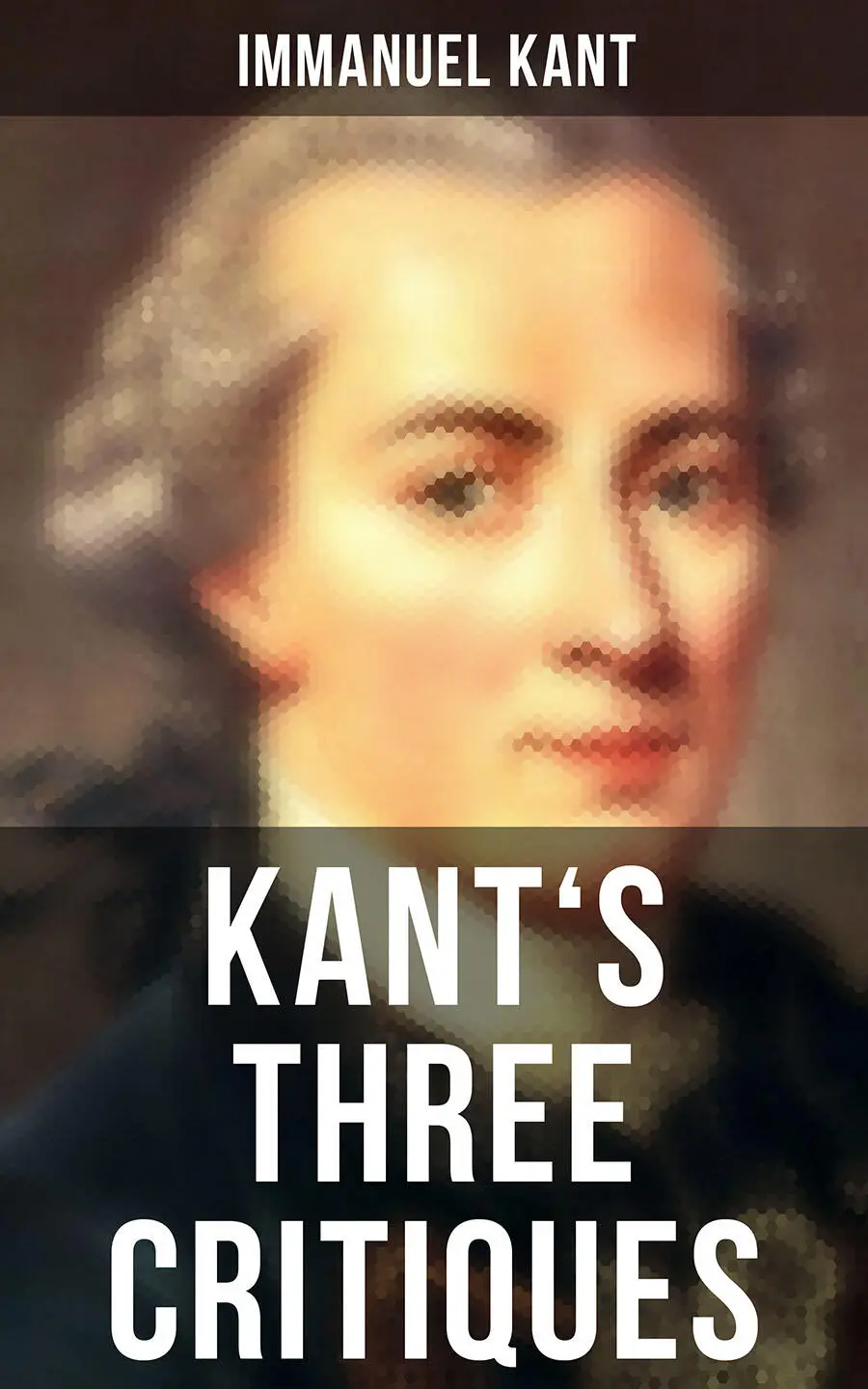
- Название:Kant's Three Critiques
- Автор:
- Жанр:
- Год:неизвестен
- ISBN:нет данных
- Рейтинг книги:5 / 5. Голосов: 1
-
Избранное:Добавить в избранное
- Отзывы:
-
Ваша оценка:
Kant's Three Critiques: краткое содержание, описание и аннотация
Предлагаем к чтению аннотацию, описание, краткое содержание или предисловие (зависит от того, что написал сам автор книги «Kant's Three Critiques»). Если вы не нашли необходимую информацию о книге — напишите в комментариях, мы постараемся отыскать её.
The Critique of Practical Reason is the second of Immanuel Kant's three critiques and it deals with his moral philosophy. The second Critique exercised a decisive influence over the subsequent development of the field of ethics and moral philosophy, beginning with Johann Gottlieb Fichte's Doctrine of Science.
The Critique of Judgment, also translated as the Critique of the Power of Judgment completes the Critical project begun in the Critique of Pure Reason. The book is divided into two main sections: the Critique of Aesthetic Judgment and the Critique of Teleological Judgment, and also includes a large overview of the entirety of Kant's Critical system, arranged in its final form.
Immanuel Kant (1724-1804) was a German philosopher, who, according to the Stanford Encyclopedia of Philosophy is «the central figure of modern philosophy.» Kant argued that fundamental concepts of the human mind structure human experience, that reason is the source of morality, that aesthetics arises from a faculty of disinterested judgment, that space and time are forms of our understanding, and that the world as it is «in-itself» is unknowable. Kant took himself to have effected a Copernican revolution in philosophy, akin to Copernicus' reversal of the age-old belief that the sun revolved around the earth.
Table of Contents:
THE CRITIQUE OF PURE REASON
THE CRITIQUE OF PRACTICAL REASON
THE CRITIQUE OF JUDGMENT
Kant's Three Critiques — читать онлайн ознакомительный отрывок
Ниже представлен текст книги, разбитый по страницам. Система сохранения места последней прочитанной страницы, позволяет с удобством читать онлайн бесплатно книгу «Kant's Three Critiques», без необходимости каждый раз заново искать на чём Вы остановились. Поставьте закладку, и сможете в любой момент перейти на страницу, на которой закончили чтение.
Интервал:
Закладка:
In conclusion, that transcendental aesthetic cannot contain any more than these two elements — space and time, is sufficiently obvious from the fact that all other conceptions appertaining to sensibility, even that of motion, which unites in itself both elements, presuppose something empirical. Motion, for example, presupposes the perception of something movable. But space considered in itself contains nothing movable, consequently motion must be something which is found in space only through experience — in other words, an empirical datum. In like manner, transcendental aesthetic cannot number the conception of change among its data a priori ; for time itself does not change, but only something which is in time. To acquire the conception of change, therefore, the perception of some existing object and of the succession of its determinations, in one word, experience, is necessary.
§§ 9 General Remarks on Transcendental Aesthetic.
I. In order to prevent any misunderstanding, it will be requisite, in the first place, to recapitulate, as clearly as possible, what our opinion is with respect to the fundamental nature of our sensuous cognition in general. We have intended, then, to say that all our intuition is nothing but the representation of phenomena; that the things which we intuite, are not in themselves the same as our representations of them in intuition, nor are their relations in themselves so constituted as they appear to us; and that if we take away the subject, or even only the subjective constitution of our senses in general, then not only the nature and relations of objects in space and time, but even space and time themselves disappear; and that these, as phenomena, cannot exist in themselves, but only in us. What may be the nature of objects considered as things in themselves and without reference to the receptivity of our sensibility is quite unknown to us. We know nothing more than our mode of perceiving them, which is peculiar to us, and which, though not of necessity pertaining to every animated being, is so to the whole human race. With this alone we have to do. Space and time are the pure forms thereof; sensation the matter. The former alone can we cognize a priori , that is, antecedent to all actual perception; and for this reason such cognition is called pure intuition. The latter is that in our cognition which is called cognition a posteriori , that is, empirical intuition. The former appertain absolutely and necessarily to our sensibility, of whatsoever kind our sensations may be; the latter may be of very diversified character. Supposing that we should carry our empirical intuition even to the very highest degree of clearness, we should not thereby advance one step nearer to a knowledge of the constitution of objects as things in themselves. For we could only, at best, arrive at a complete cognition of our own mode of intuition, that is of our sensibility, and this always under the conditions originally attaching to the subject, namely, the conditions of space and time; while the question: “What are objects considered as things in themselves?” remains unanswerable even after the most thorough examination of the phenomenal world.
To say, then, that all our sensibility is nothing but the confused representation of things containing exclusively that which belongs to them as things in themselves, and this under an accumulation of characteristic marks and partial representations which we cannot distinguish in consciousness, is a falsification of the conception of sensibility and phenomenization, which renders our whole doctrine thereof empty and useless. The difference between a confused and a clear representation is merely logical and has nothing to do with content. No doubt the conception of right, as employed by a sound understanding, contains all that the most subtle investigation could unfold from it, although, in the ordinary practical use of the word, we are not conscious of the manifold representations comprised in the conception. But we cannot for this reason assert that the ordinary conception is a sensuous one, containing a mere phenomenon, for right cannot appear as a phenomenon; but the conception of it lies in the understanding, and represents a property (the moral property) of actions, which belongs to them in themselves. On the other hand, the representation in intuition of a body contains nothing which could belong to an object considered as a thing in itself, but merely the phenomenon or appearance of something, and the mode in which we are affected by that appearance; and this receptivity of our faculty of cognition is called sensibility, and remains toto caelo different from the cognition of an object in itself, even though we should examine the content of the phenomenon to the very bottom.
It must be admitted that the Leibnitz-Wolfian philosophy has assigned an entirely erroneous point of view to all investigations into the nature and origin of our cognitions, inasmuch as it regards the distinction between the sensuous and the intellectual as merely logical, whereas it is plainly transcendental, and concerns not merely the clearness or obscurity, but the content and origin of both. For the faculty of sensibility not only does not present us with an indistinct and confused cognition of objects as things in themselves, but, in fact, gives us no knowledge of these at all. On the contrary, so soon as we abstract in thought our own subjective nature, the object represented, with the properties ascribed to it by sensuous intuition, entirely disappears, because it was only this subjective nature that determined the form of the object as a phenomenon.
In phenomena, we commonly, indeed, distinguish that which essentially belongs to the intuition of them, and is valid for the sensuous faculty of every human being, from that which belongs to the same intuition accidentally, as valid not for the sensuous faculty in general, but for a particular state or organization of this or that sense. Accordingly, we are accustomed to say that the former is a cognition which represents the object itself, whilst the latter presents only a particular appearance or phenomenon thereof. This distinction, however, is only empirical. If we stop here (as is usual), and do not regard the empirical intuition as itself a mere phenomenon (as we ought to do), in which nothing that can appertain to a thing in itself is to be found, our transcendental distinction is lost, and we believe that we cognize objects as things in themselves, although in the whole range of the sensuous world, investigate the nature of its objects as profoundly as we may, we have to do with nothing but phenomena. Thus, we call the rainbow a mere appearance of phenomenon in a sunny shower, and the rain, the reality or thing in itself; and this is right enough, if we understand the latter conception in a merely physical sense, that is, as that which in universal experience, and under whatever conditions of sensuous perception, is known in intuition to be so and so determined, and not otherwise. But if we consider this empirical datum generally, and inquire, without reference to its accordance with all our senses, whether there can be discovered in it aught which represents an object as a thing in itself (the raindrops of course are not such, for they are, as phenomena, empirical objects), the question of the relation of the representation to the object is transcendental; and not only are the raindrops mere phenomena, but even their circular form, nay, the space itself through which they fall, is nothing in itself, but both are mere modifications or fundamental dispositions of our sensuous intuition, whilst the transcendental object remains for us utterly unknown.
The second important concern of our aesthetic is that it does not obtain favour merely as a plausible hypothesis, but possess as undoubted a character of certainty as can be demanded of any theory which is to serve for an organon. In order fully to convince the reader of this certainty, we shall select a case which will serve to make its validity apparent, and also to illustrate what has been said in §§ 3.
Читать дальшеИнтервал:
Закладка:
Похожие книги на «Kant's Three Critiques»
Представляем Вашему вниманию похожие книги на «Kant's Three Critiques» списком для выбора. Мы отобрали схожую по названию и смыслу литературу в надежде предоставить читателям больше вариантов отыскать новые, интересные, ещё непрочитанные произведения.










Обсуждение, отзывы о книге «Kant's Three Critiques» и просто собственные мнения читателей. Оставьте ваши комментарии, напишите, что Вы думаете о произведении, его смысле или главных героях. Укажите что конкретно понравилось, а что нет, и почему Вы так считаете.