James Cooper - LEATHERSTOCKING TALES – Complete Collection
Здесь есть возможность читать онлайн «James Cooper - LEATHERSTOCKING TALES – Complete Collection» — ознакомительный отрывок электронной книги совершенно бесплатно, а после прочтения отрывка купить полную версию. В некоторых случаях можно слушать аудио, скачать через торрент в формате fb2 и присутствует краткое содержание. Жанр: unrecognised, на английском языке. Описание произведения, (предисловие) а так же отзывы посетителей доступны на портале библиотеки ЛибКат.
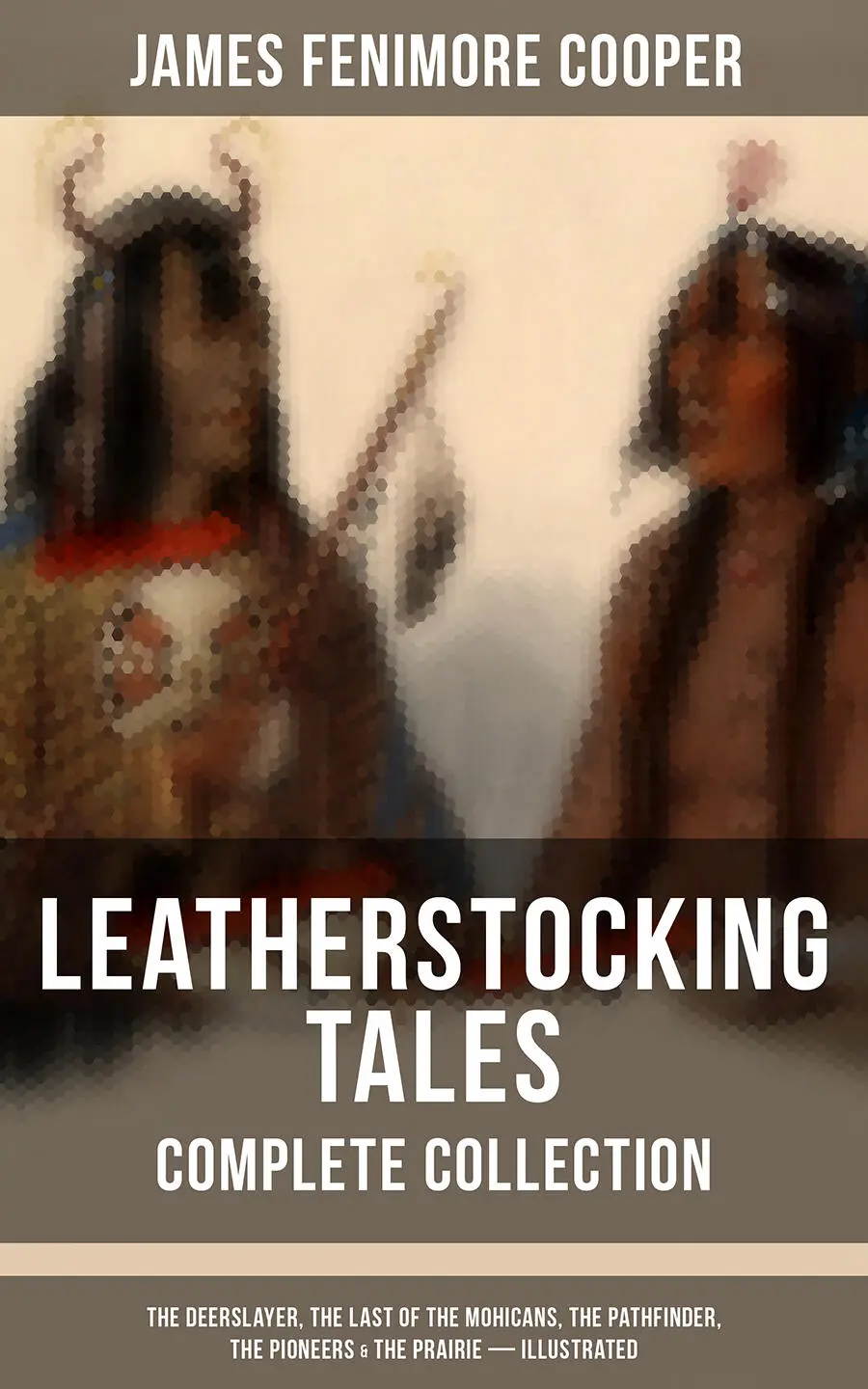
- Название:LEATHERSTOCKING TALES – Complete Collection
- Автор:
- Жанр:
- Год:неизвестен
- ISBN:нет данных
- Рейтинг книги:3 / 5. Голосов: 1
-
Избранное:Добавить в избранное
- Отзывы:
-
Ваша оценка:
LEATHERSTOCKING TALES – Complete Collection: краткое содержание, описание и аннотация
Предлагаем к чтению аннотацию, описание, краткое содержание или предисловие (зависит от того, что написал сам автор книги «LEATHERSTOCKING TALES – Complete Collection»). Если вы не нашли необходимую информацию о книге — напишите в комментариях, мы постараемся отыскать её.
LEATHERSTOCKING TALES – Complete Collection — читать онлайн ознакомительный отрывок
Ниже представлен текст книги, разбитый по страницам. Система сохранения места последней прочитанной страницы, позволяет с удобством читать онлайн бесплатно книгу «LEATHERSTOCKING TALES – Complete Collection», без необходимости каждый раз заново искать на чём Вы остановились. Поставьте закладку, и сможете в любой момент перейти на страницу, на которой закончили чтение.
Интервал:
Закладка:
By the time Hetty had said this, she reached the place where the canoes had come ashore, and, owing to the curvature of the land and the bushes, would have been completely hid from the sight of the sentinel, had it been broad day. But another footstep had caught the lover’s ear, and he was already nearly beyond the sound of the girl’s silvery voice. Still Hetty, bent only on her own thoughts and purposes, continued to speak, though the gentleness of her tones prevented the sounds from penetrating far into the woods. On the water they were more widely diffused.
“Here I am, Judith,” she added, “and there is no one near me. The Huron on watch has gone to meet his sweetheart, who is an Indian girl you know, and never had a Christian mother to tell her how wrong it is to meet a man at night.”
Hetty’s voice was hushed by a “Hist!” that came from the water, and then she caught a dim view of the canoe, which approached noiselessly, and soon grated on the shingle with its bow. The moment the weight of Hetty was felt in the light craft the canoe withdrew, stern foremost, as if possessed of life and volition, until it was a hundred yards from the shore. Then it turned and, making a wide sweep, as much to prolong the passage as to get beyond the sound of voices, it held its way towards the ark. For several minutes nothing was uttered; but, believing herself to be in a favourable position to confer with her sister, Judith, who alone sat in the stern, managing the canoe with a skill little short of that of a man, began a discourse which she had been burning to commence ever since they had quitted the point.
“Here we are safe, Hetty,” she said, “and may talk without the fear of being overheard. You must speak low, however, for sounds are heard far on the water in a still night. I was so close to the point some of the time while you were on it, that I have heard the voices of the warriors, and I heard your shoes on the gravel of the beach, even before you spoke.”
“I don’t believe, Judith, the Hurons know I have left them.”
“Quite likely they do not, for a lover makes a poor sentry, unless it be to watch for his sweetheart! But tell me, Hetty, did you see and speak with Deerslayer?”
“Oh, yes — there he was seated near the fire, with his legs tied, though they left his arms free, to move them as he pleased.”
“Well, what did he tell you, child? Speak quick; I am dying to know what message he sent me.”
“What did he tell me? why, what do you think, Judith; he told me that he couldn’t read! Only think of that! a white man, and not know how to read his Bible even! He never could have had a mother, sister!”
“Never mind that, Hetty. All men can’t read; though mother knew so much and taught us so much, father knows very little about books, and he can barely read the Bible you know.”
“Oh! I never thought fathers could read much, but mothers ought all to read, else how can they teach their children? Depend on it, Judith, Deerslayer could never have had a mother, else he would know how to read.”
“Did you tell him I sent you ashore, Hetty, and how much concern I feel for his misfortune?” asked the other, impatiently.
“I believe I did, Judith; but you know I am feeble-minded, and I may have forgotten. I did tell him you brought me ashore. And he told me a great deal that I was to say to you, which I remember well, for it made my blood run cold to hear him. He told me to say that his friends — I suppose you are one of them, sister?”
“How can you torment me thus, Hetty! Certainly, I am one of the truest friends he has on earth.”
“Torment you! yes, now I remember all about it. I am glad you used that word, Judith, for it brings it all back to my mind. Well, he said he might be tormented by the savages, but he would try to bear it as becomes a Christian white man, and that no one need be afeard — why does Deerslayer call it afeard, when mother always taught us to say afraid?”
“Never mind, dear Hetty, never mind that, now,” cried the other, almost gasping for breath. “Did Deerslayer really tell you that he thought the savages would put him to the torture? Recollect now, well, Hetty, for this is a most awful and serious thing.”
“Yes he did; and I remember it by your speaking about my tormenting you. Oh! I felt very sorry for him, and Deerslayer took all so quietly and without noise! Deerslayer is not as handsome as Hurry Harry, Judith, but he is more quiet.”
“He’s worth a million Hurrys! yes, he’s worth all the young men who ever came upon the lake put together,” said Judith, with an energy and positiveness that caused her sister to wonder. “He is true. There is no lie about Deerslayer. You, Hetty, may not know what a merit it is in a man to have truth, but when you get — no — I hope you will never know it. Why should one like you be ever made to learn the hard lesson to distrust and hate!”
Judith bowed her face, dark as it was, and unseen as she must have been by any eye but that of Omniscience, between her hands, and groaned. This sudden paroxysm of feeling, however, lasted but for a moment, and she continued more calmly, still speaking frankly to her sister, whose intelligence, and whose discretion in any thing that related to herself, she did not in the least distrust. Her voice, however, was low and husky, instead of having its former clearness and animation.
“It is a hard thing to fear truth, Hetty,” she said, “and yet do I more dread Deerslayer’s truth, than any enemy! One cannot tamper with such truth — so much honesty — such obstinate uprightness! But we are not altogether unequal, sister — Deerslayer and I? He is not altogether my superior?”
It was not usual for Judith so far to demean herself as to appeal to Hetty’s judgment. Nor did she often address her by the title of sister, a distinction that is commonly given by the junior to the senior, even where there is perfect equality in all other respects. As trifling departures from habitual deportment oftener strike the imagination than more important changes, Hetty perceived the circumstances, and wondered at them in her own simple way. Her ambition was a little quickened, and the answer was as much out of the usual course of things as the question; the poor girl attempting to refine beyond her strength.
“Superior, Judith!” she repeated with pride. “In what can Deerslayer be your superior? Are you not mother’s child — and does he know how to read — and wasn’t mother before any woman in all this part of the world? I should think, so far from supposing himself your superior, he would hardly believe himself mine. You are handsome, and he is ugly —”
“No, not ugly, Hetty,” interrupted Judith. “Only plain. But his honest face has a look in it that is far better than beauty. In my eyes, Deerslayer is handsomer than Hurry Harry.”
“Judith Hutter! you frighten me. Hurry is the handsomest mortal in the world — even handsomer than you are yourself; because a man’s good looks, you know, are always better than a woman’s good looks.”
This little innocent touch of natural taste did not please the elder sister at the moment, and she did not scruple to betray it. “Hetty, you now speak foolishly, and had better say no more on this subject,” she answered. “Hurry is not the handsomest mortal in the world, by many; and there are officers in the garrisons —” Judith stammered at the words —“there are officers in the garrisons, near us, far comelier than he. But why do you think me the equal of Deerslayer — speak of that, for I do not like to hear you show so much admiration of a man like Hurry Harry, who has neither feelings, manners, nor conscience. You are too good for him, and he ought to be told it, at once.”
“I! Judith, how you forget! Why I am not beautiful, and am feeble-minded.”
Читать дальшеИнтервал:
Закладка:
Похожие книги на «LEATHERSTOCKING TALES – Complete Collection»
Представляем Вашему вниманию похожие книги на «LEATHERSTOCKING TALES – Complete Collection» списком для выбора. Мы отобрали схожую по названию и смыслу литературу в надежде предоставить читателям больше вариантов отыскать новые, интересные, ещё непрочитанные произведения.










Обсуждение, отзывы о книге «LEATHERSTOCKING TALES – Complete Collection» и просто собственные мнения читателей. Оставьте ваши комментарии, напишите, что Вы думаете о произведении, его смысле или главных героях. Укажите что конкретно понравилось, а что нет, и почему Вы так считаете.