James Cooper - LEATHERSTOCKING TALES – Complete Collection
Здесь есть возможность читать онлайн «James Cooper - LEATHERSTOCKING TALES – Complete Collection» — ознакомительный отрывок электронной книги совершенно бесплатно, а после прочтения отрывка купить полную версию. В некоторых случаях можно слушать аудио, скачать через торрент в формате fb2 и присутствует краткое содержание. Жанр: unrecognised, на английском языке. Описание произведения, (предисловие) а так же отзывы посетителей доступны на портале библиотеки ЛибКат.
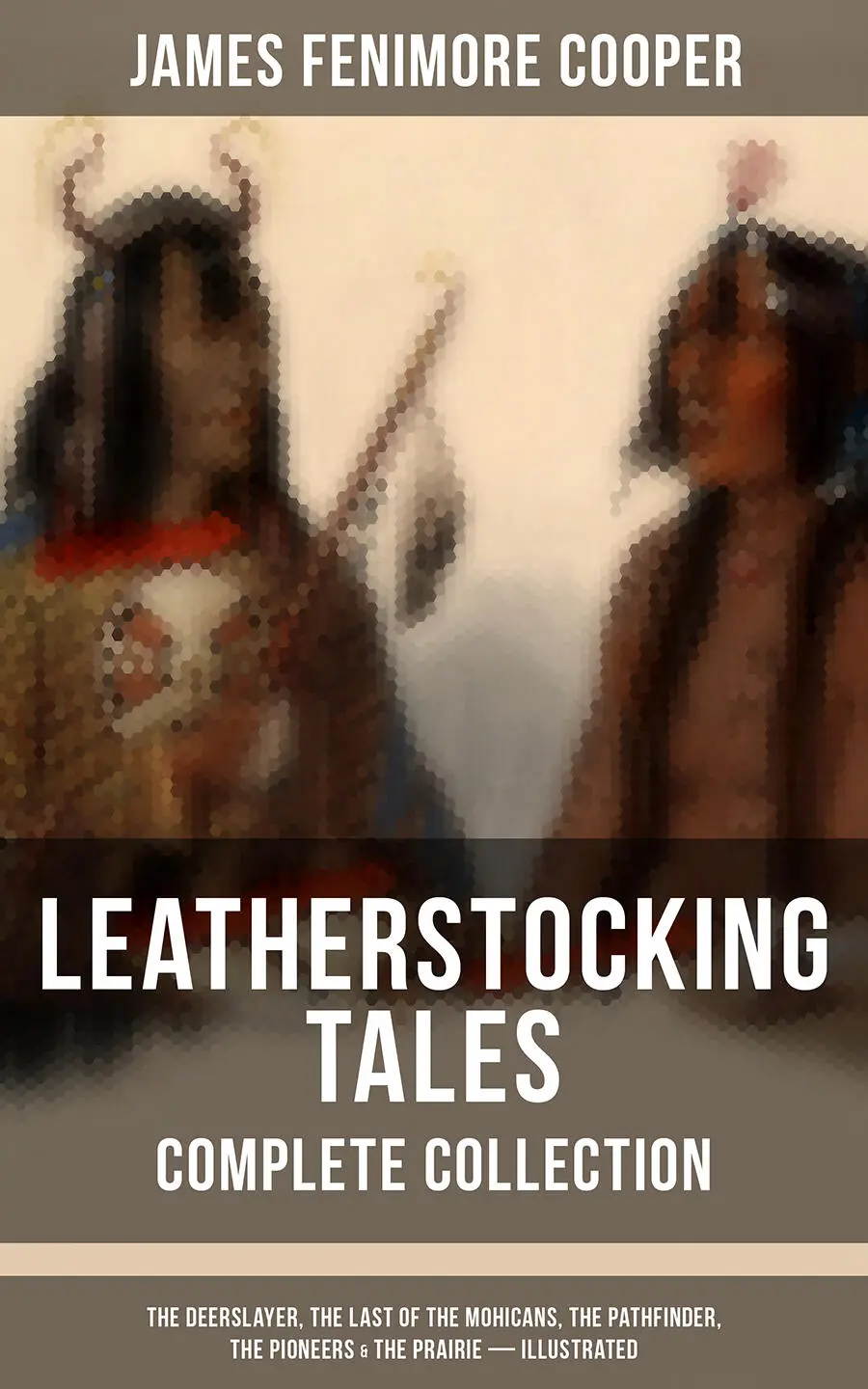
- Название:LEATHERSTOCKING TALES – Complete Collection
- Автор:
- Жанр:
- Год:неизвестен
- ISBN:нет данных
- Рейтинг книги:3 / 5. Голосов: 1
-
Избранное:Добавить в избранное
- Отзывы:
-
Ваша оценка:
LEATHERSTOCKING TALES – Complete Collection: краткое содержание, описание и аннотация
Предлагаем к чтению аннотацию, описание, краткое содержание или предисловие (зависит от того, что написал сам автор книги «LEATHERSTOCKING TALES – Complete Collection»). Если вы не нашли необходимую информацию о книге — напишите в комментариях, мы постараемся отыскать её.
LEATHERSTOCKING TALES – Complete Collection — читать онлайн ознакомительный отрывок
Ниже представлен текст книги, разбитый по страницам. Система сохранения места последней прочитанной страницы, позволяет с удобством читать онлайн бесплатно книгу «LEATHERSTOCKING TALES – Complete Collection», без необходимости каждый раз заново искать на чём Вы остановились. Поставьте закладку, и сможете в любой момент перейти на страницу, на которой закончили чтение.
Интервал:
Закладка:
“Listen,” he said; “I want to talk with my young friend from the Canadas. Let him forget that wonder for a minute.”
“Where t’other pale brother?” demanded the boy, looking up and letting the idea that had been most prominent in his mind, previously to the introduction of the chess men, escape him involuntarily.
“He sleeps, or if he isn’t fairly asleep, he is in the room where the men do sleep,” returned Deerslayer. “How did my young friend know there was another?”
“See him from the shore. Iroquois have got long eyes — see beyond the clouds — see the bottom of the Great Spring!”
“Well, the Iroquois are welcome. Two pale-faces are prisoners in the camp of your fathers, boy.”
The lad nodded, treating the circumstance with great apparent indifference; though a moment after he laughed as if exulting in the superior address of his own tribe.
“Can you tell me, boy, what your chiefs intend to do with these captyves, or haven’t they yet made up their minds?”
The lad looked a moment at the hunter with a little surprise. Then he coolly put the end of his fore finger on his own head, just above the left ear, and passed it round his crown with an accuracy and readiness that showed how well he had been drilled in the peculiar art of his race.
“When?” demanded Deerslayer, whose gorge rose at this cool demonstration of indifference to human life. “And why not take them to your wigwams?”
“Road too long, and full of pale-faces. Wigwam full, and scalps sell high. Small scalp, much gold.”
“Well that explains it — yes, that does explain it. There’s no need of being any plainer. Now you know, lad, that the oldest of your prisoners is the father of these two young women, and the other is the suitor of one of them. The gals nat’rally wish to save the scalps of such fri’nds, and they will give them two ivory creaturs, as ransom. One for each scalp. Go back and tell this to your chiefs, and bring me the answer before the sun sets.”
The boy entered zealously into this project, and with a sincerity that left no doubt of his executing his commission with intelligence and promptitude. For a moment he forgot his love of honor, and all his clannish hostility to the British and their Indians, in his wish to have such a treasure in his tribe, and Deerslayer was satisfied with the impression he had made. It is true the lad proposed to carry one of the elephants with him, as a specimen of the other, but to this his brother negotiator was too sagacious to consent; well knowing that it might never reach its destination if confided to such hands. This little difficulty was soon arranged, and the boy prepared to depart. As he stood on the platform, ready to step aboard of the raft, he hesitated, and turned short with a proposal to borrow a canoe, as the means most likely to shorten the negotiations. Deerslayer quietly refused the request, and, after lingering a little longer, the boy rowed slowly away from the castle, taking the direction of a thicket on the shore that lay less than half a mile distant. Deerslayer seated himself on a stool and watched the progress of the ambassador, sometimes closely scanning the whole line of shore, as far as eye could reach, and then placing an elbow on a knee, he remained a long time with his chin resting on the hand.
During the interview between Deerslayer and the lad, a different scene took place in the adjoining room. Hetty had inquired for the Delaware, and being told why and where he remained concealed, she joined him. The reception which Chingachgook gave his visitor was respectful and gentle. He understood her character, and, no doubt, his disposition to be kind to such a being was increased by the hope of learning some tidings of his betrothed. As soon as the girl entered she took a seat, and invited the Indian to place himself near her; then she continued silent, as if she thought it decorous for him to question her, before she consented to speak on the subject she had on her mind. But, as Chingachgook did not understand this feeling, he remained respectfully attentive to any thing she might be pleased to tell him.
“You are Chingachgook, the Great Serpent of the Delawares, ar’n’t you?” the girl at length commenced, in her own simple way losing her self-command in the desire to proceed, but anxious first to make sure of the individual. “Chingachgook,” returned the Delaware with grave dignity. “That say Great Sarpent, in Deerslayer tongue.”
“Well, that is my tongue. Deerslayer, and father, and Judith, and I, and poor Hurry Harry — do you know Henry March, Great Serpent? I know you don’t, however, or he would have spoken of you, too.”
“Did any tongue name Chingachgook, Drooping–Lily”? for so the chief had named poor Hetty. “Was his name sung by a little bird among Iroquois?”
Hetty did not answer at first, but, with that indescribable feeling that awakens sympathy and intelligence among the youthful and unpracticed of her sex, she hung her head, and the blood suffused her cheek ere she found her tongue. It would have exceeded her stock of intelligence to explain this embarrassment, but, though poor Hetty could not reason, on every emergency, she could always feel. The colour slowly receded from her cheeks, and the girl looked up archly at the Indian, smiling with the innocence of a child, mingled with the interest of a woman.
“My sister, the Drooping Lily, hear such bird!” Chingachgook added, and this with a gentleness of tone and manner that would have astonished those who sometimes heard the discordant cries that often came from the same throat; these transitions from the harsh and guttural, to the soft and melodious not being infrequent in ordinary Indian dialogues. “My sister’s ears were open — has she lost her tongue?”
“You are Chingachgook — you must be; for there is no other red man here, and she thought Chingachgook would come.”
“Chin-gach-gook,” pronouncing the name slowly, and dwelling on each syllable‘ “Great Sarpent, Yengeese tongue.”
[It is singular there should be any question concerning the origin of the well-known sobriquet of “Yankees.” Nearly all the old writers who speak of the Indians first known to the colonists make them pronounce the word “English” as “Yengeese.” Even at this day, it is a provincialism of New England to say “Anglish” instead of “Inglish,” and there is a close conformity of sound between “Anglish” and “yengeese,” more especially if the latter word, as was probably the case, be pronounced short. The transition from “Yengeese,” thus pronounced, to “Yankees” is quite easy. If the former is pronounced “Yangis,” it is almost identical with “Yankees,” and Indian words have seldom been spelt as they are pronounced. Thus the scene of this tale is spelt “Otsego,” and is properly pronounced “Otsago.” The liquids of the Indians would easily convert “En” into “Yen.”]
“Chin-gach-gook,” repeated Hetty, in the same deliberate manner. “Yes, so Hist called it, and you must be the chief.”
“Wah-ta-Wah,” added the Delaware.
“Wah-ta-Wah, or Hist-oh-Hist. I think Hist prettier than Wah, and so I call her Hist.”
“Wah very sweet in Delaware ears!”
“You make it sound differently from me. But, never mind, I did hear the bird you speak of sing, Great Serpent.”
“Will my sister say words of song? What she sing most — how she look — often she laugh?”
“She sang Chin-gach-gook oftener than any thing else; and she laughed heartily, when I told how the Iroquois waded into the water after us, and couldn’t catch us. I hope these logs haven’t ears, Serpent!”
“No fear logs; fear sister next room. No fear Iroquois; Deerslayer stuff his eyes and ears with strange beast.”
Читать дальшеИнтервал:
Закладка:
Похожие книги на «LEATHERSTOCKING TALES – Complete Collection»
Представляем Вашему вниманию похожие книги на «LEATHERSTOCKING TALES – Complete Collection» списком для выбора. Мы отобрали схожую по названию и смыслу литературу в надежде предоставить читателям больше вариантов отыскать новые, интересные, ещё непрочитанные произведения.







Обсуждение, отзывы о книге «LEATHERSTOCKING TALES – Complete Collection» и просто собственные мнения читателей. Оставьте ваши комментарии, напишите, что Вы думаете о произведении, его смысле или главных героях. Укажите что конкретно понравилось, а что нет, и почему Вы так считаете.