James Cooper - LEATHERSTOCKING TALES – Complete Collection
Здесь есть возможность читать онлайн «James Cooper - LEATHERSTOCKING TALES – Complete Collection» — ознакомительный отрывок электронной книги совершенно бесплатно, а после прочтения отрывка купить полную версию. В некоторых случаях можно слушать аудио, скачать через торрент в формате fb2 и присутствует краткое содержание. Жанр: unrecognised, на английском языке. Описание произведения, (предисловие) а так же отзывы посетителей доступны на портале библиотеки ЛибКат.
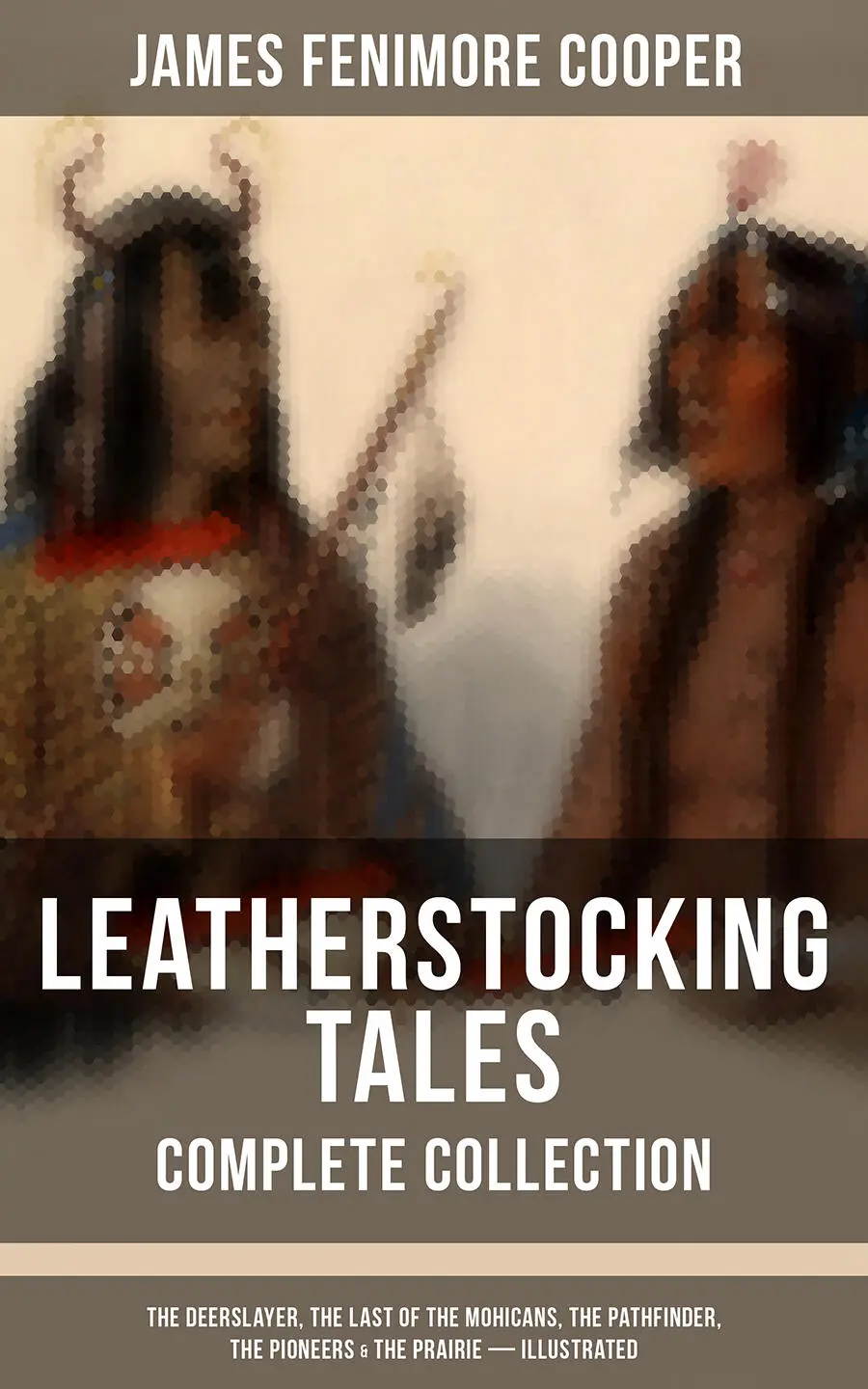
- Название:LEATHERSTOCKING TALES – Complete Collection
- Автор:
- Жанр:
- Год:неизвестен
- ISBN:нет данных
- Рейтинг книги:3 / 5. Голосов: 1
-
Избранное:Добавить в избранное
- Отзывы:
-
Ваша оценка:
LEATHERSTOCKING TALES – Complete Collection: краткое содержание, описание и аннотация
Предлагаем к чтению аннотацию, описание, краткое содержание или предисловие (зависит от того, что написал сам автор книги «LEATHERSTOCKING TALES – Complete Collection»). Если вы не нашли необходимую информацию о книге — напишите в комментариях, мы постараемся отыскать её.
LEATHERSTOCKING TALES – Complete Collection — читать онлайн ознакомительный отрывок
Ниже представлен текст книги, разбитый по страницам. Система сохранения места последней прочитанной страницы, позволяет с удобством читать онлайн бесплатно книгу «LEATHERSTOCKING TALES – Complete Collection», без необходимости каждый раз заново искать на чём Вы остановились. Поставьте закладку, и сможете в любой момент перейти на страницу, на которой закончили чтение.
Интервал:
Закладка:
It would exceed all the means of human knowledge to presume to analyze the influences that govern the acts of the lower animals. On this occasion, the dam, though proverbially fierce when its young is thought to be in danger, manifested no intention to attack the girl. It quitted the honey, and advanced to a place within twenty feet of her, where it raised itself on its hind legs and balanced its body in a sort of angry, growling discontent, but approached no nearer. Happily, Hetty did not fly. On the contrary, though not without terror, she knelt with her face towards the animal, and with clasped hands and uplifted eyes, repeated the prayer of the previous night. This act of devotion was not the result of alarm, but it was a duty she never neglected to perform ere she slept, and when the return of consciousness awoke her to the business of the day. As the girl arose from her knees, the bear dropped on its feet again, and collecting its cubs around her, permitted them to draw their natural sustenance. Hetty was delighted with this proof of tenderness in an animal that has but a very indifferent reputation for the gentler feelings, and as a cub would quit its mother to frisk and leap about in wantonness, she felt a strong desire again to catch it up in her arms, and play with it. But admonished by the growl, she had self-command sufficient not to put this dangerous project in execution, and recollecting her errand among the hills, she tore herself away from the group, and proceeded on her course along the margin of the lake, of which she now caught glimpses again through the trees. To her surprise, though not to her alarm, the family of bears arose and followed her steps, keeping a short distance behind her; apparently watching every movement as if they had a near interest in all she did.
In this manner, escorted by the dam and cubs, the girl proceeded nearly a mile, thrice the distance she had been able to achieve in the darkness, during the same period of time. She then reached a brook that had dug a channel for itself into the earth, and went brawling into the lake, between steep and high banks, covered with trees. Here Hetty performed her ablutions; then drinking of the pure mountain water, she went her way, refreshed and lighter of heart, still attended by her singular companions. Her course now lay along a broad and nearly level terrace, which stretched from the top of the bank that bounded the water, to a low acclivity that rose to a second and irregular platform above. This was at a part of the valley where the mountains ran obliquely, forming the commencement of a plain that spread between the hills, southward of the sheet of water. Hetty knew, by this circumstance, that she was getting near to the encampment, and had she not, the bears would have given her warning of the vicinity of human beings. Snuffing the air, the dam refused to follow any further, though the girl looked back and invited her to come by childish signs, and even by direct appeals made in her own sweet voice. It was while making her way slowly through some bushes, in this manner, with averted face and eyes riveted on the immovable animals, that the girl suddenly found her steps arrested by a human hand, that was laid lightly on her shoulder.
“Where go?—” said a soft female voice, speaking hurriedly, and in concern.—“Indian — red man savage — wicked warrior — thataway.”
This unexpected salutation alarmed the girl no more than the presence of the fierce inhabitants of the woods. It took her a little by surprise, it is true, but she was in a measure prepared for some such meeting, and the creature who stopped her was as little likely to excite terror as any who ever appeared in the guise of an Indian. It was a girl, not much older than herself, whose smile was sunny as Judith’s in her brightest moments, whose voice was melody itself, and whose accents and manner had all the rebuked gentleness that characterizes the sex among a people who habitually treat their women as the attendants and servitors of the warriors. Beauty among the women of the aboriginal Americans, before they have become exposed to the hardships of wives and mothers, is by no means uncommon. In this particular, the original owners of the country were not unlike their more civilized successors, nature appearing to have bestowed that delicacy of mien and outline that forms so great a charm in the youthful female, but of which they are so early deprived; and that, too, as much by the habits of domestic life as from any other cause.
The girl who had so suddenly arrested the steps of Hetty was dressed in a calico mantle that effectually protected all the upper part of her person, while a short petticoat of blue cloth edged with gold lace, that fell no lower than her knees, leggings of the same, and moccasins of deer-skin, completed her attire. Her hair fell in long dark braids down her shoulders and back, and was parted above a low smooth forehead, in a way to soften the expression of eyes that were full of archness and natural feeling. Her face was oval, with delicate features, the teeth were even and white, while the mouth expressed a melancholy tenderness, as if it wore this peculiar meaning in intuitive perception of the fate of a being who was doomed from birth to endure a woman’s sufferings, relieved by a woman’s affections. Her voice, as has been already intimated, was soft as the sighing of the night air, a characteristic of the females of her race, but which was so conspicuous in herself as to have produced for her the name of Wah-ta-Wah; which rendered into English means Hist-oh-Hist.
In a word, this was the betrothed of Chingachgook, who — having succeeded in lulling their suspicions, was permitted to wander around the encampment of her captors. This indulgence was in accordance with the general policy of the red man, who well knew, moreover, that her trail could have been easily followed in the event of flight. It will also be remembered that the Iroquois, or Hurons, as it would be better to call them, were entirely ignorant of the proximity of her lover, a fact, indeed, that she did not know herself.
It is not easy to say which manifested the most self-possession at this unexpected meeting; the pale-face, or the red girl. But, though a little surprised, Wah-ta-Wah was the most willing to speak, and far the readier in foreseeing consequences, as well as in devising means to avert them. Her father, during her childhood, had been much employed as a warrior by the authorities of the Colony, and dwelling for several years near the forts, she had caught a knowledge of the English tongue, which she spoke in the usual, abbreviated manner of an Indian, but fluently, and without any of the ordinary reluctance of her people.
“Where go?—” repeated Wah-ta-Wah, returning the smile of Hetty, in her own gentle, winning, manner —“wicked warrior that-a-way — good warrior, far off.”
“What’s your name?” asked Hetty, with the simplicity of a child.
“Wah-ta-Wah. I no Mingo — good Delaware — Yengeese friend. Mingo cruel, and love scalp, for blood — Delaware love him, for honor. Come here, where no eyes.”
Wah-ta-Wah now led her companion towards the lake, descending the bank so as to place its overhanging trees and bushes between them and any probable observers. Nor did she stop until they were both seated, side by side, on a fallen log, one end of which actually lay buried in the water.
“Why you come for?” the young Indian eagerly inquired —“Where you come for?” Hetty told her tale in her own simple and truth-loving manner. She explained the situation of her father, and stated her desire to serve him, and if possible to procure his release.
“Why your father come to Mingo camp in night?” asked the Indian girl, with a directness, which if not borrowed from the other, partook largely of its sincerity. “He know it war-time, and he no boy — he no want beard — no want to be told Iroquois carry tomahawk, and knife, and rifle. Why he come night time, seize me by hair, and try to scalp Delaware girl?”
Читать дальшеИнтервал:
Закладка:
Похожие книги на «LEATHERSTOCKING TALES – Complete Collection»
Представляем Вашему вниманию похожие книги на «LEATHERSTOCKING TALES – Complete Collection» списком для выбора. Мы отобрали схожую по названию и смыслу литературу в надежде предоставить читателям больше вариантов отыскать новые, интересные, ещё непрочитанные произведения.











Обсуждение, отзывы о книге «LEATHERSTOCKING TALES – Complete Collection» и просто собственные мнения читателей. Оставьте ваши комментарии, напишите, что Вы думаете о произведении, его смысле или главных героях. Укажите что конкретно понравилось, а что нет, и почему Вы так считаете.