Andrew Carnie - Syntax
Здесь есть возможность читать онлайн «Andrew Carnie - Syntax» — ознакомительный отрывок электронной книги совершенно бесплатно, а после прочтения отрывка купить полную версию. В некоторых случаях можно слушать аудио, скачать через торрент в формате fb2 и присутствует краткое содержание. Жанр: unrecognised, на английском языке. Описание произведения, (предисловие) а так же отзывы посетителей доступны на портале библиотеки ЛибКат.
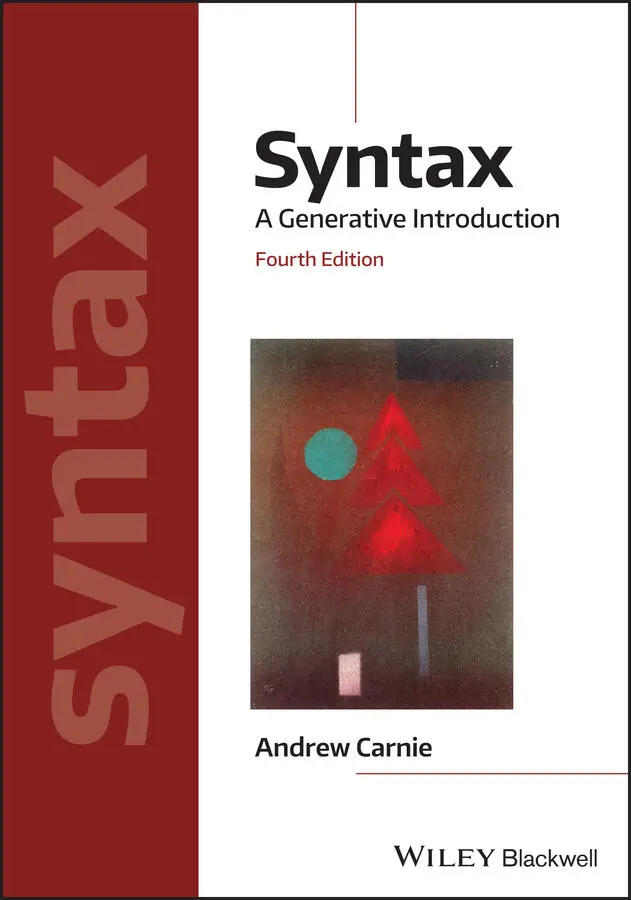
- Название:Syntax
- Автор:
- Жанр:
- Год:неизвестен
- ISBN:нет данных
- Рейтинг книги:4 / 5. Голосов: 1
-
Избранное:Добавить в избранное
- Отзывы:
-
Ваша оценка:
Syntax: краткое содержание, описание и аннотация
Предлагаем к чтению аннотацию, описание, краткое содержание или предисловие (зависит от того, что написал сам автор книги «Syntax»). Если вы не нашли необходимую информацию о книге — напишите в комментариях, мы постараемся отыскать её.
remains the leading introduction to the rules, principles, and processes that determine the structure of sentences in language. Comprehensive yet accessible, the text provides a well-balanced, student-friendly introduction to syntactic theory. Topics include phrase structure, the lexicon, binding theory, case theory, movement, covert movement, locality conditions, ditransitives, verbal inflection and auxiliaries, ellipsis, control theory, non-configurational languages, and more. Students are provided with numerous exercises and pedagogical features designed to strengthen comprehension, review learning objectives, test knowledge, and highlight major issues in the field.
The
features revised material throughout, including a new section on Chomsky's Merge and additional problem sets in every chapter, while new examples throughout the text broaden the appeal and relatability of the text to a more diverse set of students. The optional
has also been thoroughly revised and expanded to offer students the opportunity to practice the skills and concepts introduced in the primary text. This classic textbook:
Presents authoritative and comprehensive coverage of basic, intermediate, and advanced topics Includes ample exercises and clear explanations using straightforward language Offers extensive online student and instructor resources, including problem sets, PowerPoint slides, an updated instructor's manual, author-created videos, online-only chapters, and other supplementary material Features a wealth of learning tools, including learning objectives, discussion questions, and problems of varying levels of difficulty In the new fourth edition,
remains an essential textbook for beginning syntacticians, perfect for undergraduate and graduate course in linguistics, grammar, language, and second language teaching.
Available as a set with
, 2nd Edition
Syntax — читать онлайн ознакомительный отрывок
Ниже представлен текст книги, разбитый по страницам. Система сохранения места последней прочитанной страницы, позволяет с удобством читать онлайн бесплатно книгу «Syntax», без необходимости каждый раз заново искать на чём Вы остановились. Поставьте закладку, и сможете в любой момент перейти на страницу, на которой закончили чтение.
Интервал:
Закладка:
9 Part 2 The Base 6 X-bar Theory 0. Introduction1. Bar-level Projections2. Generalizing the Rules: The X-bar Schema3. Complements, Adjuncts, and Specifiers4. Some Definitional Housekeeping5. Parameters of Word Order6. Drawing Trees in X-bar Notation7. ConclusionIdeas, Rules, and Constraints Introduced in this ChapterGeneral Problem SetsChallenge Problem Sets 7 Extending X-bar Theory to Functional Categories 0. Introduction1. Determiner Phrases (DPs)2. A Descriptive Tangent into Clause Types3. Complementizer Phrases (CPs)4. Tense, Perfect, Progressive and Voice PhrasesIdeas, Rules, and Constraints Introduced in this ChapterGeneral Problem SetsChallenge Problem Sets 8 Constraining X-bar: Theta Theory 0. Introduction1. Some Basic Terminology2. Thematic Relations and Theta Roles3. The Lexicon4. Expletives and the Extended Projection Principle5. ConclusionIdeas, Rules, and Constraints Introduced in this ChapterGeneral Problem SetsChallenge Problem Sets 9 Theta Grids and Functional Categories 0. Introduction1. Complementizers2. Determiners3. Using Theta Grids for English Auxiliaries4. Main verbs vs. Auxiliaries5. ConclusionIdeas, Rules, and Constraints Introduced in this ChapterGeneral Problem SetsChallenge Problem Sets
10 Part 3 Movement 10 Head-to-Head Movement 0. Introduction1. Verb Movement (V → T)2. T Movement (T → C)3. Do -supportAppendix: Determining if a Language has V → T MovementIdeas, Rules, and Constraints Introduced in this ChapterGeneral Problem SetsChallenge Problem Sets 11 DP Movement 0. Introduction1. A Puzzle for the Theory of Theta Roles2. Passives3. Case4. Raising: Reprise5. Passives: Reprise6. Inherently Passive Verbs: Unaccusatives7. DP Movement in SVO vs. VSO Languages8. ConclusionIdeas, Rules, and Constraints Introduced in this ChapterGeneral Problem SetsChallenge Problem Sets 12 Wh-movement and Locality Constraints 0. Introduction1. Movement in Wh -questions2. Relative Clauses3. Islands4. The Minimal Link Condition5. Echo Questions ( Wh -in-situ) in English6. ConclusionIdeas, Rules, and Constraints Introduced in this ChapterGeneral Problem SetsChallenge Problem Sets 13 A Unified Theory of Movement 0. Introduction1. Move2. Explaining Cross-linguistic Differences3. Scope, Covert Movement, and the MLC4. ConclusionIdeas, Rules, and Constraints Introduced in this ChapterGeneral Problem SetsChallenge Problem Sets
11 Part 4 Advanced Topics 14 Ditransitives 0. Introduction1. The Problem of Ditransitive Verbs2. The Active Voice Head3. Object Shift4. Ditransitives: RepriseIdeas, Rules, and Constraints Introduced in this ChapterGeneral Problem SetsChallenge Problem Sets 15 Raising, Control, and Empty Categories 0. Introduction1. Raising vs. Control2. Two Kinds of Raising, Two Kinds of Control3. Control Theory4. Another Kind of Null Subject: “Little” pro 5. ConclusionIdeas, Rules, and Constraints Introduced in this ChapterGeneral Problem SetsChallenge Problem Sets 16 Ellipsis 0. Ellipsis1. LF-copying or PF-deletion2. Antecedent-Contained Deletion and Pseudogapping3. ConclusionIdeas, Rules, and Constraints Introduced in this ChapterGeneral Problem SetsChallenge Problem Sets 17 Advanced Topics in Binding Theory 0. Introduction1. Levels of Representation2. The Definition of Binding DomainIdeas, Rules, and Constraints Introduced in this ChapterGeneral Problem SetsChallenge Problem Sets 18 Polysynthesis, Incorporation, and Non-configurationality 0. Introduction1. Polysynthesis2. Incorporation3. Scrambling and Non-configurationality4. ConclusionIdeas, Rules, and Constraints Introduced in this ChapterGeneral Problem SetsChallenge Problem Sets 19 Merge 0. Introduction1. External Merge2. Internal Merge3. ConclusionIdeas, Rules, and Constraints Introduced in this ChapterGeneral Problem SetsChallenge Problem Sets
12 Conclusions and Directions for Further Study
13 References
14 Index
Pages
1 i
2 ii
3 iii
4 iv
5 v
6 vi
7 vii
8 viii
9 ix
10 x
11 xi
12 xii
13 xiii
14 xiv
15 xv
16 xvi
17 1
18 2
19 3
20 4
21 5
22 6
23 7
24 8
25 9
26 10
27 11
28 12
29 13
30 14
31 15
32 16
33 17
34 18
35 19
36 20
37 21
38 22
39 23
40 24
41 25
42 26
43 27
44 28
45 29
46 30
47 31
48 32
49 33
50 34
51 35
52 36
53 37
54 38
55 39
56 40
57 41
58 42
59 43
60 44
61 45
62 46
63 47
64 48
65 49
66 50
67 51
68 52
69 53
70 54
71 55
72 56
73 57
74 58
75 59
76 60
77 61
78 62
79 63
80 64
81 65
82 66
83 67
84 68
85 69
86 70
87 71
88 72
89 73
90 74
91 75
92 76
93 77
94 78
95 79
96 80
97 81
98 82
99 83
100 84
101 85
102 86
103 87
104 88
105 89
106 90
107 91
108 92
109 93
110 94
111 95
112 96
113 97
114 98
115 99
116 100
117 101
118 102
119 103
120 104
121 105
122 106
123 107
124 108
125 109
126 110
127 111
128 112
129 113
130 114
131 115
132 116
133 117
134 118
135 119
136 120
137 121
138 122
139 123
140 124
141 125
142 126
143 127
144 128
145 129
146 130
147 131
148 132
149 133
150 134
151 135
152 136
153 137
154 138
155 139
156 140
157 141
158 142
159 143
160 144
161 145
162 146
163 147
164 148
165 149
166 150
167 151
Читать дальшеИнтервал:
Закладка:
Похожие книги на «Syntax»
Представляем Вашему вниманию похожие книги на «Syntax» списком для выбора. Мы отобрали схожую по названию и смыслу литературу в надежде предоставить читателям больше вариантов отыскать новые, интересные, ещё непрочитанные произведения.










Обсуждение, отзывы о книге «Syntax» и просто собственные мнения читателей. Оставьте ваши комментарии, напишите, что Вы думаете о произведении, его смысле или главных героях. Укажите что конкретно понравилось, а что нет, и почему Вы так считаете.