Jeffrey McCullough - Transfusion Medicine
Здесь есть возможность читать онлайн «Jeffrey McCullough - Transfusion Medicine» — ознакомительный отрывок электронной книги совершенно бесплатно, а после прочтения отрывка купить полную версию. В некоторых случаях можно слушать аудио, скачать через торрент в формате fb2 и присутствует краткое содержание. Жанр: unrecognised, на английском языке. Описание произведения, (предисловие) а так же отзывы посетителей доступны на портале библиотеки ЛибКат.
- Название:Transfusion Medicine
- Автор:
- Жанр:
- Год:неизвестен
- ISBN:нет данных
- Рейтинг книги:3 / 5. Голосов: 1
-
Избранное:Добавить в избранное
- Отзывы:
-
Ваша оценка:
Transfusion Medicine: краткое содержание, описание и аннотация
Предлагаем к чтению аннотацию, описание, краткое содержание или предисловие (зависит от того, что написал сам автор книги «Transfusion Medicine»). Если вы не нашли необходимую информацию о книге — напишите в комментариях, мы постараемся отыскать её.
The Fifth Edition of
delivers a succinct, thorough, clinically focused, practical and authoritative treatment of a full range of topics in transfusion therapy. This ranges from issues with the blood supply, recruitment of both whole blood and apheresis donors, blood collection and storage, blood testing, blood safety, and transmissible diseases. This edition has been fully updated and revised to include exciting cellular therapies for cancer, transplantation of both hematopoietic cells and solid organs, infectious diseases and regenerative medicine.
The Fifth Edition includes new authors with highly relevant content that provides a solid grounding for readers in the field. The book:
Is an approachable comprehensive guide to the field of blood banking and transfusion medicine Provides complete and timely perspective on crucial topics, including the HLA system in transfusion medicine and transplantation and quality programs in blood banking and transfusion medicine Is extensively referenced, making it simple for readers to conduct further research on the topics of interest to them Includes new chapters on pediatric transfusion medicine and pathogen reduction Has an expended chapter on patient blood management Provides extensive discussions of the clinical use of blood transfusion in a wide variety of clinical situations including recent development In the management of acute traumatic blood loss Provides updated information about blood groups and molecular testing making inroads into clinical practice along with discussions of laboratory detection of blood groups and provision of red cells Perfect for all those working in the field of blood banking, transfusion medicine and hematology or oncology and fellows in pathology, hematology, surgery and anesthesiology.
is a good introduction for technologists specializing in blood banking and non-medical personnel working in areas related to hematology and transfusion medicine. Transfusion Medicine will also earn a place in the libraries of practicing pathologists with responsibility for blood banks.
Transfusion Medicine — читать онлайн ознакомительный отрывок
Ниже представлен текст книги, разбитый по страницам. Система сохранения места последней прочитанной страницы, позволяет с удобством читать онлайн бесплатно книгу «Transfusion Medicine», без необходимости каждый раз заново искать на чём Вы остановились. Поставьте закладку, и сможете в любой момент перейти на страницу, на которой закончили чтение.
Интервал:
Закладка:
Table 5.3 Some of the products manufactured from whole blood subject to licensure by the US Food and Drug Administration.
| Red cell components | Red blood cells |
| Red blood cells irradiated | |
| Red blood cells leukocytes removed | |
| Red blood cells leukocytes removed irradiated | |
| Red blood cells deglycerolized | |
| Red blood cells deglycerolized irradiated | |
| Red blood cells frozen | |
| Red blood cells frozen irradiated | |
| Red blood cells frozen rejuvenated | |
| Red blood cells frozen rejuvenated irradiated | |
| Red blood cells washed | |
| Whole blood CPD irradiated | |
| Whole blood cryoprecipitate removed | |
| Whole blood leukocytes removed | |
| Whole blood modified—platelets removed | |
| Whole blood platelets removed irradiated | |
| Cryoprecipitate AHF | |
| Plasma components | Cryoprecipitate AHF irradiated |
| Cryoprecipitate AHF pooled | |
| Fresh frozen plasma | |
| Fresh frozen plasma irradiated | |
| Liquid plasma | |
| Plasma | |
| Plasma irradiated | |
| Plasma cryoprecipitate reduced | |
| Plasma pathogen reduced | |
| Thawed fresh frozen plasma | |
| Thawed fresh frozen plasma irradiated | |
| Platelet‐rich plasma | |
| Platelets | Platelets |
| Platelets irradiated | |
| Platelets washed | |
| Pooled platelets | |
| Pooled platelets leukocyte reduced | |
| Pooled platelets leukocyte reduced irradiated | |
| Platelets pathogen reduced |
AHF, antihemophilic factor; CPD, citrate–phosphate–dextrose.
5.2 Preparation of blood components from whole blood
Anticoagulant–preservative solutions
The beginning of red cell preservation can be traced to Peyton Rous, who was later awarded the Nobel Prize for his work with viruses. Rous [14] and Turner showed that glucose delayed in vitro hemolysis. During the period between World Wars I and II, Mollison [15] in England developed an acidified citrate and glucose solution for red cell preservation, variants of which are the mainstay of present‐day preservatives. These solutions are composed of citrate for anticoagulation, dextrose for cell maintenance, and phosphate buffers ( Table 5.4). WB or RBCs can be stored in these solutions for periods ranging from 21 to 35 days.
During red cell preservation, adenosine triphosphate (ATP) loss generally correlates with poor red cell viability, and addition of adenine at the beginning of preservation increases ATP and improves red cell viability [16]. 2,3‐Diphosphoglycerate (2,3‐DPG) also declines in stored red cells, and this is associated with increased affinity of hemoglobin for oxygen [17–19]. Thus, there was considerable interest in developing solutions that would maintain both ATP and 2,3‐DPG while allowing removal of the maximum volume of plasma for production of derivatives. It is possible to extend the duration of red cell storage by placing the red cells in special “additive” solutions containing various combinations of saline, adenine, phosphate, bicarbonate, glucose, and mannitol [20–23] ( Table 5.5). These solutions provide better nutrients that maintain red cell viability, red cell enzymes, and red cell function, allowing red cell preservation for 42 days ( Table 5.6).
Blood processing for the preparation of components
Because most blood is separated into its components, the WB is collected into sets that involve multiple connected bags. The blood first enters the primary bag, where it is mixed with anticoagulant–preservative solution. After collection, the WB is kept at a temperature either between 1°C and 6°C or between 20°C and 24°C depending on the intended use of the unit ( Figure 5.1). If RBCs and plasma are to be produced, the blood is kept between 1°C and 6°C. The blood can be placed in a regular blood storage refrigerator or special insulated containers that contain ice to maintain the 1–6°C temperature. If platelets are to be prepared from the WB, the blood must be maintained at room temperature (20–24°C) because exposure to cold alters the platelets. Maintenance of the blood at room temperature is done by placing the units in containers specially designed to maintain that temperature. It is recognized that the blood will not attain the temperatures of the storage containers (1–6°C or 20–24°C) for several hours, but the blood must be placed in the environment that will begin to bring the temperature of the blood to the desired storage temperature.
Table 5.4 Content of anticoagulant–preservative solutions (mg in 63 mL).
Source : Fung MK, Eder A, Spitalnik SL, Westhoff CM, eds. Technical Manual , 19th edn. Bethesda, MD: American Association of Blood Banks, 2017, p. 132. © 2017 AABB. Reproduced with permission from AABB.
| CPD | CP2D | CPDA‐1 | |
|---|---|---|---|
| Sodium citrate, dehydrate | 1660 | 1660 | 1660 |
| Citric acid, anhydrous | 188 | 206 | 188 |
| Dextrose, monohydrate | 1610 | 3220 | 2010 |
| Monobasic sodium phosphate, monohydrate | 140 | 140 | 140 |
| Adenine | 0 | 0 | 17.3 |
CPD, citrate–phosphate–dextrose; CP2D, citrate–phosphate–double dextrose; CPDA‐1, citrate–phosphate–dextrose adenin‐1.
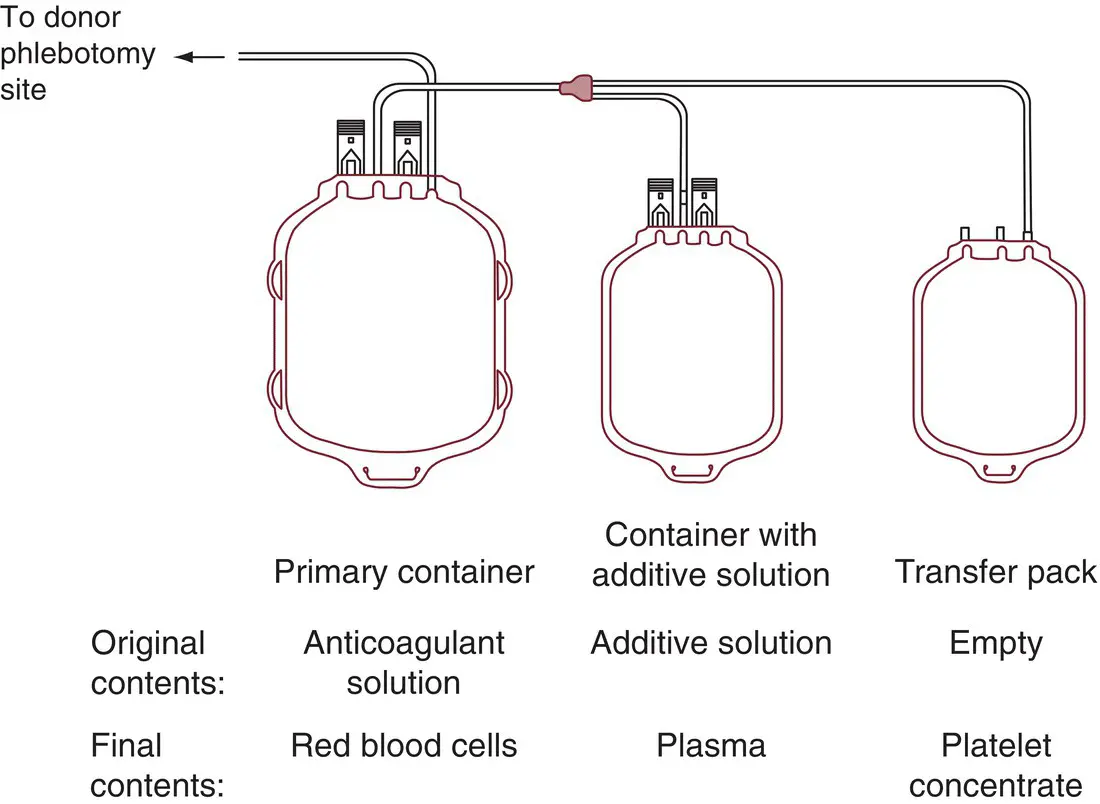
Figure 5.1 Diagram showing unit of whole blood and integral plastic bag system used for preparing blood components.
High‐speed centrifuges that accommodate four or six units of WB are used to prepare the components. Important factors in the centrifuge techniques include the rotor size, centrifuge speed, time at maximum speed, and braking mechanism or deceleration phase. The WB is manipulated differently depending on the components desired (see later). After removal of the platelet‐rich plasma, the additive solution is added to the concentrated red cells for optimum red cell preservation ( Figure 5.2). Several devices are now available that provide semiautomatic separation of WB. These are in limited use, but the concept has great potential.
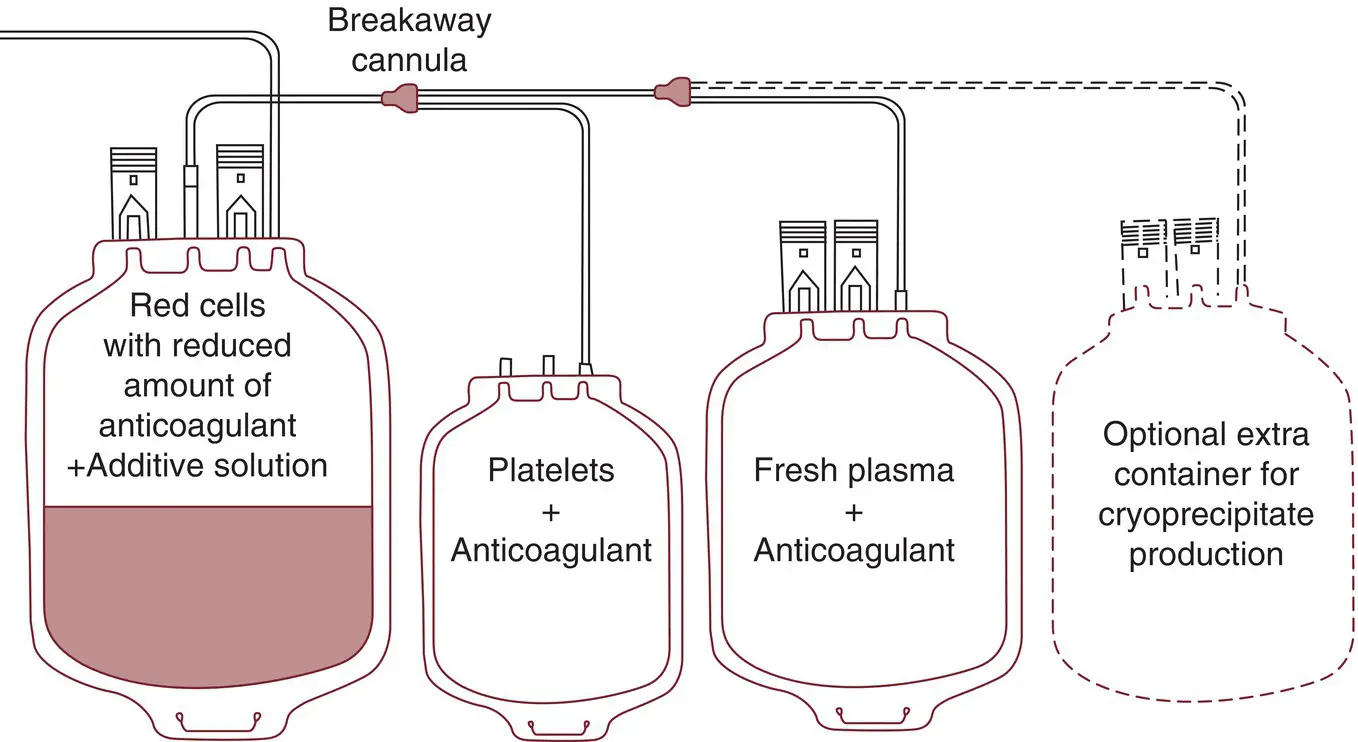
Figure 5.2 Diagrammatic illustration of the separation of whole blood into red cells, plasma, and platelet concentrate.
Table 5.5 Content of additive solutions.
Source : Fung MK, Eder A, Spitalnik SL, Westhoff CM, ed. Technical Manual , 19th edn. Bethesda, MD: American Association of Blood Banks, 2017, p. 135. © 2017 AABB. Reproduced with permission from AABB.
| AS‐1 (Adsol) | AS‐3 (Nutricel) | |
|---|---|---|
| Dextrose (glucose) | 111 | 55 |
| Adenine | 2 | 2 |
| NaH 2PO 4 | – | – |
| Mannitol | 41 | – |
| NaCl | 154 | 70 |
| Na 3‐citrate | – | 23 |
| Citric acid | 2 |
NaH 2PO 4, monobasic sodium phosphate; NaCl, sodium chloride; Na 3‐citrate, trisodium citrate.
Читать дальшеИнтервал:
Закладка:
Похожие книги на «Transfusion Medicine»
Представляем Вашему вниманию похожие книги на «Transfusion Medicine» списком для выбора. Мы отобрали схожую по названию и смыслу литературу в надежде предоставить читателям больше вариантов отыскать новые, интересные, ещё непрочитанные произведения.








Обсуждение, отзывы о книге «Transfusion Medicine» и просто собственные мнения читателей. Оставьте ваши комментарии, напишите, что Вы думаете о произведении, его смысле или главных героях. Укажите что конкретно понравилось, а что нет, и почему Вы так считаете.