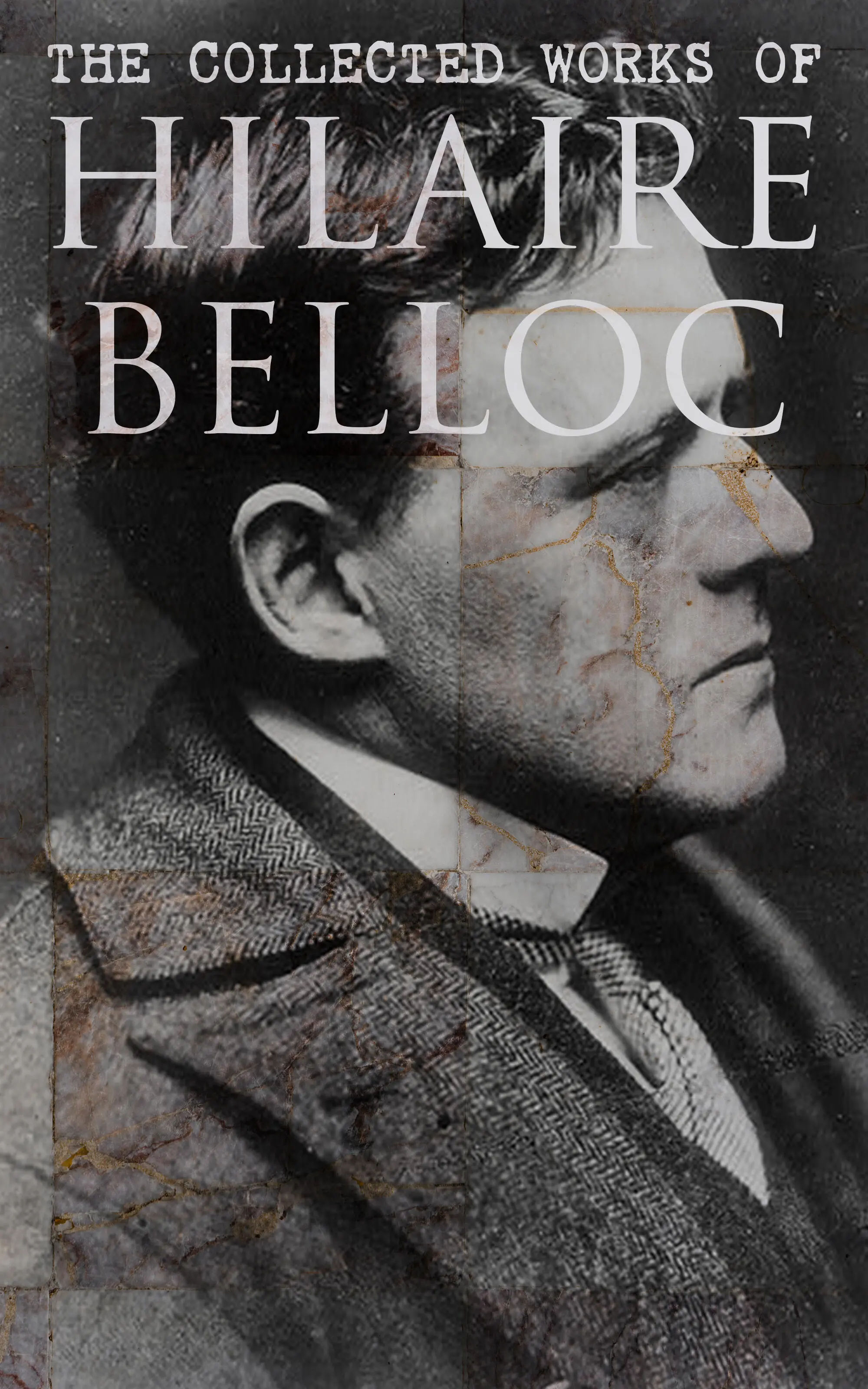
Hilaire Belloc - The Collected Works of Hilaire Belloc
Здесь есть возможность читать онлайн «Hilaire Belloc - The Collected Works of Hilaire Belloc» — ознакомительный отрывок электронной книги совершенно бесплатно, а после прочтения отрывка купить полную версию. В некоторых случаях можно слушать аудио, скачать через торрент в формате fb2 и присутствует краткое содержание. Жанр: unrecognised, на английском языке. Описание произведения, (предисловие) а так же отзывы посетителей доступны на портале библиотеки ЛибКат.
- Название:The Collected Works of Hilaire Belloc
- Автор:
- Жанр:
- Год:неизвестен
- ISBN:нет данных
- Рейтинг книги:5 / 5. Голосов: 1
-
Избранное:Добавить в избранное
- Отзывы:
-
Ваша оценка:
The Collected Works of Hilaire Belloc: краткое содержание, описание и аннотация
Предлагаем к чтению аннотацию, описание, краткое содержание или предисловие (зависит от того, что написал сам автор книги «The Collected Works of Hilaire Belloc»). Если вы не нашли необходимую информацию о книге — напишите в комментариях, мы постараемся отыскать её.
Nonfiction:
History
The Book of the Bayeux Tapestry
The Path to Rome
The Old Road
The French Revolution
Blenheim
Tourcoing
Crécy
Waterloo
Malplaquet
Poitiers
First and Last
Europe and the Faith
Survivals and New Arrivals: The Old and New Enemies of the Catholic Church
The Jews
The Historic Thames
A Change in the Cabinet
A General Sketch of the European War: The First Phase
The Two Maps of Europe
Economics
Servile State
Essays:
Avril: Essays on the Poetry of the French Renaissance
Hills and the Sea
On Nothing and Kindred Subjects
On Everything
On Anything
On Something
This and That
On
The Free Press
Fiction:
Novels & Short Stories
The Mercy of Allah
The Green Overcoat
Poetry:
A Moral Alphabet
Bad Child's Book of Beasts
More Beasts For Worse Children
The Modern Traveller
Cautionary Tales for Children
More Peers
The Collected Works of Hilaire Belloc — читать онлайн ознакомительный отрывок
Ниже представлен текст книги, разбитый по страницам. Система сохранения места последней прочитанной страницы, позволяет с удобством читать онлайн бесплатно книгу «The Collected Works of Hilaire Belloc», без необходимости каждый раз заново искать на чём Вы остановились. Поставьте закладку, и сможете в любой момент перейти на страницу, на которой закончили чтение.
Интервал:
Закладка:
Following a practice which he never abandoned, which he had found universally successful, and upon which he ever relied, the Duke of Wellington had kept his British troops, the nucleus of his defensive plan, for the last and worst of the action. He had stationed to take the first brunt those troops upon which he least relied, and these were the first Dutch-Belgian brigade under Bijlandt. This body was stationed in front of the sunken road (at the point marked A in red upon the map). Behind it he had put Pack’s brigade and Kemp’s, both British; to the left of it, but also behind the road, Best’s Hanoverian brigade. Papelotte village he held with Perponcher’s Belgians.
It will be seen that the crushing fire of the French eighty guns maintained for half an hour had fallen full upon the Dutch-Belgians, standing exposed upon the forward slope at a range of not more than 800 yards. 20At the French charge, though that was delivered through high standing crops and over drenched and slippery soil up the slope, Bijlandt’s brigade broke. It is doubtful indeed whether any other troops would not have broken under such circumstances. Unfortunately the incident has been made the subject of repeated and most ungenerous accusation. A body purposely set forward before the whole line to stand such fearful pounding and to shelter the rest; one, moreover, which in two days of fighting certainly lost one-fourth of its number in killed and wounded, and probably lost more than one-third, is deserving of a much more chivalrous judgment than that shown by most historians in its regard. Anyhow, Kemp’s brigade quickly filled the gap left by the failure of the Netherlanders, and began to press back the French charge.
Meanwhile the French right, which had captured Papelotte, was compelled to retreat upon seeing the centre thus driven back, while the French left had failed to carry the farm of La Haye Sainte. Indeed upon this side, that is, in the neighbourhood of the great road, the check and reverse to the French assault had been more complete than elsewhere. An attempt to drive its first success home with a cavalry charge had been met by a countercharge, deservedly famous, in which, among other regiments, the First and Second Lifeguards, the Blues, the King’s Dragoons, had broken the French horse and followed up the French retirement down the slope. The centre of that retirement was similarly charged by the Scots Greys; and in the end of the whole affair the English horsemen rode up to the spur where the great battery stood, sabred the gunners, and then, being thus advanced so uselessly and so dangerously from their line, were in their turn driven back to the English positions with bad loss.
When this opening chapter of the battle closed, the net result was that the initial charge of the First Corps under Erlon had failed. It had left behind it many prisoners; certain guns which had advanced with it had been put out of action; it had lost two colours.
Save for the furious inconsequent and almost purposeless fighting that was still raging far off to the left round Hougomont, the battle ceased. The valley between the opposing forces was strewn with the dead and dying, but no formed groups stood or moved among the fallen men. The swept slopes had all the appearance during that strange halt of a field already lost or won. The hour was between three and half-past in the afternoon, and so ended the first phase of the battle of Waterloo. It had lasted rather over two hours.
The Second Part of the Action
The second and decisive phase of the battle of Waterloo differed from the first in this: In the first phase Napoleon was attacking Wellington’s command alone. It was line against line. By hammering at the line opposed to him on the ridge of the Mont St. Jean, Napoleon confidently expected to break it before the day should close. His first hammer blow, which was the charge of the First Army Corps under Erlon, had failed, and failed badly. The cavalry in support of that infantry charge had failed as well as their comrades, and the British in their turn had charged the retiring French, got right into their line, sabred their gunners, only to be broken in their turn by the counter-effort of further French horse.
This first phase had ended in a sort of halt or faint in the battle, as I have described.
The second phase was a very different matter. It developed into what were essentially two battles. It found Napoleon fighting not only against Wellington in front of him, but against Blucher to his right and almost behind him. It was no longer a simple business of hammering with the whole force of the French army at the British and their allies upon the ridge in front, but of desperately attempting to break the Anglo-Dutch line against time, with diminishing and perpetually reduced forces; with forces perpetually reduced by the necessity of sending more and more men off to the right to resist, if it were possible, the increasing pressure of the accumulating Prussian forces upon the right flank of the French.
This second phase of the action at Waterloo began in the neighbourhood of four o’clock.
It is true that the arriving Prussians had not yet debouched from the screen of wood that hid them two and a half miles away to the east, but at that hour (four o’clock) the heads of their columns were all ready to debouch, and the delay between their actual appearance upon the field and the beginning of the second half of the battle was not material to the result.
That second half of the action began with a series of great cavalry charges which the Emperor had not designed, and which, even as he watched them, he believed would be fatal to him. As spectacles, these famous rides presented the most awful and memorable pageant in the history of modern war; as tactics they were erroneous, and grievously erroneous.
Before this second phase of the battle was entered it was easily open to Napoleon, recognising the Prussians advancing and catching no sight of Grouchy, to change his plan, to abandon the offensive, to stand upon the defensive along the height which he commanded, there to await Grouchy, and, if Grouchy still delayed, to maintain the chances of an issue which might at least be negative, if he could prevent its being decisively disastrous.
But even if such a conception had passed through the Emperor’s mind, military science was against it. If ever those opposed to him had full time to concentrate their forces he would, even with the reinforcement of Grouchy, be fighting very nearly two to one. His obvious, one might say his necessary, plan was to break Wellington’s line, if still it could be broken, before the full pressure of the arriving Prussians should be felt. Short of that, there could be nothing but immediate or ultimate disaster.
We shall see how, much later in the action, yet another opportunity for breaking away, and for standing upon the defensive, or for retreating, was, in the opinion of some critics, offered to the Emperor by fate.
But we shall see how, upon that second and later occasion in the day, his advantage in so doing was even less than it was now between this hour of half-past three and four o’clock, when he determined to renew the combat.
He first sent orders to Ney to make certain of La Haye Sainte, to clear the enemy from that stronghold, which checked a direct assault upon the centre, and then to renew the general attack.
La Haye Sainte was not taken at this first attempt. The French were repelled; the skirmishers, who were helping the direct attack by mounting the slope upon its right, were thrown back as well, and after this unsuccessful beginning of the movement the guns were called upon to prepare a further and more vigorous assault upon a larger scale. Not only the first great battery of eighty guns, but many of the batteries to the west of the Brussels road (which had hitherto been turned upon Hougomont and the English guns behind that position) were now directed upon the centre of the English line, and there broke out a cannonade even more furious than the one which had opened the action at one o’clock. Men trained in a generation’s experience of war called it the most furious artillery effort of their time; and never, perhaps, even in the career of the Gunner who was now in the last extremity of his fate, had guns better served him.
Читать дальшеИнтервал:
Закладка:
Похожие книги на «The Collected Works of Hilaire Belloc»
Представляем Вашему вниманию похожие книги на «The Collected Works of Hilaire Belloc» списком для выбора. Мы отобрали схожую по названию и смыслу литературу в надежде предоставить читателям больше вариантов отыскать новые, интересные, ещё непрочитанные произведения.










Обсуждение, отзывы о книге «The Collected Works of Hilaire Belloc» и просто собственные мнения читателей. Оставьте ваши комментарии, напишите, что Вы думаете о произведении, его смысле или главных героях. Укажите что конкретно понравилось, а что нет, и почему Вы так считаете.