Ann LeZotte - T4
Здесь есть возможность читать онлайн «Ann LeZotte - T4» весь текст электронной книги совершенно бесплатно (целиком полную версию без сокращений). В некоторых случаях можно слушать аудио, скачать через торрент в формате fb2 и присутствует краткое содержание. Город: Boston, Год выпуска: 2008, ISBN: 2008, Издательство: Houghton Mifflin Harcourt, Жанр: Поэзия, на английском языке. Описание произведения, (предисловие) а так же отзывы посетителей доступны на портале библиотеки ЛибКат.
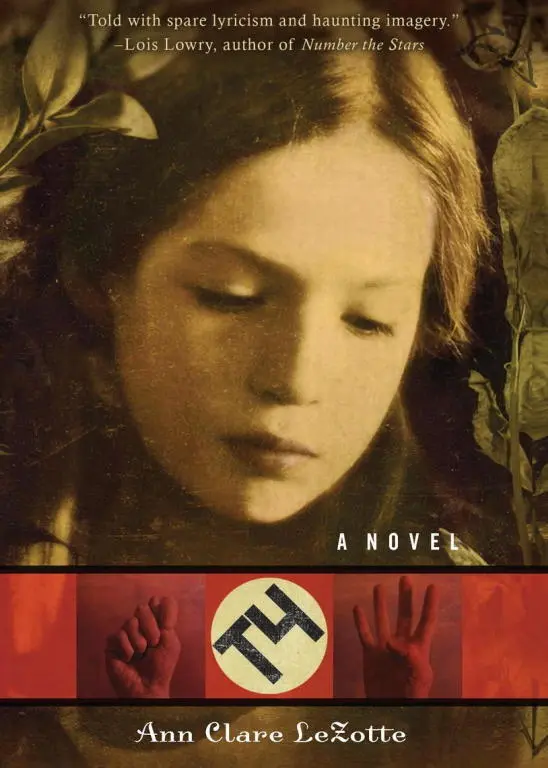
- Название:T4
- Автор:
- Издательство:Houghton Mifflin Harcourt
- Жанр:
- Год:2008
- Город:Boston
- ISBN:978-0-547-04684-6
- Рейтинг книги:3 / 5. Голосов: 1
-
Избранное:Добавить в избранное
- Отзывы:
-
Ваша оценка:
T4: краткое содержание, описание и аннотация
Предлагаем к чтению аннотацию, описание, краткое содержание или предисловие (зависит от того, что написал сам автор книги «T4»). Если вы не нашли необходимую информацию о книге — напишите в комментариях, мы постараемся отыскать её.
T4 — читать онлайн бесплатно полную книгу (весь текст) целиком
Ниже представлен текст книги, разбитый по страницам. Система сохранения места последней прочитанной страницы, позволяет с удобством читать онлайн бесплатно книгу «T4», без необходимости каждый раз заново искать на чём Вы остановились. Поставьте закладку, и сможете в любой момент перейти на страницу, на которой закончили чтение.
Интервал:
Закладка:
I had romantic ideas about Walthar
He was three years
Older than I,
But that didn’t matter.
I would grow up.
It was better
To be friends
Before husband
And wife.
His hair was like
The wing of a blackbird.
His long arms reached up
To the higher branches of a tree.
He could ride a bicycle
Backwards in the rain,
Singing, “I will steal
A little horse and our
Fortunes make thereby…”
My family seemed to approve
Walthar used Sign
With me
And soon my parents
And Clara and some
Of our neighbors
Understood too.
Father said
After the war
I could go to
A special school
In another town
For Deaf teenagers,
If it was still standing.
In truth,
It had to be rebuilt.
Germany’s Deaf
Community
Never completely
Recovered
From the public
And personal
Destruction.
Father said
He was sorry
He hadn’t thought
Of getting me
The best education
Before the war.
In 1943, the spring thawed
Our land, but our country was fighting
With the whole world, it seemed.
My experience had taught me
That Germany’s cause was wrong. I was lucky
To have parents who were kind and taught
Us not to hate anybody. Could I make a
Difference, like Father Michael?
I thought of the future world—if Jews,
Gypsies, and the Disabled would have an
Equal part in it? Meanwhile, the sweet
Brook flowed and I slept on the hammock.
I was almost happy when summer’s bees
And dandelions were replaced with a hard
Freeze and dark winter days. It had
Seemed wrong to feel so safe and alive.
Christmas Eve, 1943
The Christkind
Brought us a tree
And presents.
Walthar gave me
A boy and girl
He carved
Out of wood.
The next day
We had a roast
Goose lunch.
Outside
Snow fell
On my house
And other parts
Of Europe,
Lightly
Covering
The mass graves
Of the Nazis’ victims,
And our fallen soldiers,
Young German
Boys who had
Given their lives
To an unjust cause.
I held on to Mother
As she and everybody else sang—
I had started to speak, but mostly
Croaked like a frog—
A song by our countrymen,
Father Josef Mohr and Franz Gruber.
Silent night, Holy night
All is calm, all is bright
’Round yon virgin Mother and Child
Holy infant so tender and mild.
Sleep in heavenly peace
Sleep in heavenly peace.
It was a prayer that year, not just a carol.
Our Savior’s birth was tinged with sorrow.
I never saw
Stephanie Holderlin
Again.
But she was
In my heart.
Father Josef
Remained
A family friend.
Father Michael
Was killed
By an Allied bomb.
Later we learned
That six million
Jews
Had been
Murdered.
But I always
Thought
Of those seven
In the cabin.
The End
In May of 1945,
Germany
Surrendered.
The United States,
Russia, and England
Were victorious.
Japan and Italy
Fell with us.
Our crimes
Would live in
Infamy.
Forty-eight million
People had died
Fighting
Across the globe.
Grandmother said,
“All the suffering,
All the casualties.
This is the worst
War the world
Will ever know.”
I prayed to God, our
Lantern in the dark,
That it would be so.
In 1947
Father Josef married me and Walthar
In a country church ceremony. I wore
A long white gown and satin slippers.
I braided my hair and pinned it around
My head, like a crown. I proudly wore
A necklace of gold coins Walthar had
Given me when he proposed. It was
A Romani tradition. My groom had no
Family left after the war, so he decided
To join my world. Still, on our wedding
Night, we shared some salted bread before
Going to bed, another Gypsy custom. We
Had a son and daughter: one with dark,
Faraway eyes, the other with hair like spun
Gold. I was a farmer’s wife. We visited
Father and Mother until they died, four months
Apart, in the same bed. Clara married too,
And became an actress in Berlin. Whatever
Season, whatever weather, we were glad we
Had survived the worst, but we also felt guilty.
That feeling—that we had escaped when others equally
Important had died—would never subside.
Postscript
A plaque
commemorating
The victims
of Action T4
Was set in
the pavement
Where the offices
once stood.
The original
building
Had been destroyed
in the war.
Educating
people is
The best tool
we have
Against
forgetting.
We must
make sure
Nothing
like T4
Ever
happens
Again.
And so
My story
told in
Poetry
ends.
Notes from the Author
Paula Becker is named after the German painter Paula Modersohn-Becker (1876–1907). The Nazis labeled her art, mainly portraits of peasant girls and women, “degenerate.” She was a close friend of the great German poet Rainier Maria Rilke (1875–1926). Rilke’s wife, the sculptor Clara Westhoff (1878-1954), was Paula’s closest friend.
“Hear the Voice of the Poet” was inspired by the English poet William Blake’s “Introduction,” the first poem in his book Songs of Experience (1794).
Unfortunately, the practice of pouring hot wax into a person’s ears to cure deafness was more common than it should have been into the twentieth century.
I thank Merriam Webster’s online student dictionary for the neutral definition of euthanasia.
“The Story of Anny Wodl” is taken from an English translation of testimony given at the Nuremberg trials. I borrowed Frederich Holderlin’s last name for Stephanie. Holderlin (1770–1843) was a major German lyric poet.
Nelly and Paul, two of the children in the cabin, were named after Nelly Sachs (1891–1970) and Paul Celan (1920–1970)—the two greatest German Jewish poets of the Holocaust. Sachs was awarded the 1966 Nobel Prize in Literature; Celan committed suicide in Paris.
It is believed that 200,000 to 2,000,000 Gypsies were killed in the Romani Holocaust, also called Porajmos, which means “devouring” in the Romani language.
For readers, teachers, and parents interested in learning more about the Nazi’s Action T4 euthanasia program, a good place to start is the online exhibition on the United States Holocaust Memorial Museum website, Deadly Medicine: Creating the Master Race. The book that originally got me interested in the subject is Crying Hands: Eugenics and Deaf People in Nazi Germany, by Horst Biesold (Gallaudet University Press).
Читать дальшеИнтервал:
Закладка:
Похожие книги на «T4»
Представляем Вашему вниманию похожие книги на «T4» списком для выбора. Мы отобрали схожую по названию и смыслу литературу в надежде предоставить читателям больше вариантов отыскать новые, интересные, ещё непрочитанные произведения.


Обсуждение, отзывы о книге «T4» и просто собственные мнения читателей. Оставьте ваши комментарии, напишите, что Вы думаете о произведении, его смысле или главных героях. Укажите что конкретно понравилось, а что нет, и почему Вы так считаете.