Ann LeZotte - T4
Здесь есть возможность читать онлайн «Ann LeZotte - T4» весь текст электронной книги совершенно бесплатно (целиком полную версию без сокращений). В некоторых случаях можно слушать аудио, скачать через торрент в формате fb2 и присутствует краткое содержание. Город: Boston, Год выпуска: 2008, ISBN: 2008, Издательство: Houghton Mifflin Harcourt, Жанр: Поэзия, на английском языке. Описание произведения, (предисловие) а так же отзывы посетителей доступны на портале библиотеки ЛибКат.
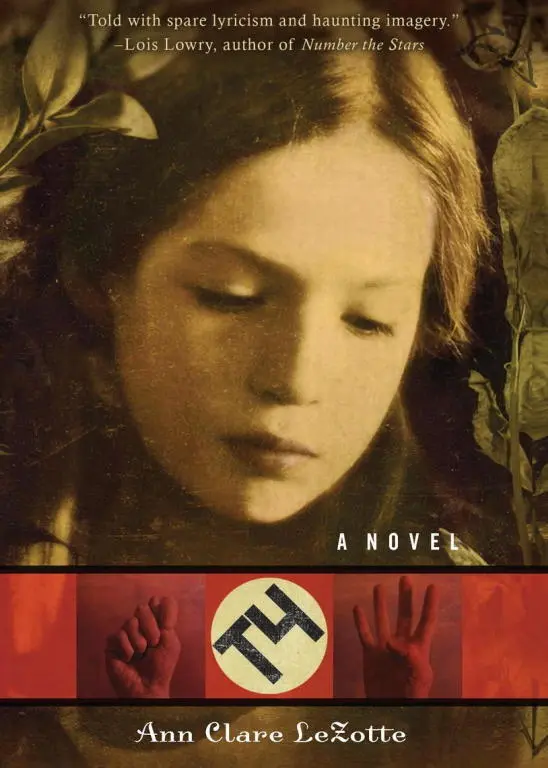
- Название:T4
- Автор:
- Издательство:Houghton Mifflin Harcourt
- Жанр:
- Год:2008
- Город:Boston
- ISBN:978-0-547-04684-6
- Рейтинг книги:3 / 5. Голосов: 1
-
Избранное:Добавить в избранное
- Отзывы:
-
Ваша оценка:
T4: краткое содержание, описание и аннотация
Предлагаем к чтению аннотацию, описание, краткое содержание или предисловие (зависит от того, что написал сам автор книги «T4»). Если вы не нашли необходимую информацию о книге — напишите в комментариях, мы постараемся отыскать её.
T4 — читать онлайн бесплатно полную книгу (весь текст) целиком
Ниже представлен текст книги, разбитый по страницам. Система сохранения места последней прочитанной страницы, позволяет с удобством читать онлайн бесплатно книгу «T4», без необходимости каждый раз заново искать на чём Вы остановились. Поставьте закладку, и сможете в любой момент перейти на страницу, на которой закончили чтение.
Интервал:
Закладка:
We all exchanged hugs and kisses.
It was the hardest thing
I ever had to do,
But I tried not to look back.
I fell asleep next to Father Josef. He had a
Blanket over his lap. He tucked it around me
As he drove his car out of our secluded town.
The movement of the wheels under my seat
Soothed me like a lullaby.
I awoke in a barn
Covered with straw
And a woolen blanket.
The moon
Was still visible in the sky.
I felt a pit in my stomach.
I was hungry.
I cried when I remembered
I had left my family behind.
Soon, a lady appeared in the doorway
She waved for me to follow her into the big house.
I sat at the kitchen table and
She gave me bread and milk.
She made certain movements with her fingers
And took my hand to do the same thing.
She was trying to teach me
The official sign language alphabet of the Deaf.
I learned to make the letters on one hand;
It’s called finger-spelling.
She also taught me word signs for the objects
I saw in the house and garden:
Chair, bed, book, tree, grass, rabbit.
Language is a key.
I felt so many doors were opening to me.
The lady in the doorway was Stephanie Holderlin.
Stephanie Holderlin
Was a retired schoolteacher.
She lived alone on a farm.
She knew Father Josef
And agreed to hide me.
She didn’t agree with T4.
She kept books in her attic
That had been banned
And burned by the Nazis.
She had a Deaf pupil once.
She learned to use
German Sign Language
So she could teach him.
Not only did she teach me
To sign,
But I learned
To be brave
From her.
I put on Stephanie’s lipstick
Staring into the oval mirror
On her vanity table.
It was a dark shade of red,
Sort of like the wing
Of a cardinal,
Or a fancy automobile.
I undid my hair.
It had a natural wave.
I noticed
I was getting
Little yellow hairs
In my armpits
And on my privates.
Another Knock on the Door
It was three in the morning and
The Gestapo was at the door!
By that time I had stopped
Sleeping in the barn.
I was curled up
On a pile of feather beds
In Stephanie’s spare bedroom.
She sent me running
Out the back door to the barn.
She told me to sit in the dirty pigsty
In my white nightgown
And to be still, keep quiet.
I shivered from the cold
And the smell and fear.
After an hour of waiting,
Stephanie came to get me.
She was talking fast;
I read her lips.
“The monsters asked me
If I have a Jewish child
Living in my home.
One of our neighbors
Must have seen you,
Although you rarely go
Out of the house,
And reported us.
Why don’t they mind
Their own business?”
She’d told them a former student
Had stopped by briefly.
The secret police listened to her
And left. But it wasn’t safe
For me to be there anymore.
Two days later
Father Josef came to pick me up.
I was happy to see him,
But I was sad to be leaving Stephanie.
I hoped I’d see her again someday.
Father Josef
Told me
He had visited
My family.
He said
Mother had been ill
But she was feeling better.
Father was working hard
But he missed me.
Schatze
Still looked for me
In the woods.
Father Josef
Reached into his pocket
And pulled out
A watercolor
Painting of two flowers.
And underneath them
Clara had written
Both of our names.
We drove two hours
To a church with a homeless shelter.
A Lutheran priest,
Father Michael,
Looked after me
During the months
I spent there.
He was nearly bald
And his face was rosy.
He had been concerned
About the welfare
Of the sick and Disabled
Even before the war.
Like a growing number
Of clergymen,
He wasn’t afraid to speak
Out against T4.
At the shelter,
I watched the people around me.
They were talking about the crimes
That were being committed.
I learned things I couldn’t believe were true.
They said
Disabled children
Were being taken
Out of their homes
Against
Their parents’ wishes.
They were put
In hospitals and
Nursing homes.
They said a majority of two
Among three or four
Attending physicians
Was enough to issue
A death warrant.
They said
The children were transferred
To six killing stations,
The village of Grafeneck
In the Black Forest,
The “old jail”
At Brandenberg,
Berberg, Hartheim,
Sonnenstein,
And Hadamar.
Nobody said
Why
The doctors
Agreed
To do it.
Because nobody knew.
Dr. Bouhler
Insisted the deaths
Should be
Painless.
He didn’t want
The patients
To know what was
Going to happen.
But they died of
Lethal injection
And starvation.
I was the only young girl at the shelter
So I spent a lot of time by myself.
I worked for my supper,
Serving soup and cleaning up
The tables and dishes.
One man watched me
As I swept the large room
And made up the cots.
He didn’t frighten me.
I found him strange
And a little charming.
Because his clothes
Were rags pieced together
And he sometimes smelled
Like a wet animal,
They called him Poor Kurt.
Poor Kurt
Wrapped his dreams
Around him
Like a patchwork quilt.
He slept
Almost every night
At the shelter.
He slept all day too.
His bushy beard
Appeared to be gray,
But he never washed,
So I couldn’t tell.
He said birds
Sat on his shoulders
In the park
And nibbled
Bits of bread
Caught in his beard.
Once I saw
A fox walk
Straight through
The door.
It drank milk from
Poor Kurt’s mug.
Интервал:
Закладка:
Похожие книги на «T4»
Представляем Вашему вниманию похожие книги на «T4» списком для выбора. Мы отобрали схожую по названию и смыслу литературу в надежде предоставить читателям больше вариантов отыскать новые, интересные, ещё непрочитанные произведения.




Обсуждение, отзывы о книге «T4» и просто собственные мнения читателей. Оставьте ваши комментарии, напишите, что Вы думаете о произведении, его смысле или главных героях. Укажите что конкретно понравилось, а что нет, и почему Вы так считаете.