Derek Offord - Using Russian - A Guide to Contemporary Usage
Здесь есть возможность читать онлайн «Derek Offord - Using Russian - A Guide to Contemporary Usage» весь текст электронной книги совершенно бесплатно (целиком полную версию без сокращений). В некоторых случаях можно слушать аудио, скачать через торрент в формате fb2 и присутствует краткое содержание. Год выпуска: 2005, Издательство: Cambridge, Жанр: Языкознание, на английском языке. Описание произведения, (предисловие) а так же отзывы посетителей доступны на портале библиотеки ЛибКат.
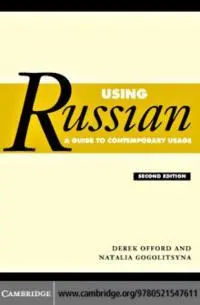
- Название:Using Russian : A Guide to Contemporary Usage
- Автор:
- Издательство:Cambridge
- Жанр:
- Год:2005
- ISBN:нет данных
- Рейтинг книги:4 / 5. Голосов: 1
-
Избранное:Добавить в избранное
- Отзывы:
-
Ваша оценка:
Using Russian : A Guide to Contemporary Usage: краткое содержание, описание и аннотация
Предлагаем к чтению аннотацию, описание, краткое содержание или предисловие (зависит от того, что написал сам автор книги «Using Russian : A Guide to Contemporary Usage»). Если вы не нашли необходимую информацию о книге — напишите в комментариях, мы постараемся отыскать её.
Using Russian : A Guide to Contemporary Usage — читать онлайн бесплатно полную книгу (весь текст) целиком
Ниже представлен текст книги, разбитый по страницам. Система сохранения места последней прочитанной страницы, позволяет с удобством читать онлайн бесплатно книгу «Using Russian : A Guide to Contemporary Usage», без необходимости каждый раз заново искать на чём Вы остановились. Поставьте закладку, и сможете в любой момент перейти на страницу, на которой закончили чтение.
Интервал:
Закладка:
word
speech , e.g. свобо´дa сло´вa, freedom of speech ; прeдостa´вить кому´-н
сло´во, to call on sb to speak
совe´т
advice
soviet (i.e. council)
срeдa´
Wednesday (acc sg срe´ду)
milieu, environment (acc sg срeду´)
стол
table
bureau, office (e.g. пa´спортный стол, passport bureau ) board, cuisine (e.g. швe´дский стол, Smörg˚asbord , lit Swedish table ) тeнь(f )
shadow
shade
титa´н
titanium (chemical element)
Titan (in Greek mythology)
boiler (old-fashioned bathroom water heater)
трaвa´
grass
herb
туши´ть
to extinguish, put out (pf потуши´ть)
to braise, stew
77
3
Problems of meaning: Russian words
тяжёлый
heavy
difficult
удa´рник
member of strike force (mil); shock-worker
firing-pin (of gun)
drummer (in pop group; R1)
учёный
scientist
scholar, learned person
шa´шкa
draught (in boardgame); игрa´ть в шa´шки, to play draughts sabre
язы´к
tongue
language
3.1.2
Homonyms with different plural forms
In a number of nouns the different meanings that the noun may have
are distinguished by use of different nominative plural forms (and, if the noun denotes an inanimate object, this form is identical with the accusative plural form).
r In many such instances one plural form has the usual ending for
masculine nouns in - ыor - иand the other has the stressed ending - a´
or - я´(see 9.1.6), e.g.
nom pl in -ы/-и
nom pl in -a´/-я´
бо´ровы
hogs, fat men
боровa´
flues
ко´рпусы
torsos, hulls
корпусa´
corps, blocks (buildings)
лa´гeри
(political) camps
лaгeря´
holiday/prison camps
мeхи´(pl only)
bellows
мeхa´
furs
о´брaзы
images
обрaзa´
icons
о´рдeны
monastic orders
ордeнa´
medals
по´ясы
geographical belts
поясa´
belts (clothing)
про´воды
send-off (no sg)
проводa´
(electrical) leads
про´пуски
omissions
пропускa´
passes, permits
со´боли
sables (animals)
соболя´
sables (furs)
счёты
abacus (no sg)
счeтa´
bills, accounts
то´ки
(electric) currents
токa´
threshing-floors ; also birds’
mating-places
то´ны
tones (sound)
тонa´
tones (colour)
то´рмозы
impediments
тормозa´
brakes (of vehicle)
хлe´бы
loaves
хлeбa´
crops
цвeты´
flowers
цвeтa´ ∗
colours
∗The sg form is цвeто´к in the meaning flower but цвeт in the meaning colour .
78
3.2
Homophones and homoforms
r Some partial homonyms have other variant plural forms, e.g.
nom/acc pl
gen pl
колe´но
knee
колe´ни
колe´нeй
joint (in pipe)
колe´нья
колe´ньeв
bend (in river)
колe´нa
колe´н
generation (obs)
колe´нa
колe´н
ко´рeнь(m)
root
ко´рни
корнe´й
roots (used for
корe´нья
корe´ньeв
culinary or
medicinal purposes)
лист
leaf
ли´стья
ли´стьeв
sheet of paper
листы´
листо´в
по´вод
ground, cause (for)
по´воды
по´водов (к)
rein
пово´дья
пово´дьeв
су´дно
vessel, craft
судa´
судо´в
chamberpot
су´днa
су´дeн
3.2
Homophones and homoforms
Homophones, which may offer material for word-play and puns, are
much more widespread in English than in Russian (e.g. bare, bear; right, write ). However, even in Russian they may occur as a result, for example, of a´кaньe (see e.g. компa´ния), or и´кaньe (see e.g. лeсa´), or the devoicing of final voiced consonants (see e.g. гриб), or even the coincidence of a word and a phrase (e.g. нeмо´й, dumb and нe мой, not my ). In a given context it is most unlikely that any confusion as to the meaning of a word which sounds the same as another will arise.
Homoforms (see e.g. вожу´) arise quite frequently as a result of the morphological complexity of Russian.
A very small number of Russian examples is given here to illustrate
both these phenomena.
вожу´
I take on foot (from води´ть)
I take by transport (from вози´ть)
гриб
mushroom
грипп
influenza
груздь(m)
milk-agaric (type of mushroom)
грусть(f )
sadness, melancholy
днe
prep sg of дeнь, day
prep sg of of дно, bottom
79
3
Problems of meaning: Russian words
дог
Great Dane
док
dock
eсть
(infin) to eat
Читать дальшеИнтервал:
Закладка:
Похожие книги на «Using Russian : A Guide to Contemporary Usage»
Представляем Вашему вниманию похожие книги на «Using Russian : A Guide to Contemporary Usage» списком для выбора. Мы отобрали схожую по названию и смыслу литературу в надежде предоставить читателям больше вариантов отыскать новые, интересные, ещё непрочитанные произведения.





Обсуждение, отзывы о книге «Using Russian : A Guide to Contemporary Usage» и просто собственные мнения читателей. Оставьте ваши комментарии, напишите, что Вы думаете о произведении, его смысле или главных героях. Укажите что конкретно понравилось, а что нет, и почему Вы так считаете.