Лоуренс Блок - Random Walk - A Novel for a New Age
Здесь есть возможность читать онлайн «Лоуренс Блок - Random Walk - A Novel for a New Age» весь текст электронной книги совершенно бесплатно (целиком полную версию без сокращений). В некоторых случаях можно слушать аудио, скачать через торрент в формате fb2 и присутствует краткое содержание. Город: New York, Год выпуска: 1988, ISBN: 1988, Издательство: A Tor Book, Жанр: Фэнтези, Проза, Самосовершенствование, на английском языке. Описание произведения, (предисловие) а так же отзывы посетителей доступны на портале библиотеки ЛибКат.
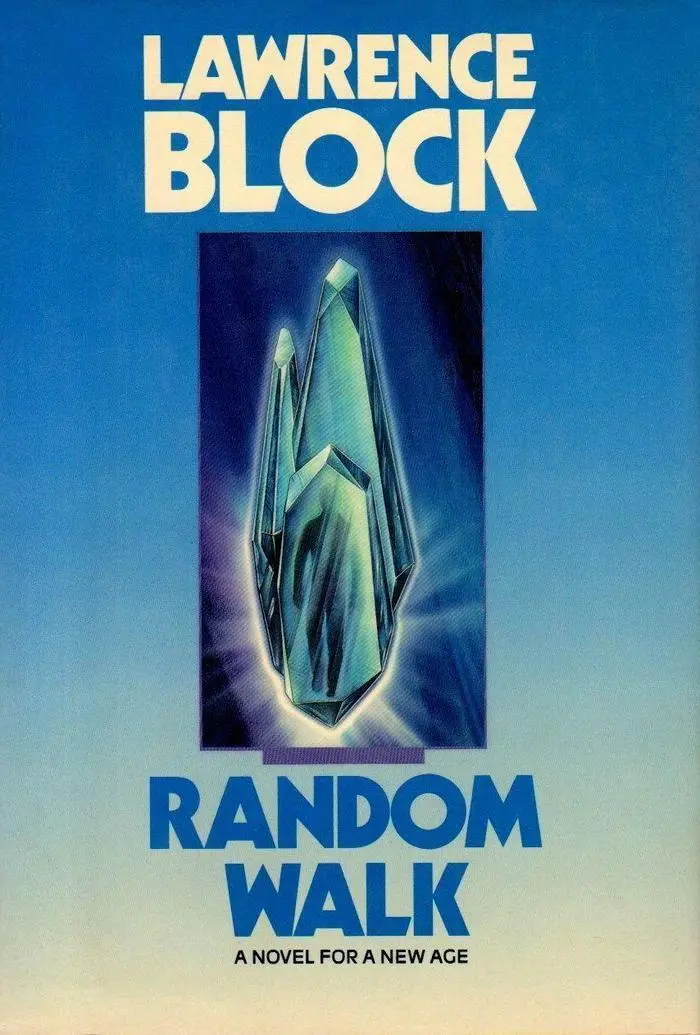
- Название:Random Walk: A Novel for a New Age
- Автор:
- Издательство:A Tor Book
- Жанр:
- Год:1988
- Город:New York
- ISBN:978-0-312-93092-9
- Рейтинг книги:4 / 5. Голосов: 1
-
Избранное:Добавить в избранное
- Отзывы:
-
Ваша оценка:
Random Walk: A Novel for a New Age: краткое содержание, описание и аннотация
Предлагаем к чтению аннотацию, описание, краткое содержание или предисловие (зависит от того, что написал сам автор книги «Random Walk: A Novel for a New Age»). Если вы не нашли необходимую информацию о книге — напишите в комментариях, мы постараемся отыскать её.
Wonderful things happen as he walks: Sleeping in the open in the chilled air, Guthrie discovers that he is not cold. Tired, he finds he always has a place to sleep. And he begins to draw people to him: Jody, a young man who doesn't understand what is happening, but knows he must walk. Sara and her son Thom. She's blind, but sees better than the sighted. Mame, crippled by arthritis, leaves her walker by the roadside. The group grows and walks and heals.
Also walking, but on another path, is Mark. Murderous Mark. When he joins the people, he discovers his role… and his punishment.
The random walk: It never ends, it just changes; it is not the destination which matters, but the journey.
Random Walk: A Novel for a New Age — читать онлайн бесплатно полную книгу (весь текст) целиком
Ниже представлен текст книги, разбитый по страницам. Система сохранения места последней прочитанной страницы, позволяет с удобством читать онлайн бесплатно книгу «Random Walk: A Novel for a New Age», без необходимости каждый раз заново искать на чём Вы остановились. Поставьте закладку, и сможете в любой момент перейти на страницу, на которой закончили чтение.
Интервал:
Закладка:
It didn’t take them long to overtake the rest of the group. Kimberley fell into conversation with a young woman who was carrying an infant in a sling on her back, and Mark found himself drawn forward in the procession until he was walking with a woman named Sue Anne and a very soft-spoken Indian named George. Sue Anne did most of the talking. She was telling him and George about some woman named Sara, and was clearly in awe of the woman. He found himself picturing Sara in his mind. He visualized a tall fiery-eyed woman with a tawny mane of hair, a sort of combination of Amazon and Valkyrie, and he was taken aback to learn that Sara was actually a short slender gray-haired woman who happened to be blind.
“Wait a minute,” he said. “I thought people get healed right and left on this hike. I keep hearing about the deaf hearing and the lame walking.”
“That’s what usually happens,” Sue Anne said.
“Sara chose to be blind,” George put in. “So she can see better.”
He didn’t stop in De Smet. He’d had no interest in the little house on the prairie, that had just been a way to start a conversation with Kimberley. Bunches of them stopped at various stores and eating places in De Smet to buy food, and then they all moved on, and he moved along with them.
He wasn’t sure why. There were any number of good-looking women in the group, but he was beginning to realize that he was not going to be able to do anything about it. He had had his hands on Kimberley’s throat, for heaven’s sake, and had wound up giving her a massage. And now whenever he began to make one of his companions the object of a fantasy, that voice sounded in his head, insisting that the woman in question was his sister.
Whatever that was supposed to mean.
As De Smet disappeared behind them, he felt as though he had let go of the steering wheel of his life. He’d certainly let go of the Lincoln; it was close to three hours west of him by now, and every step was taking him farther away from it. He could still turn around and walk back to his car, but would it even be there if he did? He seemed to remember having left the key in the ignition, and he knew he’d left the doors unlocked. The crime rate was undeniably low in rural South Dakota, but a Lincoln with the keys in it, parked at the side of the road, might still prove an irresistible temptation to some local teenager. It wouldn’t have lasted fifteen minutes in downtown Kansas City. How long would it last out here?
It struck him that he would probably never know. Because he wouldn’t go back for the car. He couldn’t go back. He could only go forward. Whatever that meant, and wherever that led.
He was walking now with a man named Douglas and a woman named Lissa. He tried to have a fantasy about Lissa — she was quite attractive — but it wouldn’t work. He felt somehow connected to Lissa. She had just been talking of astral bodies, a concept he had never understood but seemed almost able to grasp now, and when he tried to fantasize about her all he could think of was that they were Siamese twins on the astral plane, their spirit bodies joined at the nape of the neck. When his hands reached for her throat they fastened at the same time upon his own. He could not strangle her without cutting off his own air line.
He stopped trying, but then it came to him that Lissa was very like a woman named Marguerite whom he had killed in her own home six years ago in Kansas City. He had strangled her with her own pajama cord, winding it twice around her throat and drawing it tight, watching her pale eyes as the life drained out of them. When had he last thought of Marguerite? Not in months, maybe years, but he remembered her now—
And felt her pain. And felt her terror. Before he had witnessed it but now he felt it, and he and Marguerite shared a throat and the cord was choking both of them at once. Marguerite was your sister, said the damned voice in his head, and suddenly they were all his sisters, they were all linked to him, they were all part of him, and he felt his own being rent by a hundred and one mortal wounds.
“Mark? Are you all right?”
Yes, he told Douglas. He was okay.
“You look like you’re hurting, man.”
He had a headache, a brutal one, a line of fire bisecting his skull. He said as much to Douglas, and asked who was likely to have an aspirin.
“Hold still,” Douglas said. And he thrust his hands down at his sides, huffed and puffed like a weightlifter about to attempt a new personal best, and then placed his hands on either side of Mark’s head. Something buzzed — around Mark’s head at first, then within it. After a moment Douglas dropped his hands. “There,” he said. “That any better?”
“The headache’s gone,” Mark said.
Douglas was wiping his forearms with his hands, as if flinging some invisible unpleasantness from them. “If it comes back,” he said, “just tell somebody. Most everybody who’s been here a few days knows how to do that.”
“You’ll learn,” Lissa assured him. “I’ll show you tonight, if I’m not busy. Or somebody else will. And in a week you’ll be teaching people yourself.”
But they were wrong, he thought. His hands didn’t take pain away. They inflicted it.
His headache was gone. He wanted not to believe that so much pain could be lifted with so little effort, but he did believe it almost in spite of himself. Maybe they weren’t completely crazy. Maybe they truly were capable of miracles.
No matter. They could heal headaches, but he had an ache in his heart now where nobody’s hands could possibly reach. Something was happening to him.
And there didn’t seem to be anything he could do to halt the process. He wanted to leave, to turn his back on these people, but he knew that was impossible. He had the strongest feeling that he would die if he separated himself from the others. It was ridiculous, it didn’t make any sense, and yet he was certain of its essential truth.
He thought of leaving even if it meant death, of seeking death, of welcoming it. He saw now that he had been killing pieces of himself for eight years. Every time he killed a woman he had killed something within himself. They were all his sisters, they were all parts of what he was a part of, some interconnectedness of all things, something he had heard of and read about and never ever felt.
He felt it now.
The pain stayed with him, a deep soreness at the base of his throat, a dull ache in his heart, dancing pinpoints of pain in his shoulder blades and the middle of his back. It never went away, and it always seemed to be just a bit more than he could bear, but it never truly got so bad that he could not in fact endure it. And the desire to leave stayed with him, but it too never reached the point where he was able to act on it. Something carried him along. He could not stand it, but he stood it. He could not bear it, but he bore it. He could not go on, but he went on.
There was a wooded area east of De Smet and they made camp there, along the shores of Lake Preston. By the time they were settled in Mark was in a sort of a daze. Years ago as a child at summer camp he’d been hit in the forehead by a thrown baseball, and he’d suffered what was later diagnosed as a concussion. But at the time no one had made him go to the infirmary, and he’d wandered around for hours seeing through a fog and hearing through a filter, his senses muffled, the world at a distance.
He was like that now. He could walk around without bumping into people, he could carry on a conversation when spoken to, but everything was dimly perceived and imperfectly defined. Someone shared food with him and he ate. Someone made a place for him and he sat down. Several people asked him if he was all right. He said that he was.
When a young teenage boy asked him, he found himself at a loss for an answer. “I’m mixed up,” he said finally.
Читать дальшеИнтервал:
Закладка:
Похожие книги на «Random Walk: A Novel for a New Age»
Представляем Вашему вниманию похожие книги на «Random Walk: A Novel for a New Age» списком для выбора. Мы отобрали схожую по названию и смыслу литературу в надежде предоставить читателям больше вариантов отыскать новые, интересные, ещё непрочитанные произведения.



Обсуждение, отзывы о книге «Random Walk: A Novel for a New Age» и просто собственные мнения читателей. Оставьте ваши комментарии, напишите, что Вы думаете о произведении, его смысле или главных героях. Укажите что конкретно понравилось, а что нет, и почему Вы так считаете.