Geoff Ryman - Was
Здесь есть возможность читать онлайн «Geoff Ryman - Was» весь текст электронной книги совершенно бесплатно (целиком полную версию без сокращений). В некоторых случаях можно слушать аудио, скачать через торрент в формате fb2 и присутствует краткое содержание. Жанр: Фантастика и фэнтези, на английском языке. Описание произведения, (предисловие) а так же отзывы посетителей доступны на портале библиотеки ЛибКат.
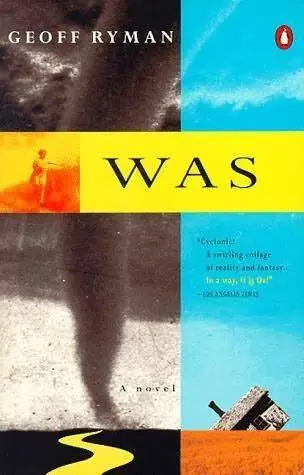
- Название:Was
- Автор:
- Жанр:
- Год:неизвестен
- ISBN:нет данных
- Рейтинг книги:5 / 5. Голосов: 1
-
Избранное:Добавить в избранное
- Отзывы:
-
Ваша оценка:
Was: краткое содержание, описание и аннотация
Предлагаем к чтению аннотацию, описание, краткое содержание или предисловие (зависит от того, что написал сам автор книги «Was»). Если вы не нашли необходимую информацию о книге — напишите в комментариях, мы постараемся отыскать её.
Ryman's darkly imaginative, almost surreal improvisation on L. Frank Baum's Oz books combines a stunning portrayal of child abuse, Wizard of Oz film lore and a polyphonic meditation on the psychological burden of the past.
From Kirkus Reviews
The Scarecrow of Oz dying of AIDS in Santa Monica? Uncle Henry a child abuser? Dorothy, grown old and crazy, wearing out her last days in a Kansas nursing home? It's all here, in this magically revisionist fantasy on the themes from The Wizard of Oz. For Dorothy Gael (not a misprint), life with Uncle Henry and Aunty Em is no bed of roses: Bible-thumping Emma Gulch is as austere (though not as nasty) as Margaret Hamilton, and her foul- smelling husband's sexual assaults send his unhappy niece over the line into helpless rage at her own wickedness and sullen bullying of the other pupils in nearby Manhattan, Kansas. Despite a brush with salvation (represented by substitute teacher L. Frank Baum), she spirals down to madness courtesy of a climactic twister, only to emerge 70 years later as Dynamite Dottie, terror of her nursing home, where youthful orderly Bill Davison, pierced by her zest for making snow angels and her visions of a happiness she never lived, throws over his joyless fianc‚e and becomes a psychological therapist. Meanwhile, in intervening episodes in 1927 and 1939, Frances Gumm loses her family and her sense of self as she's transformed into The Kid, Judy Garland; and between 1956 and 1989, a little boy named Jonathan, whose imaginary childhood friends were the Oz people, grows up to have his chance to play the Scarecrow dashed by the AIDS that will draw him to Kansas-with counselor Davison in pursuit-in the hope of finding Dorothy's 1880's home and making it, however briefly, his own. This tale of homes lost and sought, potentially so sentimental, gets a powerful charge from Ryman's patient use of homely detail in establishing Dorothy's and Jonathan's childhood perspectives, and from the shocking effects of transforming cultural icons, especially in detailing Dorothy's sexual abuse. Science-fiction author Ryman (The Child Garden, 1990) takes a giant step forward with this mixture of history, fantasy, and cultural myth-all yoked together by the question of whether you can ever really go home.
Was — читать онлайн бесплатно полную книгу (весь текст) целиком
Ниже представлен текст книги, разбитый по страницам. Система сохранения места последней прочитанной страницы, позволяет с удобством читать онлайн бесплатно книгу «Was», без необходимости каждый раз заново искать на чём Вы остановились. Поставьте закладку, и сможете в любой момент перейти на страницу, на которой закончили чтение.
Интервал:
Закладка:
When had she last dressed like that?
"Mom?" he asked, sitting up. He was horrified. How long was she going to stay? How long was he going to have to pretend to be well? Already, with actorish skills, he was firming up his eyes and straightening his back. He stood up, with a spring in his step. It was like watching a very aged actor trying to be sprightly. Jonathan could see himself move, very plainly, though his limbs were weighted to the chair.
His mother backed away from him. "I'm all right. You keep sitting," she said. Vapor wreathed out of her mouth, like steam. She found her way to another garden chair, uncertainly, nervously.
At first Jonathan thought it was cigarette smoke coming out of her mouth. But then he saw that she was sitting in a field of snow. Sparkles of sunlight blasted back up from it, like sand in his eyes. It was cold, where his mother was.
She leaned forward, uncertain how to begin. This was not the confident businesswoman that his mother had become. Now in her sixties, Jonathan's mother had lost all sense of fear and, because of that, all sense of style.
This was his young and insecure mother, who had no assurances how well her life would turn out, who wanted everything to be new and modern, who threw out anything old, who was a model but who still did not believe she was beautiful. This was his mother when she was younger than he was now. Poor ghost.
Are you a good witch or a bad witch?
"Did you ever notice," she began, hesitantly, "how in biographies they never tell you much about the adult's relationship with his parents?"
"Yes," said Jonathan. Indeed he had, being interested in history The words flowed out of his mouth slowly and messily like molasses.
"It's because people are embarrassed by it," said his mother. There were no creases in her cheeks, no patches of scaly skin on her wrists. Her lipstick was ruby red and her hair black.
"It's embarrassing for everyone. Embarrassing for the child who needs to become independent. How can you be independent when there is someone who still calls you their child? For the parents, it's a constant reminder how old they are and how strange life is. They look at the face of a forty-year-old man and say, I gave birth to him. I held his hand as a baby."
Jonathan couldn't see what was happening behind the snow-blind sunglasses.
"When you were first born," his mother said, "I took you out into a field of snow, like this one." She held out her hands, and showed him the Canadian field. "I held you up against my cheek and it was as though I were launching you into the future. It seemed to me you were like a branch, that would grow into the year 2000."
Somehow they were back in Los Angeles.
"You won't see the year 2000, will you?" his mother said.
"No," whispered Jonathan.
"I used to think there was some compensation," his mother said. "When you were a baby, and I realized there was something wrong with you, when you rocked and wouldn't speak, when you tore things up, I asked everyone what I had done wrong. Then I saw. You could draw. You could make those heads out of clay. And I thought: There always is some compensation. When you quit university the first time, and I saw you act at Stratford, I thought: There's the compensation. Even when you left me, left all of us and came here to do whatever it was you did in all those bars, I thought: He's got to be there to make it. He's got to be there for his profession."
She looked around at his garden, at the L.A. sun. "But there's no compensation, Jonathan. There's no one to pass anything on to. You'll die, and the future will be only silence. You'll die and there won't be anything left."
Somewhere there were birds singing in bushes.
"I went back to our old house. The one your father built. It has had eight owners since we left. I walked through its rooms. Everything had been torn out, replaced. Even the stone fireplace your father built. Even the tree we planted that had your name. The shoebox at the end of the hall, even the patio out back."
"What?" Jonathan began, words trailing limply. He meant to ask, what did the owners think, with you wandering through their rooms.
"They didn't see me. I wasn't really there." She admitted it, shyly, with a sad shrug of her shoulders.
"You never told me," she said. "You never told me anything about yourself. You shut me out. You were embarrassed. You should always pay attention to embarrassment, Jonathan. It means there is something too tangled to deal with. And humor, when people turn things into a joke. Or when they make them weird or spooky. It means that there is something people cannot face."
She took off her sunglasses, and looked at him directly.
"Have you ever noticed, Jonathan? Being an actor. Has it ever occurred to you that there are only two genres that can deal with family life? One of them is comedy." She smiled ruefully. "And the other is…"
Her voice went rough and deep and harsh and menacing, and her face blossomed out like a flower in time-lapse photography, burst out in an eruption of scar tissue and deformation, marks where knives had passed.
"The other is horror!"
Jonathan howled and threw himself back in his chair, nearly knocking it over. He lost all of his breath, he couldn't pull in air, and his heart was thumping.
He looked around his garden, and there was no one there, and it was dark. When had the sun set?
I was dreaming, he told himself. That was all; I was dreaming.
But he knew his eyes had been open, and he knew he had been awake. He knew his mind was beginning to go. He didn't have as much time as he had thought.
Behind the locked door, the telephone began to ring again, over and over.
Finally, in 1981 when he was thirty years old, Jonathan had been offered a leading role in a film.
It was a horror movie. His agent described the script, euphemistically, as "powerful." The character was so disfigured that Jonathan had assumed no one would know it was him under the makeup.
The film was called The Child Minder . Jonathan played a character called Mort. Mort's face had been slashed by his father when he was a child. The face looked like a crazy quilt, all swellings and stitches. The character Mort loved children, and he loved killing them.
Mort hung them from meat hooks. He pressed cheese-cutting wire through them. Mort kissed them as he killed them and called them "my sweet baby, my sweet child."
Jonathan needed the money. It was with a sense of dread that he showed up at 5:00 a.m. in the scanty little trailer on location in Santa Monica. He assumed he would dry again. He often did, without warning. Despite his reputation for brilliance, Jonathan would sometimes unaccountably be unable to act. It was unaccountable even to himself.
Ira had read the script and described it with one word: pornography.
But as the layers of latex accumulated, destroying his face, Jonathan found he began to feel pity for the character he saw being built up in the mirror. Jonathan found a voice for him-desperate, wild with sadness and humor and betrayed good grace. His voice would be cultured, his laugh hysterical and poisoned. There was something solid there, as solid as history, that Jonathan could grasp.
Jonathan stepped out of the trailer into a gray California morning. He walked toward the lights and stepped into their magic circle. Jonathan spun on his heel once, and something alive reared out from him, took over his face, took over his voice box and his cheek muscles. The latex on his face was as unresponsive as scar tissue. That was right, too.
Children. What the world does to children. Cuts them, scars them, imprisons them, destroys them. It was all so terrible as to be a horrible joke, an embarrassment, a subject for comedy, comedy or terror.
Читать дальшеИнтервал:
Закладка:
Похожие книги на «Was»
Представляем Вашему вниманию похожие книги на «Was» списком для выбора. Мы отобрали схожую по названию и смыслу литературу в надежде предоставить читателям больше вариантов отыскать новые, интересные, ещё непрочитанные произведения.




Обсуждение, отзывы о книге «Was» и просто собственные мнения читателей. Оставьте ваши комментарии, напишите, что Вы думаете о произведении, его смысле или главных героях. Укажите что конкретно понравилось, а что нет, и почему Вы так считаете.