Joan Vinge - The Snow Queen
Здесь есть возможность читать онлайн «Joan Vinge - The Snow Queen» весь текст электронной книги совершенно бесплатно (целиком полную версию без сокращений). В некоторых случаях можно слушать аудио, скачать через торрент в формате fb2 и присутствует краткое содержание. Год выпуска: 1980, ISBN: 1980, Издательство: Dial Press, Жанр: Фантастика и фэнтези, Фэнтези, на английском языке. Описание произведения, (предисловие) а так же отзывы посетителей доступны на портале библиотеки ЛибКат.
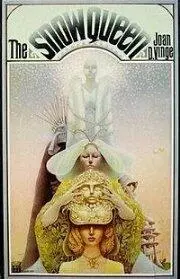
- Название:The Snow Queen
- Автор:
- Издательство:Dial Press
- Жанр:
- Год:1980
- ISBN:0-803-77739-6
- Рейтинг книги:5 / 5. Голосов: 1
-
Избранное:Добавить в избранное
- Отзывы:
-
Ваша оценка:
The Snow Queen: краткое содержание, описание и аннотация
Предлагаем к чтению аннотацию, описание, краткое содержание или предисловие (зависит от того, что написал сам автор книги «The Snow Queen»). Если вы не нашли необходимую информацию о книге — напишите в комментариях, мы постараемся отыскать её.
Won Hugo Award for Best Novel in 1981.
Nominated for Nebula Award for Best Novel in 1981.
The Snow Queen — читать онлайн бесплатно полную книгу (весь текст) целиком
Ниже представлен текст книги, разбитый по страницам. Система сохранения места последней прочитанной страницы, позволяет с удобством читать онлайн бесплатно книгу «The Snow Queen», без необходимости каждый раз заново искать на чём Вы остановились. Поставьте закладку, и сможете в любой момент перейти на страницу, на которой закончили чтение.
Интервал:
Закладка:
“Miroe, I’ve always wondered why you use that thing to power your pump.”
He glanced back at her, away at the windmill, said good-naturedly, “Well, you took away my hovercraft, Jerusha. You can never tell when I might lose my generators.”
It was not the answer she had been expecting, but she only shook her head. They reached the main house, went in through the storm shuttered porch, into the room she still remembered perfectly from the first time; and from the handful of stolen evenings in the years since then that she had spent cross-legged before the fire, wrapped in warmth and golden light, caught up in a game of 3D chama or feeding Miroe’s quiet fascination with her reminiscences about another world.
She pulled off her helmet, shook out her dark curls. She let her eyes wander over the comfortable junk-shop homeliness of the room, where relics of his off worlder ancestors, heirlooms by default, kept uneasy truce with rough-hewn native furniture. Moving to the broad stone hearth she turned to face him, letting her back begin to thaw. “You know, after all this time I feel like I haven’t even been away. Funny, isn’t it, how some places are like that?”
He looked up at her from halfway across the room; didn’t answer, but smiled. “Why don’t you take your things upstairs? I’ll get us something to eat.”
She picked up the shoulder bag she had hah filled with a change of clothing, climbed the worn staircase to the second story. It was a large house… filled with echoes of children and laughter… filled with memories. The banister under her hand was worn smooth by the polishing of countless hands; but the halls, the rooms, were empty and silent now. Only Miroe, the last of his line, alone. Alone even among the Winters who worked for him here. She sensed the bond of trust and respect that seemed to exist between them, a stronger bond than she would have expected between owner and workers, natives and off worlder But there was always an intangible field of reserve surrounding him, keeping him separate, self-contained. She felt it, sometimes, striking sparks against her own.
She entered the room she had always taken, threw her bag and her helmet down on the rumpled bed, watched them sink into the comforters. The wooden-framed bed itself was as hard as a board — was a board, for all she knew — but she had never lam awake here for half the night, praying for sleep while her eyes burned a hole through her lids in the dark…
She unfastened her coat, took it off, started toward the massive wardrobe with it. Stopped, as her gaze landed on the eye-stunning chartreuse flightsuit lying in a heap on the wardrobe’s floor. She hung her coat on a hook mechanically, picked up the jump suit and held it against herself. Held it at arm’s length again, studying the contours. Then, slowly, she took her coat back and hung the flightsuit in its place.
She went back to the bed, looked again at the rumpled covers; picked up the brush lying on a stool at bedside, fingered the strands of long, fair hair. She put it down again. She stood silently, suddenly in her mind seeing a small, solitary, curly-haired child, in threadbare underpants and sandals, who crouched to watch silvery wogs flit in a dying pool. The sunlight poured over her like hot honey, suffocating all sound, and the stone-studded, blistered moraine of the dry riverbed stretched away forever…
Jerusha took back her helmet and her bag from the bed, and went quickly down the stairs.
“Jerusha?” Miroe straightened away from the low planked table near the fire, frowning his lack of comprehension. “I thought you were—”
“You didn’t tell me you had — other guests.” The word took on meanings she hadn’t intended. “I won’t stay.”
His face changed, like the face of a man who had just been caught in a terrible oversight. Her own face seemed to have froZen to death.
He said quietly, “Aren’t you ever off duty?”
“Your morals are no all — concern of mine, even on duty.”
“What?” Another expression entirely. “You mean-Is that what you thought?” His relief burst out in deep laughter. “I thought you were looking for smugglers!”
Her mouth opened.
“Jerusha.” He picked his way across the cluttered room to her. “Ye gods, I didn’t mean it like that. It isn’t what you think; she’s only a friend. Not a romance. She’s young enough to be my daughter. She’s out on a boat right now.”
Jerusha looked away, down, “I didn’t want to — intrude.”
He cleared his throat. “I’m not a plastic effigy, gods know—” He picked up a flabby, faded cushion, put it down.
“I didn’t expect you were.” She knew she was saying it badly.
“I… you said once that I wasn’t a stupid man. But in all this time, all the visits you’ve made here, I never realized…” his hand rose to touch her in a way he had never touched her, “…that you wanted something more.”
“I didn’t want you to.” Didn’t want to admit it, even to myself. She tried to move, tried to step away from his hand, tried, tried-trembling like a wild bird.
He took his hand away. “Is there someone else? In the city, back on your world, another—”
“No,” her face burning. “Never.”
“Never?” He held a long breath. “Never?… No one has ever touched you like this—” along the nape of her neck, her earlobe, the line of her jaw “—or like this—” tracing the seal of her tunic down over her breast “—or done this—” slowly surrounding her with his arms, tightening her against him until she felt the lines of his body melt into hers, and his mouth was on her mouth like nectar.
Murmuring, “Yes… now…” as his kiss released her. She found his lips again, demanding.
“Beg your pardon, sir!”
Jerusha gasped, breaking his hold in reflex; saw the ancient cook with back turned to them in the doorway.
“What is it?” Miroe’s voice was frayed around the edges.
“Midday, sir. Midday meal is ready… but it’ll keep until you are, sir.” Jerusha heard the knowing smile as the cook shuffled back into the pantry.
Miroe sighed heavily, his face trying to smile and frown but only managing to look aggrieved. He reached for her hand, but she slipped it through his fingers before they closed. He looked at her, she saw his surprise.
“You asked the question eloquently.” Her own smile wavered with the static of her emotions. “But you should have asked it another time, Miroe.” She shook her head, pressing her hands to her lips for a moment. “It’s too close to the end for me now… or not close enough.”
“I understand.” He nodded, suddenly noncommital; as though the moment that had just been between them, the moment she had waited so long for, meant nothing to him.
Disappointment and sudden shame pinched her chest. Is that all it would have meant to you? “I’d better be getting back to the city.” So you can tell your Winter doxies how you almost had the Commander of Police for lunch.
“You don’t have to go. We can — pretend it didn’t happen.”
“Maybe you can. But I can’t pretend, any more. Reality is too loud.” She pulled on her coat, began a crooked course to the door.
“Jerusha. Will you be all right?” The concern caught at her.
She stopped, turned back, under control. “Yes. Even a day outside Carbuncle is like a transfusion. Maybe… will I see you again, at the Festival — before the final departure?” She hated herself for asking when he would not.
“No, I don’t think so. I think this is one Festival I want to miss. And I’m not leaving Tiamat; this is my home.”
“Of course.” She felt an artificial smile starting again, like a muscle cramp. “Well, maybe I’ll — call, before I go.” Go to pieces, go to hell…
Читать дальшеИнтервал:
Закладка:
Похожие книги на «The Snow Queen»
Представляем Вашему вниманию похожие книги на «The Snow Queen» списком для выбора. Мы отобрали схожую по названию и смыслу литературу в надежде предоставить читателям больше вариантов отыскать новые, интересные, ещё непрочитанные произведения.





Обсуждение, отзывы о книге «The Snow Queen» и просто собственные мнения читателей. Оставьте ваши комментарии, напишите, что Вы думаете о произведении, его смысле или главных героях. Укажите что конкретно понравилось, а что нет, и почему Вы так считаете.