Joan Vinge - The Snow Queen
Здесь есть возможность читать онлайн «Joan Vinge - The Snow Queen» весь текст электронной книги совершенно бесплатно (целиком полную версию без сокращений). В некоторых случаях можно слушать аудио, скачать через торрент в формате fb2 и присутствует краткое содержание. Год выпуска: 1980, ISBN: 1980, Издательство: Dial Press, Жанр: Фантастика и фэнтези, Фэнтези, на английском языке. Описание произведения, (предисловие) а так же отзывы посетителей доступны на портале библиотеки ЛибКат.
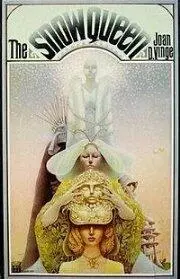
- Название:The Snow Queen
- Автор:
- Издательство:Dial Press
- Жанр:
- Год:1980
- ISBN:0-803-77739-6
- Рейтинг книги:5 / 5. Голосов: 1
-
Избранное:Добавить в избранное
- Отзывы:
-
Ваша оценка:
The Snow Queen: краткое содержание, описание и аннотация
Предлагаем к чтению аннотацию, описание, краткое содержание или предисловие (зависит от того, что написал сам автор книги «The Snow Queen»). Если вы не нашли необходимую информацию о книге — напишите в комментариях, мы постараемся отыскать её.
Won Hugo Award for Best Novel in 1981.
Nominated for Nebula Award for Best Novel in 1981.
The Snow Queen — читать онлайн бесплатно полную книгу (весь текст) целиком
Ниже представлен текст книги, разбитый по страницам. Система сохранения места последней прочитанной страницы, позволяет с удобством читать онлайн бесплатно книгу «The Snow Queen», без необходимости каждый раз заново искать на чём Вы остановились. Поставьте закладку, и сможете в любой момент перейти на страницу, на которой закончили чтение.
Интервал:
Закладка:
Darkness swallowed them unexpectedly as the tram entered one of the transparent spokes that spanned the starship harbor’s vacuum to the spaceport hub of the city wheel. Moon lost the images of El sevier’s words as they flowed into a memory of her own, of firelight and wind, warm kisses, and two hearts beating together. The empty blackness seeped into the space in her own soul which should have been filled and hid her face, as her face turned as bleak as her heart. “Wish I could have known him.” Cress’s face shone briefly as he lit one of the spicy-smelling reeds everyone here seemed to smoke.
“He gone,” Silky said, pointlessly, remarking on the obvious. He spoke barely intelligible Sandhi, the international language of Kharemough, which Moon had been learning with Elsevier’s help. But the thoughts behind his murky mutterings were as opaque to her as they had ever been.
“TJ would have driven you right up the wall, Cress,” Elsevier said, fondly. “He was always switched on. You move through a much thicker temporal medium; you’re much better suited to astrogation
Cress laughed; it became a fit of coughing.
“You know they told you not to smoke!” Elsevier reached forward and took the glowing reed out of his hand; he didn’t protest.
“Gone,” Silky said. “Gone. Gone…” as though he were obsessed by the feel of the word.
“Yes, Silky,” Elsevier murmured. “The good always die young, even if they live to be a hundred.” She stroked one of the maimed tentacles draped across the back of Cress’s seat. “I never saw him as angry, or as fine, as the day he took you from that street carnival in Narlikar.” She shook her head, her necklace of bells rang silverly.
“He suffered everyone’s pain; and that was why he wanted to end it. Thank the gods he was so strong. I don’t know how he lived with it…”
Where is Sparks now, and who is hurting him? And why can’t I help him? Moon’s booted feet moved restlessly beside the seat; she stared at Silky with sudden, unwilling insight. Oh, Lady — I can’t wait longer! Her knuckles turned white on the seat back.
“To think he cut all his radical ties because he was afraid for me — when I knew he would gladly have died for his beliefs himself. I was incensed; but I was glad, too: He was a pacifist, among people who were not.” She took a puff from Cress’s reed. “And then he took up smuggling! Oh—”
The tram burst into the light again, on the passenger level of the star port itself. Wallscreens were everywhere along their path, with changing scenics of other worlds; in the lower levels of the complex an unimaginable number of goods imported from all of those worlds waited shipment down to the planet’s surface. Countless more shipments from Kharemough’s sophisticated industries passed through the star port in the return trade: There were other scenics, designed to awe arriving visitors, that glorified the technological heights that could sustain major manufacturing processes in space itself. Moon had been told that this was the largest floating city, but not the only one, above Kharemough; there were thousands of other production stations and factories, whose workers spent most of their lives in space between the planet and its moons. The idea of spending a lifetime in black isolation haunted and depressed her.
The tram drifted to a stop, in the waiting area for travelers down to the planet’s surface. Moon followed Cress and Silky wordlessly through the exploding crowds, to claim space on a lounge while El sevier went to the ticketing machines.
“Ah…” Cress settled back, looking up at the omnipresent video displays. Here they changed from scene to scene of the star port exterior: now the hazy, cloud-dressed surface of Kharemough; now the surface of the nearer moon, an abstract painting of industrial pollutants; now the glaring image of an interstellar freighter, a chain of coin discs strung out on the matte blackness like a necklace of drilled shell beads. He sat on Silky’s far side, protecting Silky from strangers by the barrier of their bodies; Silky gaped at the sluggish patterns of passersby, oil on a water surface. “That’s what I like about Kharemough — they always try to keep your mind occupied.” A false note sounded in the easy words as the starships flashed onto the screen. Elsevier had said that Cress had once been a journeyman astrogator for a major shipping line. “Too bad we can’t see the Prime Minister’s ships; but he’s not due home for a couple more weeks. That’s a sight to put your eyes out for sure, young mistress.”
Moon glanced down from the screens. “Why do you always call me that? My name is Moon!”
“What?” Cress looked at her blankly, shrugged. “I know it is, young mistress,” deliberate. “But you’re a sibyl; and I owe you my life. You deserve to be addressed with honor. Besides,” he smiled, “if I let it get too casual, I might fall in love with you.”
She stared at him, taken by surprise, but his face refused to tell her whether he was making fun of her or not. She looked away again moodily, not knowing how to answer him; tried to watch the pictures on the screens.
Disembodied voices made announcements in Sandhi, and half a dozen other languages she didn’t recognize at all. The ideo graphic symbols of written Sandhi were incomprehensible to her, but she was learning the spoken language from tapes that heightened recall while she listened. They opened her mind with music while they etched the words painlessly on her unconscious; and by now she could understand most of what she heard. But there were nuances within nuances to this language, just as there were to the relationships between the people who used it. A strict caste system controlled the people of this world, denning their roles in society from the day they were born. Offworlders were immune to its restrictions, as long as they remained aloof from them — she had been given a ticket, over Elsevier’s pleading, for addressing a shopkeeper by his Sandhi classification, instead of as “citizen.” More serious breaches of conduct within the system were punishable by stiff fines or even loss of an inherited rating. There were separate shops, restaurants, and theaters for the Technical, Nontechnical, and Unclassified ratings, and the highest and lowest could not even speak to each other without an intermediary. She had wondered indignantly, clutching her ticket, why they put up with it. Elsevier had only smiled and said, “Inertia, my dear. Most people simply aren’t unhappy enough with the known to trade it for the unknown. TJ could never understand that.”
Moon leaned forward on the quilt-surfaced couch as Elsevier rematerialized out of the crowd mass.
“They’re already boarding. We’d better go.” Elsevier waved the ticket printouts toward the gateway at the far side of the waiting area, where passengers were funneling into the unknown. Cress stood up with Silky; Moon followed, resigned. “Don’t look so glum, young mistress; you won’t feel a thing. It’s all in the hands of the traffic controllers, a shuttle’s not like a ship. More like a crate.”
“It’s beautiful down there, Moon. Wait until you see KR’s ornamental gardens.”
“Gardens aren’t what I need, Elsie.” Her eyes went to the view of space again, like iron to a lodestone. “I need to go home.”
Cress gave Elsevier an accusing, unreadable look; she turned away from it. “Wait until you meet KR, Moon. You’ll understand everything then.”
20
They boarded the shuttle at the tail of the crowd. Moon caught a glimpse of its tubby, boxlike exterior through the airlock’s port: It was a crate, just as Cress had said, with no propulsion of its own. It was drawn down to the planet and shunted back up again just like any other piece of freight, clutched in an invisible hand of repeller-or tractor — beams from one of the planetary distribution centers. A shipping window was a column of no-man’s space thirty meters wide, licking out into the zone of heavy industry between Kharemough and its moons.
Читать дальшеИнтервал:
Закладка:
Похожие книги на «The Snow Queen»
Представляем Вашему вниманию похожие книги на «The Snow Queen» списком для выбора. Мы отобрали схожую по названию и смыслу литературу в надежде предоставить читателям больше вариантов отыскать новые, интересные, ещё непрочитанные произведения.



Обсуждение, отзывы о книге «The Snow Queen» и просто собственные мнения читателей. Оставьте ваши комментарии, напишите, что Вы думаете о произведении, его смысле или главных героях. Укажите что конкретно понравилось, а что нет, и почему Вы так считаете.