Joan Vinge - The Snow Queen
Здесь есть возможность читать онлайн «Joan Vinge - The Snow Queen» весь текст электронной книги совершенно бесплатно (целиком полную версию без сокращений). В некоторых случаях можно слушать аудио, скачать через торрент в формате fb2 и присутствует краткое содержание. Год выпуска: 1980, ISBN: 1980, Издательство: Dial Press, Жанр: Фантастика и фэнтези, Фэнтези, на английском языке. Описание произведения, (предисловие) а так же отзывы посетителей доступны на портале библиотеки ЛибКат.
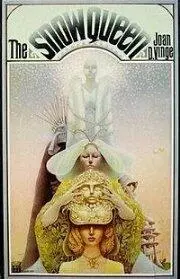
- Название:The Snow Queen
- Автор:
- Издательство:Dial Press
- Жанр:
- Год:1980
- ISBN:0-803-77739-6
- Рейтинг книги:5 / 5. Голосов: 1
-
Избранное:Добавить в избранное
- Отзывы:
-
Ваша оценка:
The Snow Queen: краткое содержание, описание и аннотация
Предлагаем к чтению аннотацию, описание, краткое содержание или предисловие (зависит от того, что написал сам автор книги «The Snow Queen»). Если вы не нашли необходимую информацию о книге — напишите в комментариях, мы постараемся отыскать её.
Won Hugo Award for Best Novel in 1981.
Nominated for Nebula Award for Best Novel in 1981.
The Snow Queen — читать онлайн бесплатно полную книгу (весь текст) целиком
Ниже представлен текст книги, разбитый по страницам. Система сохранения места последней прочитанной страницы, позволяет с удобством читать онлайн бесплатно книгу «The Snow Queen», без необходимости каждый раз заново искать на чём Вы остановились. Поставьте закладку, и сможете в любой момент перейти на страницу, на которой закончили чтение.
Интервал:
Закладка:
But that left his family. It had been her duty, devolved upon her by Mantagnes, the new Acting Commander, to help LiouxSked’s wife make the arrangements for the family’s departure from Tiamat. “Marika needs another woman’s presence at a time like this, Jerusha,” Mantagnes had said, quite sincerely. She had bitten her tongue. Well, damn it, maybe she does.
She had wondered how she would be able to face Lesu Marika LiouxSked and the two little girls, with the knowledge of what she had seen that night still branded on her memory. But she had kept control of her emotions with a success born of long practice, and it had seemed to have a good effect on the distraught and grieving woman.
Lesu Marika had always been distant and disapproving during their previous encounters — usually when LiouxSked had made her play glorified nanny on family expeditions into the Maze. But, like most of the force stationed here — like herself — LiouxSked and his family had come from Newhaven; and so now they spoke together in their own language of home, like strangers met in an alien land. Marika and the children were returning home to family and friends (and the Commander was returning with them, to spend the rest of his life in an institution; but they did not speak of that). Jerusha encouraged safe, nonspecific recollections of the world they had all longed to see again: the sun bleached heat of the days; the vital, quicksilver people; the star port metropolis and trade center of Miertoles lo Faux — where she had first seen the glory of the Prime Minister’s visitation, and been awed by its splendor. Where she had dreamed her own dreams of other worlds…
Jerusha felt someone come to stand silently beside her; glanced over and then down at ten-year-old Lesu Andradi, the younger of LiouxSked’s two daughters. She was a bright, eager girl, very unlike her simpering older sister, and Jerusha had grown fond of her. And the gradual realization that the child hanging on her hand looked up at her uniform with the same near-awe that she had always felt toward her own uniformed father and brother had made the humiliation of her nursemaid duty bearable.
Now Andradi imitated her own pose at the window unthinkingly — a small, forlorn figure in a shapeless gray robe, her forehead smudged with ash. The family dressed for mourning, as though
LiouxSked had actually died. But the gods weren’t that kind… Gods, hell! Jerusha’s mouth thinned. The gods had nothing to do with it; this stank of human treachery.
Andradi rubbed her eyes surreptitiously with her fist as she watched the other children play, part of the world that she had suddenly been cut off from. “I wish I could say good-bye to Scelly and Minook. But Mama won’t let us, because — because of Da.”
Jerusha wondered whether it was simply that her mother considered it inappropriate to mourning, or whether Marika was afraid of what the other children might say to her own. But she only said, “They’ll understand.”
“But I don’t want to go away and not see them any more! I hate Newhaven!” Andradi had been born on Tiamat, and her image conscious parents affected a pretentiously Kharemoughi lifestyle; her homeworld was nothing to her but a name, the symbol of all that had abruptly gone wrong with her life.
Jerusha put an arm out, circled the girl’s narrow shoulders, glancing over her head at the sterile sophistication of the room behind them. She heard muffled echoes from the upper stories, where Marika and the servants were gathering together the last of the family’s belongings. They were leaving behind most of the furniture-not because of the expense of shipping it, she suspected, so much as the painful associations of this place. “I know, Andradi. You hate Newhaven now. But when you get there you’ll find new friends, and they’ll show you how to climb up into prong trees, and weave the bark into hats. They’ll take you out with a lamp to find flowers that only bloom at night; and in the rainy season water falls out of the sky like a warm shower, and all the vines in your courtyard will be covered with sweet berries. You can catch shiny wogs in a pool…” Although she doubted very much that Marika would let her daughters catch wogs.
Andradi snuffled. “What — what are those?”
Jerusha smiled. “Little things like fish that live in the winter rain pools. In the summer they burrow down into the mud and sleep there until the rains come again.”
“For a hundred years?” Andradi’s eyes widened. “That’s a long time.”
Jerusha laughed as comprehension caught up with her. “No, not a hundred — just a couple. Winter and summer don’t last as long there as they do here.”
“Oh, double luck!” Andradi clapped her hands. “That’ll be like living forever. Just like the Snow Queen!”
Jerusha winced, pushed the thought aside and nodded her encouragement. “There you go. You’ll like growing up on Newhaven. I know I did.” She was aware that she was ignoring the things she had come to hate once she was grown. “I wish I was going back myself.” The words slipped out, unintended.
Andradi abruptly was clinging like a burr, her small face buried against Jerusha’s tunic. “Oh, yes — oh, yes, Jerusha — please come! You can show me everything, you know everything; I want you to come with me.” She trembled. “You’re a good Blue.”
Jerusha stroked the dark, curly head, speechless with the sudden comprehension of what she meant now to this child, whose rightful symbol of firm stability and trust had suddenly destroyed himself. She let herself realize, at last, how deeply Andradi’s bewildered grief had penetrated her own defenses and tightened its grip around her heart.
She pried the girl’s arms loose where they wrapped her waist above her equipment belt, and took the slim, warm hands in her own. “Thank you, Andradi. Thank you for asking. I wish I could go with you; but my job here isn’t done. Your father… your father didn’t do this thing to himself, Andradi. No matter what anybody says, don’t you ever believe he did. Somebody did it to him. I don’t know who yet but I’m going to find out. I’m going to make sure that person pays. And when I do, you’ll get a message from me, so that you’ll know he has — or she has. Maybe after that I’ll be ready to go home myself.”
“All right…” The curly head bobbed once, and then the somber, up slanting eyes found her face again. “When I’m grown, I’m going to be a Blue too.”
Jerusha smiled, without irony or condescension. “Yes, I think maybe you will.”
They glanced up together as Marika entered the den, veiled in gray; she gestured her daughter to her side, and Andradi moved away reluctantly. “Everything is ready, Jerusha.” Her voice was as dreary and gray as she was. “You may see us to the star port now.”
Jerusha nodded. “Yes, Madame LiouxSked.” She followed them gladly out of the abandoned room.
Jerusha left the hovercraft to an attendant whose presence she barely registered, walked toward the heavy windowed doors that separated the cavernous garage from police headquarters on the other side. The whole of this alley was taken up by offices and detention cells and the court buildings, a drab stain of moral rectitude on the crazy quilt of the Maze. Officially it was the Olivine Alley; but everyone, including its inhabitants, knew it as Blue Alley.
She barely remembered to pause for the second it took the sluggish doors to snap open and let her pass through, into the anonymous hallway beyond. Her mind still lay on the trip she had just made, the reason for it, the whole incredible, ugly chain of events that had shaken everyone in this’ Excuse me, patrolman. Excuse me, patrolman. Excuse me, patrolman.”
Читать дальшеИнтервал:
Закладка:
Похожие книги на «The Snow Queen»
Представляем Вашему вниманию похожие книги на «The Snow Queen» списком для выбора. Мы отобрали схожую по названию и смыслу литературу в надежде предоставить читателям больше вариантов отыскать новые, интересные, ещё непрочитанные произведения.





Обсуждение, отзывы о книге «The Snow Queen» и просто собственные мнения читателей. Оставьте ваши комментарии, напишите, что Вы думаете о произведении, его смысле или главных героях. Укажите что конкретно понравилось, а что нет, и почему Вы так считаете.