Brian Aldiss - Helliconia Winter
Здесь есть возможность читать онлайн «Brian Aldiss - Helliconia Winter» весь текст электронной книги совершенно бесплатно (целиком полную версию без сокращений). В некоторых случаях можно слушать аудио, скачать через торрент в формате fb2 и присутствует краткое содержание. Год выпуска: 1985, ISBN: 1985, Издательство: Jonathan Cape, Жанр: Фантастика и фэнтези, на английском языке. Описание произведения, (предисловие) а так же отзывы посетителей доступны на портале библиотеки ЛибКат.
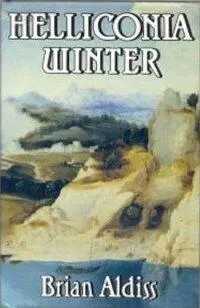
- Название:Helliconia Winter
- Автор:
- Издательство:Jonathan Cape
- Жанр:
- Год:1985
- ISBN:0-224-01847-7
- Рейтинг книги:5 / 5. Голосов: 1
-
Избранное:Добавить в избранное
- Отзывы:
-
Ваша оценка:
Helliconia Winter: краткое содержание, описание и аннотация
Предлагаем к чтению аннотацию, описание, краткое содержание или предисловие (зависит от того, что написал сам автор книги «Helliconia Winter»). Если вы не нашли необходимую информацию о книге — напишите в комментариях, мы постараемся отыскать её.
Helliconia Winter — читать онлайн бесплатно полную книгу (весь текст) целиком
Ниже представлен текст книги, разбитый по страницам. Система сохранения места последней прочитанной страницы, позволяет с удобством читать онлайн бесплатно книгу «Helliconia Winter», без необходимости каждый раз заново искать на чём Вы остановились. Поставьте закладку, и сможете в любой момент перейти на страницу, на которой закончили чтение.
Интервал:
Закладка:
The white hair emphasised the size of his head. His straight brows, eyes, mouth, emphasised the anger that lurked like thunder there.
He bowed deeply to the Priest-Supreme and kissed his hand. He turned to salute the Synod.
“I thank you for giving me audience,” he said.
“Archpriest-Militant Asperamanka, we had been informed of your death in battle,” said Chubsalid. “We rejoice in the inaccuracy of our information.”
Asperamanka formed his lips into a chilling smile. “I all but died— but not in battle. The story of how I managed to reach Askitosh, almost alone of all my army, is an extraordinary one. I was shot in Chalce, on the very frontiers of our continent, I was captured by phagors, I escaped, I was lost in marshland—well, in brief, it is God’s miracle that I stand before you now. God protected me, and sharpened me as an instrument of justice. For I come as proof of a crime of perfidy unequalled in the illustrious history of Sibornal.”
“Pray take a seat,” said the Priest-Supreme, motioning to a lackey. “We wait to hear what you have to tell us. You will prove a better informant than any gossie.”
As Asperamanka told his story of the ambush, of the withering fire directed by the Oligarch’s guard against his returning forces, as the full extent of what had happened was borne home to everyone, it became clear that Parlingelteg had spoken truly. The Church would have to confront the State. Otherwise, the Church became party to the massacre.
It took Asperamanka over an hour to unfold the whole story of the campaign and its betrayal. Finally he was silent. Silent only for a minute. Then he unexpectedly hid his face in his hands and burst into tears.
“The crime is mine too,” he cried. “I worked for the Oligarch. I fear the Oligarch. To me, Church and State were one and synonymous.”
“But no more,” said Chubsalid. He rose and rested his hand on Asperamanka’s shoulder. “Thank you for being God’s instrument and making our duty plain to us.
“The Oligarchy has had jurisdiction over humanity’s bodies, the Church over its souls. Now we must gird ourselves to assert the supremacy of the soul above the body. We must oppose the Oligarchy. Is it here so resolved?”
The fourteen members gave cries of assent. Sticks rattled under the table.
“Then it is unanimous.”
After more discussion, agreement was reached that the first move should be to send out a firmly worded Bill to all churches the length and breadth of the land. The Bill would declare that the Church de- fended the ancient practice of pauk, which it regarded as an essential freedom of every man and woman in the realm. There was no evidence that the so-called gossies spoke other than Truth. The Church in no way accepted that the practice of pauk spread the Fat Death. Chubsalid set his name to the Bill.
“This is probably the most revolutionary Bill the Church has ever put out,” said the silvery voice. “I just want to state that fact. And by acknowledging pauk, are we not acknowledging also the Original Beholder? And are we not thus allowing heathen superstition into the Church?”
“The Bill makes no mention of the Original Beholder, brother,” said Parlingelteg softly.
The Bill was approved and sent to the ecclesiastical printer. From the printer it went out to all the churches in the land.
Four days passed. In the Palace of the Priest-Supreme, churchmen waited for the storm to break.
A messenger, clad in oilskins against the weather, came down from Icen Hill and delivered a sealed document at the Palace.
The Priest-Supreme broke the seal and read the message.
The message said that subversive pamphlets put out by the Synod preached treason, in that they set out deliberately to flout recent Acts promulgated by the State. Treason was punishable by death.
If there was an explanation for these vile offences, then the Priest-Supreme of the Church of the Formidable Peace should present himself before the Oligarch forthwith, and deliver it in person.
The letter was signed with the signature of Torkerkanzleg II.
“I do not believe that man exists,” Chubsalid said. “He has reigned for over thirty years. Nobody has ever seen him. No portrait exists of his face. He could be a phagor for all we know to the contrary…”
He continued for a while in this vein, tut-tutting absently, and visiting the Synod library to compare signatures, toying with magnifying glasses and shaking his head.
This activity made the Priest-Supreme’s advisors nervous; they felt he should be concentrating on the gravity of a summons which, on the face of it at least, appeared to be his death warrant. Senior advisors, speaking among themselves, suggested that the entire centre of the Church should move immediately from Askitosh to a safer place— possibly to Rattagon, although it was under siege, since its position in the middle of a lake rendered it secure; or even to Kharnabhar, despite its extreme climate, since it was a religious refuge.
But Chubsalid had his own ideas. Retreat never entered his mind. After an hour of pottering about comparing signatures, he announced that he would meet the Oligarch. An acceptance note was written by his scribe to that effect. It suggested that the meeting should be in the great entrance hall of Icen Castle, and that anyone who wished might come there and hear the debate between the two men.
As Chubsalid appended his name to the document, Priest-Chaplain Parlingelteg, who was standing nearby, came forward and knelt by the Priest-Supreme’s chair.
“Sire, when you go to that place, permit me to accompany you. Whatever there befalls you, let it also befall me.”
Chubsalid set his hand on the young man’s shoulder.
“It shall be as you suggest. I shall be grateful for your presence.”
He turned then to Asperamanka, who was also in the company.
“And you, our Priest-Militant, will you also come to Icen Castle, to bear witness to the Oligarch’s crime?”
Asperamanka looked here and there, as if seeking out an invisible door. “You speak better than I, Priest-Supreme. I think it unwise to bring up the subject of the plague. We have no cure for the Fat Death, any more than the State. The Oligarch may have reasons we know nothing of for wishing to suppress pauk.”
“Then we will hear them. You will come with Parlingelteg and me?”
“Perhaps we should take doctors with us.”
Chubsalid smiled. “We shall be able to stand against him, I trust, without the aid of doctors.”
“Surely we ought to try and compromise,” said Asperamanka, looking wretched.
“We shall see if that is possible,” said Chubsalid. “And thank you for saying you will accompany us.”
The day dawned. Priest-Supreme Chubsalid put on his ecclesiastical robes and bade good-bye to his colleagues. One or two he embraced.
The silvery man shed a tear.
Chubsalid smiled at him. “Whatever happens this day, I will require your courage as well as mine.” His voice was firm and serene.
He climbed into his carriage, where Asperamanka and Parlingelteg waited. The carriage moved off.
It made its way through silent streets. The police, at the Oligarch’s command, had cleared onlookers away, so that there was none of the cheering which usually greeted the appearance of the Priest- Supreme. Only silence.
As the carriage ground its way up the treacherous paving stones of Icen Hill, the presence of soldiery was all too noticeable. At the gates of the castle, armed men stepped forward and fended off those priests who had followed behind their leader’s carriage. The carriage passed under the ponderous stone arch. The great iron gates closed behind it.
Many windows looked down on the front courtyard, enforcing silence with their oppressive dead shine. They were mean windows, less like eyes than blunt teeth.
Читать дальшеИнтервал:
Закладка:
Похожие книги на «Helliconia Winter»
Представляем Вашему вниманию похожие книги на «Helliconia Winter» списком для выбора. Мы отобрали схожую по названию и смыслу литературу в надежде предоставить читателям больше вариантов отыскать новые, интересные, ещё непрочитанные произведения.


Обсуждение, отзывы о книге «Helliconia Winter» и просто собственные мнения читателей. Оставьте ваши комментарии, напишите, что Вы думаете о произведении, его смысле или главных героях. Укажите что конкретно понравилось, а что нет, и почему Вы так считаете.