Walter Tevis - Mockingbird
Здесь есть возможность читать онлайн «Walter Tevis - Mockingbird» весь текст электронной книги совершенно бесплатно (целиком полную версию без сокращений). В некоторых случаях можно слушать аудио, скачать через торрент в формате fb2 и присутствует краткое содержание. Город: London, Год выпуска: 2007, ISBN: 2007, Издательство: Gollancz, Жанр: Фантастика и фэнтези, на английском языке. Описание произведения, (предисловие) а так же отзывы посетителей доступны на портале библиотеки ЛибКат.
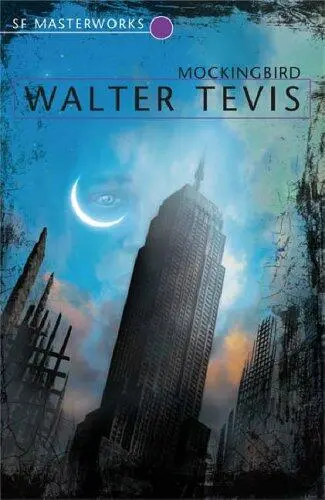
- Название:Mockingbird
- Автор:
- Издательство:Gollancz
- Жанр:
- Год:2007
- Город:London
- ISBN:978-0575079151
- Рейтинг книги:5 / 5. Голосов: 1
-
Избранное:Добавить в избранное
- Отзывы:
-
Ваша оценка:
Mockingbird: краткое содержание, описание и аннотация
Предлагаем к чтению аннотацию, описание, краткое содержание или предисловие (зависит от того, что написал сам автор книги «Mockingbird»). Если вы не нашли необходимую информацию о книге — напишите в комментариях, мы постараемся отыскать её.
Mockingbird
Review
From the Inside Flap “A moral tale that has elements of Aldous Huxley’s
,
, and
.”
—
“Set in a far future in which robots run a world with a small and declining human population, this novel could be considered an unofficial sequel to
, for its central event and symbol is the rediscovery of reading.”
—
“Because of its affirmation of such persistent human values as curiosity, courage, and compassion, along with its undeniable narrative power,
will become one of those books that coming generations will periodically rediscover with wonder and delight.”
—
“I’ve read other novels extrapolating the dangers of computerization but Mockingbird stings me, the writer, the hardest. The notion, the possibility, that people might indeed lose the ability, and worse, the desire to read, is made acutely probable.”
—
bestselling author ANNE MCCAFFREY “Walter Tevis is science fiction’s great neglected master, one of the definitive bridges between sf and literature. For those who know his work only through the movies, the lucid prose and literary vision of
and
will come as a revelation.”
—AL SARRANTONIO, Author of
saga
Mockingbird — читать онлайн бесплатно полную книгу (весь текст) целиком
Ниже представлен текст книги, разбитый по страницам. Система сохранения места последней прочитанной страницы, позволяет с удобством читать онлайн бесплатно книгу «Mockingbird», без необходимости каждый раз заново искать на чём Вы остановились. Поставьте закладку, и сможете в любой момент перейти на страницу, на которой закончили чтение.
Интервал:
Закладка:
The steel buildings of NYU were dazzling in the setting sun. On the drive through Washington Square we passed four or five students in their denim robes, each of them going his separate way. The square was overgrown with weeds. None of the fountains were working,
I had the bus park in front of the library.
And there it was, the old half-rusted building where I had worked in the archives and had lived with Mary Lou. My heart began beating very hard when I saw it sitting there, surrounded by weeds and with no one in sight.
I had enough presence of mind to realize that I might lose my bus to someone who merely wanted to take it somewhere. So I took my tool kit and removed the front panel, disconnected what Audel’s Guide called the “Door Activating Assembly Servo,” and then told the door to open. And it would not. I set the tool kit inside the brain opening. No one would bother it.
I walked into the building, a little less shaky but still very excited. There was no one there. The halls were empty; the rooms I looked into were empty; there was no sound except for the echoing of my own footsteps.
I did not feel, as I might once have, either awed or jumpy from the emptiness of the place. I was wearing one of my new sets of clothes from Maugre: tight blue jeans, a black turtleneck, and light black shoes. I had pulled the sleeves of my turtleneck up earlier in the day, because of the warmth, and my forearms were suntanned, lean, and muscular. I liked the looks of them, and I liked the general feeling in my body and in my mind that they seemed to convey: springy, taut, and strong. I was no longer over-impressed with this dying building; I was merely looking for someone in it.
My old room was empty, and unchanged since I had been there, but the collection of silent films was gone. I was disappointed at that, since at the back of my mind I had planned to take them with me—or with us—wherever I might go in my thought bus.
Still sitting on my old bed-and-desk was the artificial fruit that Mary Lou had picked for me at the zoo.
I took the fruit and stuffed it into the side pocket of my jeans. I looked around the room. There was nothing else in it that I wanted. I left, slamming the door shut behind me. I had decided where to go.
While I was replacing the wires in the thought bus by the light from a streetlamp outside, I looked up to see a fat, balding man staring at me. He must have come up while I was working, without my seeing him. His face was puffy and characterless, with a stoned inwardness that was, for a moment, shocking to see. I realized after a moment that it was not really different from hundreds of faces I had seen before, but that there were two things different now about my way of looking at him: I was no longer concerned with Privacy, and consequently I examined him more closely than I might have a year before; and I was used to being close to the Baleens and, although they took drugs too, their faces did not have the arrogant stupidity about them that most ordinary people had.
After I had stared at him a moment he lowered his eyes and began looking at his feet. I turned back to the wires I was reattaching to the bus’s servo, and I heard him speaking in a gravelly voice. “That’s illegal,” he was saying. “Tampering with Government Property.”
I did not even look back at him. “What government?” I said.
He was silent for a moment. Then he said, “That’s tampering . Tampering is a Mistake. You could go to prison.”
I turned around and looked at him. I was holding a wrench in my right hand, and I was sweating a bit. I looked right in his eyes, and at his idiotic, mindless, pasty face. “If you don’t get away from me right now,” I said, “I’ll kill you.”
His jaw went slack and he stared at me.
“Move, you fool,” I said. “Right now.”
He turned and walked away. I saw him reach in his pocket and pull out some pills and begin swallowing them, holding his head back. I felt like throwing the wrench at him.
I finished refastening the wires and then got into the bus and told it to take me to the Burger Chef on Fifth Avenue.
She was not in the Burger Chef; but I had not really expected her to be. The place looked different to me somehow, and then I realized that it was the booths. Two of them had been taken out altogether and almost all of the rest were badly charred. There must have been several immolations since I had last been there.
I went to the counter and told the female Make Two to give me two algaeburgers and a glass of tea from the samovar. She got them, a bit slowly, and set them down on the counter, waiting. Suddenly I realized what she was waiting for: my credit card. And I didn’t have one, had forgotten all about them.
“I don’t have a credit card,” I said to her.
She looked at me with that stupid robot look—the same look the guards at the prison always had on their faces—and then she picked up the tray again, turned, and began carrying it over toward a trash bin.
I shouted at her, “Stop! Bring that back!”
She stopped, turned slightly, then turned back again toward the trash bin. She began moving toward it again, more slowly.
“Stop, you idiot!” I shouted. Then, hardly thinking about it, I climbed over the counter, walked quickly over to her, and put my hand on her shoulder. I turned her around facing me, and took the tray from her. She merely looked at me stupidly for a moment, and then somewhere in the ceiling of the room an alarm bell began to ring furiously.
I climbed quickly back over the counter and started to leave, when I saw a big heavy moron robot in a green uniform coming toward me from a back room somewhere. He was like the one at the zoo, and he began to say, “You are under arrest. You have the right to remain silent…”
“Bug off, robot,” I told him. “Get back in the kitchen and leave the customers alone.”
“You are under arrest,” he said, but more weakly this time. He had stopped moving.
I walked up to him and looked into his empty, nonhuman eyes. I had never looked at a robot that closely before, having been brought up to fear and respect them. And I became aware, looking at his stupid, manufactured face, that I was seeing for the first time what the significance of this dumb parody of humanity really was: nothing, nothing at all. Robots were something invented once out a blind love for the technology that could allow them to be invented. They had been made and given to the world of men as the weapons that nearly destroyed the world had once been given, as a “necessity.” And, deeper still, underneath that blank and empty face, identical to all the thousands of faces of its make, I could sense contempt—contempt for the ordinary life of men and women that the human technicians who had fashioned it had felt. They had given robots to the world with the lie that they would save us from labor or relieve us from drudgery so that we could grow and develop inwardly. Someone must have hated human life to have made such a thing—such an abomination in the sight of the Lord.
This time I spoke to him—to it —and with fury. “Get out of my sight, robot,” I shouted. “Get out of my sight immediately.”
And the robot turned and walked away from me.
I looked over at the four or five people who were sitting, each in his own booth, in the Burger Chef. Every one of them had his shoulders drawn up and his eyes closed, in complete Privacy Withdrawal.
I left quickly and was relieved to be back in my thought bus. I told it silently to take me to the Bronx Zoo, to the House of Reptiles. “Gladly,” it said.
All of the lights were out at the zoo. The moon had begun to rise. I had my kerosene lantern lit when the bus pulled up in front of the door of the House of Reptiles. The air was cool on my skin, but I did not put on a jacket.
Читать дальшеИнтервал:
Закладка:
Похожие книги на «Mockingbird»
Представляем Вашему вниманию похожие книги на «Mockingbird» списком для выбора. Мы отобрали схожую по названию и смыслу литературу в надежде предоставить читателям больше вариантов отыскать новые, интересные, ещё непрочитанные произведения.






Обсуждение, отзывы о книге «Mockingbird» и просто собственные мнения читателей. Оставьте ваши комментарии, напишите, что Вы думаете о произведении, его смысле или главных героях. Укажите что конкретно понравилось, а что нет, и почему Вы так считаете.