Walter Tevis - Mockingbird
Здесь есть возможность читать онлайн «Walter Tevis - Mockingbird» весь текст электронной книги совершенно бесплатно (целиком полную версию без сокращений). В некоторых случаях можно слушать аудио, скачать через торрент в формате fb2 и присутствует краткое содержание. Город: London, Год выпуска: 2007, ISBN: 2007, Издательство: Gollancz, Жанр: Фантастика и фэнтези, на английском языке. Описание произведения, (предисловие) а так же отзывы посетителей доступны на портале библиотеки ЛибКат.
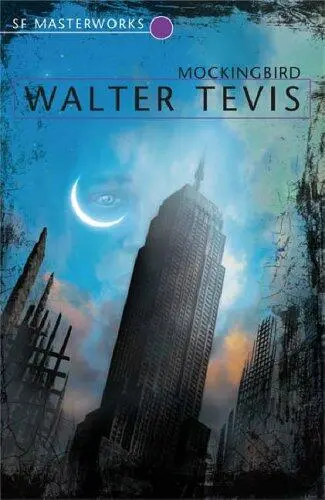
- Название:Mockingbird
- Автор:
- Издательство:Gollancz
- Жанр:
- Год:2007
- Город:London
- ISBN:978-0575079151
- Рейтинг книги:5 / 5. Голосов: 1
-
Избранное:Добавить в избранное
- Отзывы:
-
Ваша оценка:
Mockingbird: краткое содержание, описание и аннотация
Предлагаем к чтению аннотацию, описание, краткое содержание или предисловие (зависит от того, что написал сам автор книги «Mockingbird»). Если вы не нашли необходимую информацию о книге — напишите в комментариях, мы постараемся отыскать её.
Mockingbird
Review
From the Inside Flap “A moral tale that has elements of Aldous Huxley’s
,
, and
.”
—
“Set in a far future in which robots run a world with a small and declining human population, this novel could be considered an unofficial sequel to
, for its central event and symbol is the rediscovery of reading.”
—
“Because of its affirmation of such persistent human values as curiosity, courage, and compassion, along with its undeniable narrative power,
will become one of those books that coming generations will periodically rediscover with wonder and delight.”
—
“I’ve read other novels extrapolating the dangers of computerization but Mockingbird stings me, the writer, the hardest. The notion, the possibility, that people might indeed lose the ability, and worse, the desire to read, is made acutely probable.”
—
bestselling author ANNE MCCAFFREY “Walter Tevis is science fiction’s great neglected master, one of the definitive bridges between sf and literature. For those who know his work only through the movies, the lucid prose and literary vision of
and
will come as a revelation.”
—AL SARRANTONIO, Author of
saga
Mockingbird — читать онлайн бесплатно полную книгу (весь текст) целиком
Ниже представлен текст книги, разбитый по страницам. Система сохранения места последней прочитанной страницы, позволяет с удобством читать онлайн бесплатно книгу «Mockingbird», без необходимости каждый раз заново искать на чём Вы остановились. Поставьте закладку, и сможете в любой момент перейти на страницу, на которой закончили чтение.
Интервал:
Закладка:
I looked at him. What he said made sense. But I knew, too, that I could not wait until spring. “No,” I said. “I’ll leave tomorrow.”
He shook his head at me. “Okay. Okay.” Then he got out of the bed, leaned down, pulled back the bedcover, and reached under. He slid out a large cardboard box and opened it. Inside were packages of cookies and bread, and soybars, all wrapped in clear plastic. “Take what you can carry of this.”
“I don’t want to…”
“ Take it,” he said. “I can get more.” And then, “You’ll need something to carry it with.” He thought for a moment and then went to the door of his cell and shouted, “Larsen! Come here!” and a moment later a short man whom I recognized from the Protein 4 fields came walking up. “Larsen,” Belasco said, “I need a backpack.”
Larsen looked at him a minute. “That’s a lot of work,” he said. “A lot of stitchin’. And you gotta get the canvas, and tubes for the frame…”
“You’ve already got one in your cell, the one you made out of a pair of pants. I saw it when we had that poker game, that time when all the robots were malfunctioning.”
“Hell,” Larsen said. “I can’t let you have that one. That’s for my escape.”
“Horseshit,” Belasco said. “You ain’t going nowhere. That poker game was three or four yellows ago. And how are you going to get your bracelets off? With your teeth?“
“I could use a file…”
“That’s horseshit too,” Belasco said. “They may run this prison dumb, but they ain’t that dumb. There ain’t no hand tools hard enough to cut them bracelets, and you know it.”
“Then how are you getting out?”
“Not me. Bentley here.” Belasco reached out and put his hand on my shoulder. “He’s gonna try using the big knife in the shoe factory.”
Larsen stared at me. “ That’s a damn fool thing to do.”
“It’s his business, Larsen,” Belasco said. “Can you let him have the backpack?”
Larsen thought a moment. Then he said, “What do I get for it?”
“Two of my pictures from the wall. Any two you pick.”
Larsen looked at him narrowly. “And a cat?”
Belasco frowned. “Shit.” Then, “Okay. The black one.”
“The orange,” Larsen said.
Belasco shook his head wearily. “Get the backpack,” he said.
And he got it, and Belasco filled it with food for me and showed me how I could carry Biff in it if I needed to.
Without sopors, I did not sleep that night. I did not want the aftereffects of sopors when I went to the shoe factory in the morning. I was tormented by thoughts of what I planned to do: not only to risk grave injury under the knife but to face a life of bare survival, in winter, with no knowledge of the places I would be traveling through and with no training for the difficulties except for one thin book about shore dinners. Nothing in my education— my stupid, life-hating education—had prepared me for what I was about to do.
A part of me kept saying that I should wait. Wait until spring, wait until they told me my sentence was over. Life in prison wasn’t really any worse than life in a Thinker Dormitory, and if I learned to be like Belasco I could make an easy life for myself here. There really was almost no discipline, once you learned how to avoid being beaten by the guards, just by keeping an eye out for them. Obviously, once the device of the metal bracelets had been invented, everything about running a prison had gone slack, as with so much else. There was plenty of dope, and I was used to the food and the labor. And there was TV, and Biff, my cat…
But that was only part of me. There was another, deeper part that said, “You must leave this place.” And I knew, knew even to my terror, that I had to listen to that voice.
My old programming would say, “When in doubt, forget it.” But I had to quiet that voice, too. Because it was wrong . If I was to continue to live a life that was worth the trouble of living it, I had to leave.
Whenever I would see that huge knife in my imagination, or the cold and empty beaches, I would think of Mary Lou throwing the rock into the python’s cage. It made the night alone in my cell bearable.
In the morning I wore the backpack to breakfast and ate my protein flakes and black bread while wearing it. None of the guards even seemed to notice.
When I finished my breakfast I looked up to see Belasco walking over toward my little table. We were not supposed to speak at meals, but he said, “Here, Bentley. Eat this on the way to the factory,” and he handed me his chunk of bread—which was far larger than mine had been. A guard shouted, “Invasion of Privacy!” from across the room, but I ignored him.
“Thanks,” I said. Then I held out my hand, as men did in films. “Goodbye, Belasco,” I said.
He understood the gesture, and took my hand firmly, looking me in the face. “Goodbye, Bentley,” he said. “I think you’re doing the right thing.”
I nodded, squeezed his hand hard, and then turned and walked away.
When I filed into the doorway with the rest of my shift the knife was already in operation. I stopped and let the others walk in past me and stared at it for a minute. It looked overwhelming to me and my stomach seemed to clamp tight inside me and my hands began to tremble, from just looking at it.
It was about the length of a man’s leg, and broader. The metal was adamant steel, silvery gray, with a curved edge that was so sharp it hardly made any sound as it cleaved like a guillotine through twenty layers of thick polymeric shoe material. The material was fed to it on a conveyor belt, and held in position on a kind of anvil under the blade by a set of metal hands; they would hold a stack of material under the blade and the blade would drop from a height of five feet and shear noiselessly into the stack and then pull back up again. I could see light glitter on the edge of the blade when it was at its high point, and I thought of what would happen if it touched my wrists. And how could I be certain where to place them? And if I succeeded with one arm, I still would have to do the other. It was impossible. Standing there, I felt it wash over me like a wave: I’ll bleed to death. The blood will let from my wrists like a fountain…
And then I said aloud, “So what? I have nothing to lose.”
I pushed myself through the other men who were taking up their positions on the assembly line and walked up to the machine. The only robot in the room was the one presiding over the blade, with his arms folded across his heavy chest and his eyes vacant. I walked up beside him. He shifted his eyes toward me but remained motionless, saying nothing.
The blade came down, glittering, with horrible speed. I stood there watching it, transfixed. This time I could hear the soft hiss of its slicing edge. I put my hands in my pockets to stop them from trembling.
I looked down at the belt, where the automatic hands were pushing the cut material into a hopper to be sent back for further cuts. And I saw something that made my heart beat even faster: there was a thin, dark line on the anvil where the edge of the blade had been touching it, probably for blues and yellows. It showed exactly where the blade would come down!
And then I thought of how I might do it. And without stopping to consider, to let myself think and become even more frightened, I went ahead.
When the next stack had been cut and before the hands could push it off the anvil, I reached out and took a handful of the half-pieces, keeping their freshly cut edges still lined up. The hand removed the others, and a fresh uncut stack was brought into position. There would be a few moments’ hesitation before the knife came down. Not letting myself look up at or think about the blade, I pushed the new material onto the floor.
Читать дальшеИнтервал:
Закладка:
Похожие книги на «Mockingbird»
Представляем Вашему вниманию похожие книги на «Mockingbird» списком для выбора. Мы отобрали схожую по названию и смыслу литературу в надежде предоставить читателям больше вариантов отыскать новые, интересные, ещё непрочитанные произведения.





Обсуждение, отзывы о книге «Mockingbird» и просто собственные мнения читателей. Оставьте ваши комментарии, напишите, что Вы думаете о произведении, его смысле или главных героях. Укажите что конкретно понравилось, а что нет, и почему Вы так считаете.