Walter Tevis - Mockingbird
Здесь есть возможность читать онлайн «Walter Tevis - Mockingbird» весь текст электронной книги совершенно бесплатно (целиком полную версию без сокращений). В некоторых случаях можно слушать аудио, скачать через торрент в формате fb2 и присутствует краткое содержание. Город: London, Год выпуска: 2007, ISBN: 2007, Издательство: Gollancz, Жанр: Фантастика и фэнтези, на английском языке. Описание произведения, (предисловие) а так же отзывы посетителей доступны на портале библиотеки ЛибКат.
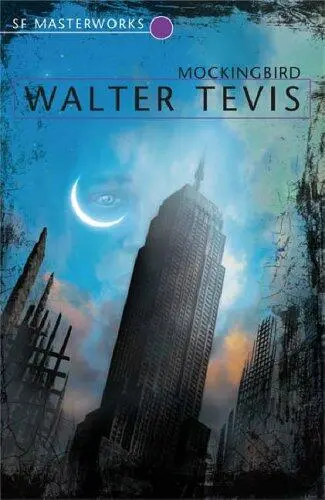
- Название:Mockingbird
- Автор:
- Издательство:Gollancz
- Жанр:
- Год:2007
- Город:London
- ISBN:978-0575079151
- Рейтинг книги:5 / 5. Голосов: 1
-
Избранное:Добавить в избранное
- Отзывы:
-
Ваша оценка:
Mockingbird: краткое содержание, описание и аннотация
Предлагаем к чтению аннотацию, описание, краткое содержание или предисловие (зависит от того, что написал сам автор книги «Mockingbird»). Если вы не нашли необходимую информацию о книге — напишите в комментариях, мы постараемся отыскать её.
Mockingbird
Review
From the Inside Flap “A moral tale that has elements of Aldous Huxley’s
,
, and
.”
—
“Set in a far future in which robots run a world with a small and declining human population, this novel could be considered an unofficial sequel to
, for its central event and symbol is the rediscovery of reading.”
—
“Because of its affirmation of such persistent human values as curiosity, courage, and compassion, along with its undeniable narrative power,
will become one of those books that coming generations will periodically rediscover with wonder and delight.”
—
“I’ve read other novels extrapolating the dangers of computerization but Mockingbird stings me, the writer, the hardest. The notion, the possibility, that people might indeed lose the ability, and worse, the desire to read, is made acutely probable.”
—
bestselling author ANNE MCCAFFREY “Walter Tevis is science fiction’s great neglected master, one of the definitive bridges between sf and literature. For those who know his work only through the movies, the lucid prose and literary vision of
and
will come as a revelation.”
—AL SARRANTONIO, Author of
saga
Mockingbird — читать онлайн бесплатно полную книгу (весь текст) целиком
Ниже представлен текст книги, разбитый по страницам. Система сохранения места последней прочитанной страницы, позволяет с удобством читать онлайн бесплатно книгу «Mockingbird», без необходимости каждый раз заново искать на чём Вы остановились. Поставьте закладку, и сможете в любой момент перейти на страницу, на которой закончили чтение.
Интервал:
Закладка:
“Yes,” I said.
“My God,” she said, “we should do it with them all. What’s the word?”
“Read.”
“That’s it. We should read them all.”
She began to gather up an armful of books and I meekly did the same. We carried them down the hallways to my room.
DAY FORTY-EIGHT
I spent the rest of that morning reading to her from different books. But it was difficult for me to continue paying attention; I had almost no idea of what was being said. Several times we changed books, but it was still chess.
After several hours of this she interrupted to say, “Why are all books about chess?” and I said, “I have books at my home in Ohio that are about other things. About people and dogs and trees and things. Some of them tell stories.” And then, suddenly, I thought of something I should have thought of before and I said, “I can look the word ‘chess’ up in Dictionary .” I opened up the cabinet in my desk and took it out and began leafing through it until I found the words that began with “C.” I found it almost right away. “Chess: a board game between two players.” And there was a picture of two men seated at a table. On the table was one of those black-and-white arrangements with what my reading had taught me were called “pieces” sitting on it. “It’s some kind of a game,” I said. “Chess is a game.”
Mary Lou looked at the picture. “There are pictures of people in books?” she said. “Like on Simon’s walls?”
“Some books are full of pictures of people and things,” I said. “The easy books, like the ones I learned to read with, have big pictures on each page.”
She nodded. And then she looked at me intensely. “Would you teach me to read?” she said. “From those books with the big pictures in them?”
“I don’t have them here,” I said. “They’re in Ohio.”
Her face fell. “Do you only have books about… about chess?”
I shook my head. Then I said, “There might be more. Here in the library.”
“You mean books about people?”
“That’s right.”
Her face lit up again. “Let’s go look.”
“I’m tired.” I was tired, from all that reading and running around.
“Come on ,” she said. “This is important .”
So I agreed to go search more rooms with her.
We must have spent over an hour going down hallways and opening doors. The rooms were all empty, although some of them had shelves along the walls. Once, Mary Lou asked me, “What are all these empty rooms for ?” and I said, “Dean Spofforth told me the library is scheduled for demolition. I think that’s why the rooms are empty.” I supposed she knew that buildings all over New York had been scheduled for demolition long before we were born, but nothing happened to them.
“Yes,” she said, “half of the buildings at the zoo are that way, too. But what are all these rooms for ?”
“I don’t know,” I said. “Books?”
“That many books?”
“I don’t know.”
And then, at the end of a long, especially mossy hallway, where some of the overhead lights were dim, we came to a gray door that had a sign saying: STORAGE. We pushed the door open with some difficulty; it was a much heavier door than the others and it had some kind of seal around it. We got it open by pushing together and I was immediately surprised by two things. The air inside smelled strange—it smelled old— and there were steps going down. I had thought we were on the lowest floor of the library already. We took the steps, and I almost slipped and fell. They were heavily layered with some kind of slippery, yellowish dust. I caught myself just in time.
As we descended, the air smelled even stronger, older.
At the bottom of the stairs was a hallway. There were overhead lights, but they were very dim. The hallway was short, and at the end of it were two doors. One said: EQUIPMENT, and the other said: BOOKS, and below this, in smaller letters: TO BE RECYCLED. We pushed the door open. There was at first nothing but darkness and sweet-smelling air behind the door. Then, suddenly, lights flickered on and Mary Lou gasped. “Jesus Christ!” she said.
The room was huge and there were books everywhere.
You could not see any walls because of the shelves filled with books. And books were stacked up on their sides in the middle of the room, and in piles along the walls in front of the full shelves. They were of every color and size.
I stood there not knowing what to do or say. I was feeling something that was like what some of the films had made me feel— a sense that I was in the presence of great waves of feeling that had once been felt by people who were now dead and who understood things that I did not.
I knew that there had been books in the ancient world, of course, and that most of them were probably from that time before television, but I had no idea there were that many.
While I stood there, feeling what I have no name for, Mary Lou walked toward a pile of big, thin books that was not as high as the others. She reached up, the way I had seen her reach up for the inedible fruit in the python cage at the House of Reptiles, and took the top book down carefully. She held it awkwardly in both hands, and stared at its cover. Then very carefully she opened its pages. I could see that there were pictures. She stared at some of the pages for a long time. Then she said, “Flowers!” and closed the book and handed it to me. “Can you… say what you read on this?”
I took it from her and read the cover: Wildflowers of North America . I looked at her.
“Paul,” she said softly, “I want you to teach me how to read.”
Spofforth
Every afternoon at two o’clock Spofforth took a walk, for about an hour. Like his habitual whistling, which was the only manifestation of his to-him-unknown ability to play the piano, the habit of taking walks had been, willy-nilly, copied into his metal brain from the start. It was not a compulsion; he could override it when he wished to; but he usually did not. His work at the university was so slight, so trivial to him, that he could easily spare the time. And there was no one with the authority to tell him not to.
He would walk through the city of New York, his arms swinging, his tread light, his head erect, usually looking neither to the right nor to the left. Sometimes he would look in the windows of the small automatic stores that distributed food and clothing to anyone with a credit card, or stop to watch a crew of Make Twos emptying garbage, or working on the repair of ancient sewers. These matters concerned him; Spofforth knew far better than any human being did the importance of supplying food and clothing and removing waste. The ineptitudes and malfunctions that plagued the rest of this moribund city could not be allowed to stop those services. So Spofforth would walk through a different part of Manhattan every day and check to see if the food and clothing equipment were functioning and if the wastes were being removed. He was not a technician, but he was smart enough to repair ordinary breakdowns.
He generally did not look at the people he passed on the street. Many of them would stare at him—at his size, his physical vigor, his black earlobes—but he ignored them.
His walk this August day took him through midtown Manhattan, on the West Side. He walked through streets with small Permoplastic houses, centuries old, some of them with poorly tended flower gardens. Gardening, for some reason, was taught in the dormitories. Probably hundreds of years before, some Engineer-Planner with a liking for flowers had decided that flower gardening should be a part of the standard human experience; because of that one casual idea, generations of humanity had planted marigolds and zinnias and phlox and yellow roses without really ever knowing why.
Читать дальшеИнтервал:
Закладка:
Похожие книги на «Mockingbird»
Представляем Вашему вниманию похожие книги на «Mockingbird» списком для выбора. Мы отобрали схожую по названию и смыслу литературу в надежде предоставить читателям больше вариантов отыскать новые, интересные, ещё непрочитанные произведения.





Обсуждение, отзывы о книге «Mockingbird» и просто собственные мнения читателей. Оставьте ваши комментарии, напишите, что Вы думаете о произведении, его смысле или главных героях. Укажите что конкретно понравилось, а что нет, и почему Вы так считаете.