Neal Stephenson - Reamde
Здесь есть возможность читать онлайн «Neal Stephenson - Reamde» весь текст электронной книги совершенно бесплатно (целиком полную версию без сокращений). В некоторых случаях можно слушать аудио, скачать через торрент в формате fb2 и присутствует краткое содержание. Город: New York, Год выпуска: 2011, ISBN: 2011, Издательство: William Morrow, Жанр: Фантастика и фэнтези, thriller_techno, на английском языке. Описание произведения, (предисловие) а так же отзывы посетителей доступны на портале библиотеки ЛибКат.
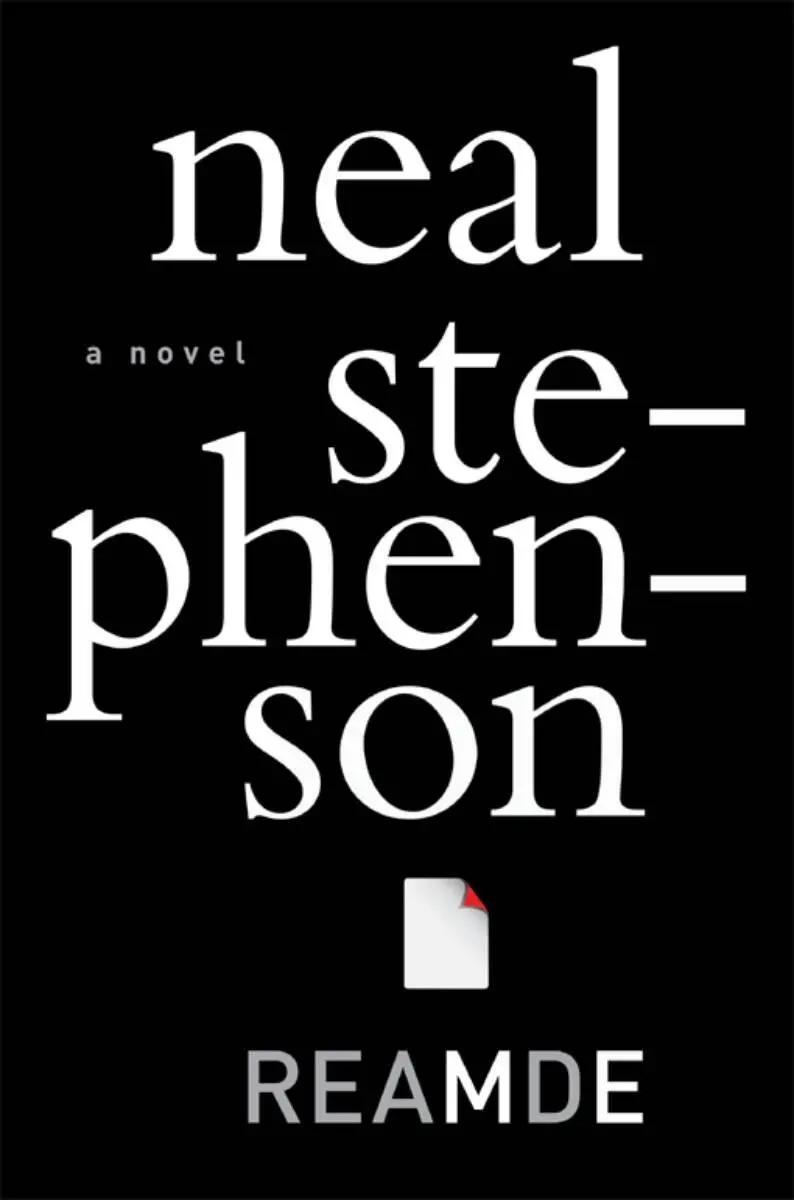
- Название:Reamde
- Автор:
- Издательство:William Morrow
- Жанр:
- Год:2011
- Город:New York
- ISBN:978-0-06-197796-1
- Рейтинг книги:4 / 5. Голосов: 1
-
Избранное:Добавить в избранное
- Отзывы:
-
Ваша оценка:
Reamde: краткое содержание, описание и аннотация
Предлагаем к чтению аннотацию, описание, краткое содержание или предисловие (зависит от того, что написал сам автор книги «Reamde»). Если вы не нашли необходимую информацию о книге — напишите в комментариях, мы постараемся отыскать её.
For Richard, the game was the perfect opportunity to launder his aging hundred dollar bills and begin his own high-tech start up—a venture that has morphed into a Fortune 500 computer gaming group, Corporation 9592, with its own super successful online role-playing game, T’Rain. But the line between fantasy and reality becomes dangerously blurred when a young gold farmer accidently triggers a virtual war for dominance—and Richard is caught at the center.
In this edgy, 21st century tale, Neal Stephenson, one of the most ambitious and prophetic writers of our time, returns to the terrain of his cyberpunk masterpieces
and
, leading readers through the looking glass and into the dark heart of imagination.
Reamde — читать онлайн бесплатно полную книгу (весь текст) целиком
Ниже представлен текст книги, разбитый по страницам. Система сохранения места последней прочитанной страницы, позволяет с удобством читать онлайн бесплатно книгу «Reamde», без необходимости каждый раз заново искать на чём Вы остановились. Поставьте закладку, и сможете в любой момент перейти на страницу, на которой закончили чтение.
Интервал:
Закладка:
She opened her mouth and shook her head hopelessly.
“The tall black man?” Marlon guessed.
“No, tall white man.”
Marlon and Csongor looked at each other.
“White like paper,” Yuxia went on. She licked a finger, wiped a streak of concrete dust off her cheek, then held it up for them both to see. “Basic color of this.”
Marlon said, “If you had tried to do something, that dude would have killed you.” But this just sent Yuxia into another paroxysm of steering wheel pounding.
“My head was confused,” Csongor said. “I saw nothing clearly. But after Ivanov struck me, someone else came into the cellar—the same man as you are talking about?”
“Yes, the same,” Marlon confirmed. “He shot at the man who hit you and—” Seeing what had happened in his mind’s eye, Marlon shook his head in a combination of disbelief and nausea. Csongor, who spoke no Chinese at all, was impressed, thus far, by Marlon’s fluency in the universal English of action movies and chat rooms.
They were threading a huge interchange where the ring road connected with a colossal, new-looking bridge thrown across a strait to what Csongor conjectured was the mainland: a zone of tidal flats supporting immense high-rise apartment complexes still under construction, and equally tall standards to support power lines hung across the water.
“Anyone who kills Ivanov is my loverboy,” Yuxia remarked.
Csongor had a strong feeling that Ivanov’s killer would make a terrible loverboy. He turned and looked at Marlon.
A human figure, outside the car, caught his eye. He looked out the dust-hazed windshield to see a uniformed PSB officer standing in the median strip, just by the side of the road, facing traffic. Both hands in front of him.
Aiming a gun.
Right at them.
Csongor twitched so hard that he kicked Ivanov’s man-purse under the passenger seat. But as the cop was flashing by, he perceived that it was actually a manikin, planted there on a concrete base, and that the thing in its hands was a mockup of a radar gun. He put his hands to his face and leaned back and tried to compose himself.
First things first. “You have a phone?” Csongor asked.
Marlon hadn’t noticed the manikin. He had been gazing curiously at Csongor’s strange reactions and movements. He nodded, sat up out of his slouch, produced a phone, and yanked its battery. Csongor felt a wave of good feeling pass through him. Not only had Marlon guided him out of hell, but he was the kind of guy who didn’t have to be told how to render his phone silent and untraceable.
“Yuxia?”
“No! Dr. Evil took it.”
“Then it’s probably in Dr. Evil’s bag,” Csongor said. He extricated it from beneath the passenger seat, hauled it up onto his lap, and began zipping it open. The unmistakable lurid pink of Chinese currency gleamed in the gap, and he thought better of opening the thing wide. So he opened it just enough to get his hand inside and began groping around. This went slowly, since he couldn’t see what he was doing. Marlon watched with a mixture of curiosity and nervousness.
“Who was that guy?” Csongor asked, trying to get Marlon thinking of something else. “That black man?”
Marlon’s eyes snapped up from the bag to glare at Csongor. “Who the fuck are you !?” he demanded.
Then Marlon and Yuxia got into an argument. Csongor had the impression that Yuxia had reprimanded Marlon for his bad manners.
“Don’t worry about it,” Csongor said. “It is a reasonable question.” He grinned, trying to convey that he was not offended. Any kind of pronounced facial expression made his head hurt, though.
Perhaps in response to something Marlon had said, Yuxia got an interested look on her face and turned to scrutinize Csongor. Then her eyes dropped to the bag.
Marlon tapped her on the shoulder and nodded toward the windshield, trying to draw her attention to the road, since she had drifted back into the left lane and was passing a lot of cars.
“Marlon is right,” she concluded, turning back around and dropping speed. “Who the fuck are you?”
It was obvious that Csongor’s behavior with the bag had set their nerves on edge. So he dropped it to the floor of the van, in the middle of the space between himself and Yuxia and Marlon. He unzipped it all the way and pulled back its top flap to expose its full contents.
It had some kind of internal stiffeners that held it open in a box shape. Its main central cavity was filled with money: as many as a dozen rubber-banded bricks that, along with the ammunition clips and the electric stun gun, floated around in a stew of loose bills and ten-bill packets. Sewn to the inside walls of the bag were a number of little mesh pockets, filled with clutter. Csongor, recognizing the purplish-red hue of a Hungarian passport, opened one of these and pulled out a clear Ziploc bag containing his passport, his phone, and most of the contents of his wallet. He pulled the battery from the phone and put the other stuff on the seat next to him. Continuing to explore the other pockets, he found two other Ziploc bags, one containing Peter’s stuff and the other containing Zula’s. He made certain that their phones were deactivated.
Yet another phone, a Chinese model, had been thrown into one of the pockets. Csongor pulled it out and held it up. “Is this yours?” he asked, popping out the battery.
No answer came from Yuxia, and he looked up for the first time to discover her and Marlon gazing into the bag in silent astonishment. She, at least, had the presence of mind to glance up at the road from time to time.
“This is Ivanov’s bag,” Csongor said. “Do you guys understand that? It is not mine.”
“It is now,” Marlon said.
“Are those bullets?” Yuxia asked.
Csongor placed Yuxia’s phone and its battery in the cup holder next to her elbow, then reached into the bag and held up one of the ammunition clips. The top couple of cartridges were clearly visible at its top. “Yes.”
“You have a gun?” Her tone of voice was not: It would be really cool and useful if you had a gun . It was, rather, If you have a gun, we are in even worse trouble than I had thought .
“No. Only these. Maybe the other guy took Ivanov’s gun.”
“What is in the end part?” Marlon asked, eyeing a separate compartment on the end of the bag, big enough to hold a couple of paperback books. Something was definitely making it bulge. Csongor unzipped it, reached in, and, to his own shock, pulled out a pistol. This one was smaller than the one Ivanov had been carrying, with woodgrained grips. He recognized it: this was the basic sidearm that Soviet and Russian military had always carried. He simply could not believe that one of them was in his hand.
“OMG,” Marlon said.
In Hungary, Csongor had had very little access to guns. But on a trip to a hacker conference in Vegas two years ago, he had spent a couple of evenings at firing ranges that catered to foreign visitors, and he had learned a few basics. He figured out how to eject the clip from this weapon, then maneuvered it into a shaft of sun coming in through the crack in the roof and pulled back the slide just enough to verify that no rounds were in the chamber. Then he found the safety and flicked it back and forth a couple of times just to get a feel for when it was on and when it was off. When he was certain that the weapon contained no cartridges and that it was inert, he set it on the van’s seat next to him, then reached back into the bag pocket to see what other treasures might be contained in there. He came up with a spare clip for the pistol, fully stuffed with cartridges. Then he pulled out a pair of heavy black cylinders with steel rings affixed to their tops.
Читать дальшеИнтервал:
Закладка:
Похожие книги на «Reamde»
Представляем Вашему вниманию похожие книги на «Reamde» списком для выбора. Мы отобрали схожую по названию и смыслу литературу в надежде предоставить читателям больше вариантов отыскать новые, интересные, ещё непрочитанные произведения.


Обсуждение, отзывы о книге «Reamde» и просто собственные мнения читателей. Оставьте ваши комментарии, напишите, что Вы думаете о произведении, его смысле или главных героях. Укажите что конкретно понравилось, а что нет, и почему Вы так считаете.