Neal Stephenson - Reamde
Здесь есть возможность читать онлайн «Neal Stephenson - Reamde» весь текст электронной книги совершенно бесплатно (целиком полную версию без сокращений). В некоторых случаях можно слушать аудио, скачать через торрент в формате fb2 и присутствует краткое содержание. Город: New York, Год выпуска: 2011, ISBN: 2011, Издательство: William Morrow, Жанр: Фантастика и фэнтези, thriller_techno, на английском языке. Описание произведения, (предисловие) а так же отзывы посетителей доступны на портале библиотеки ЛибКат.
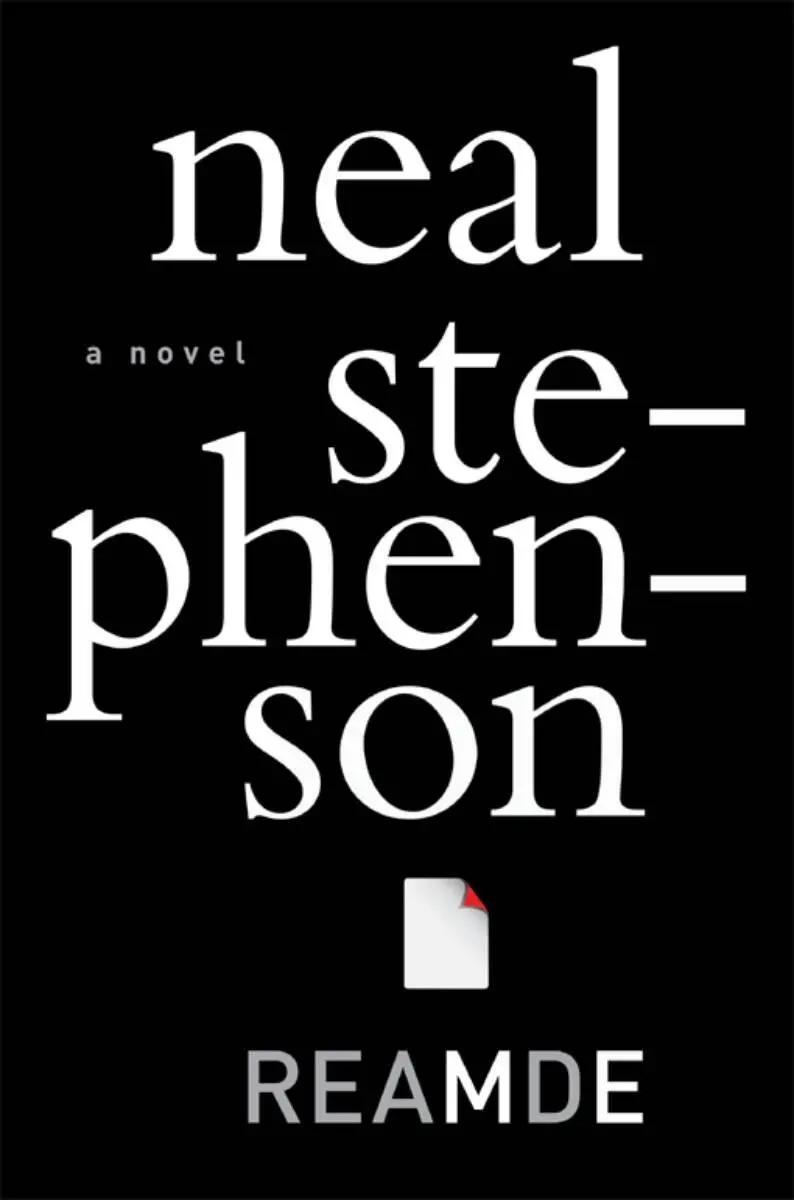
- Название:Reamde
- Автор:
- Издательство:William Morrow
- Жанр:
- Год:2011
- Город:New York
- ISBN:978-0-06-197796-1
- Рейтинг книги:4 / 5. Голосов: 1
-
Избранное:Добавить в избранное
- Отзывы:
-
Ваша оценка:
Reamde: краткое содержание, описание и аннотация
Предлагаем к чтению аннотацию, описание, краткое содержание или предисловие (зависит от того, что написал сам автор книги «Reamde»). Если вы не нашли необходимую информацию о книге — напишите в комментариях, мы постараемся отыскать её.
For Richard, the game was the perfect opportunity to launder his aging hundred dollar bills and begin his own high-tech start up—a venture that has morphed into a Fortune 500 computer gaming group, Corporation 9592, with its own super successful online role-playing game, T’Rain. But the line between fantasy and reality becomes dangerously blurred when a young gold farmer accidently triggers a virtual war for dominance—and Richard is caught at the center.
In this edgy, 21st century tale, Neal Stephenson, one of the most ambitious and prophetic writers of our time, returns to the terrain of his cyberpunk masterpieces
and
, leading readers through the looking glass and into the dark heart of imagination.
Reamde — читать онлайн бесплатно полную книгу (весь текст) целиком
Ниже представлен текст книги, разбитый по страницам. Система сохранения места последней прочитанной страницы, позволяет с удобством читать онлайн бесплатно книгу «Reamde», без необходимости каждый раз заново искать на чём Вы остановились. Поставьте закладку, и сможете в любой момент перейти на страницу, на которой закончили чтение.
Интервал:
Закладка:
He looked up and locked eyes with Marlon. Neither of them had ever seen anything like this before, outside of a video game, but Csongor was pretty certain, and Marlon’s expression confirmed, that these were grenades.
“Make some noise if you are alive,” said Yuxia. Traffic had become complex, and she was doing a lot of lane changing.
“Now we have a pistol and a couple of hand grenades,” Csongor announced.
Marlon had taken one of the grenades and was examining it. The sides of the canister were perforated with large holes, revealing some internal structure. “These are not real grenades,” he announced. “Look. No shrapnel. Holes instead.”
“Stun grenades?” Csongor guessed.
“Or smoke or tear gas.” Marlon and Csongor could communicate very clearly as long as they hewed to vocabulary from video games.
Yuxia intervened. “Csongor’s supposed to be telling us who he is,” she reminded Marlon. “Grenade can be explained later.”
“I’ll tell you who I am,” Csongor promised. “But first please tell me what just happened. What do you know about that tall black guy?”
Marlon was glaring at him. Csongor realized that he had insulted Marlon, or more likely just spooked him, by implying that he, Marlon, might know something about who the guy was. He looked into Marlon’s eyes. “It might be important,” Csongor pleaded.
“He lived upstairs with dudes from the far west,” Marlon said. “We only saw him a couple of times.”
“Did you know that these dudes from the far west had AK-47s?”
“What do you take me for, man?”
“Okay, sorry.”
Csongor leaned back in his seat, hoping that this would ease the throbbing in his head. There was a significant silence: their way of reminding him that he had yet to explain himself. “Okay,” he said. “Do you guys know anything about Hungary?”
Neither of them did. But neither would come out and admit it, perhaps worried about being impolite. Marlon, somewhat surprisingly, made a reference to the 1956 Olympic water polo team. But that was where his knowledge of Hungary began and ended.
Whenever Csongor found himself in an airport, he would go to the newsstand and browse the endless racks of glossy English-and German-language magazines, bemused by the phenomenon of cultures that were large enough to support monthly publications in which people would dither in print over the minutest details of makeup, high-performance motorcycles, and model railways. Hungarians learned those languages so that they could feign membership in that world when it suited them. But their isolation and tininess were nothing compared to what it would have been if Hungary had been part of China. Here, if Hungarians survived at all, they would be trotted out once a year to perform folk dances, simply to prove to the rest of the world that they hadn’t yet been exterminated. Csongor had never heard of Yuxia’s ethnic minority, the Hakka, and yet he didn’t have to look them up on Wikipedia to guess that there were probably ten times as many of them as there were Hungarians.
So where to begin?
“It is a long story. I could start with the Battle of Stalingrad,” he said, “and go on from there. But.” He stopped, sighed, and considered it.
“First, I am an asshole who made a lot of wrong decisions.”
Hungary was an embedded system. It was idle to dream of what it would be like, and of all the brave and noble decisions Hungarians would have made, had it been a thousand times larger and surrounded by a saltwater moat. He paused to rest.
Yuxia checked him in the rearview.
Marlon fixed him with a somewhat incredulous look as if to say, If you’re an asshole who made wrong decisions, what am I?
Csongor couldn’t help chuckling at this. Somewhat to his astonishment, Marlon’s face cracked open with a smile. Cool, tough, world-wise, but unquestionably a smile. He turned back toward the window to hide it.
“And because of certain fucked-up remnants of the past, which we are now getting rid of,” Csongor continued, “things were actually simple and easy for me as long as I kept making the wrong decisions. However”—he checked his watch, and found that its crystal was shattered and its hands had stopped—“something like half an hour ago, I made the correct decision and did the right thing. Look where I am now.”
Another nervous mirror-glance from Yuxia. Csongor realized he’d better explain that remark. “In a car with nice people,” he said.
That was better, but he was still planting his big feet in the wrong places. To Csongor, Marlon would always be the guy who risked his life to enter a collapsing building and lead a stranger to safety. But Marlon, he sensed, didn’t want to be thought of that way. He had the cool insouciance of the skate rats performing their death-defying leaps in the Erszébet Tér, the hackers showing off their latest exploits at DefCon in Vegas.
“Or at least one nice person,” Csongor corrected himself.
Marlon turned around and gave him that smile again, then reached back with his right hand. Some kind of complex basketball-player handshake ensued. Csongor was pretty sure he muffed his end of it; Central European hockey players didn’t go in for such things. But he no longer had that awful feeling that he used to get when he was trying to skate backward, and so he let it rest there.
MR. JONES SAID nothing further in English until an hour into the journey, when he looked at Zula and said, “I give up.”
By that time they had completed a couple of circuits of the ring road that lined the island’s shore. Contrary to the first instruction given, they had not gone to the airport. Zula had been confused by this until she had understood that her companion—if that was the right word—didn’t speak a word of Chinese, and that he assumed (correctly as it turned out) that the taxi driver spoke no English; so he had just shouted the one English word that every taxi driver in the world had to know. This had been just to get him moving. Once that driver had nudged and honked his way clear of the chaos surrounding the exploded building, Mr. Jones had produced a phone, dialed a number, and spoken in Arabic. Zula had known that it was Arabic because she had heard a fair bit of that language while living in a refugee camp in the Sudan. After a brief exchange of news, which Zula could tell had been extremely surprising to the person on the other end of the line—for Mr. Jones had soon grown weary of insisting that every word was true—he had handed the phone up to the taxi driver, who had listened to some instructions, nodded vigorously, and said something that must have meant “yes” or “I will do it.”
Mr. Jones had then exchanged a few more terse Arabic sentences with his interlocutor and hung up. And the taxi driver had begun to drive laps around the ring road.
Zula had been resting her free elbow on the frame of the taxi’s window, turning her hand out, from time to time, to press her fingertips against the tinted glass. There was something about the manufactured environment of a car that engendered a completely bogus feeling of safety.
When Mr. Jones said those three words: “I give up,” Zula opened her eyes and startled a little. Could it really be that she had gone to sleep? Seemed a strange time for a nap. But the body reacted in odd ways to stress. And once they had gotten out onto the ring road, there had been nothing in the way of shootings or explosions to demand her attention. Exhaustion had stolen up on her.
“He was Russian, yes? The big man?”
“The man you… killed?” She couldn’t believe that sentences like this one were coming out of her mouth.
Surprise, then a trace of a smile came over the gunman’s face. “Yes.”
Читать дальшеИнтервал:
Закладка:
Похожие книги на «Reamde»
Представляем Вашему вниманию похожие книги на «Reamde» списком для выбора. Мы отобрали схожую по названию и смыслу литературу в надежде предоставить читателям больше вариантов отыскать новые, интересные, ещё непрочитанные произведения.


Обсуждение, отзывы о книге «Reamde» и просто собственные мнения читателей. Оставьте ваши комментарии, напишите, что Вы думаете о произведении, его смысле или главных героях. Укажите что конкретно понравилось, а что нет, и почему Вы так считаете.