Neal Stephenson - Reamde
Здесь есть возможность читать онлайн «Neal Stephenson - Reamde» весь текст электронной книги совершенно бесплатно (целиком полную версию без сокращений). В некоторых случаях можно слушать аудио, скачать через торрент в формате fb2 и присутствует краткое содержание. Город: New York, Год выпуска: 2011, ISBN: 2011, Издательство: William Morrow, Жанр: Фантастика и фэнтези, thriller_techno, на английском языке. Описание произведения, (предисловие) а так же отзывы посетителей доступны на портале библиотеки ЛибКат.
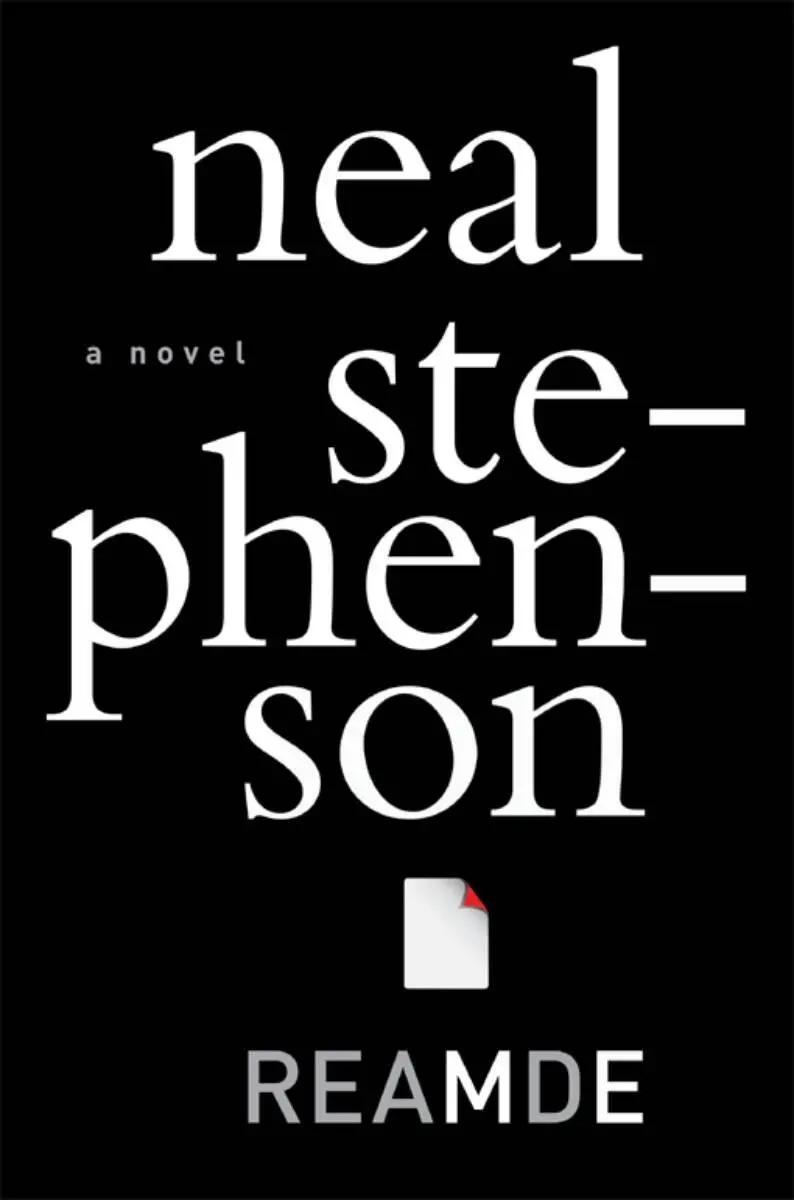
- Название:Reamde
- Автор:
- Издательство:William Morrow
- Жанр:
- Год:2011
- Город:New York
- ISBN:978-0-06-197796-1
- Рейтинг книги:4 / 5. Голосов: 1
-
Избранное:Добавить в избранное
- Отзывы:
-
Ваша оценка:
Reamde: краткое содержание, описание и аннотация
Предлагаем к чтению аннотацию, описание, краткое содержание или предисловие (зависит от того, что написал сам автор книги «Reamde»). Если вы не нашли необходимую информацию о книге — напишите в комментариях, мы постараемся отыскать её.
For Richard, the game was the perfect opportunity to launder his aging hundred dollar bills and begin his own high-tech start up—a venture that has morphed into a Fortune 500 computer gaming group, Corporation 9592, with its own super successful online role-playing game, T’Rain. But the line between fantasy and reality becomes dangerously blurred when a young gold farmer accidently triggers a virtual war for dominance—and Richard is caught at the center.
In this edgy, 21st century tale, Neal Stephenson, one of the most ambitious and prophetic writers of our time, returns to the terrain of his cyberpunk masterpieces
and
, leading readers through the looking glass and into the dark heart of imagination.
Reamde — читать онлайн бесплатно полную книгу (весь текст) целиком
Ниже представлен текст книги, разбитый по страницам. Система сохранения места последней прочитанной страницы, позволяет с удобством читать онлайн бесплатно книгу «Reamde», без необходимости каждый раз заново искать на чём Вы остановились. Поставьте закладку, и сможете в любой момент перейти на страницу, на которой закончили чтение.
Интервал:
Закладка:
This was perhaps the only thing that could have torn the taxi driver’s attention away from the collapsing building. He turned around and gazed in almost equal astonishment at the sight of four dust-caked legs protruding from the open rear door of his taxi. He tried to say something, discovered he had a cigarette glued to his lip, pulled it loose, stuck his head into the driver’s-side door, and stiffened up.
Sokolov knew why, even though he couldn’t see it: the jihadist was aiming a gun into his face.
After a short discussion, the taxi driver sagged into the driver’s seat, closed the door, put the vehicle in gear, and got it moving. Such was the chaos in that intersection that Sokolov could have caught them by walking. Hell, by crawling on hands and knees. But killing the jihadist and helping Zula, as desirable as both of those things might have been, were not his main concerns now. He had to get out before the PSB threw a cordon around this whole area.
UNTIL QUITE RECENTLY, as Csongor had considered his position in the world, he had never thought of himself as the sort of person who would end up in any situation even remotely like this one. Which might seem odd given that he had been employed, to a greater or lesser extent, by criminals since the age of fourteen. But as he had been at such pains to explain to Zula, most of what criminals did was in fact quite boring and they tended to go to great lengths to avoid such outcomes.
The fact that he was the most stable and levelheaded person in the family said more about the recent history of Hungary than about Csongor himself.
His family, at least on the patrilineal side, had dwelled in Kolozsvár, the capital of Transylvania, since the Middle Ages. The city had for centuries been the object of a vicious and sustained tug-of-war between Hungarians and Romanians, who knew it as Cluj. After the First World War, Hungary had lost it, along with the rest of Transylvania, to Romania. Csongor’s family had suddenly found themselves living in a foreign country. This had not gone well for them, and so when Hungary had allied itself with the Axis in the late 1930s, Csongor’s grandfather had enthusiastically joined the Hungarian Army. He had married a Hungarian woman in Budapest, brought her back to Kolozsvár, impregnated her, and then gone off to help Hitler invade Russia. Along with many of the other Hungarians who participated in the Battle of Stalingrad, he vanished like a grain of salt dropped into the Pacific Ocean, and so his infant son—Csongor’s father—never even laid eyes on him. His mother retreated to her family home in Budapest, where they survived the out-and-out Nazi occupation and the eventual onslaught of the Soviet Red Army with the usual litany of horrors, deprivations, and scrapes with sudden violent death. After things settled down a bit, and Hungary and Romania became, at least in theory, sister nations living in harmony under the umbrella of the Warsaw Pact, Csongor’s grandmother moved back into the family’s old house in Kolozsvár, which was now Cluj again since it had been handed back to Romania. There Csongor’s father had endured the remainder of his childhood, and there he had attended the university and become a graduate student in the mathematics department. But circa 1960 the university, which was predominantly Hungarian, had come under the heel of Romanian chauvinists who had subjected the place to a thorough ethnic cleansing. His adviser had committed suicide. Acting now as the man of the household—for his mother had become a bit sick in the head—Csongor’s father had sold the old family residence and picked up stakes and moved to Budapest, where, lacking an advanced degree, he had found work as a schoolteacher.
A bachelor schoolteacher for a long time, since the combination of poverty and living with a difficult, needy mother had made it difficult for him to attract steady girlfriends. But his mother had passed away in the mid-1970s and he had struck up a relationship with a much younger woman—one of his former students, whom he had encountered by chance on the subway, years after her graduation. They had gotten married in 1979. Bartos had been born in 1982 and Csongor in 1985. Father was a lovely man, but already in his midforties. Smoking several packs a day, he had burned his body out like a meat cigarette and died when Csongor was ten years old. Though not before he had succeeded in downloading most of what he knew of mathematics into the mind of Bartos and, to a lesser extent, Csongor.
Hungarians had a thing for math. Contrary to rumor, this was not genetic. It couldn’t be. As anyone could see from walking down the streets of Budapest, they were absolute mongrels—the Americans of Europe. Lots of blue eyes in faces where one would otherwise not expect to see them. Expensive billboards, all over Budapest’s airports, touted the expertise, the might, the global reach of German engineering and construction firms. Engineering! Another luxury of nationalities with huge populations and intact landmasses. Hungary, severed from half of the population and most of the natural resources that it had once claimed, had now to practice a sort of economic acupuncture, striving to know the magic nodes in the global energy flow where a pinprick could alter the workings of a major organ. Mathematics was one of the few disciplines where it was possible to exert that degree of leverage, and so the Hungarians had become phenomenally good at teaching it to their children. Part of that was awarding recognition to those who excelled at it. Bartos had participated in mathematics contests that were broadcast on national television as if they were football championships. He even looked like a mathematician.
Meanwhile Csongor, who didn’t, was skulking through the corridors of his school trying to avoid the coach of the wrestling team, who tracked him down at least once a day and did everything short of putting him in a headlock to make him show up for practice. Csongor had just barely managed to keep the athletic department at bay by joining the hockey team. But he could not bring himself to skate backward, so they made him the goalkeeper. This he was actually good at, because of an unusual combination of puck-blocking bulk with extremely fast reflexes (he had once tried to capitalize on the latter by becoming a saber fencer, but, as the coach explained to him, “There is too much of you to hit”).
He could not have known, during his young puck-stopping years, that this would provide so much conversational fodder for his eventual boss: a Russian organized crime figure and hockey fanatic who wanted to be addressed as Ivanov.
Don’t you want to get old and grow the mustache? Drive the bus?
Ivanov insisted that he was a great admirer of the Hungarians and was always marveling over the miracle of their continuing to exist at all, which at first Csongor naively took as a compliment but later came to understand as an implicit threat. His way of bonding with Csongor had been to make all sorts of remarks about Csongor’s appearance. “You do not look like hacker. Seeink you on street, I would say captain of water polo team. Then, bouncer in nightclub. Then, bus driver. When you going to grow the big mustache?” For it seemed as though Hungarian men, though they looked all sorts of different ways when young, converged on a few basic body shapes when old. The Grizzled Bullet Head. The Highbrow, with receding silver hair swept back. The Carpathian Wild Man, preceded everywhere by his eyebrows. Csongor, a classic Bullet Head, knew it was only a matter of time before he grew the Mustache. But for now it was his practice to just mow his hair down to stubble on the first Tuesday of each month and to keep his face, which he thought unobjectionable but far from handsome, clean-shaven.
He had learned that certain women were drawn to big men, and he had not been above taking advantage of this from time to time. He had had only one serious girlfriend, a year ago. Yesterday, he had decided that Zula was the woman for him.
Читать дальшеИнтервал:
Закладка:
Похожие книги на «Reamde»
Представляем Вашему вниманию похожие книги на «Reamde» списком для выбора. Мы отобрали схожую по названию и смыслу литературу в надежде предоставить читателям больше вариантов отыскать новые, интересные, ещё непрочитанные произведения.


Обсуждение, отзывы о книге «Reamde» и просто собственные мнения читателей. Оставьте ваши комментарии, напишите, что Вы думаете о произведении, его смысле или главных героях. Укажите что конкретно понравилось, а что нет, и почему Вы так считаете.