Neal Stephenson - Reamde
Здесь есть возможность читать онлайн «Neal Stephenson - Reamde» весь текст электронной книги совершенно бесплатно (целиком полную версию без сокращений). В некоторых случаях можно слушать аудио, скачать через торрент в формате fb2 и присутствует краткое содержание. Город: New York, Год выпуска: 2011, ISBN: 2011, Издательство: William Morrow, Жанр: Фантастика и фэнтези, thriller_techno, на английском языке. Описание произведения, (предисловие) а так же отзывы посетителей доступны на портале библиотеки ЛибКат.
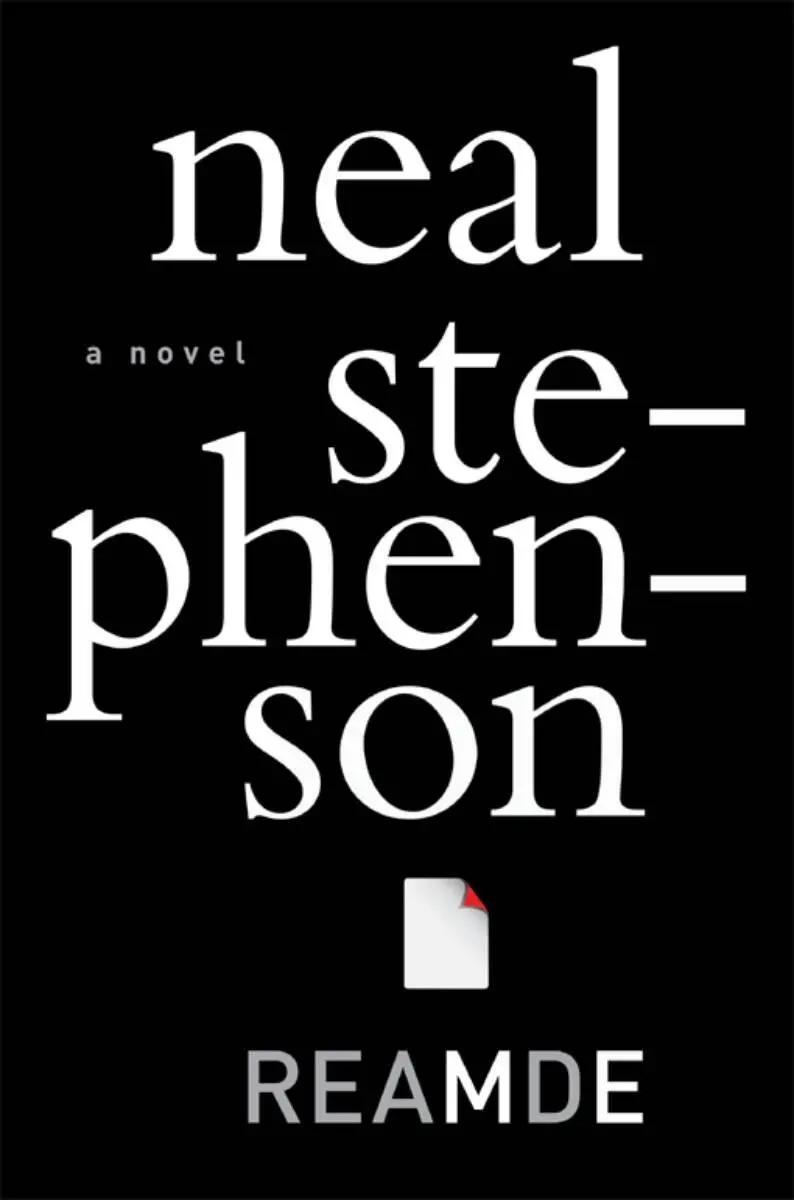
- Название:Reamde
- Автор:
- Издательство:William Morrow
- Жанр:
- Год:2011
- Город:New York
- ISBN:978-0-06-197796-1
- Рейтинг книги:4 / 5. Голосов: 1
-
Избранное:Добавить в избранное
- Отзывы:
-
Ваша оценка:
Reamde: краткое содержание, описание и аннотация
Предлагаем к чтению аннотацию, описание, краткое содержание или предисловие (зависит от того, что написал сам автор книги «Reamde»). Если вы не нашли необходимую информацию о книге — напишите в комментариях, мы постараемся отыскать её.
For Richard, the game was the perfect opportunity to launder his aging hundred dollar bills and begin his own high-tech start up—a venture that has morphed into a Fortune 500 computer gaming group, Corporation 9592, with its own super successful online role-playing game, T’Rain. But the line between fantasy and reality becomes dangerously blurred when a young gold farmer accidently triggers a virtual war for dominance—and Richard is caught at the center.
In this edgy, 21st century tale, Neal Stephenson, one of the most ambitious and prophetic writers of our time, returns to the terrain of his cyberpunk masterpieces
and
, leading readers through the looking glass and into the dark heart of imagination.
Reamde — читать онлайн бесплатно полную книгу (весь текст) целиком
Ниже представлен текст книги, разбитый по страницам. Система сохранения места последней прочитанной страницы, позволяет с удобством читать онлайн бесплатно книгу «Reamde», без необходимости каждый раз заново искать на чём Вы остановились. Поставьте закладку, и сможете в любой момент перейти на страницу, на которой закончили чтение.
Интервал:
Закладка:
She had been well supplied with plastic tarps, but they learned soon enough that these could not stand up to the stresses imposed on them by the wind. Fishnets were much stronger but would not hold air. And so they had improvised sails by combining the two: laying fishnets out over tarps and then sewing them together with zip ties, piano wire, needle and thread, tape. The resulting composites were strong enough to stand up to the wind, but their edges and corners—where the wind’s power had to be transmitted into lines attached to the ship—ripped out whenever the breeze was appreciable. So there had been a lot more learning and improvising connected with those edges. The results were very far from being pretty, but nothing had torn out in a long time. It was only after they had solved that problem and hoisted their first little sail up on the yards and the rigging intended for manipulating fishnets that their Engineer had fetched a bottle of beer from the ship’s stores and, to the consternation of his fellow officers, smashed it against the boat’s prow while christening her Szélanya, the “Mother of the Wind.” “If such a being exists,” he explained, “she might be flattered, and decide not to completely fuck us.”
The Straits of Taiwan ran northeast-southwest. As they had learned during the first few hours of their journey, a steady current flowed down it, bending all courses southward. And as they learned over the first few days, that current was strongly assisted by the prevailing winds, which blew vigorously and consistently out of the northeast, pushing them down out of the strait into the South China Sea.
The Skipper had never been on a boat, other than passenger ferries, until the day the adventure had begun. Nonetheless he had, during the first, critical forty-eight hours, acquired a command of basic sailing principles with a speed and fluency that had struck the Engineer as being almost supernatural. Much like a teenager who starts playing a new video game without bothering to open the manual, he tried things and observed the results, abandoning whatever didn’t work and moving aggressively to exploit small successes. A profusion of ideas spewed forth from his mind. There was no such thing as a bad idea, apparently. But, perhaps more important, there was no such thing as a good idea either, until it had been tried and coolly evaluated. It was clear how he had become the leader of a sort of gang back home: not by asserting his leadership but by being so relentless in his production, evaluation, and exploitation of ideas that his friends had been left with no choice but to form up in his wake. Once he and his fellow officers had built sails that would not immediately fall apart, and once he had learned to make the ship sail after a fashion, the Skipper had begun perusing some of the charts that had been left beyond on the bridge by the vessel’s previous owners. Making some rough calculations from the GPS, he had reckoned that the consequences of just letting the wind and current push them around would be landfall in Malaysia or Indonesia in a few weeks’ time. Tacking upwind, or even sailing at right angles to the wind, would be out of the question with what primitive rigging they could improvise from found objects on the boat. But the Engineer, who had done a bit of sailing on Lake Balaton, believed that by setting a sail at the correct angle and angling the rudder just so, they could use the northeasterly winds to drive them south and east toward the island of Luzon, and thereby shorten their voyage by one or two weeks. So they bent their course for the Philippines, and though the first day’s results were discouraging, they taught themselves over time to make Szélanya track south-southeast more often than not.
Then it was just waiting, and watching the sky, and wondering how it was all going to go down when the inevitable storm hit. It occurred to them—far too late, obviously—that they shouldn’t have run the fuel tanks completely dry, since it would be nice to be able to operate the generator that supplied power to the bilge pump. A battery system seemed to be keeping the GPS unit and other small electronic devices alive, but none of the energy-hungry stuff was available to them; when they had to haul on a line, they would use a hand-cranked winch, or, if none was in the right location, jury-rig strange aboriginal-looking snarls of cables and levers to get the job done. The entire vessel began to look as if it were lashed together with metal tourniquets.
They rode out a storm that, in retrospect, had not been a storm at all, but just a rainy day with large waves. For some reason the Pilot was least susceptible to seasickness; she tended to spend more time than anyone else up on the bridge, where the pitching and rolling and yawing ought to have been worse. When the sea was flat, the Skipper and the Engineer would go up there and visit her, but they had come to think of it as the Pilot’s own private wardroom and hesitated before entering. When the sea was rough, of course, they tended to be busy setting the sails and fixing things that had just broken. The Engineer’s response to seasickness was to expose himself to the weather, lying out on the foredeck staring fixedly at the horizon and letting rain and wave crests wash over him. The Skipper’s style was to retreat to his cabin where he could revel in his misery without being observed. Neither strategy would have been possible had it not been for the Pilot’s ability to stand planted in the bridge for many hours without letup, managing the wheel and keeping an eye on the compass and the GPS.
The rainy-day-with-waves had at least served as a sort of rehearsal for an actual storm. The Engineer, who had a vague recollection of his tiny sailboat being swamped by a motorboat’s wake on Lake Balaton, was fairly certain that the correct way to manage such situations was to keep the ship perpendicular to the wave crests. This made it less likely to get capsized when struck broadside. If they’d had engines, of course, they could have pointed Szélanya any direction they liked. As it was, the Engineer had reckoned, they’d have to put up a small sail, just enough to drag her downwind, not so large as to be ripped to shreds by thwarted winds. He had set to work crafting such an object out of tarps and nets and other junk that they hadn’t already used for other purposes. The mere act of doing this had seemed to revive very old buried memories, fragments of nautical lore that he had picked up when younger, reading Hungarian translations of books like Moby-Dick and Treasure Island . He woke up with the vague conviction solidifying in his mind that it might be a good idea to throw something big and draggy off the stern and tow it through the water behind them; as the wind pushed Szélanya along, this drogue would torque her stern backward and keep her aimed in a consistent direction, which in general should be perpendicular to the wave crests. He sacrificed a small table to the purpose, enveloping it in a cradle of ropes and then shoving it off the transom at the end of a cable. The initial trial, conducted in calmer conditions, suggested that the thing wouldn’t last very long in an actual storm and so he and the Skipper, who had come around to his way of thinking, devoted the better part of a day to reinforcing it.
They certainly had nothing else to do.
It had turned out that the calm day spent working on the drogue and the storm sail had been calm precisely in a calm-before-the-storm sense, and so the following couple of days had been spent in a condition of extreme misery. The storm sail and drogue had been deployed as soon as it became obvious what was about to happen. The Skipper and Engineer had scurried around and closed all hatches where it seemed water might get in, and then they had gone up to join the Pilot. The vessel’s steering gear consisted of a system of chains joining the wheel on the bridge to the actual rudder, and when things became rambunctious, it sometimes required more strength than the Pilot could muster—especially when she was exhausted from a long shift. At such times the Skipper would take over until such time as his arms wore out or the torque simply became too much, whereupon the Engineer would take the wheel and do battle, mano a mano, with the Mother of the Wind. There was no time during the storm when the Engineer was unable to supply the requisite amount of brute force. The problem lay in mixing it with intelligence. They could not see a thing. The bridge’s windows were sheeted with rain and windblown spume. The one that faced forward, just above the wheel, had a motorized disk set into it that was supposed to spin at great speed and throw off water, but they could not get it to work. So during the part of the storm when they most badly needed to see the waves, so as to make informed decisions about steering, they were blind and had to judge the shape of the sea by feeling the tilting and heaving and plummeting of the deck plates beneath their feet. By that time, of course, it was too late to effect any useful response. The best that the Engineer could do was assume that the next wave would be moving in roughly the same direction as the current one, and steer accordingly. He had just about convinced himself that all his efforts were a complete waste of time, based on sheer fantasy, when he lost concentration for a few moments and they got broadsided by a crest that laid Szélanya on her side for several moments. All three of them, and all the loose stuff in the bridge, telescoped into what had been the port bulkhead and was now the floor, and lay there like crumpled refuse for several moments until the vessel lazily rolled upright again. She was not beautiful but she was, apparently, well ballasted.
Читать дальшеИнтервал:
Закладка:
Похожие книги на «Reamde»
Представляем Вашему вниманию похожие книги на «Reamde» списком для выбора. Мы отобрали схожую по названию и смыслу литературу в надежде предоставить читателям больше вариантов отыскать новые, интересные, ещё непрочитанные произведения.





Обсуждение, отзывы о книге «Reamde» и просто собственные мнения читателей. Оставьте ваши комментарии, напишите, что Вы думаете о произведении, его смысле или главных героях. Укажите что конкретно понравилось, а что нет, и почему Вы так считаете.