Neal Stephenson - Reamde
Здесь есть возможность читать онлайн «Neal Stephenson - Reamde» весь текст электронной книги совершенно бесплатно (целиком полную версию без сокращений). В некоторых случаях можно слушать аудио, скачать через торрент в формате fb2 и присутствует краткое содержание. Город: New York, Год выпуска: 2011, ISBN: 2011, Издательство: William Morrow, Жанр: Фантастика и фэнтези, thriller_techno, на английском языке. Описание произведения, (предисловие) а так же отзывы посетителей доступны на портале библиотеки ЛибКат.
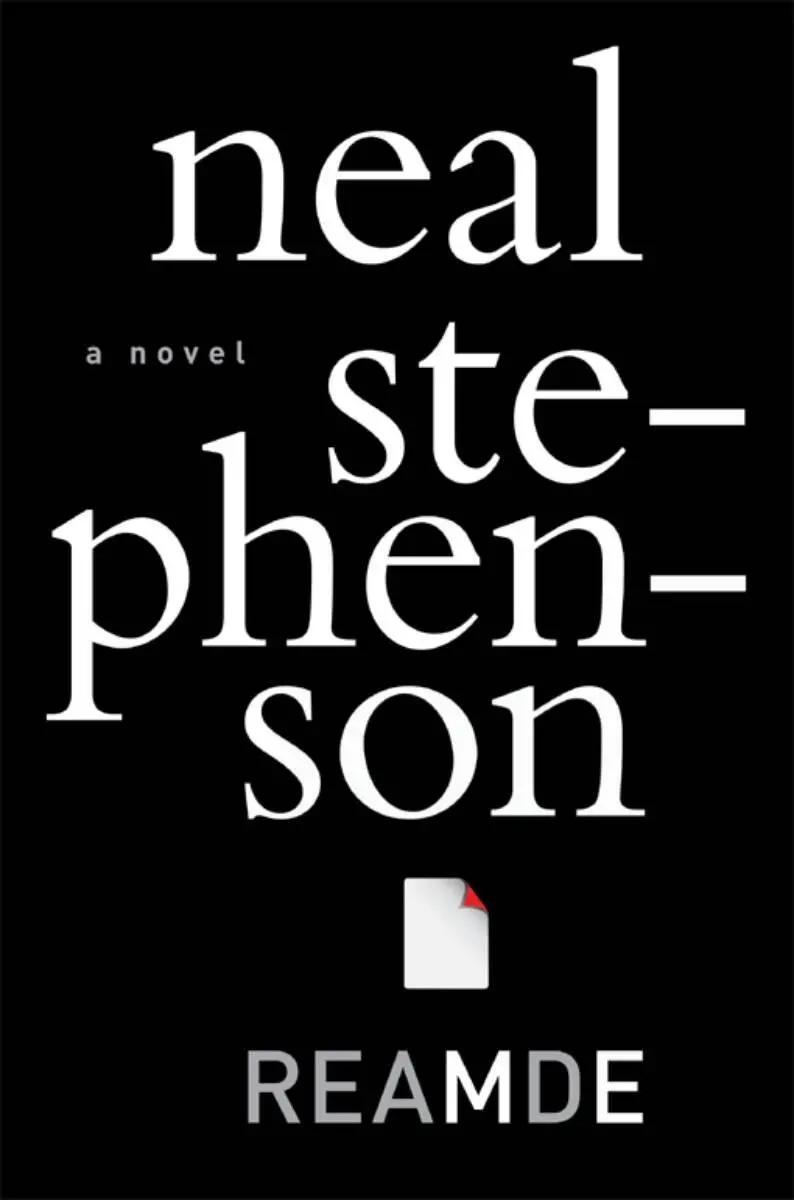
- Название:Reamde
- Автор:
- Издательство:William Morrow
- Жанр:
- Год:2011
- Город:New York
- ISBN:978-0-06-197796-1
- Рейтинг книги:4 / 5. Голосов: 1
-
Избранное:Добавить в избранное
- Отзывы:
-
Ваша оценка:
Reamde: краткое содержание, описание и аннотация
Предлагаем к чтению аннотацию, описание, краткое содержание или предисловие (зависит от того, что написал сам автор книги «Reamde»). Если вы не нашли необходимую информацию о книге — напишите в комментариях, мы постараемся отыскать её.
For Richard, the game was the perfect opportunity to launder his aging hundred dollar bills and begin his own high-tech start up—a venture that has morphed into a Fortune 500 computer gaming group, Corporation 9592, with its own super successful online role-playing game, T’Rain. But the line between fantasy and reality becomes dangerously blurred when a young gold farmer accidently triggers a virtual war for dominance—and Richard is caught at the center.
In this edgy, 21st century tale, Neal Stephenson, one of the most ambitious and prophetic writers of our time, returns to the terrain of his cyberpunk masterpieces
and
, leading readers through the looking glass and into the dark heart of imagination.
Reamde — читать онлайн бесплатно полную книгу (весь текст) целиком
Ниже представлен текст книги, разбитый по страницам. Система сохранения места последней прочитанной страницы, позволяет с удобством читать онлайн бесплатно книгу «Reamde», без необходимости каждый раз заново искать на чём Вы остановились. Поставьте закладку, и сможете в любой момент перейти на страницу, на которой закончили чтение.
Интервал:
Закладка:
“How’d you know his nickname was Dodge?”
“It’s mentioned in his Wikipedia entry.”
This was the first time they had discussed Richard—or any nonimmediate topic, for that matter—since the very brief conversation immediately after the jet crash, when Jones had been about to put a bullet in her, and she’d revealed that she had an uncle who, (a) was very rich, and (b) knew how to smuggle things across the Canada/U.S. border. She had expected further interrogation. But Jones was a thorough man, a self-starter, a strategizer. Zula had slowly come to understand that every action he had taken in the days since had been centered around Uncle Richard and the possibility of using him to sneak across the border. The war room he’d constructed in the RV had nothing to do— yet —with a Vegas casino massacre. That could all be seen to after they’d crossed the border. This here was all to do with Richard, and Schloss Hundschüttler was its epicenter.
Her brain was slowly making sense of the virtual stickpins printed on the map. Each one of them corresponded to one of the photos that Jones had printed up from her Flickr page. After several days in the cell, it was taking her a little while to get back into the Internet-based mind-set in which she had lived most of her post-Eritrean life. But she remembered she had once had a phone and that it had a GPS receiver built into it as well as a camera, and those two systems could talk to each other; if you gave permission—and she was pretty sure she had—the device would append a latitude and a longitude to each photograph, so that you could later plot them out on a map and see where each picture had been taken. During the visit to the Schloss, she and Peter and Richard had spent a couple of afternoons wandering around the vicinity on ATVs and snowshoes. The pins printed on the map were breadcrumb trails marking out the paths they had taken, a crumb dropped every time Zula had tapped the shutter button on the screen of her phone.
Her face was flushing hot, as if Jones had caught her out in something acutely embarrassing.
And yet, at the same time, it was strangely pleasurable to be reminded that she had once had a life that had included such luxuries as a boyfriend and a phone.
“Most of this is self-explanatory, if one is willing to put a bit of thought into it,” Jones remarked. “As an example, in this snapshot of Peter donning his snowshoes, there’s a mountain peak in the background, wooded on its lower slopes, but with a barren face—I’m guessing scree beneath the snow. According to the time-stamp, it was taken right around noon—indeed, I can see the remains of your lunch on the seat of the ATV. The shadows should therefore be pointing north. And strangely enough, when we look at the Google satellite image—which was taken during the summer, evidently—we see a peak here, with a scree-covered face turned toward the pin on the map, which is more or less to its south. So it all fits together. Schloss Hundschüttler’s website could hardly be more descriptive; I have already taken the virtual tour of the property and had a virtual pint in the virtual tavern. Virtual pints being the only kind that I, as a devout Muslim, am allowed to have…” Jones had become somewhat rambling, perhaps because Zula was being a little slow to snap out of this combination of cell-induced ennui and the shock of seeing familiar places and faces so displayed. He slid a page across the table at her, then bracketed it between two more. Each contained an image from her phone. “But there are still certain mysteries that require explanation. What the bloody hell is this?” he asked. “I know where it is.” He tapped a location on the map, a few miles south of the Schloss, sprouting a cluster of stickpins. “But what the hell? It’s not mentioned on the Schloss’s site, and even WikiTravel is silent on the matter.”
“It was an abandoned mine.” Zula paused, a little taken aback by the unfamiliar sound of her own voice. Then she corrected herself: “It is an abandoned mine.” She had grown accustomed to thinking of her life and everything she’d ever experienced as dwelling solely in the past.
“What were they mining? Trees?”
She shook her head. “Lead or something; I don’t know.”
“I’m serious,” he said. “What sort of mine requires a million board feet of timber?” For the overwhelming impression given by the photographs was of planks and beams, thousands of them, silver with age, splayed and flattened in some sort of slow-motion disaster that ran all the way down the side of a small mountain. As if the world’s biggest timber flume, a waterfall of rough-sawn planks coursing down the slope, had suddenly been deprived of water and had frozen and shriveled in place.
“Mines are supposed to be below ground, I’d thought,” Jones continued.
“Aren’t you a graduate of the Colorado School of Mines?” Zula asked.
Jones, for once, looked a bit sheepish. “They should probably change the name. It’s not just about that. I only went there to learn how to blow things up. I don’t know squat about mines really.”
“All of this wood was some kind of structure that they built aboveground, obviously. For what purpose I don’t know. But it runs up and down the slope for quite a distance. It’s got to be some kind of mineral separation technique that uses gravity. Maybe they sluiced water down through it, or something. In some places, it’s just these big chutes.” Zula pointed to the wreckage of one such in the background of a photograph of Uncle Richard. Then she shuffled papers around until she found a photo of something that looked like a very old house pushed askew by a shock wave. “Other places you’ll see a platform with a shack, or even something the size of this, built on it. But they are mostly just flattened, as you can see.”
“Well, whatever this thing is, it’s eight point four kilometers from the Schloss, and almost exactly the same elevation,” Jones said.
“Because of the railway,” Zula said.
He looked interested. “What railway?”
She shook her head. “It doesn’t exist anymore. But there used to be a narrow-gauge railway that ran from Elphinstone south into this valley. Closest to town was the Schloss, which was the baron’s residence and the headquarters of the whole empire. Farther back up the valley were the mines he made his money from…”
“And this is one of those,” Jones said, flicking his eyes down at the photos they’d been looking at. “But why did you say because of the railway?”
“The elevation,” Zula said. “You noticed that there’s very little difference in altitude. That’s because—”
“Trains aren’t very good at going up and down hills,” Jones completed the sentence for her, nodding.
“Yeah. Neither are bicyclists and cross-country skiers. So—”
“Ah, yes, now I understand. The trail up the valley, so proudly described on the Schloss’s website.”
Zula nodded. “That trail is just the right-of-way of the old narrow-gauge mining railway, paved over.”
“Yes.” Jones considered it for a bit, paying more attention to the convolutions of the terrain shown on the map. “How does one connect with that trail, I wonder?”
Zula propped herself up on her elbows, leaned over the table, tried to focus on the map for a while. Then she shook her head. “This is too much information,” she said. “It’s not that hard.” She flipped one of the photographs over to expose its blank back. Then she swiped the fat carpenter’s pencil that Jones had picked up at Walmart. She slashed a horizontal line across the page. “The border,” she said. Then a vertical line crossing the border at right angles. “The Selkirks.” Another, parallel to it, farther east. “The Purcells. Between them, Kootenay Lake.” She drew a long north-south oval, north of the border. “Highway 3 tries to run parallel to the border, but it has to zig and zag because of obstructions.” She drew a wandering line across the Selkirks and the Purcells. In some places it nearly grazed the border, in others it veered considerably to the north. At one such location, south of the big lake, she penciled in a fat X, bestriding the highway. “Elphinstone,” she said. “Snowboarders and sushi bars.” Because of the highway’s northward bulge, a considerable bight of land was here trapped between it and the U.S. border. Into the middle of it she slashed a line that first headed southwest out of town but then curved around until it was directed southeast: a big C with its northern end anchored at Elphinstone and its southern end trailing off as it approached the United States. Then she sketched in a series of cross-hatches across this arc, cartographic shorthand marking it as a railway line.
Читать дальшеИнтервал:
Закладка:
Похожие книги на «Reamde»
Представляем Вашему вниманию похожие книги на «Reamde» списком для выбора. Мы отобрали схожую по названию и смыслу литературу в надежде предоставить читателям больше вариантов отыскать новые, интересные, ещё непрочитанные произведения.


Обсуждение, отзывы о книге «Reamde» и просто собственные мнения читателей. Оставьте ваши комментарии, напишите, что Вы думаете о произведении, его смысле или главных героях. Укажите что конкретно понравилось, а что нет, и почему Вы так считаете.