Neal Stephenson - Reamde
Здесь есть возможность читать онлайн «Neal Stephenson - Reamde» весь текст электронной книги совершенно бесплатно (целиком полную версию без сокращений). В некоторых случаях можно слушать аудио, скачать через торрент в формате fb2 и присутствует краткое содержание. Город: New York, Год выпуска: 2011, ISBN: 2011, Издательство: William Morrow, Жанр: Фантастика и фэнтези, thriller_techno, на английском языке. Описание произведения, (предисловие) а так же отзывы посетителей доступны на портале библиотеки ЛибКат.
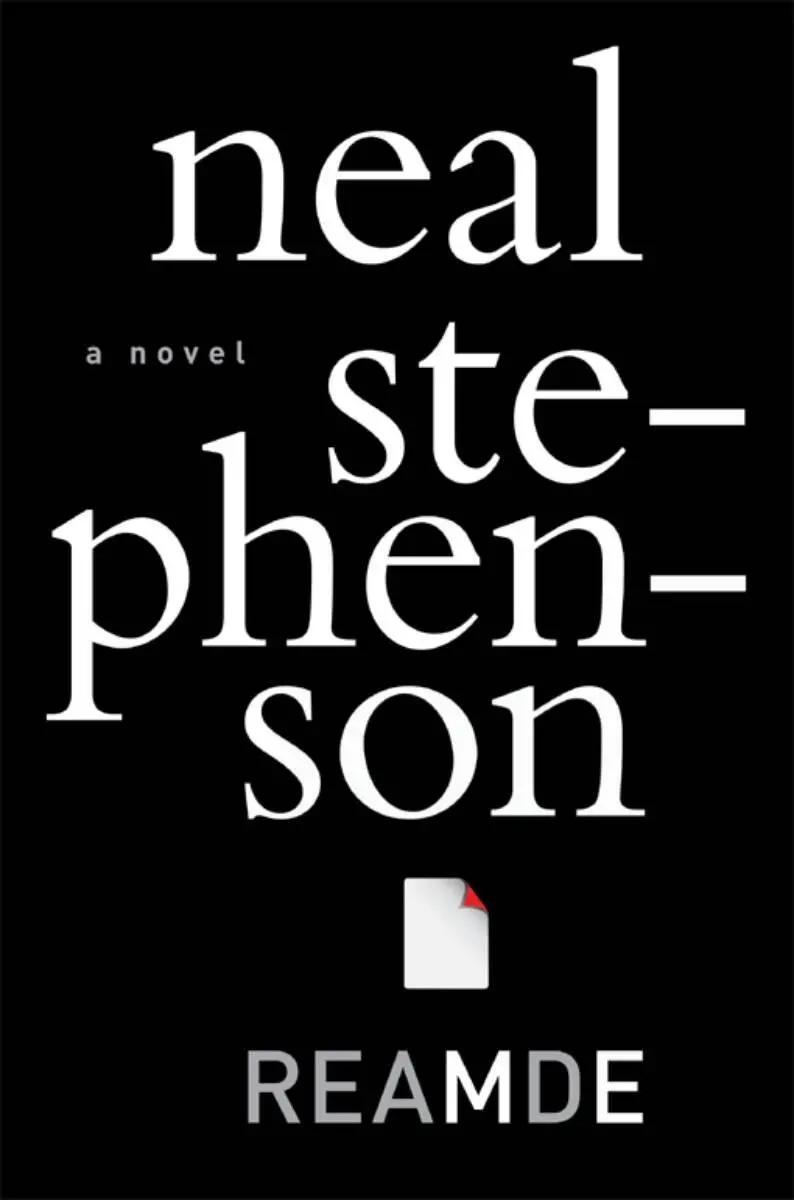
- Название:Reamde
- Автор:
- Издательство:William Morrow
- Жанр:
- Год:2011
- Город:New York
- ISBN:978-0-06-197796-1
- Рейтинг книги:4 / 5. Голосов: 1
-
Избранное:Добавить в избранное
- Отзывы:
-
Ваша оценка:
Reamde: краткое содержание, описание и аннотация
Предлагаем к чтению аннотацию, описание, краткое содержание или предисловие (зависит от того, что написал сам автор книги «Reamde»). Если вы не нашли необходимую информацию о книге — напишите в комментариях, мы постараемся отыскать её.
For Richard, the game was the perfect opportunity to launder his aging hundred dollar bills and begin his own high-tech start up—a venture that has morphed into a Fortune 500 computer gaming group, Corporation 9592, with its own super successful online role-playing game, T’Rain. But the line between fantasy and reality becomes dangerously blurred when a young gold farmer accidently triggers a virtual war for dominance—and Richard is caught at the center.
In this edgy, 21st century tale, Neal Stephenson, one of the most ambitious and prophetic writers of our time, returns to the terrain of his cyberpunk masterpieces
and
, leading readers through the looking glass and into the dark heart of imagination.
Reamde — читать онлайн бесплатно полную книгу (весь текст) целиком
Ниже представлен текст книги, разбитый по страницам. Система сохранения места последней прочитанной страницы, позволяет с удобством читать онлайн бесплатно книгу «Reamde», без необходимости каждый раз заново искать на чём Вы остановились. Поставьте закладку, и сможете в любой момент перейти на страницу, на которой закончили чтение.
Интервал:
Закладка:
Finally, somewhere down south of the border, below the hook-shaped railway, she made another X and told him that it was Bourne’s Ford, Idaho. “My uncle is quite the expert on the history of this railway,” she said. “He could explain it better.”
“I’ll ask him when I see him,” Jones said.
This hit her like a baseball bat to the bridge of the nose. It took her a few moments to get going again. “Bourne’s Ford is in a river valley,” she said.
“Most fords are,” Jones pointed out dryly.
“Right. Anyway, it’s well served by rail and river transport. So it was thought for a while that the way to make the baron’s mine profitable was to run the line over the border and connect with other mining railways that had been run up into the mountains on the U.S. side.” She sketched in a few lines radiating up toward Canada from Bourne’s Ford. “Abandon,” she muttered.
“Abandoned mines?”
“Abandon Mountain,” she said. “It’s up here somewhere.” She made a vague circle between Bourne’s Ford and the border.
“Nice name.”
“They had a talent for these things. Anyway, so there was this competition as to whether all the ore was going to end up going south to Bourne’s Ford and Sandpoint, which would have turned this whole region into a dependency of the United States, or whether they were going to tie it into the Canadian transport network instead. It led to sort of a railway-building contest. The baron was smart enough to play both sides against each other. Americans were trying to punch a line up from the south, and he was at least pretending to run his narrow-gauge line down to the border to connect up with it.” She tapped the lower arc of the C. Then she moved the pencil up and scratched at its northern end. “At the same time the Canadians were desperately trying to build the last set of tunnels needed to connect Elphinstone with the rest of the country. The Canadians won. So the baron connected his line at the northern end, and Elphinstone developed into a prosperous town. The southern extension of the line—which was probably just a feint anyway, to make the Canadians dig those tunnels faster—was abandoned.”
“But it’s still there,” Jones said.
“It was surveyed all the way to the border,” Zula said. “They only graded it to within a few miles. At that point you run into the need for trestles and tunnels, and it starts getting really expensive to actually build it. So the bike-slash-ski trail goes up basically to the face of a cliff, five miles short of the border, and stops.”
“But there’s a way through.”
“Evidently,” Zula said. “When my uncle was carrying the bearskin south—”
“Bearskin?”
“Another story. Not in the Wikipedia entry. I’ll tell you some other time. The point is that he needed to walk into the U.S. but didn’t know how. He followed the old narrow-gauge railway line up out of Elphinstone, walking on the railroad ties.”
“A nice gentle climb.”
“Yes, for the reason mentioned. He got to the end. And then he found some way around, or through, the wall of rock that was blocking his path, and covered the last miles south across the border, and picked his way south—”
She sketched a faint, wavy, speculative line down through the circle she’d drawn earlier for Abandon Mountain, and thence down into Bourne’s Ford.
“He didn’t exactly pioneer it.” She glanced up to see Jones staring at her intently. “He was following traces left forty, fifty years earlier by whiskey smugglers during Prohibition.”
Prohibition Crick . She wondered if that would show up on Google Maps.
“And later by marijuana smugglers.”
“That’s the rumor, certainly.”
Jones was impatient with that. “Rumor or not, he made a lot of trips along this route.” He leaned forward and traced it with his finger. “He passed by the ruin of the baron’s house many times, and that was how he conceived the idea to buy the property and fix it up into a legitimate business.”
“That much of the Wikipedia entry is correct as far as I know,” she allowed.
“YOU MEAN, YOU were there in China?” Richard asked the woman.
“I mean, I was there when the apartment building blew up.”
Richard just stared at her.
“The one with your niece in the cellar.”
“Yeah,” he said. “I didn’t imagine you were talking about some other blown-up apartment in China.”
“Sorry.”
He looked at her for a while. “You’re not going to tell me who you are, are you?”
“No, I’m afraid not. But you can call me… oh, Laura, if it helps to have a name.”
“What is your interest in all this, Laura? What do you have to gain from talking me out of going to Xiamen?”
“Laura” got a wry look on her face. Trying to work out what she could say and what she couldn’t.
“Is this to do with the Russians?” he asked. “Are you somehow connected with that investigation?”
“Not in the way you mean,” she said. “But just a few days ago I was with one of them. The leader.”
“Ivanov, or Sokolov?” Richard asked. And was immediately gratified to see frank shock spread across Laura’s face.
“ Very good,” she said. “I had the feeling that unexpected things might happen if I talked to you.”
Richard knew the two Russian names because Zula had mentioned them in her note. But he could see that the woman Laura didn’t know about that note. “So which of them were you with?” he asked.
“Sokolov,” Laura said. And she must have seen some look of hope on Richard’s face, because caution then fell down over her own visage like a shutter. “But I’m very sorry to tell you that this doesn’t actually help, where finding Zula is concerned. Not directly, anyway.”
“How can it not help? My understanding is that Ivanov abducted her and that Sokolov is his henchman.”
“Ivanov’s dead. Sokolov, if anything, was prepared to help Zula once Ivanov was out of the way. But because of the way it all went down… nothing happened right. Zula is no longer with the Russians.”
“Who’s she with?”
Laura clearly knew the answer but was uncomfortable blurting it out. “Is there another place we can chat?” she asked.
“Not until you talk me out of getting on that plane and flying to China.”
“Zula hasn’t been in China for something like ten days,” Laura said.
“Where is she then?”
“It is my considered opinion,” Laura said, “that she’s quite nearby.”
Day 17
Even after land finally hove into view on her port side, Szélanya glided along parallel to a dark coast for the better part of a day before the winds finally shifted round and enabled them to steer her in to shore. The coastline was fractally scalloped, consisting of shallow bays, miles wide, themselves indented with smaller indentations. The big bays were frequently demarcated by headlands or little isles that were connected to the mainland at low tide. Having cleared one of these, the crew of Szélanya —unused to navigating in the presence of land, or, for that matter, any solid object—trimmed her sails and adjusted her rudder to make her cut into the next bay. This one eventually hooked around, perhaps ten kilometers ahead of them, into a little island that was linked to the mainland by mudflats, and once they got themselves pointed into it, there was no doubt that they would make landfall somewhere, and soon. They could not now escape from the bay even if they tried. For Szélanya had not been designed as a sailing vessel. It had become one almost two weeks ago, but only in the sense that any floating object, devoid of other propulsion, was wind driven. Actually making it into something that would sail had involved a lot of trial and error; mostly the latter.
Читать дальшеИнтервал:
Закладка:
Похожие книги на «Reamde»
Представляем Вашему вниманию похожие книги на «Reamde» списком для выбора. Мы отобрали схожую по названию и смыслу литературу в надежде предоставить читателям больше вариантов отыскать новые, интересные, ещё непрочитанные произведения.


Обсуждение, отзывы о книге «Reamde» и просто собственные мнения читателей. Оставьте ваши комментарии, напишите, что Вы думаете о произведении, его смысле или главных героях. Укажите что конкретно понравилось, а что нет, и почему Вы так считаете.