Neal Stephenson - Reamde
Здесь есть возможность читать онлайн «Neal Stephenson - Reamde» весь текст электронной книги совершенно бесплатно (целиком полную версию без сокращений). В некоторых случаях можно слушать аудио, скачать через торрент в формате fb2 и присутствует краткое содержание. Город: New York, Год выпуска: 2011, ISBN: 2011, Издательство: William Morrow, Жанр: Фантастика и фэнтези, thriller_techno, на английском языке. Описание произведения, (предисловие) а так же отзывы посетителей доступны на портале библиотеки ЛибКат.
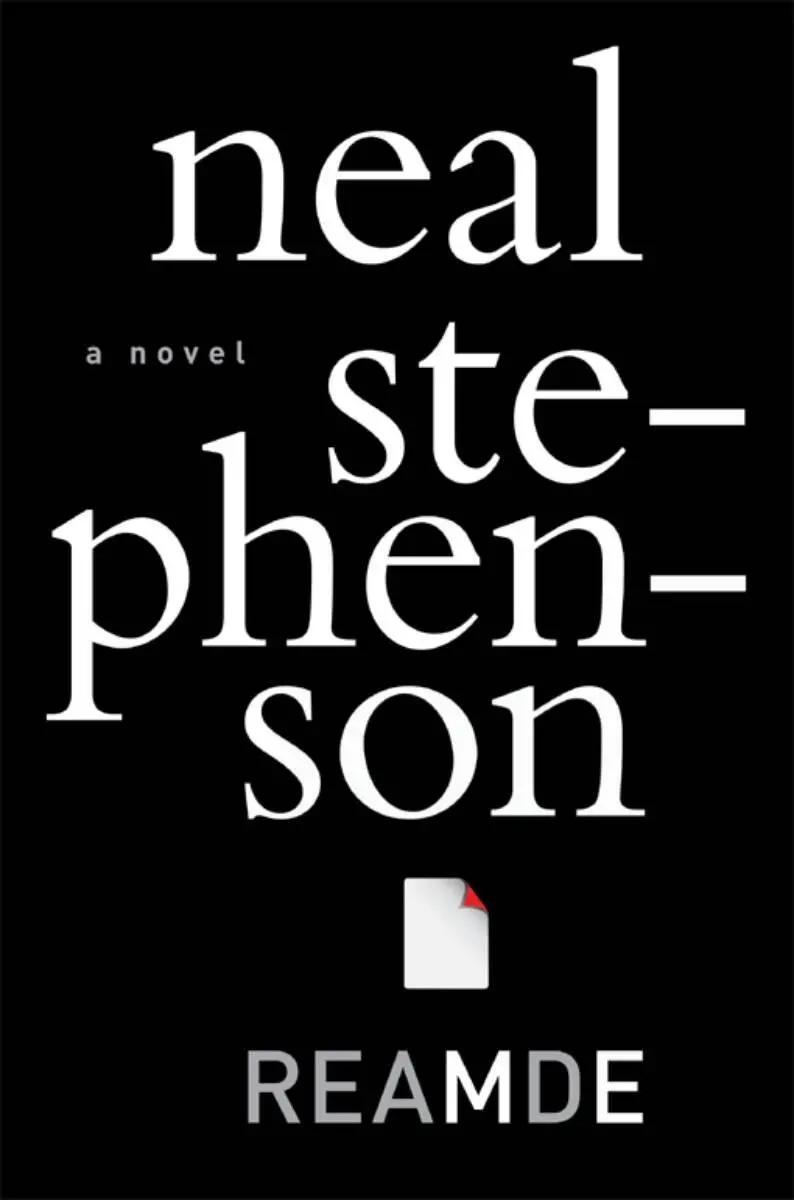
- Название:Reamde
- Автор:
- Издательство:William Morrow
- Жанр:
- Год:2011
- Город:New York
- ISBN:978-0-06-197796-1
- Рейтинг книги:4 / 5. Голосов: 1
-
Избранное:Добавить в избранное
- Отзывы:
-
Ваша оценка:
Reamde: краткое содержание, описание и аннотация
Предлагаем к чтению аннотацию, описание, краткое содержание или предисловие (зависит от того, что написал сам автор книги «Reamde»). Если вы не нашли необходимую информацию о книге — напишите в комментариях, мы постараемся отыскать её.
For Richard, the game was the perfect opportunity to launder his aging hundred dollar bills and begin his own high-tech start up—a venture that has morphed into a Fortune 500 computer gaming group, Corporation 9592, with its own super successful online role-playing game, T’Rain. But the line between fantasy and reality becomes dangerously blurred when a young gold farmer accidently triggers a virtual war for dominance—and Richard is caught at the center.
In this edgy, 21st century tale, Neal Stephenson, one of the most ambitious and prophetic writers of our time, returns to the terrain of his cyberpunk masterpieces
and
, leading readers through the looking glass and into the dark heart of imagination.
Reamde — читать онлайн бесплатно полную книгу (весь текст) целиком
Ниже представлен текст книги, разбитый по страницам. Система сохранения места последней прочитанной страницы, позволяет с удобством читать онлайн бесплатно книгу «Reamde», без необходимости каждый раз заново искать на чём Вы остановились. Поставьте закладку, и сможете в любой момент перейти на страницу, на которой закончили чтение.
Интервал:
Закладка:
Zula used the lavatory. When she emerged, all three men were still in the same positions, though Jones had now begun cackling with satisfaction.
Noticing Zula standing above him, he tucked his chin, rolled to his feet, and beckoned her forward. She squeezed past him into the cockpit, dropped to one knee, and looked up.
No more than a hundred feet above them was the underbelly of a 747.
So that explained why they had felt free to gain altitude. They had timed their flight plan so as to synchronize it with this jumbo’s takeoff from Taipei airport. It was headed for (she guessed) Vancouver or San Francisco or some other West Coast destination. Cutting underneath it as it vectored northward from the tip of Taiwan, they had positioned themselves beneath it and gained altitude in lockstep with it, their bogey merging with its bogey on the radar screens of air traffic controllers and military installations up and down the eastern coast of Asia.
She helped herself to a can of Coke and a bag of chips from the plane’s miniature galley, then made her way back aft through the cabin, sensing Khalid’s eyes on her spine. Jones was now sitting across the table from him, and they were examining a chart of the northern Pacific.
The soldier with the laptop was sitting with his back to her. Looking over his shoulder she saw what was holding his attention so closely: he was playing Flight Simulator. Practicing a takeoff run from a rural landing strip.
She didn’t want to make it obvious that she had noticed, so she kept walking without breaking stride and returned to the cabin, closing the door behind her.
THE MAN, WHO was calling himself George Chow, took Olivia into Jincheng: a fishing town at the island’s western end. A couple of hotels had been thrown up near the ferry terminal, serving a mix of tourists and businessmen, and George Chow had taken a suite in one of them. He had apparently traveled here in the company of a Thai woman who had some talents as a hairdresser and a makeup artist. The woman had a bob haircut and wore conspicuous designer eyeglasses and dramatic makeup. She had spread newspapers on the floor and laid out her shears and combs and brushes. Olivia took a quick shower and then received a bob haircut exactly like that of the Thai woman, which, under any other circumstances, she’d have been afraid to take a risk on. The eyeglasses turned out to be fake—the lenses didn’t do anything. Olivia ended up wearing them. The same makeup too. And a few minutes later, the same clothes. A PRC goon holding a blurry photograph of Meng Anlan would not immediately peg her as being the same person; and if anyone had noticed George Chow coming off the Taipei flight this morning with the Thai woman on his arm, they’d assume that he was going home in the company of the same lady.
While all of this was happening, George Chow disappeared for about an hour, then came back saying that various matters had been arranged.
One of which, apparently, was a taxi, waiting for them in the alley just off the hotel’s loading dock, piloted by a man who, Olivia inferred, had been well paid not to notice or talk about anything. They drove to the place in the middle of the island that Sokolov had identified, earlier, as a good meeting site. Its advantages now became plain. They stopped near the culvert, and George Chow pretended to take photographs of Olivia standing against the backdrop of the wooded ridge. Sokolov was able to remain perfectly hidden, even though only a few meters away, until a moment when the road was free of traffic. He then emerged and did a passable job of concealing his amusement at the new Olivia.
“You are fashion queen,” Sokolov observed.
“For two hours. Once I get to Taipei, all of this is coming right off.”
“Then where? London?”
“I assume so. Yes. Let’s go.”
“Where we go?” Sokolov asked, a bit sharply. He was much too worldly wise to imagine that he too would be whisked away to London.
“I’ll explain in the car,” Olivia said.
The weather had gradually turned gray as the day had worn on, and it was now becoming blustery, with a strong breeze out of the north. This suited their purposes, since it gave Sokolov an excuse to put on a rain slicker that they had purchased for him in Jincheng, and to wear it with the hood up. For now, though, he just slumped as far down as possible in the car’s rear seat as George Chow explained what was about to happen. Meanwhile the driver took them west back into town, then north, running parallel to the island’s western coast, until they had passed out of the built-up area (which took all of about thirty seconds) and into another of those strange places where no Chinese people went, apparently for the reason that no other Chinese people were there. This was a wild beach landscape similar to the one where they had crawled up out of the surf the night before. On higher ground above it, where the sand was held together by the root systems of sparse grass, a man and his son were flying a string of kites. Below, the beach stretched away for at least a kilometer. Olivia thought at first that it was studded with antitank obstacles even more thickly than the one she and Sokolov had washed up on. On closer examination, though, what she was looking at were thousands of concrete pillars that had been planted upright in the tidal zone to give shellfish something to grow on. Workers were picking their way among them. Each had a bamboo pole balanced over his or her shoulders, a basket or a bag dangling from each end. Seen through the thickening air of an incoming shower, it looked like a colossal cemetery: not a modern American cemetery with its polished and neatly arrayed monuments, but a thousand-year-old English churchyard crammed with worn gray stones tilting this way and that.
George Chow seemed to guess that they wanted privacy, or perhaps he felt a need to keep a watch over any traffic coming up the coast road, and so he remained in the taxi while Sokolov and Olivia walked out, trying to find salt water. For they had arrived early. The tide was low. Olivia left her purse in the car and went barefoot. Sokolov was now using a handheld GPS issued to him by George Chow, aiming for a waypoint marked on its screen.
When they reached a place where fog and mist had rendered them invisible from the road, they sat down on a couple of adjacent shellfish-pillars that had been picked clean by harvesters and watched the tide flow in. For they were only a hundred meters from the rendezvous point. Olivia wasn’t wearing much, and Sokolov didn’t have to ask to know that she was chilly, and so he sat upwind of her and wrapped his raincoat around her so that she could snuggle up under his arm.
“I think I’m going with you,” she announced, after ten minutes had passed in silence.
“Not get on plane?” Sokolov said.
“No. Why should I? Nothing prevents me from just getting on this boat with you, and taking the freighter to Long Beach.”
He considered it for a good long time. Long enough that she began to worry that she had screwed it all up. Sokolov had enjoyed this morning’s rumpus in the bunker, and might enjoy more in the future, provided there was no commitment; but being stuck on a freighter with Olivia for two weeks was a hell of a lot of togetherness. What man wouldn’t recoil, just a little, from that?
“Would make two weeks more interesting,” he allowed. Then he switched over to Russian. “But this is not the correct choice for you to make.”
Part of her wanted to say Why not? but, having affrighted him already, she did not want to get pouty on him now.
“What is the correct choice?”
“Find Jones,” he said. “Figure out where he is. Tell me.”
“But if we find him,” she said, “he’s dead, or captured, no matter what. We don’t need you to kill him.”
Читать дальшеИнтервал:
Закладка:
Похожие книги на «Reamde»
Представляем Вашему вниманию похожие книги на «Reamde» списком для выбора. Мы отобрали схожую по названию и смыслу литературу в надежде предоставить читателям больше вариантов отыскать новые, интересные, ещё непрочитанные произведения.






Обсуждение, отзывы о книге «Reamde» и просто собственные мнения читателей. Оставьте ваши комментарии, напишите, что Вы думаете о произведении, его смысле или главных героях. Укажите что конкретно понравилось, а что нет, и почему Вы так считаете.