Neal Stephenson - Reamde
Здесь есть возможность читать онлайн «Neal Stephenson - Reamde» весь текст электронной книги совершенно бесплатно (целиком полную версию без сокращений). В некоторых случаях можно слушать аудио, скачать через торрент в формате fb2 и присутствует краткое содержание. Город: New York, Год выпуска: 2011, ISBN: 2011, Издательство: William Morrow, Жанр: Фантастика и фэнтези, thriller_techno, на английском языке. Описание произведения, (предисловие) а так же отзывы посетителей доступны на портале библиотеки ЛибКат.
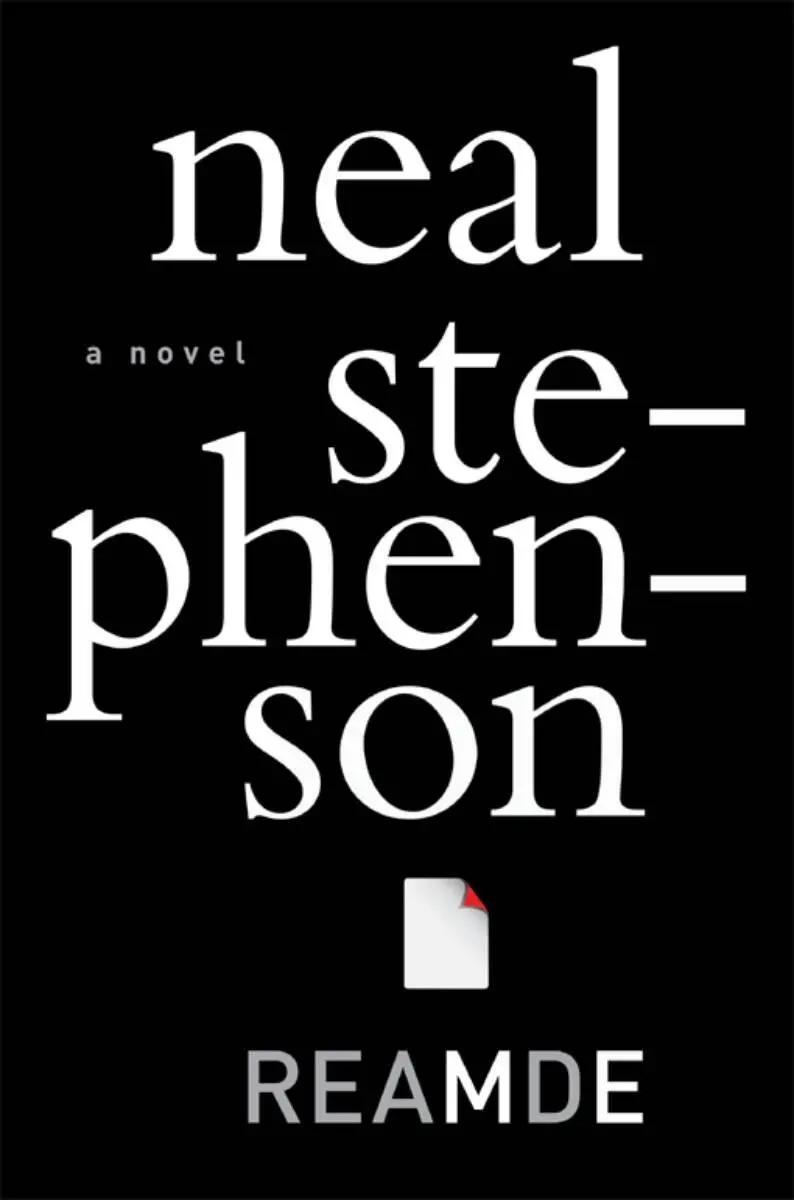
- Название:Reamde
- Автор:
- Издательство:William Morrow
- Жанр:
- Год:2011
- Город:New York
- ISBN:978-0-06-197796-1
- Рейтинг книги:4 / 5. Голосов: 1
-
Избранное:Добавить в избранное
- Отзывы:
-
Ваша оценка:
Reamde: краткое содержание, описание и аннотация
Предлагаем к чтению аннотацию, описание, краткое содержание или предисловие (зависит от того, что написал сам автор книги «Reamde»). Если вы не нашли необходимую информацию о книге — напишите в комментариях, мы постараемся отыскать её.
For Richard, the game was the perfect opportunity to launder his aging hundred dollar bills and begin his own high-tech start up—a venture that has morphed into a Fortune 500 computer gaming group, Corporation 9592, with its own super successful online role-playing game, T’Rain. But the line between fantasy and reality becomes dangerously blurred when a young gold farmer accidently triggers a virtual war for dominance—and Richard is caught at the center.
In this edgy, 21st century tale, Neal Stephenson, one of the most ambitious and prophetic writers of our time, returns to the terrain of his cyberpunk masterpieces
and
, leading readers through the looking glass and into the dark heart of imagination.
Reamde — читать онлайн бесплатно полную книгу (весь текст) целиком
Ниже представлен текст книги, разбитый по страницам. Система сохранения места последней прочитанной страницы, позволяет с удобством читать онлайн бесплатно книгу «Reamde», без необходимости каждый раз заново искать на чём Вы остановились. Поставьте закладку, и сможете в любой момент перейти на страницу, на которой закончили чтение.
Интервал:
Закладка:
With buckets of seawater, hauled up on a rope, they sluiced the steel floor of the bridge until it was no longer bloody. Learning their way around the vessel, they found scrub brushes and cleaning supplies and gave the place a more thorough washing down, swabbing blood splashes and fingerprints away from some of the bridge’s vertical surfaces. Marlon pulled the ruined radio off its bracket and threw it into the sea, trailing its bloody microphone.
The user interface of the GPS was anything but intuitive, but Marlon figured out how to zoom and pan its tiny map. Standing around it in the dark, they began to get a sense of where they had been—for the GPS displayed the boat’s past track—and where they were going. It seemed that, for the first hour of their voyage, Mohammed had steered them generally south along the coast, then changed to an easterly heading, making directly for Taiwan at a speed of something like ten knots. This had brought them to a point about thirty nautical miles off the Chinese coast, which was where the confrontation and shooting had taken place.
At that point, Marlon had dropped the vessel’s speed to more like five knots. This was not the absolute slowest they could go, but if they went any slower they lost all sense that they were making forward progress, and the boat seemed to wallow and wander (an impression that could be confirmed by zooming in on the track and observing the way it staggered across the screen). The rudder, it seemed, was not capable of doing its job unless water was flowing across it with at least some minimum speed.
Marlon told Csongor about what Batu had said regarding the fuel gauge, or lack thereof, and so Csongor went down to the engine room and spent a while figuring out how the diesels worked, eventually identifying the fuel line and the pump that fed it. From this, plumbing led back through a bulkhead to a space mostly occupied by a pair of cylindrical tanks of impressive and reassuring size, each rather more than a meter in diameter and perhaps three meters long. Each had a fill pipe welded into its top. Csongor traced those up to a pair of fittings on the deck, which he guessed they would use whenever they pulled up to the nautical equivalent of a gas station. Shining his flashlight around that area, working out slowly in concentric circles, he finally found where they kept the dipstick: a piece of (inevitably) bamboo secured under the gunwale with bungee cords, ruled with felt-tip scribe marks and (to him) cryptic annotations. He called Yuxia down to help him interpret the marks, and then they opened one of the fuel fill hatches and shoved the bamboo pole down into it. Then he began pulling it out in a hand-over-hand movement, praying that he would feel cold wet diesel fuel on his palms. This did not happen, however, until the last few inches of the stick emerged. Yuxia read the nearest number marked on the pole. This meant nothing since they had no idea how quickly the diesels consumed fuel. But there was no ignoring the fact that it was the last number on the stick. “We just have to be scientific about this,” Csongor said, and he marked the exact location of the fuel level and noted the time.
They then repeated the experiment with the other tank and found that it was completely dry. Csongor went down and fiddled with the valves and confirmed his suspicion that the empty tank had simply been disconnected from the system; the jihadists had only used the one tank, and they hadn’t bothered to put more than a little bit of fuel in it, since all they ever did was putter around the harbor at the island.
Yuxia went back up to the bridge to keep Marlon company and make sure he didn’t fall asleep on his feet, and Csongor devoted more time to sorting through the hold’s contents. It did not take a Sherlock Holmes to read the recent history of this boat. It had been owned, and used hard, for many years by actual fishermen who had accumulated the sorts of gear and supplies one would expect: nets, lines, stackable plastic trays, polyethylene cutting boards, cutlery, whetstones, all manner of tools, paint, lubricants, solvents, and the like. As sustenance on longer voyages they had also laid in white plastic drums of what he took to be potable water, and sacks of rice, and a few other bulk food items such as soy sauce and cooking oil.
Then, at some point, the boat had been acquired by the jihadists, who had turned it into a floating arsenal: probably not enough to run a war, or even an insurrection, but plenty if the only goal was to blow up a building or plan a Mumbai-style shooting spree. So there was a pallet carrying a black steel drum of what Csongor guessed, by smell, to be fuel oil, and another carrying heavy woven-plastic sacks of white powder labeled as FERTILIZER: ammonium nitrate, presumably. Those two ingredients, mixed together, would make a high explosive that, as Csongor knew from reading the newspapers, could be detonated if one had some blasting caps handy. Csongor had no idea what a blasting cap even looked like, but he soon enough found out, as a carton of them had been helpfully stored on a shelf next to a translucent plastic box filled with phones, all of the same make and model.
Other boxes and pallets had been loaded with ammunition, mostly loose rifle cartridges in dark green or black steel boxes. But these had been raided and depleted earlier in the day as Jones and his men had made hasty preparations for their departure. He already knew that the guns were all missing, since they’d carefully searched for them earlier.
Supposing that they got picked up, eventually, by naval or coast guard vessels, he did not want to be found on board with such things, and so he began to consider how most easily to throw them overboard. Looking up, he noted that much of the foredeck consisted of a large cargo hatch, and so he went up and figured out how to get that open, and then spent a few minutes shining his flashlight over the equipment poised above it: cranes and winches and cables that had obviously been put there to facilitate moving things in and out of that hatch, if only he could figure out how to turn them on and use them. Some of the winches sported hand cranks, and so he reckoned he could get it done with muscle power if he had to. Now that he was out of China, he was finally getting a feel for how things were done in the country, and realizing that they had a genius for the kind of simple technology that required no instruction manuals. It was going to help them during this voyage.
Returning to the hold, he began sorting things out into three piles: trash (e.g., empty cardboard boxes), stuff they might be able to use (food), and dangerous or incriminating objects that needed to be jettisoned. He found four boxes, shrink-wrapped together, packed with instant ramen. Then three cartons of military rations: ready-made meals sealed in black pouches. Opening one of these just to see what it was, he discovered that he was ravenous and ate the whole thing standing up, stuffing the food into his mouth with filthy hands.
He found cigarettes and first aid kits and sorted those into the “keep” pile.
He was spending a lot of time maneuvering around the black steel drum of fuel oil, and finally—for perhaps the energy from the food was at last making its way to his brain—realized that the ship’s engines would probably burn it. How to transfer it into the fuel tanks? He spun up a sort of harebrained idea that involved using the ship’s crane to haul the drum up out of the hold and then somehow funnel its contents into the fuel filler abovedecks. With a little more consideration, though—for perhaps the Chinese way with technology was beginning to catch on with him—he realized that a siphon ought to work, since the ship’s fuel tank was actually situated below the altitude of the fuel drum. So he scrounged a hose and got the thing rigged up and after some false starts and spills and spitting out of fuel oil was eventually able to get a siphon working that drained the drum over the course of the next half hour.
Читать дальшеИнтервал:
Закладка:
Похожие книги на «Reamde»
Представляем Вашему вниманию похожие книги на «Reamde» списком для выбора. Мы отобрали схожую по названию и смыслу литературу в надежде предоставить читателям больше вариантов отыскать новые, интересные, ещё непрочитанные произведения.





Обсуждение, отзывы о книге «Reamde» и просто собственные мнения читателей. Оставьте ваши комментарии, напишите, что Вы думаете о произведении, его смысле или главных героях. Укажите что конкретно понравилось, а что нет, и почему Вы так считаете.