Neal Stephenson - Reamde
Здесь есть возможность читать онлайн «Neal Stephenson - Reamde» весь текст электронной книги совершенно бесплатно (целиком полную версию без сокращений). В некоторых случаях можно слушать аудио, скачать через торрент в формате fb2 и присутствует краткое содержание. Город: New York, Год выпуска: 2011, ISBN: 2011, Издательство: William Morrow, Жанр: Фантастика и фэнтези, thriller_techno, на английском языке. Описание произведения, (предисловие) а так же отзывы посетителей доступны на портале библиотеки ЛибКат.
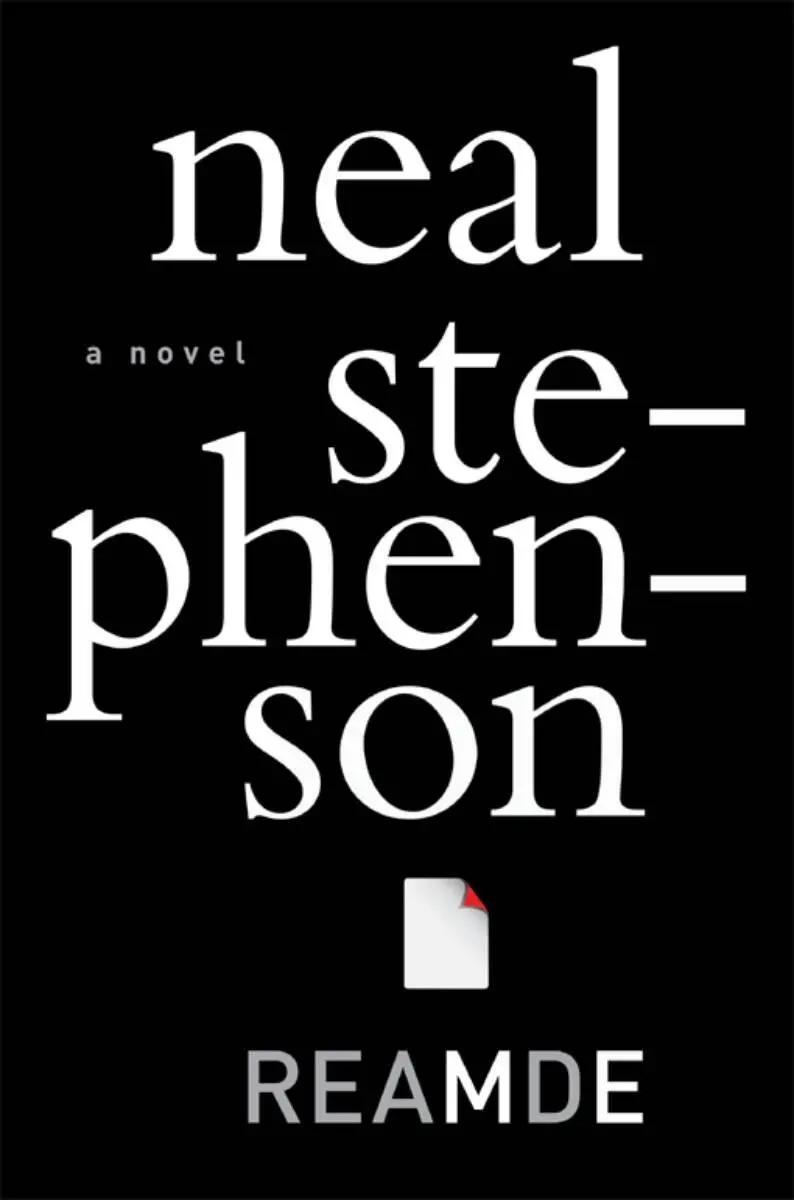
- Название:Reamde
- Автор:
- Издательство:William Morrow
- Жанр:
- Год:2011
- Город:New York
- ISBN:978-0-06-197796-1
- Рейтинг книги:4 / 5. Голосов: 1
-
Избранное:Добавить в избранное
- Отзывы:
-
Ваша оценка:
Reamde: краткое содержание, описание и аннотация
Предлагаем к чтению аннотацию, описание, краткое содержание или предисловие (зависит от того, что написал сам автор книги «Reamde»). Если вы не нашли необходимую информацию о книге — напишите в комментариях, мы постараемся отыскать её.
For Richard, the game was the perfect opportunity to launder his aging hundred dollar bills and begin his own high-tech start up—a venture that has morphed into a Fortune 500 computer gaming group, Corporation 9592, with its own super successful online role-playing game, T’Rain. But the line between fantasy and reality becomes dangerously blurred when a young gold farmer accidently triggers a virtual war for dominance—and Richard is caught at the center.
In this edgy, 21st century tale, Neal Stephenson, one of the most ambitious and prophetic writers of our time, returns to the terrain of his cyberpunk masterpieces
and
, leading readers through the looking glass and into the dark heart of imagination.
Reamde — читать онлайн бесплатно полную книгу (весь текст) целиком
Ниже представлен текст книги, разбитый по страницам. Система сохранения места последней прочитанной страницы, позволяет с удобством читать онлайн бесплатно книгу «Reamde», без необходимости каждый раз заново искать на чём Вы остановились. Поставьте закладку, и сможете в любой момент перейти на страницу, на которой закончили чтение.
Интервал:
Закладка:
The time came when Xiamen Center called out the ID of the plane that Zula was on and issued the command transferring them to the responsibility of Hong Kong center. Pavel answered in the usual way and bid Xiamen Center adieu. Pavel and Sergei then exchanged a few sentences in Russian.
Suddenly the plane shifted beneath Zula’s feet with a crispness that one never experienced on a commercial airliner. She had to throw out both hands to prevent herself from being thrown forward into the cabin door. The plane was not merely descending in the way that airliners did, that is, by throttling back on the engines and shedding altitude in level flight; it was actually pointed down, using the power of its engines to thrust itself directly toward the sea.
The steepness of the dive increased to the point where Zula was lying full-length on the cabin door. Through it she could hear luggage and junk flying around in the cabin, and sleepy men shouting in alarm, and wakeful ones laughing delightedly.
She had thought at first that this was just a temporary maneuver to shed some altitude, but as it went on and on, she came instead to the realization that Pavel and Sergei had decided to commit suicide by crashing the plane into the sea. This couldn’t possibly go on any longer; her ears had popped three times.
But then, just as abruptly as it had gone into the dive, the plane pulled out of it, pressing her into the door, and then the corner between the door and the floor, and finally the floor itself with what felt like several Gs of acceleration as its nose came up and it returned to what seemed to be level flight. When she was able to move again, she peeled herself off the cabin floor, popped her head over the edge of the bed, and looked out a window to see blank white, and raindrops streaming across the glass. She elbow-crawled across the bed, put her face to the window, and looked down. The clouds and fog were too dense to allow her to see very much, but through an occasional gap, she was able to glimpse the gray surface of the ocean hurtling past no more than a hundred feet below.
The plane now banked and executed a course change: a long sweeping leftward turn.
There was a flat-screen TV mounted to the bulkhead above the foot of the bed. Zula had not tried turning it on yet, because she didn’t like TV, but now it occurred to her that she was being foolish. So she turned it on and was presented with a menu of offerings including an onboard DVD player, a selection of video games, and “MAP.” She chose the latter and was presented with a map of the South China Sea, apparently generated by exactly the same software that was used aboard commercial airliners, since the typefaces and the style of the presentation were familiar to anyone who had ever taken a long-haul airline flight. The place of origin had been programmed in as Xiamen, and the destination was Sanya Phoenix International Airport, which was at the southern tip of a huge elliptical island, comparable in size to Taiwan, that lay off China’s southern coast. She was pretty sure that this was called Hainan Island and that it was part of the People’s Republic of China. A flight plan had been drawn on the map, connecting Xiamen to Sanya by two straight legs of roughly equal length. The first leg headed south-southwest from Xiamen, roughly paralleling China’s southern coast. Then it doglegged into a more westerly heading that took it straight to the southern tip of Hainan. Just guessing, it looked as though the course had been laid out to keep it well clear of the Hong Kong/Shenzhen/Macao/Guangdong area, which was right in the middle. Presumably the airspace around it was extraordinarily crowded and a good thing to avoid.
The plane’s actual track and current position were also superimposed on the map, and these showed that the flight plan had been followed precisely until a few minutes ago. Now they were headed a little north of due east, on a track that looked as though it would take them just south of Taiwan.
None of this would have made sense to her had she not been party to last night’s meeting in the main cabin. Obviously, they had never had any true intention of flying to Hainan Island. They had chosen that destination solely because it was a domestic flight and as such would not draw the attention of the immigration authorities at Xiamen’s airport. For that, any destination in China would have sufficed. But Hainan seemed to have another advantage, which was that a flight to there from Xiamen would naturally pass over the ocean; and over the ocean it was possible to get away with tricks such as screaming along at wavetop level to evade radar.
She reckoned that they were playing some kind of game having to do with the workings of the air traffic control system. Though she had never studied such things in any detail, she knew in a vague way that radar had limited range and that the structure of the air traffic control system somehow reflected that fact; a country’s airspace was divided into separate zones, each managed from a different control center with its own radar system. Airplanes in flight were handed off from one control center to the next as they made their way across the country. At some point they had stopped being the responsibility of the air traffic controllers in Xiamen and entered into a zone controlled from Hong Kong. Or perhaps by flying out over the ocean they had entered into a no-man’s-land that was not monitored or controlled by any authority. At any rate, she guessed that they had, a few minutes ago, reached one of those edges or seams in the system. Pavel and Sergei had then bid farewell to the air traffic controllers in the zone that they were departing and had gone into the power dive before they showed up on the radar screen, and came to the attention, of any other controllers.
Where they were going now she could only conjecture. Once they cleared the southern cape of Taiwan, there was nothing out there but the Pacific Ocean. But she’d seen enough of great circle routes yesterday evening to understand that flying basically east, as they were doing now, was no way to get across it.
It took them about half an hour’s flying time to get east of Taiwan. The plane then banked left again, and its little icon on the screen rotated around until it was pointed a little east of north. So it appeared that they were executing a large U-shaped maneuver around Taiwanese airspace.
The radio, which had been silent for a while, came alive again; apparently the pilots had switched over to a different frequency, and apparently that frequency was being used by Taipei Center, since all the transmissions now seemed to originate from there. Taipei Center seemed to be managing a large number of Boeings and Airbuses. These were helpfully identified, not only by their call signs, but by their origins or destinations as well, and so Zula got a clear impression of an extremely busy airport handling jumbo jets coming in from, or flying out to, far-flung destinations such as Los Angeles, Sydney, Tokyo, Toronto, and Chongqing.
It took rather less than an hour for the plane to clear the northern tip of Taiwan, which was where Taipei was located. It then executed a series of maneuvers and began a long steady ascent, which Zula was able to track using the helpful data screens thrown up every minute or so on the TV display. Presumably this would make the plane visible on radar, supposing that any radar stations were in range. But looking at the smaller-scale map that occasionally flashed up on the TV, Zula noted that they were in a region where planes from all over Southeast Asia and Australia might fly northward en route to Japan or Korea. So maybe they were hoping that their bogey would go unnoticed in all the clutter?
Her bladder could not stand any more waiting, and so she finally opened the door and stepped forward into the main cabin. This was crowded and smelled like sweaty men. The four soldiers were seated close together in the back. Two of them were napping, one was reading the Koran, and the fourth was intently focused on a laptop. At the cabin’s forward end, a fold-down table had been deployed and was covered with large aeronautical charts on which Khalid and Abdallah Jones had apparently been tracking their progress. Khalid was there now, staring directly at Zula with hate, fascination, or both. Jones was not in evidence until she made her way up the aisle to the lavatory. She then discovered him lying on his back with his feet in the aisle and his head in the cockpit. He was staring almost vertically upward through the cockpit windows. Pavel and Sergei likewise were craning their necks in what seemed a most awkward manner, attending to something that seemed to be above and ahead of them.
Читать дальшеИнтервал:
Закладка:
Похожие книги на «Reamde»
Представляем Вашему вниманию похожие книги на «Reamde» списком для выбора. Мы отобрали схожую по названию и смыслу литературу в надежде предоставить читателям больше вариантов отыскать новые, интересные, ещё непрочитанные произведения.






Обсуждение, отзывы о книге «Reamde» и просто собственные мнения читателей. Оставьте ваши комментарии, напишите, что Вы думаете о произведении, его смысле или главных героях. Укажите что конкретно понравилось, а что нет, и почему Вы так считаете.