Orson Card - Pathfinder
Здесь есть возможность читать онлайн «Orson Card - Pathfinder» весь текст электронной книги совершенно бесплатно (целиком полную версию без сокращений). В некоторых случаях можно слушать аудио, скачать через торрент в формате fb2 и присутствует краткое содержание. Год выпуска: 2010, ISBN: 2010, Издательство: Simon Pulse, Жанр: Фантастика и фэнтези, на английском языке. Описание произведения, (предисловие) а так же отзывы посетителей доступны на портале библиотеки ЛибКат.
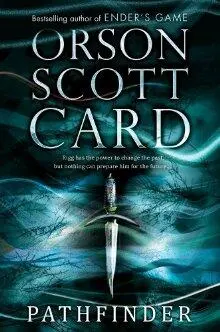
- Название:Pathfinder
- Автор:
- Издательство:Simon Pulse
- Жанр:
- Год:2010
- ISBN:978-1-4169-9176-2
- Рейтинг книги:5 / 5. Голосов: 1
-
Избранное:Добавить в избранное
- Отзывы:
-
Ваша оценка:
Pathfinder: краткое содержание, описание и аннотация
Предлагаем к чтению аннотацию, описание, краткое содержание или предисловие (зависит от того, что написал сам автор книги «Pathfinder»). Если вы не нашли необходимую информацию о книге — напишите в комментариях, мы постараемся отыскать её.
—secrets about Rigg's own past, his identity, and his destiny. And when Rigg discovers that he has the power not only to see the past, but also to change it, his future suddenly becomes anything but certain.
Rigg’s birthright sets him on a path that leaves him caught between two factions, one that wants him crowned and one that wants him dead. He will be forced to question everything he thinks he knows, choose who to trust, and push the limits of his talent…or forfeit control of his destiny.
Pathfinder — читать онлайн бесплатно полную книгу (весь текст) целиком
Ниже представлен текст книги, разбитый по страницам. Система сохранения места последней прочитанной страницы, позволяет с удобством читать онлайн бесплатно книгу «Pathfinder», без необходимости каждый раз заново искать на чём Вы остановились. Поставьте закладку, и сможете в любой момент перейти на страницу, на которой закончили чтение.
Интервал:
Закладка:
“Is that some kind of proverb?” asked the cook.
“Yes, sir,” said Umbo.
“Then you come from a place full of very stupid people,” said the cook.
“Thank you sir,” said Umbo. “Does that mean I can help?”
“If you break one dish I’ll knock you on the head, crack your skull, and pry it open like a hardboiled egg.”
“I hope word doesn’t get around that you’re as likely to serve chopped boy in your stew as mutton or pork.”
“Wouldn’t matter if I did,” said the cook. “Anybody’s on this tub, they’ll eat what I serve or try their luck at catching something edible in this saint-forsaken river.”
Within moments, the cook had Umbo running errands, and to Umbo it felt like being home again. It took no particular effort or even a detour to glance into the spot where he had put the knife and see that it was still there. But he wouldn’t take it now. He didn’t know yet whether the People’s Army even knew about the ancient knife—this general seemed to have an obsession with old things and it was better if he didn’t know about the one thing that Rigg had really stolen.
Finally the cook set him down to pare turnips to make the mash for the next day’s breakfast. It was slow work, but mindless as long as you were careful not to let your finger get added to the mix.
And as he sliced and chopped, Umbo thought about what he knew he would have to do. Somehow he must figure out how to do the thing that he had already been seen doing—travel back in time to this morning to give warnings to himself and to Rigg.
Wouldn’t it have been nice of his future self to give him some hint about how he was going to learn how to talk to people in the past?
One thing was certain—Umbo had never seen any of the paths that Rigg was always talking about. So even if he succeeded in causing himself to slow down—or speed up, or whatever it was he did—it was an open question about whether he would ever be able to see anybody from the past—even the past of just this morning.
And before long, he was trying to do to himself what he had so easily done to Rigg, speeding him up—or slowing him down, depending on how you looked at it. But it was as if his talent were a long sword—he could easily use it to touch others, but his arms were too short or the sword too long for him to stab himself.
It was like Wandering Man had said, during the brief time he gave Umbo a little training: You have to find it the way you teach yourself to wiggle your ears.
Since Umbo had never knowingly wiggled his ears—nor known anyone who could—the example was wasted on him.
But then Wandering Man went ahead and taught him how to wiggle them. He had made Umbo look in the mirror and then smile his broadest grin. “See how your ears move up just a little when you smile?”
Umbo could see it easily, once it had been pointed out.
“That means you have the muscles to wiggle your ears, and they’re working. What you do is smile and then unsmile, again and again, only now you’re concentrating on the muscles that draw your ears up and back when you smile. Smile hard, and then try to move your ears again only without any of the smiling.”
Umbo tried and tried. “Nothing happens,” he said.
“But you’re mistaken,” said Wandering Man. “Something very important has happened. You’re aware of those muscles. It takes a while for the nerves to reinforce their connections so the muscles will contract without dragging all the rest of the smile with them. Practice it whenever you think of it, smiling hard and then trying again without the smile. Gradually, the muscles will strengthen. Just make sure you work both ears equally, so you don’t end up with only one ear you can control.”
It took only three days before his ears were moving on command—either together or individually. Within another couple of weeks, he was a champion ear-wiggler.
And, as Wandering Man had predicted, the analogy was nearly perfect. Previously when he had thrown his little web of speed onto another person, it had been willy-nilly and ragged—it gave Mother a headache when he did it to her repeatedly. But with practice, even though he had no idea what was actually happening inside him, he began to be able to control the thing, to make it steady, to make it strong. It just took concentration and repetition, hour after hour.
Now he would have to do it all over again, this time learning how to include himself, and only himself, within his zone of speed.
The only sign he had that he might have made any progress was when the cook came in and said, gruffly, “Where’d you put the rest of them?”
“They’re all in the pot,” said Umbo.
The cook looked doubtful, but came and looked in the pot and then turned back to Umbo. “Nobody ever peeled them that fast.” But then he examined them closely and had to admit that Umbo had done it exactly right.
“I would have said it can’t be done that fast.”
“I applied myself.”
“Apply this, you show-off,” said the cook, making a dismissive gesture that Umbo had been told had something to do with either female body parts, the act of rutting, or defecation—Umbo had been told of many a likely meaning, but none of them seemed right to him.
But Umbo took no offense—for the cook really meant it as backhanded praise. And the fact that he had done it so quickly was also an indication that something was happening. Had he sped himself up, at least a little? It was a promising start.
Umbo was up on the passenger deck, the kitchen chores done, when he saw them bringing Loaf—in a cart, manacled and attached to the cart with chains. Apparently his arrest had not gone as smoothly as Rigg’s and Umbo’s.
The general came out at once, long enough to greet Loaf and give him the run of the ship, as long as Loaf didn’t try to go back on land.
The general also told the captain they could start the voyage whenever he and his crew were ready. Then the general went back into the captain’s quarters to continue his interview with Rigg. Umbo would have given almost anything to be in that room. Instead, the mate started barking orders and in no time the boat was untied and being poled away from the dock.
“You think Rigg’s all right in there?” asked Loaf.
Umbo turned to see that Loaf had come up on the passenger deck.
But so had the officer who arrested him. When Umbo and Loaf pointedly looked at him, he smiled a bit nastily and said, “The general may have forgotten that you’re prisoners, but I haven’t.”
Umbo ignored the officer—for Rigg’s method seemed the best, saying nothing and acting as if nothing had been said. “I’m practicing,” Umbo said to Loaf—deliberately making his voice loud enough for the officer to hear. “But the thing I’ve got to do, I don’t know if it’s even possible. There are things you can do for someone else that you just can’t do for yourself.”
“Like tickling,” said Loaf.
“Exactly like that,” said Umbo.
“What did you mean by that?” demanded the officer.
“Mean by what?” asked Umbo.
“‘Tickling.’ Are you speaking in some kind of code?”
Loaf turned to the officer. “If you don’t understand what we’re talking about, that doesn’t mean you have a right to pester the grownups to explain everything. You’d have to have been with us during our whole journey up till now, and we don’t like you well enough to spend enough time with you to acquaint you with all the particulars.”
Again with the evil smile. “The general won’t always be here,” said the officer. “Then we’ll see how much you like me.” He went over the ladder and scooted down it to the cargo deck.
As soon as they were alone, Loaf got to the point. “I’m glad you’re making progress, though I wouldn’t be worried even if you weren’t. One fact is clear: you can learn to do it because you did it. Or will do it.”
Читать дальшеИнтервал:
Закладка:
Похожие книги на «Pathfinder»
Представляем Вашему вниманию похожие книги на «Pathfinder» списком для выбора. Мы отобрали схожую по названию и смыслу литературу в надежде предоставить читателям больше вариантов отыскать новые, интересные, ещё непрочитанные произведения.





Обсуждение, отзывы о книге «Pathfinder» и просто собственные мнения читателей. Оставьте ваши комментарии, напишите, что Вы думаете о произведении, его смысле или главных героях. Укажите что конкретно понравилось, а что нет, и почему Вы так считаете.