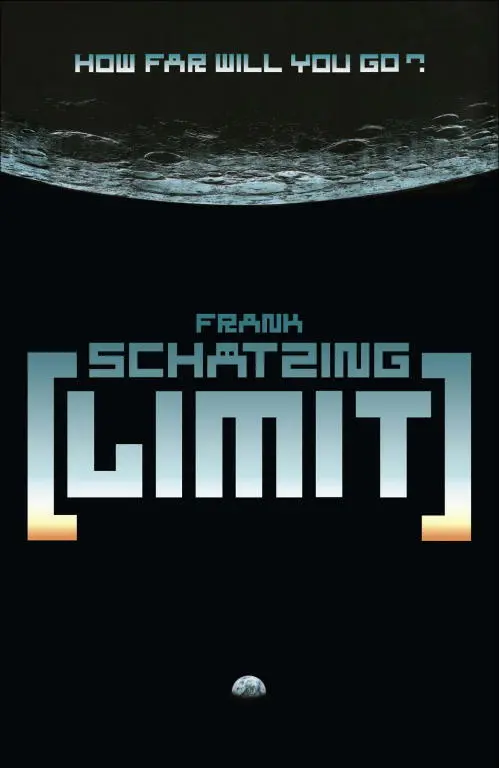
Frank Schätzing - Limit
Здесь есть возможность читать онлайн «Frank Schätzing - Limit» весь текст электронной книги совершенно бесплатно (целиком полную версию без сокращений). В некоторых случаях можно слушать аудио, скачать через торрент в формате fb2 и присутствует краткое содержание. Город: London, Год выпуска: 2013, ISBN: 2013, Издательство: Jo Fletcher Books, Жанр: Фантастика и фэнтези, на английском языке. Описание произведения, (предисловие) а так же отзывы посетителей доступны на портале библиотеки ЛибКат.
- Название:Limit
- Автор:
- Издательство:Jo Fletcher Books
- Жанр:
- Год:2013
- Город:London
- ISBN:9781849165150
- Рейтинг книги:4 / 5. Голосов: 1
-
Избранное:Добавить в избранное
- Отзывы:
-
Ваша оценка:
Limit: краткое содержание, описание и аннотация
Предлагаем к чтению аннотацию, описание, краткое содержание или предисловие (зависит от того, что написал сам автор книги «Limit»). Если вы не нашли необходимую информацию о книге — напишите в комментариях, мы постараемся отыскать её.
In 2025, entrepreneur Julian Orley opens the first-ever hotel on the moon. But Orley Enterprises deals in more than space tourism—it also operates the world’s only space elevator, which in addition to allowing the very wealthy to play tennis on the lunar surface connects Earth with the moon and enables the transportation of helium-3, the fuel of the future, back to the planet. Julian has invited twenty-one of the world’s richest and most powerful individuals to sample his brand-new lunar accommodation, hoping to secure the finances for a second elevator…
On Earth, meanwhile, cybercop Owen Jericho is sent to Shanghai to find a young female hacker known as Yoyo, who’s been on the run since acquiring access to information that someone seems quite determined to keep quiet. As Jericho closes in on the girl and the conspiracy swirling around her, he finds mounting evidence that connects her to Julian Orley as well as to the entrepreneur’s many competitors and enemies. Soon, the detective realizes that the lunar junket to Orley’s hotel is in real and immediate danger.
Limit — читать онлайн бесплатно полную книгу (весь текст) целиком
Ниже представлен текст книги, разбитый по страницам. Система сохранения места последней прочитанной страницы, позволяет с удобством читать онлайн бесплатно книгу «Limit», без необходимости каждый раз заново искать на чём Вы остановились. Поставьте закладку, и сможете в любой момент перейти на страницу, на которой закончили чтение.
Интервал:
Закладка:
‘At the end of the day, he was an even bigger criminal than Mayé,’ said Yoyo. ‘But no one cared. Papa didn’t have anything that would have been worth caring about. As a good patriot, he renamed everything that didn’t yet have an African name, and since then the mainland has been called Mbini, the island Bioko and the capital city Malabo. By the way, I also looked into Mayé’s native background. He’s from the Fang tribe.’
‘And what happened to this splendid Papa?’
Yoyo made a snipping motion with her fingers. ‘He was got rid of. A coup.’
‘With support from abroad?’
‘It seems not. Papa’s family values got out of hand; he even started to execute his close relatives. His own wife fled over the border in the dead of night. No one from his clan was safe any more, and in the end it became too much for one of them.’
In 1979, there was singing and dancing in Equatorial Guinea.
A man in a plain uniform stands in the entrance to a vault, where glowing ghosts dart over the walls and ceiling, generated by the crackling fire in the middle of the room. He is inconspicuousness personified. From time to time, he gives instructions under his breath, prompting the guards to give the dancers, who have been hopping around the fire and singing Papa’s praises in grotesque liveliness for hours, a helping hand with red-hot pokers. It smells of decadence and burnt flesh. Mosquitoes buzz around. In the gloomy corners and along the walls, the scene is mirrored in the eyes of rats. Anyone who tips over the brink into exhaustion is dragged up, beaten until they bleed and hauled outside. Almost all of them, apart from the uniformed men, are undernourished and dehydrated, many show signs of mistreatment, and others have yellow fever and malaria written on their gaunt faces.
Black Beach Party: just a normal day in Black Beach Prison, the infamous jail in Malabo that makes America’s Devil Island look like a relaxing spa resort.
The man watches for a while longer, then leaves the dance of death, his face filled with worry. His name is Teodoro Obiang Nguema Mbasogo, nephew of the president, Commander of the National Guard and Director of the Black Beach Institution. He is responsible for scenes like these, so highly valued by Papa – just as the president enjoys spending his birthdays shooting prisoners in the Malabo stadium with ‘Those Were the Days, My Friend’ blasting out at full volume. But Obiang’s concern wasn’t for the prisoners, most of whom would never get out of this shabby, car-park-like fortress alive. It was his own life he feared for, and he had every reason to do so. These days, everyone in Papa’s clan had to confront the possibility of suddenly falling victim to the president’s paranoia and being sent off into the eternal rainforests to a soundtrack of Mary Hopkin.
So even Obiang was afraid.
And yet his own family values weren’t very different from those of his cut-throat uncle. Macías’ fear of clans was part of his blood, a fear of the preferential politics which saw clans give their sons and daughters to other clans in order to stay in power. Papa himself felt the full force of it when Obiang staged a coup and chased the Unique Wonder out of office. Papa, deprived of his power, fled headlong into the jungle, but not before first burning the remaining local currency. More than one hundred million dollars go up in flames in his villa, literally the very last of the State money. By the time Obiang’s henchmen tracked down the weakened Macías amongst the huge ferns and piles of apeshit, Equatorial Guinea was as bare as a bone. They drive the man to Malabo, play him ‘Those Were the Days’ and bullet by bullet deliver him to the ghosts of his forefathers, a task taken care of by Moroccan soldiers – his own people are too afraid of the cannibal’s dark magic.
And so the highest military council takes command of government business. Like all newly enthroned leaders, Obiang makes well-meaning promises to the people, proclaims a parliamentary democracy and, at the end of the eighties, even allows elections. Numerous candidates are suggested: but by him. Obiang wins, primarily because his Partido Democrático de Guinea Ecuatorial runs without competition, the representatives of which celebrate with a big party in Black Beach Prison. The government regrows like a lizard’s tail: the same blood, the same genes. Esangui-Fang even. It’s a family business. Anyone who criticises it will soon be dancing and singing around the fire, the only thing that’s changed is the wording. Obiang’s temper isn’t anywhere near as bad as Papa’s; he’s much more preoccupied with re-establishing trust abroad, making tentative links with the enduringly snubbed Spain and informing the Soviets that they are no longer friends. Equatorial Guinea begins to look more like a state again, and less like a subtropical Dachau. Money flows into the country. Annabon, Bioko’s sister island, is large and beautiful, ideal for the disposal of nuclear waste, something for which the First World is prepared to pay a pretty penny. The only problem is that Annabon is inhabited, but it won’t be for much longer. Illegal fishing, arms smuggling, the drugs trade and child labour: Obiang pulls out all the stops and transforms the green patch in the Gulf of Guinea into a lovely little gangsters’ paradise.
Foreign creditors put the pressure on. Democracy is a necessity. Obiang reluctantly accepts opposition parties, but despite using all his criminal talents, he is still 250 million dollars in the red. Then something inexplicable happens, something which gives the future a completely new shine overnight. First near Bioko, and then off the mainland coast. Something which makes the president round his lips reverently, as round as one needs to shape them in order to articulate a certain word.
‘Oil.’
‘Exactly, said Jericho. ‘The first sites were detected at the beginning of the nineties, and after that the race was on. There’s a constant stream of companies interested in the Gulf. Not one of them makes any more references to human rights. All of a sudden, mining licences are more popular topics of conversation.’
‘And Obiang cashes in.’
‘And cleans up, because of the low prices.’ Jericho pointed at his screen. ‘If you want to see the list of people who were imprisoned or murdered—’
‘Show me.’
‘Spain was the exception, I should add. Madrid clearly does get worked up about human rights infringements.’
‘Respect to them.’
‘No, it was motivated by frustration. Some opposition forces had found shelter in Spain and railed against Obiang’s clan, so he was a little reluctant to grant licences to Spanish companies. The Spanish government reacted bitterly and suspended foreign aid in protest. Heart-warming really, because Mobil opens up another oilfield near Malabo just a little later, and Equatorial Guinea’s economic growth shoots up by forty per cent. Then it’s one after another: there are discoveries near Bioko, near Mbini, a building boom in Malabo; oil towns such as Luba and Bata spring up. Obiang has no more political opponents; he is the oil prince. His re-election in the mid-nineties turns into a farce. The only competitor who can be taken seriously, Severo Moto from the Progressive Party, is sentenced to a hundred years’ imprisonment for high treason and escapes to Spain by the skin of his teeth.’
‘Interesting.’ Yoyo looked at him thoughtfully. ‘And who held the most licences?’
‘America.’
‘What about China?’
‘Not at the time. The US companies took the lead. They were the quickest and forced outrageous treaties on Obiang; he had very little understanding of the trade and signed everything they put in front of him. The ethnic shambles between the Fang and Bubi reached a new peak. There were very few Bubi on the mainland, but they’re the majority on Bioko, where the coastline was suddenly spluttering with oil. They all used to be poor, and in theory this should have made them all rich, but Obiang only lined his own pockets. The protests started in 1998. The Bubi founded a movement, fighting for the independence of Bioko, and there’s no way Obiang was going to allow that.’
Читать дальшеИнтервал:
Закладка:
Похожие книги на «Limit»
Представляем Вашему вниманию похожие книги на «Limit» списком для выбора. Мы отобрали схожую по названию и смыслу литературу в надежде предоставить читателям больше вариантов отыскать новые, интересные, ещё непрочитанные произведения.




Обсуждение, отзывы о книге «Limit» и просто собственные мнения читателей. Оставьте ваши комментарии, напишите, что Вы думаете о произведении, его смысле или главных героях. Укажите что конкретно понравилось, а что нет, и почему Вы так считаете.