Рита Браун - Animal Magnetism
Здесь есть возможность читать онлайн «Рита Браун - Animal Magnetism» весь текст электронной книги совершенно бесплатно (целиком полную версию без сокращений). В некоторых случаях можно слушать аудио, скачать через торрент в формате fb2 и присутствует краткое содержание. Год выпуска: 2009, ISBN: 2009, Издательство: Random House Publishing Group, Жанр: Домашние животные, на английском языке. Описание произведения, (предисловие) а так же отзывы посетителей доступны на портале библиотеки ЛибКат.
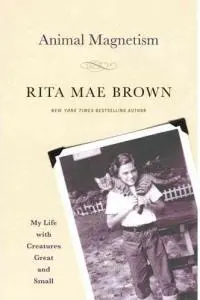
- Название:Animal Magnetism
- Автор:
- Издательство:Random House Publishing Group
- Жанр:
- Год:2009
- ISBN:978-0-345-51693-0
- Рейтинг книги:3 / 5. Голосов: 1
-
Избранное:Добавить в избранное
- Отзывы:
-
Ваша оценка:
Animal Magnetism: краткое содержание, описание и аннотация
Предлагаем к чтению аннотацию, описание, краткое содержание или предисловие (зависит от того, что написал сам автор книги «Animal Magnetism»). Если вы не нашли необходимую информацию о книге — напишите в комментариях, мы постараемся отыскать её.
Brown readily admits that she prefers the company of animals to people, a trait handed down from her mother. After all, Brown explains, "There's no such thing as a dumb dog, but God knows there are continents filled with dumb humans." In fact, by observing the dogs on her farm, the horses in her stables, and the cats that have helped her flesh out her many novels, Brown has gained better insight into herself and other human beings-one need only look at a chicken coop, she once realized, to see its striking similarity to her mother's clucking and preening group of friends.
In hilarious and heartwarming stories, Brown introduces us to Franklin, a parrot with a wicked sense of humor; R.C., a courageous Doberman who defined loyalty and sacrifice; Suzie Q, the horse who taught her the meaning of hard work; Baby Jesus, a tough tiger cat from New York City with sharp teeth to match his attitude; and of course the beloved and prolific Sneaky Pie, who needs no introduction to her legions of fans. In her succinct and personable style, Brown also revisits the very human parts of her life-growing up in the segregated South, dealing with the pain and the loss of those dearest to her, and coming into her own as an adult and as a writer.
Every recollection here reveals nature's delight and wonder-and offers solid evidence of the ability of animals to love. As funny as it is poignant, Animal Magnetism shows how these inspiring creatures, great and small, can bring out the best in us, restore us to our greater selves, and even save our lives.
Animal Magnetism — читать онлайн бесплатно полную книгу (весь текст) целиком
Ниже представлен текст книги, разбитый по страницам. Система сохранения места последней прочитанной страницы, позволяет с удобством читать онлайн бесплатно книгу «Animal Magnetism», без необходимости каждый раз заново искать на чём Вы остановились. Поставьте закладку, и сможете в любой момент перейти на страницу, на которой закончили чтение.
Интервал:
Закладка:
He taught me to put bag balm on their paw pads if they became footsore. He showed me, after a cow or sheep was rendered, how to cook up a meat and barley stew for them. Start with a little flaxseed or corn, toss in a touch of cheap bourbon or whiskey. I’ve never seen hounds since to match PopPop’s hounds.
I’m trying to build an addition onto my kennels so that I can have a block and tackle, a walk-in freezer, and one of those huge iron pots that take four men to move so I can duplicate PopPop’s recipe. Until then, it’s commercial kibble, which is good, but what could be better than warm gruel on a cold day after you’ve run fifty miles?
Conditioning and nutrition are critical. Teaching me gave PopPop a lift to his step. He wasn’t talkative. He’d tell me what I needed to know, like, “Buzz, cook until the meat falls off the bones. Dry the bones out. Save them, let them dry out, and then grind them up.” He’d pour into the gruel the ground bones from, say, last week’s cooking. “Use barley. Don’t use wheat. If you can get rice, that’s good, but we can’t get it here as easily as barley, which is all around. Put in this much flaxseed.” He’d pour in two gallons (the pot could hold two grown men). “Corn oil is good but expensive. If you become a rich woman, use corn oil.” He’d wink. “Course you could marry a rich man, but don’t marry him if he’s not a foxhunter.” A deep breath. “Or at least some kind of hunter. A man that doesn’t hunt isn’t a man.” I never disputed this and don’t much to this day, although I realize for many, hunting opportunities are slipping. Then there are those who demonize all hunters, portraying them as bloodthirsty dolts.
On these lessons would go. Usually I kept my trap shut. Sometimes I’d ask a question. Training fascinated me. He’d go into a run with puppies, eight weeks old. “All they need to know is their name.” He’d call a puppy’s name and if they came, he’d give them a little treat. He played games with them, which encouraged hunting prowess. To this day, I still use some of those games with my own pups.
The most important things he taught me were:
Love your hounds.
Trust your hounds. If you can’t trust a hound, don’t hunt him.
If anyone mistreats your hound, never speak to them again. If they hurt a hound, bide your time but hurt them back.
Now, that might sound ugly, but people are pack animals. Let one misbehave, and the pack begins to disintegrate. If you don’t establish your position, people will walk all over you. If you have to hurt them, hurt them. He never told me how to hurt them, but over the years I learned a variety of ways to get even with anyone who misread my cotillion manners for weakness and to really smash anyone who hurt a hound, a horse, a cat, or a fox.
People that hurt animals will eventually hurt people. You can’t tolerate it. The law allows what honor forbids. Besides, in my experience, the law only belongs to those who can afford it.
I’d go with him to contests. Dad drove. Frost sparkled on cornstalks. What excitement. Men would pay an entry fee per hound, usually two dollars but sometimes as much as five, which was a lot of money. You could eat for a week for five dollars. The hounds got a number painted on each hindquarter. The judges mounted up, usually on quiet horses since some of the judges couldn’t have gotten back on if they fell off. Too much pie. Wives, girlfriends came along but I didn’t see women hunting the hounds. We all knew some of them worked in the kennels, but back then you made the man look good even if he wasn’t. If the ladies resented it, I didn’t know, but I was too little to know. I sure resented it as I grew.
Two incidents from those hunts are vivid and still guide me today. One I wrote about in Rita Will . As PopPop deteriorated further he started to cheat. I unwittingly helped. He’d go to the cast (where you’d first let out your hound or hounds) with a gorgeous hound who ran silent. We’d go in the middle of the night. We’d follow on foot as best we could to learn where the foxes were and where the freshest scent was up to that time. Then we’d come back the next morning and he’d release the hounds that spoke. If the hunt was way far from his little house we couldn’t do this since he couldn’t drive.
I told Mother once I realized what was going on. She said, “Keep it to yourself. Sometimes people have to break the rules to live. He’s suffered in this life.” So I never told until I wrote Rita Will because they’re all gone now.
There are people who break other people for the sake of obeying the rules, and there are people who break the rules to help others. I hope, thanks to Mother and Dad, I fall into the latter category. Not that I’m looking to cheat, but I figure you could throw out ninety percent of all federal, state, and county legislation and we’d all be happier, and far, far more productive.
The other lesson I learned involved a German baker. He’d been successful, eventually selling his store and recipes to a larger company. He’d fled the rise of the Nazis, and he was a decorated World War I vet. He grew up with a different kind of hound than we had, but he enjoyed working with hounds. So he got himself some American foxhounds and started learning about them and vice versa.
I mention American because here there are four kinds of foxhounds: English, American, Crossbred (a combination of the two), and Penn-marydels. Each has its virtues. I prefer the American, most especially Bywaters Blood or Skinker Blood (Orange County) hounds from The Plains, Virginia.
PopPop and Hans (PopPop called him Johnny) met at a hound trial. Typical of hound people, they started trading stories and tips. PopPop helped Hans a lot because Hans wanted a system. American hounds, like Thoroughbred horses, are terribly sensitive, though often very affectionate. Not everyone can or should handle them.
“No system.” PopPop would shake his head. “Each hound is a snowflake.”
Hans struggled with this. He’d been in the German army, after all, and rules and orders were the breath of life. Systems tend to be a German trait. I base this observation on my numerous visits there, and let me be clear: I really adore Germany, and I’m partial to Austria, too. But PopPop kept telling Hans he had to relax, be flexible, let the hound tell him what it would do and how quickly it would learn. He used a horseman’s term: “Don’t run him through the bridle.”
Since these men were born before automobiles, Hans got it. His English, heavily accented, a northern accent, was very good. He was a fine man with a booming sense of humor who always fussed over me. Naturally, I adored him, and his wife, too.
Hans worked tirelessly with his American hounds. He began to win. He won a big one, walking off with fifty dollars. The first person to shake his hand was my grandfather, who really could have used that prize money.
When PopPop, Dad, and our two hounds, Buster and Bromo, loaded up in the car, we found an envelope on the driver’s seat written in the most beautiful script I ever had seen. It was addressed to Herr George Harmon and Buster and Bromo. The paper was watermarked. I noticed signs of elegance like that, even then, because Mother pounded it into me.
The letter simply read, “Corporal Harmon: Thank you. Sergeant Haxthausen.”
PopPop, much as he needed the money, struggled, for the gift was so large. Dad finally stepped in. “George, to return or refuse a gift is an insult pretty much anywhere in the world. Go thank him.”
PopPop’s eyes got glassy. He folded the letter and I watched him walk to where Hans was receiving congratulations, along with his wife. Well, she was so pretty, the men just wanted to touch her, so they shook her hand, too.
Читать дальшеИнтервал:
Закладка:
Похожие книги на «Animal Magnetism»
Представляем Вашему вниманию похожие книги на «Animal Magnetism» списком для выбора. Мы отобрали схожую по названию и смыслу литературу в надежде предоставить читателям больше вариантов отыскать новые, интересные, ещё непрочитанные произведения.


Обсуждение, отзывы о книге «Animal Magnetism» и просто собственные мнения читателей. Оставьте ваши комментарии, напишите, что Вы думаете о произведении, его смысле или главных героях. Укажите что конкретно понравилось, а что нет, и почему Вы так считаете.