Рита Браун - Animal Magnetism
Здесь есть возможность читать онлайн «Рита Браун - Animal Magnetism» весь текст электронной книги совершенно бесплатно (целиком полную версию без сокращений). В некоторых случаях можно слушать аудио, скачать через торрент в формате fb2 и присутствует краткое содержание. Год выпуска: 2009, ISBN: 2009, Издательство: Random House Publishing Group, Жанр: Домашние животные, на английском языке. Описание произведения, (предисловие) а так же отзывы посетителей доступны на портале библиотеки ЛибКат.
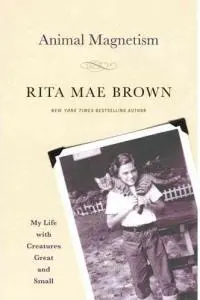
- Название:Animal Magnetism
- Автор:
- Издательство:Random House Publishing Group
- Жанр:
- Год:2009
- ISBN:978-0-345-51693-0
- Рейтинг книги:3 / 5. Голосов: 1
-
Избранное:Добавить в избранное
- Отзывы:
-
Ваша оценка:
Animal Magnetism: краткое содержание, описание и аннотация
Предлагаем к чтению аннотацию, описание, краткое содержание или предисловие (зависит от того, что написал сам автор книги «Animal Magnetism»). Если вы не нашли необходимую информацию о книге — напишите в комментариях, мы постараемся отыскать её.
Brown readily admits that she prefers the company of animals to people, a trait handed down from her mother. After all, Brown explains, "There's no such thing as a dumb dog, but God knows there are continents filled with dumb humans." In fact, by observing the dogs on her farm, the horses in her stables, and the cats that have helped her flesh out her many novels, Brown has gained better insight into herself and other human beings-one need only look at a chicken coop, she once realized, to see its striking similarity to her mother's clucking and preening group of friends.
In hilarious and heartwarming stories, Brown introduces us to Franklin, a parrot with a wicked sense of humor; R.C., a courageous Doberman who defined loyalty and sacrifice; Suzie Q, the horse who taught her the meaning of hard work; Baby Jesus, a tough tiger cat from New York City with sharp teeth to match his attitude; and of course the beloved and prolific Sneaky Pie, who needs no introduction to her legions of fans. In her succinct and personable style, Brown also revisits the very human parts of her life-growing up in the segregated South, dealing with the pain and the loss of those dearest to her, and coming into her own as an adult and as a writer.
Every recollection here reveals nature's delight and wonder-and offers solid evidence of the ability of animals to love. As funny as it is poignant, Animal Magnetism shows how these inspiring creatures, great and small, can bring out the best in us, restore us to our greater selves, and even save our lives.
Animal Magnetism — читать онлайн бесплатно полную книгу (весь текст) целиком
Ниже представлен текст книги, разбитый по страницам. Система сохранения места последней прочитанной страницы, позволяет с удобством читать онлайн бесплатно книгу «Animal Magnetism», без необходимости каждый раз заново искать на чём Вы остановились. Поставьте закладку, и сможете в любой момент перейти на страницу, на которой закончили чтение.
Интервал:
Закладка:
For the first time in my life I experienced an exhilarating partnership. We were Fred Astaire and Ginger Rogers. Horses have a big range of emotions and they sense ours. Suzie Q knew when I was peeved, hurt, happy, or tired. She’d nuzzle me if I was on the ground or put her big head over my shoulder. I’d stand on the box and run my hands along her crest. She fairly wriggled with happiness. I’d run my hands over her back and rub the muscles on either side of her spine. I’d massage her legs. We showed our affection through touch. She knew a fair number of words. The tone of my voice relayed information, but the best communicator for us was touch. Naturally, the carrots and apples helped. I liked the other horses, but I loved Suzie Q.
Some horses have a pronounced sense of humor. She sure did. If I put down my notebook and she could reach it, she’d pick it up and drop it in her stall. She’d pretend to chase the farm dogs. She’d allow the cats to walk on her back but she was very, very picky about people. If she disliked someone she avoided them or wouldn’t come out of her stall corner to say hello. Literally, she showed them her ass. She didn’t like nervous people or loud people. Strange, but someone can appear calm on the outside yet be churning on the inside. Horses know. Sometimes that kind of person has an “electric seat,” which makes the horse hotter than a peppercorn. The horse senses this, just as they are amazingly good at identifying mental illness. Horses cannot be around crazy people. A dog or cat, depending on the type of mental illness, can often bear it, even seem to sympathize with it, but horses can’t. They can deal with cerebral palsy and other forms of damage, like people without arms or legs. You can ride without your legs from the knees down, but you do need your thighs. With the advance of prosthetics, I bet there are some people who can ride with an entire manufactured leg. Horses can deal with all these conditions.
Humans’ belief systems cloud reality. We think we aren’t animals and we have forgotten how to read one another’s bodies, much less other species’. I am speaking in broad terms but I don’t think you will disagree. We are moving at warp speed away from the gifts of our species and instead are putting our faith in technology. Technology must be the servant, not the master.
Suzie Q lived into her late twenties. It was hard to leave her when we moved to the Deep South. Dad just couldn’t stand the cold anymore and neither could Mother. They wanted warmth, and the vividness of deep Southern individualism. When I bade my friend goodbye, I cried. Dad, not as strict as Mother about showing one’s emotions, gave me time. Tweetie gave me twenty dollars. A fortune!
Suzie Q died when I was eighteen. Mother wrote me a letter to tell me because I was in my first year at college. A wave of nostalgia and loss rolled over me. The three creatures who showed me and taught me the power of unconditional love were now gone: Dad, Chaps, and Suzie Q. Through time I learned to accept and moderate. Love surmounts even death. Love is like remembered light, it will guide you through the darkness. Suzie Q, Chaps, and Dad are still my lanterns.
A young bluejay gave me my first lesson in the rules of natural selection. Photo courtesy of Ken Thomas at www.KenThomas.us .
Natural Selection
A fter years of observing and engaging in the natural world all around us, I have learned an important lesson. You can’t fight nature. Calamities and death are a part of it, just as much as birth and growth are. Once you understand and accept this vast power that at times makes you feel as insignificant as a tiny particle, you can find great fulfillment in the beauty and logic of it all.
Growing up in the middle of the Appalachian chain, I had daily opportunities to marvel at the beauty of the natural world. In the spring, everything shimmered with fragrance, color, sound. There may be other parts of the world where spring and fall rival this beauty, but I’ve not seen them, and I’ve traveled a great deal, usually on business. I don’t like to travel, for it takes me away from my animals.
The willows send out a hint that the change is coming with a faint cast of yellow. The crocuses are usually up by then and the snowdrops have already bloomed, literally pushing up through the snow. The robins announce their return with a characteristic “hello” chirp. Since they are just back, they chirp a lot, like old friends getting together after a long parting. They are just plain happy. Why is it so difficult for scientists to fathom that other creatures feel the joy of life? Science is always behind when it comes to the natural world. A small case in point: for years scientists taught us that dogs are color blind. A few years ago this position was reversed. Another example, in the December 19, 2008, issue of The Manchester Guardian Weekly , on page 45, there’s a sidebar about scientists at the University of Vienna who determined that dogs get jealous. Anyone who ever lived with a dog knows this.
In spring, the redbud begins to bloom, first deep magenta, then lightening to shades of pink as buds open. Goldfinches chatter away, worse than any group of golfers at the nineteenth hole. The oaks, still barren, with rustling brown leaves still attached, might host bluejays peering down at the goldfinches wondering should they terrorize them or not. The forsythias spill cascades of yellow; as they fade, the dogwoods begin to explode. White and pink covers the whole eastern side of the Blue Ridge Mountains, which I face. The spring green glows on hickories, oaks, sycamores, and black birch, the deciduous natives of the East Coast.
I grew up in the foothills of the Appalachians. And when I was full grown, as soon as I made enough money, I repaired to the mountains themselves. Flatlanders tend to weary of our twisting roads and the fact that they can’t see around corners. I often think this explains the difference between writers like Edna Ferber and William Styron. Those who live in the Rockies or the Sierra Nevada laugh at our mountains, calling them hills. Go ahead and laugh. This was once the highest mountain chain in the world. Living here forces one to comprehend the sheer power of time as well as weather. The roundness of these mountains can make a person feel like a baby leaning against his mother’s breast or propped up on her thigh.
These mountains harbor life, nurture life, and take life.
My sixth spring intoxicated me. Mother loved to garden, so we were on our hands and knees putting additional loam on the beds. No mulch back then. Or if there was, we didn’t know about it. We’d buy crushed seashells from the Chesapeake shores to put on the lawn and we’d buy what folks called turned dirt, a kind of light-textured loam but deep brown in color. Anything to retard the weeds, which I swear will still be here even if there’s an atomic war.
Little insects ran away when I disturbed their nesting places. From time to time I’d unearth a gross fat white grub. The chickens considered them a great delicacy.
A warbler called.
Mother’s head went up. “Ah, they’re back.”
“What?”
“Warblers. Those little birds with the big songs. Usually they’re high up in the trees. I don’t see them as much as I hear them. Thing is, there’re lots of kinds of warblers, and their songs are similar. I have a hard time distinguishing.” (Me, too.)
“Not like crows.”
She smiled. “No, but people confuse bluejay calls with crows sometimes.”
These were so distinct to me. “They do?”
“Honey, people don’t really listen to the birds. They might like a song—a thrush, say, which is so beautiful, but they don’t know it’s a thrush.”
“Are they stupid?” Diplomacy was a long time coming.
Читать дальшеИнтервал:
Закладка:
Похожие книги на «Animal Magnetism»
Представляем Вашему вниманию похожие книги на «Animal Magnetism» списком для выбора. Мы отобрали схожую по названию и смыслу литературу в надежде предоставить читателям больше вариантов отыскать новые, интересные, ещё непрочитанные произведения.




Обсуждение, отзывы о книге «Animal Magnetism» и просто собственные мнения читателей. Оставьте ваши комментарии, напишите, что Вы думаете о произведении, его смысле или главных героях. Укажите что конкретно понравилось, а что нет, и почему Вы так считаете.