Glennon Doyle - Untamed
Здесь есть возможность читать онлайн «Glennon Doyle - Untamed» весь текст электронной книги совершенно бесплатно (целиком полную версию без сокращений). В некоторых случаях можно слушать аудио, скачать через торрент в формате fb2 и присутствует краткое содержание. Год выпуска: 2020, Издательство: Random House Publishing Group, Жанр: Публицистика, на английском языке. Описание произведения, (предисловие) а так же отзывы посетителей доступны на портале библиотеки ЛибКат.
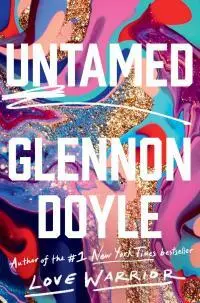
- Название:Untamed
- Автор:
- Издательство:Random House Publishing Group
- Жанр:
- Год:2020
- ISBN:нет данных
- Рейтинг книги:4 / 5. Голосов: 2
-
Избранное:Добавить в избранное
- Отзывы:
-
Ваша оценка:
Untamed: краткое содержание, описание и аннотация
Предлагаем к чтению аннотацию, описание, краткое содержание или предисловие (зависит от того, что написал сам автор книги «Untamed»). Если вы не нашли необходимую информацию о книге — напишите в комментариях, мы постараемся отыскать её.
" *Untamed* will liberate women --emotionally, spiritually, and physically. **It is phenomenal.** "--Elizabeth Gilbert, author of *City of Girls* and *Eat Pray Love***
*This is how you find yourself.
*
There is a voice of longing inside each woman. We strive so mightily to be good: good partners, daughters, mothers, employees, and friends. We hope all this striving will make us feel alive. Instead, it leaves us feeling weary, stuck, overwhelmed, and underwhelmed. We look at our lives and wonder: *Wasn't it all supposed to be more beautiful than this?* We quickly silence that question, telling ourselves to be grateful, hiding...
Untamed — читать онлайн бесплатно полную книгу (весь текст) целиком
Ниже представлен текст книги, разбитый по страницам. Система сохранения места последней прочитанной страницы, позволяет с удобством читать онлайн бесплатно книгу «Untamed», без необходимости каждый раз заново искать на чём Вы остановились. Поставьте закладку, и сможете в любой момент перейти на страницу, на которой закончили чтение.
Интервал:
Закладка:
TWELVE-YEAR-OLD TISH: Totally.
My friend Mimi told me that she was concerned because her middle school son was spending hours on his phone behind his locked bedroom door.
“Do you think he’s watching porn?” I asked her.
“No!” Mimi said. “He can’t be. He’s so young!”
“I just read that the average age kids discover porn is eleven.”
“Jesus.” Mimi shook her head. “I just feel bad spying on him. I mean, it’s his phone.”
“Nah. You pay the bill. It’s your phone, he’s borrowing it.”
“I’m afraid of what I’ll find,” Mimi said.
“I know. Me too, every time,” I admitted. “But what if he’s already found porn? What if he’s lost in that world by now? Don’t you want to go in and find him?”
“I just have no idea what I’d say.”
“Listen, I know plenty of adults who find certain kinds of porn to be liberating, but the porn kids come across on the internet is misogynistic poison. We have to explain that to them so they don’t learn that sex is about violence. I just think that saying anything at all—even if we say it awkward and stumbling and afraid while our kids roll their eyes—is better than saying nothing at all.
“What if you said:
“Sex is an exciting and wonderful thing about being human. It is natural to be curious about sex, and when we are curious about things, we turn to the internet for information.
“But here’s the problem with using the internet to learn about sex: You cannot know who is doing the teaching. There are people who have taken sex and sucked all the life out of it to package it and sell it on the internet. What they’re selling is not real sex. It lacks connection, respect, and vulnerability, which is what makes sex sexy.
“This kind of porn is sold by people who are like drug dealers. They sell a product that fills people with a rush that feels like joy for a short while but then becomes a killer of real joy. Over time people prefer the rush of drugs to the real joy of life. Many who start watching porn very young will get hooked on the rush. Eventually they will find it hard to enjoy real sex with real human beings.
“Trying to learn about sex from porn is like trying to learn about the mountains by sniffing one of those air fresheners they sell at the gas station. When you finally get to the real mountains and breathe in that pure, wild air—you might be confused. You might wish it smelled like that fake, manufactured air-freshener version.
“We don’t want you to stay away from porn while you’re young because sex is bad. We want you to stay away from porn because real sex—with humanity and vulnerability and love—is indescribably good. We don’t want fake sex ruining real sex for you.
“What if you said something like that?” I asked Mimi. “Do not leave that sweet boy alone in the woods because you are too afraid to go get him.”
We don’t have to have answers for our children; we just have to be brave enough to trek into the woods and ask tough questions with them.
We can do hard things.
One afternoon I opened my inbox and saw an email with the subject line “Mom, You’re Up!”
The email was meant to inform me that it was my turn to provide breakfast for my kid’s school athletic team after their early-morning practice. Each morning, a parent delivers a full spread of bagels, cream cheese, juices, and bananas to school. She sets up the buffet while the children practice so that after they finish, they can dine.
The night before I was to deliver the goods, I received another email from the mother of one of the athletes. She had a concern she wanted to share with me. She was worried that the other parents had not been providing sufficient cream cheese choices for the children. For example, last Friday there had been only two options, and several of the children hadn’t liked either one of them and had been forced to eat their bagels cream cheese–less. She had a solution: “There’s a bagel store close to the school that makes five different flavors of cream cheese. Might you be able to provide all of them?”
All of them. Five flavors of cream cheese.
Five flavors of cream cheese is not how to make a child feel loved.
Five flavors of cream cheese is how to make a child an asshole.
And yet I am a cream cheese parent. All of my friends are cream cheese parents. Cream cheese parenting is the result of following our memo: Successful parenting is giving your children the best of everything. We are cream cheese parents because we haven’t stopped to ask: Does having the best of everything make the best people?
What if we revised our memo? What if we decided that successful parenting includes working to make sure that all kids have enough, not just that the particular kids assigned to us have everything? What if we used our mothering love less like a laser, burning holes into the children assigned to us, and more like the sun, making sure all kids are warm?
One morning I woke up and read a story unfolding at our southern border. Children as young as four months old were being stripped away from their asylum-seeking parents’ arms, loaded into vans, and sent without explanation to detention centers. I searched the web for Americans’ reaction to this, certain that all would be as heartbroken and outraged as I was. Some were. Others were hardened. Again and again, I read: “It’s unfortunate, but they shouldn’t have come here if they didn’t want this to happen.”
Privilege is being born on third base. Ignorant privilege is thinking you’re there because you hit a triple. Malicious privilege is complaining that those starving outside the ballpark aren’t waiting patiently enough.
Despair is physical for me. With each new heartbreaking image and heartless response, I felt hope drain from my body. Hope is energy. That morning, I ran out of both. I shut down my computer and climbed into bed at 3:00 P.M. Abby tucked me in, kissed my forehead. Out in the hallway, I heard my daughter ask, “Is Mommy okay?” Abby said, “She will be. She’s feeling it all now. She has to feel it all so she can use it. Just wait. Let Mom sleep. When she gets up, something amazing will happen.”
What if we let ourselves feel it all? What if we decided that it is strength—not weakness—to let other people’s pain pierce us? What if we stopped our lives and the world for things that are worth stopping for? What if we raised our hands and asked, “Can we stay here for a minute? I’m not ready to run out to recess yet.”
I slept for twelve hours and then woke up at 3:00 A.M. on fire. By the time Abby walked out of our bedroom, I’d set up a command center in the dining room. As soon as she saw my face, the piles of papers, and the easel covered with phone numbers and ideas, she understood. She looked at me and said, “Okay, babe. Let’s do this. First, though: coffee.”
As soon as the sun rose, we called the Together Rising team: my sister, Allison, and Liz. One was on vacation, one in the middle of a big project at work, one caring for a sick relative. They stopped their worlds and set up their own command centers in the beach rental, in the office, in the hospital room. We began the way we always begin our responses to large humanitarian crises: We contacted the people on the ground who understood the crisis firsthand and knew which organizations were responding with wisdom, efficiency, and integrity.
Together Rising exists to turn our collective heartbreak into effective action. We do this by serving as a bridge between two sets of warriors: the everyday warriors across the globe who—in their kitchens and cars and offices—refuse to go numb to crises in distant countries and their own communities; and the boots-on-the-ground warriors who devote their lives to world-healing, life-saving work. With a most frequent donation of just $25, Together Rising has ushered more than $20 million over that bridge from heartbreak to action.
Читать дальшеИнтервал:
Закладка:
Похожие книги на «Untamed»
Представляем Вашему вниманию похожие книги на «Untamed» списком для выбора. Мы отобрали схожую по названию и смыслу литературу в надежде предоставить читателям больше вариантов отыскать новые, интересные, ещё непрочитанные произведения.







Обсуждение, отзывы о книге «Untamed» и просто собственные мнения читателей. Оставьте ваши комментарии, напишите, что Вы думаете о произведении, его смысле или главных героях. Укажите что конкретно понравилось, а что нет, и почему Вы так считаете.